
Introduction
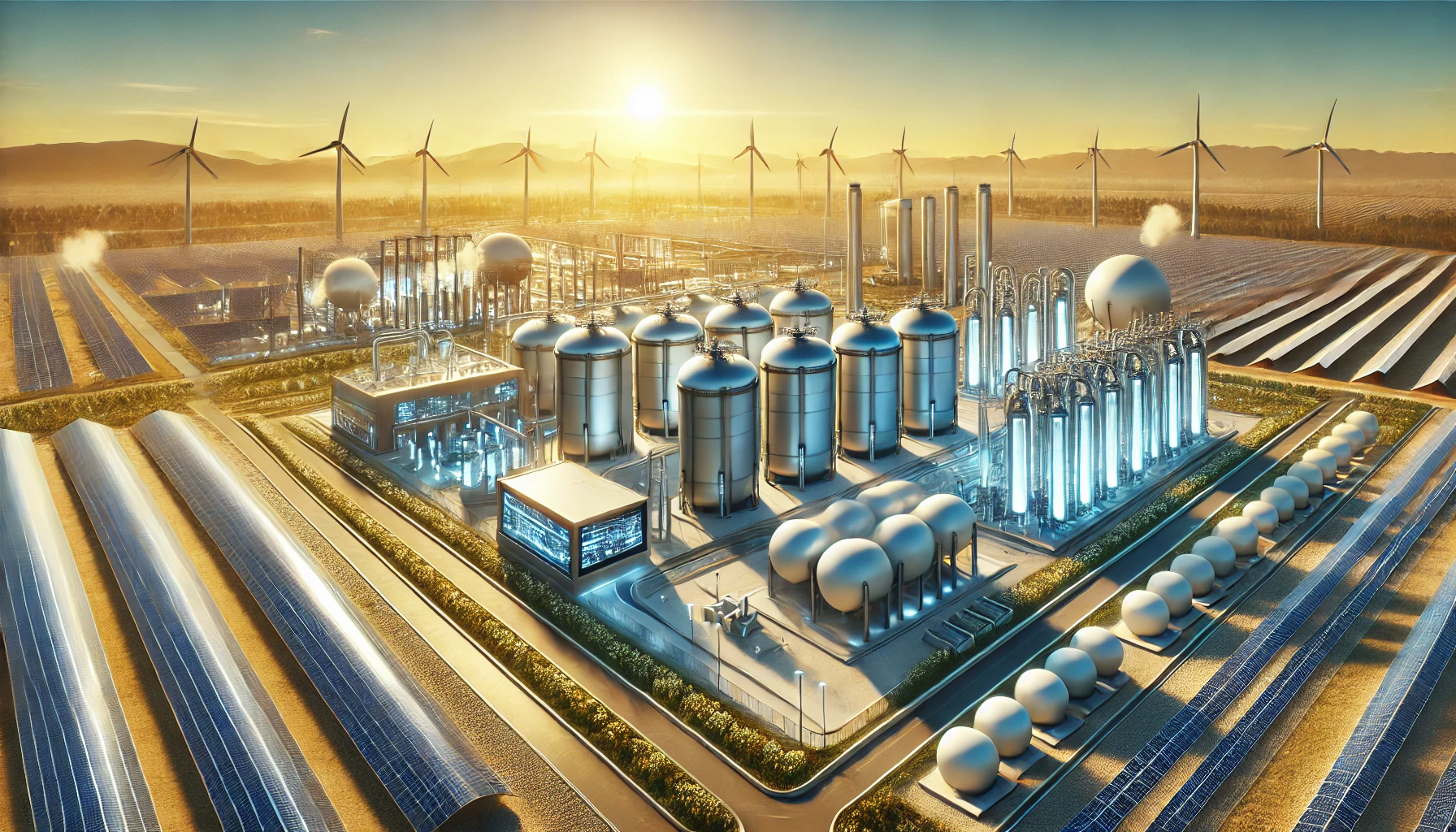
As the world transitions toward renewable energy sources, the need for efficient energy storage solutions becomes increasingly important. Current battery storage systems have limitations due to resource constraints, disposal issues, and finite cycle life. Liquid air energy storage (LAES) and hydrogen combustion technology offer a viable alternative, especially when combined into a hybrid system.
This paper explores a hybrid energy storage system that integrates liquid air storage and hydrogen combustion turbines to create a scalable, efficient, and sustainable solution for grid energy storage.
System Overview
This system operates by storing excess renewable energy from sources such as solar, wind, and hydro in two forms:
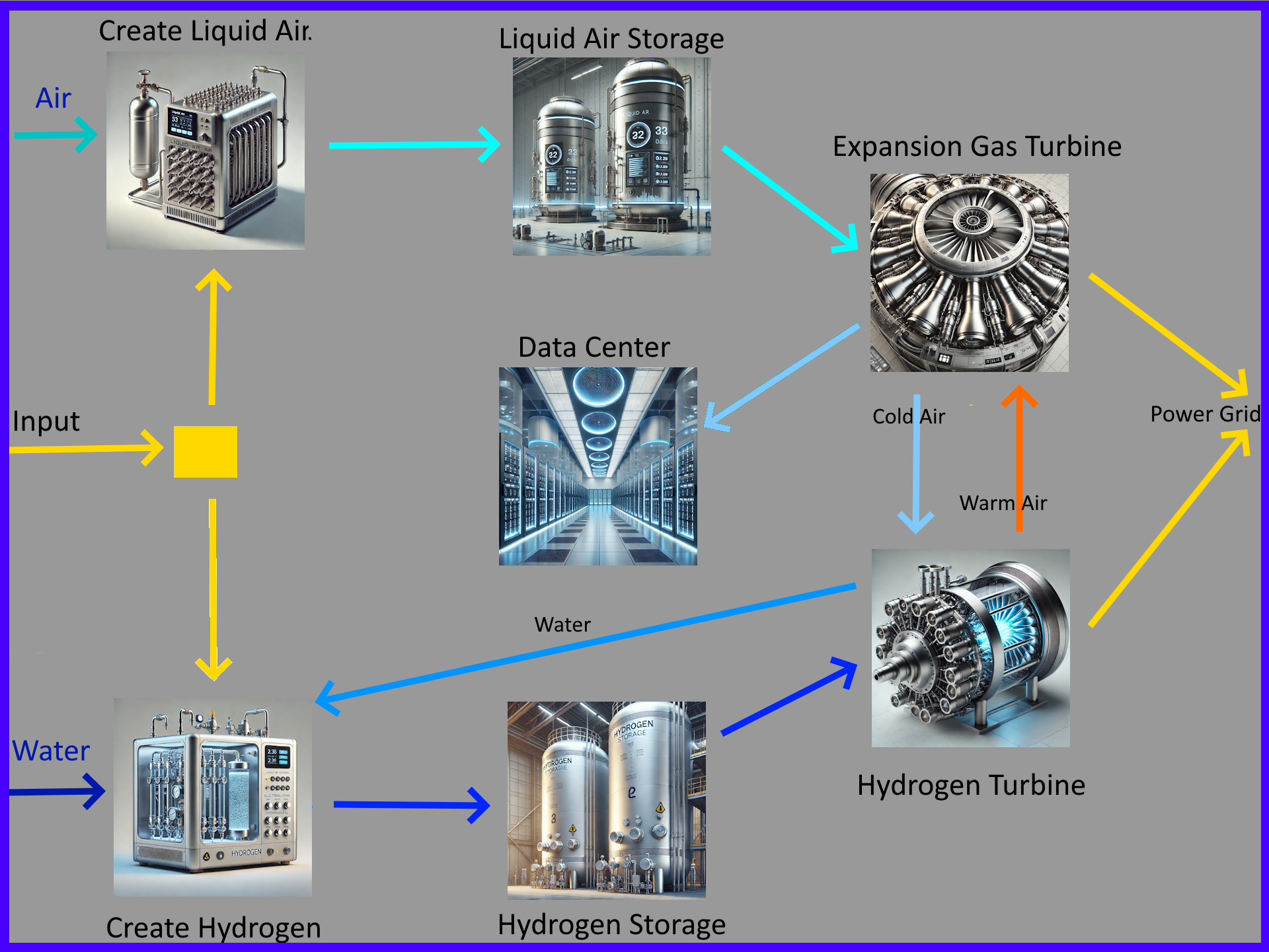
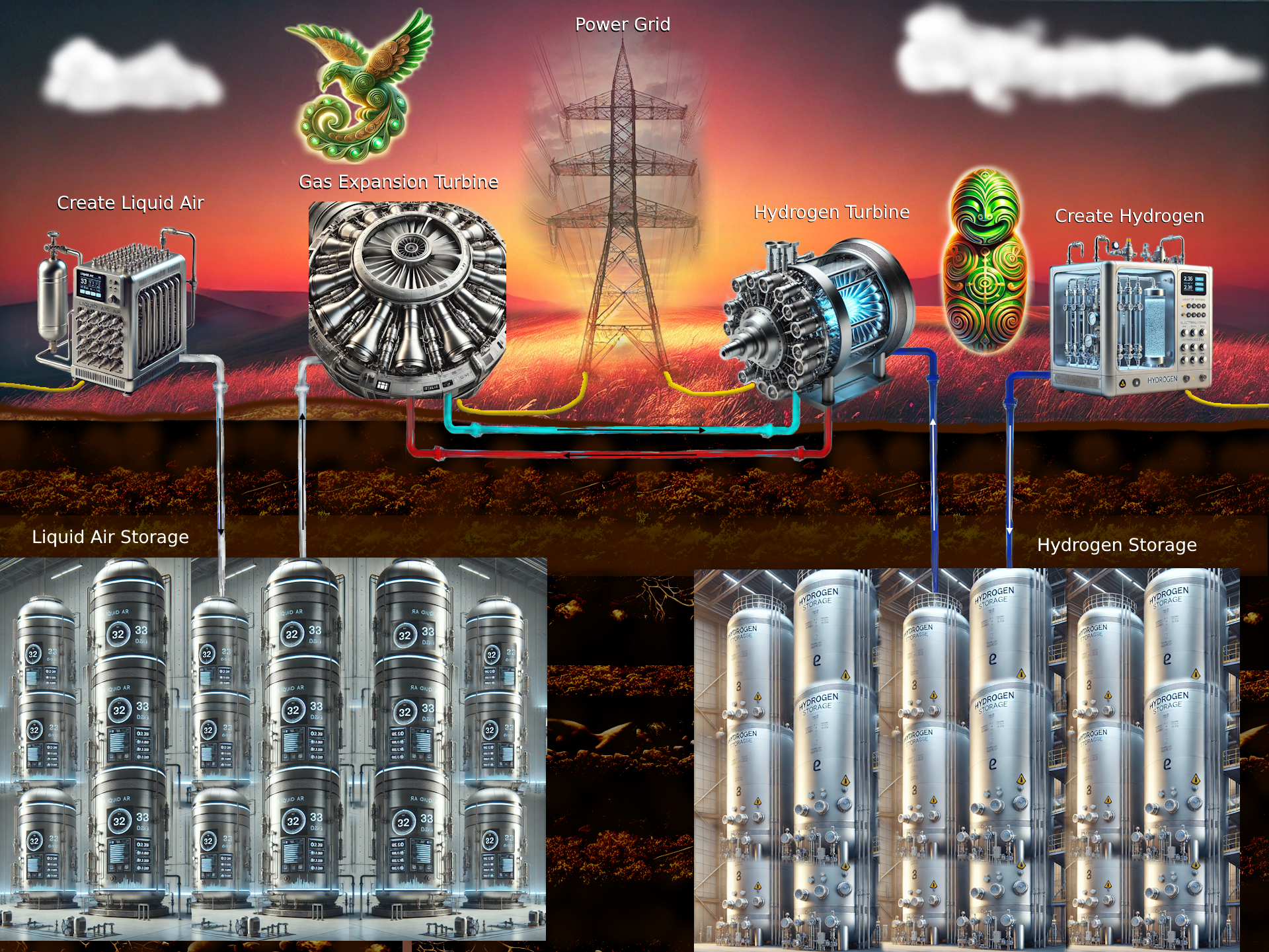
Liquid Air Storage: Converts surplus electricity into liquid air, which is later expanded through turbines to generate electricity.
Hydrogen Combustion: Uses electrolysis to split water into hydrogen, which is stored and later burned in a hydrogen turbine to generate additional power.
By combining these technologies, we create a dual-stage energy system that ensures maximum energy utilization and grid stability.
Energy Storage and Release Process
1. Energy Collection & Storage Phase
Surplus renewable energy powers an air liquefaction system, cooling and compressing air to -194°C to form liquid air.
Excess electricity is also used for hydrogen electrolysis, splitting water into H₂ and O₂, which is stored for later use.
The system can store both liquid air and hydrogen for flexible energy management.
2. Energy Release Phase (Power Generation)
When energy demand is high, stored liquid air is expanded through a multi-chamber turbine, producing electricity.
If additional power is needed, hydrogen is combusted in a hydrogen turbine, generating extra power.
The hybrid system allows on-demand energy release and reduces grid strain during peak hours.
Efficiency & Energy Calculations and Additional Benefits
1. Liquid Air Energy Contribution
10,000 liters of liquid air produces ~443.8 kWh of electricity when expanded.
Round-trip efficiency is ~55-65% due to liquefaction and expansion losses.
2. Hydrogen Energy Contribution
Electrolysis running for 24 hours can produce ~12 kg of hydrogen.
This hydrogen stores ~472.8 kWh of energy, providing a long-term power source.
3. Water Recovery & Recycling
90% of the water used in electrolysis is recovered from the hydrogen combustion process, reducing stress on natural water resources.
This closed-loop system ensures sustainable water usage.
4. Using Excess Hydrogen for More Liquid Air & Utilizing Cold Air Exhaust
If excess hydrogen is available, it is used to power the liquefaction process, producing additional 3,377 liters of liquid air, further extending energy storage capacity.
Additionally, the cold air exhaust from the liquid air expansion process can be used to cool other energy systems, improving overall efficiency. This waste cold energy can assist in industrial cooling processes, improve power plant efficiency, or be repurposed for air conditioning needs, reducing reliance on additional cooling power sources.
If excess hydrogen is available, it is used to power the liquefaction process, producing additional 3,377 liters of liquid air, further extending energy storage capacity.
Why the Hybrid System is Superior to a Single Technology, Battery Storage, or Energy Waste
With energy efficiency and sustainability addressed, the next crucial factor is ensuring effective energy utilization. Instead of relying solely on one method, the hybrid system maximizes efficiency and reliability by combining two complementary energy storage solutions.
While both liquid air storage and hydrogen combustion are viable energy storage technologies, using them individually has limitations. A hybrid system mitigates these challenges by combining their strengths while also offering advantages over battery storage or wasting excess energy.
1. Solving the Efficiency Problem
Liquid air storage alone has moderate efficiency (55-65%), but provides fast power release.
Hydrogen storage has lower efficiency (~30-45%) but allows long-duration energy storage.
Hybrid Benefit: The system uses liquid air for quick response and hydrogen for extended energy supply, optimizing overall efficiency.
2. Reducing Energy Loss
Liquid air loses energy through boil-off over time if not used immediately.
Hydrogen production through electrolysis takes time, making it impractical for real-time energy needs.
Hybrid Benefit: The system prioritizes liquid air first for instant power, then uses hydrogen when long-term storage is required.
3. Balancing Grid Demand More Effectively
A liquid air-only system can handle short-term fluctuations, but cannot sustain power over long periods.
A hydrogen-only system requires time-consuming electrolysis, meaning it cannot always respond quickly to demand spikes.
Hybrid Benefit: Liquid air handles quick fluctuations, while hydrogen supplies backup power, making the grid more stable.
4. Making the Best Use of Excess Energy
If too much hydrogen is produced, a hydrogen-only system risks overproduction and inefficient storage.
If too much liquid air is produced, it can slowly evaporate and be lost.
Hybrid Benefit: Excess hydrogen is used to create more liquid air, ensuring no energy is wasted.
5. Water Sustainability
Hydrogen electrolysis requires a steady water supply.
A liquid air-only system does not recover water, which means wasted resources.
Hybrid Benefit: Hydrogen combustion releases water vapor, which is recovered and reused, making the system more sustainable.
5. Safe and Space-Efficient Storage with Oxygen-Free Containment for Future Energy Demands
Gas storage tanks can be easily stored underground, improving safety and reducing space usage.
Underground storage protects against environmental hazards and prevents potential leakage risks. Unlike fossil fuels, any leaked hydrogen or liquid air would not contaminate water sources or the environment. The primary concern with hydrogen leaks is the risk of explosion, which can be effectively managed by underground containment, advanced sensors, and controlled air replacement technology to prevent dangerous build-ups due to accident or leaking tanks. Additionally, storing hydrogen in an oxygen-free nitrogen environment can further enhance safety. By removing O₂ from the storage space, the risk of hydrogen combustion or explosion is drastically reduced. This method acts as a built-in fire suppression system, preventing ignition sources while ensuring that energy remains safely stored. This makes underground storage not only space-efficient but also a safer and more reliable method for large-scale energy storage.
Hybrid Benefit: This allows higher-density energy storage without requiring extensive land use, making the system even more viable for urban and industrial applications. As global energy demands continue to increase, such an approach becomes increasingly necessary to ensure reliable and scalable energy storage solutions that can adapt to modern needs.
Conclusion: A Scalable Future-Proof Energy Solution
As the demand for sustainable energy storage grows, integrating multiple energy storage technologies is critical. This hybrid system offers a solution that adapts to both immediate and long-term power needs, making it a viable alternative to traditional energy storage systems.
The hybrid liquid air & hydrogen energy storage system offers a scalable, efficient, and sustainable solution for integrating renewable energy into the grid. By combining fast-response liquid air expansion with long-term hydrogen storage, this system ensures grid stability, minimizes energy waste, and provides a sustainable alternative to traditional battery storage. With further advancements in electrolysis and liquefaction efficiency, this hybrid approach could play a crucial role in the future of global energy storage, especially as worldwide energy demands continue to rise in the modern age.