

Abstract
Basalt fiber is an advanced material produced by melting volcanic rock and drawing it into fine filaments. It offers superior strength-to-weight ratios, exceptional corrosion resistance, and remarkable thermal stability compared to traditional steel and fiberglass. China has emerged as the global leader in basalt fiber production, accounting for over 60% of worldwide output, and is actively exporting both the technology and the manufacturing infrastructure to other nations. This paper provides an overview of the technology, its advantages, economic considerations, and the strategic role China is playing in scaling the industry globally.
1. Introduction
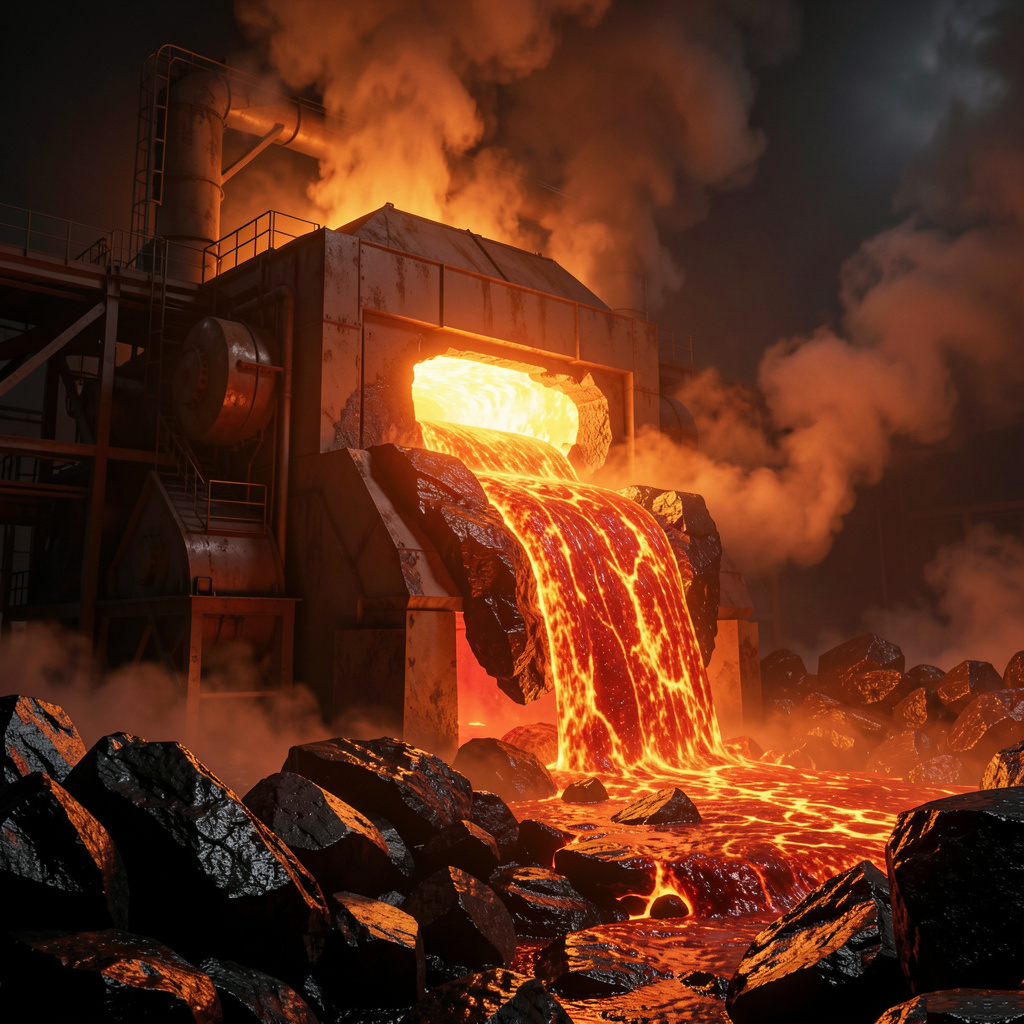
Basalt fiber is produced from one of the most abundant materials on Earth: basalt, the volcanic rock that forms much of the planet's crust. The production process is remarkably straightforward: basalt rock is crushed, melted at high temperatures, and drawn through small nozzles to create continuous filaments thinner than a human hair.
What makes this technology compelling is its combination of high performance and environmental benefits. Basalt fibers require no chemical additives in their production and produce no toxic interactions with air, water, or other chemicals. This has led to basalt fiber being described as a "21st-century green industrial material" and a "green, high-performance inorganic fiber".
2. How the Technology Works
The production process for basalt fiber is conceptually simple yet technically demanding.
2.1 The Manufacturing Process
Crushing: Basalt rock is mined and crushed into small pieces.
Melting: The crushed rock is fed into furnaces and heated to approximately 1,400°C to 1,500°C.
Fiber Formation: The molten basalt is passed through platinum-rhodium bushing plates (specialized nozzles) to form continuous filaments under hydrostatic pressure.
Collection: These filaments are collected into strands, lubricated for stability, and spooled for further processing.
2.2 Key Technical Considerations
The primary technical challenge lies in the bushing plates. These are made from platinum-rhodium alloy and are extraordinarily expensive, representing a significant portion of equipment costs. The furnaces must operate continuously at high temperatures to maintain a stable melt and prevent crystallization, which would ruin the process.
China has made significant technological advances in this area, including:
2400-hole intelligent drawing technology
Melt homogenization control
Raw material magnetic separation and purification
Improvements in yield rates from under 60% to over 90% at leading enterprises
3. Advantages Over Traditional Materials
Basalt fiber offers compelling advantages over steel, fiberglass, and carbon fiber across multiple dimensions.
3.1 Strength and Weight
Property Basalt Fiber Steel Comparison
Tensile Strength 3,000-4,800 MPa ~400-600 MPa 2.5 to 4 times stronger
Weight 25%-30% of steel's weight Reference 70%-75% lighter
Strength-to-Weight Ratio Exceptional Moderate Superior
Basalt fiber reinforcement is 4.5 times lighter than steel while offering 2.5 times the tensile strength. Other sources report even more impressive figures: basalt fiber composites can be three times stronger than steel while weighing two-thirds less, and basalt MiniBars deliver four times the strength of conventional rebar at just 30% of the weight.
3.2 Corrosion Resistance
Unlike steel, basalt fiber is completely inert and does not corrode. It is resistant to:
Acids and alkalis
Salt water and seawater
Caustic chemicals
Sulfide gases
This corrosion resistance is perhaps its most significant advantage for infrastructure applications. Steel reinforcement in concrete is vulnerable to rust, particularly in coastal environments or areas where de-icing salts are used. Basalt fiber eliminates this problem entirely.
3.3 Thermal Stability
Basalt fiber maintains its properties across an extraordinary temperature range:
Operating range: −269°C to 700°C
Withstands up to 700°C without degradation
Functions down to −260°C
For comparison, glass fibers typically withstand only up to 380°C, and carbon fibers up to 500°C. This makes basalt fiber suitable for aerospace applications, fire insulation, and extreme environments.
3.4 Comparison with Other Fibers
Material Strength Cost Environmental Impact
Basalt Fiber High Moderate Low (no chemicals, abundant resource)
E-Glass Moderate Low Moderate
Carbon Fiber Very High Very High High (energy-intensive)
Basalt fiber offers 20-30% greater tensile strength than E-glass while being more affordable and sustainable than carbon fiber. It is positioned as a cost-effective, mid-performance reinforcement material that offers a balance between glass fibers and carbon fibers. Importantly, it is non-carcinogenic, unlike some synthetic fibers.
4. Economic Considerations
4.1 Production Costs
The production cost of basalt fiber is dominated by energy consumption and equipment costs, which together account for more than 90% of total costs.
Cost Component Percentage
Raw materials (basalt rock) Less than 1%
Energy (electricity/gas) ~45-50%
Equipment (furnaces, bushings) ~40-45%
Labor Small percentage
The raw material cost is exceptionally low, less than $5 per ton if the plant is located near a basalt quarry. This means that access to affordable energy is the single most important factor for economic viability.
4.2 Market Pricing
Basalt fiber prices are competitive with other high-performance fibers:
Basalt fiber: ~$2,000–$5,000 per ton
Carbon fiber: ~$16,000+ per ton
Aramid fiber: ~$27,000+ per ton
Basalt fiber's performance is described as "close to T300-grade carbon fiber and significantly better than glass fiber," while its price is only one-tenth that of carbon fiber and comparable to high-grade glass fiber.
4.3 Factory Payback Periods
Investment proposals and existing projects indicate attractive payback periods for basalt fiber factories:
Project Investment Capacity Payback Period
Central Asia Project $50 million Not specified ~3.9 years
Uzbekistan Project $20 million ~2,000–2,500 tons/year 5 years
Kazakhstan Project $213 million 17,300 tons/year 6 years
A 3 to 6-year payback period is remarkably short for heavy industrial facilities. For comparison, steel mills typically take 10–20 years to break even, and chemical plants often take 8-15 years.
4.4 Lifecycle Cost Advantages
While basalt fiber may have higher upfront costs than steel, its lifecycle economics are often superior:
Holistic life cycle cost analysis shows that basalt FRP reinforcement in highway bridges with average traffic volumes very likely offers an economic advantage over corrosion-prone reinforcing steel.
Basalt rebar can extend bridge service life from an estimated 50 years to 100+ years while reducing annual maintenance costs by 60%.
Basalt fiber composite rebars reduce energy consumption to 46% of steel equivalents.
Basalt fiber production uses at least 70% less carbon during production than steel reinforcement and 22% less than recycled steel.
5. Global Market Growth
The basalt fiber market is growing rapidly and is projected to become a multi-billion-dollar industry.
5.1 Market Size Projections
Year Market Size Source
2025 $350–$612 million Multiple
2026 $408–$740 million Multiple
2034 ~$1.48 billion Fortune Business Insights
2032 ~$1 billion 6W Research
The market is growing at a compound annual growth rate (CAGR) of 9% to 12.8%. The building and construction sector is the largest end-use market, accounting for approximately 34% of the market.
5.2 Regional Distribution
Asia Pacific dominates with a 37.9% market share
North America holds 32.6%
Europe holds 21.5%
China is the world's largest producer, with over 60% of global production capacity.
6. China's Strategic Role
6.1 China as the Global Leader
China has positioned basalt fiber as a strategic material and one of the "four high-performance fibers" (along with carbon fiber, aramid fiber, and ultra-high molecular weight polyethylene).
Key facts about China's basalt fiber industry:
Global production share: over 60%
National strategic priority: Listed in China's "Made in China 2025" initiative
Classified as a "key strategic material" in the Ministry of Industry and Information Technology's 2024 guidance
National standards: China has established standards like JT/T776.1-2010 for basalt fiber
6.2 Exporting the "Factory in a Box" Model
China is not merely selling basalt fiber products; it is exporting the entire industrial ecosystem, technology, equipment, and standards.
The Kyrgyzstan Project (October 2025):
Kyrgyzstan's first basalt fiber factory
Built by China Railway 25th Bureau
Located in Bishkek, covering 8 hectares with 30,000 square meters of construction
Annual capacity: 5,000 tons
Uses Chinese technology, Chinese standards, and Chinese equipment
Part of Kyrgyzstan's national plan to reduce dependence on steel imports
This project demonstrates China's strategy of:
Building demonstration projects
Establishing technical standards
Creating long-term demand for Chinese equipment and expertise
Positioning itself as the global partner of choice for basalt fiber technology
Chinese basalt fiber manufacturing equipment has already been exported to Germany and the USA, and products are exported to Southeast Asia, Africa, the Middle East, Central and South Asia, Europe, and the United States.
6.3 Real-World Applications in China
China is actively deploying basalt fiber across multiple sectors:
Sector Applications
Aerospace Chang'e-6 lunar flag (2024)
Infrastructure Bridges, highways, tunnels, airport runways
Marine Aquaculture platforms resistant to 12-level typhoons
Energy Wind turbine blades, photovoltaic brackets
Environmental Desertification control, water treatment filters
Transportation Asphalt additives improving rutting resistance by 30-50%
The application of basalt fiber in pavements is particularly well-documented. Studies show it improves:
Rutting resistance: 30%-50%
Fatigue life: 20%-40%
Crack resistance and impermeability: 30%-55%
7. Implications for Other Countries
7.1 The Opportunity
The Kyrgyzstan project demonstrates that countries do not need to develop basalt fiber technology from scratch. They can partner with Chinese firms to build turnkey factories using proven technology, established standards, and experienced contractors.
For countries with abundant basalt resources, such as New Zealand, Iceland, and many others, this represents a significant opportunity to:
Establish a new high-value industry
Reduce dependence on imported steel
Create export-oriented manufacturing
Leverage renewable energy for competitive advantage
7.2 The Energy Advantage
Because energy costs dominate basalt fiber production, countries with low-cost or renewable energy have a natural competitive advantage. New Zealand, with its 85% renewable electricity grid and abundant geothermal resources, is particularly well-positioned. A basalt fiber plant powered by geothermal energy could market its product as genuinely "green fiber," commanding premium pricing in environmentally conscious markets.
7.3 Remaining Challenges
Despite its advantages, basalt fiber faces several barriers to widespread adoption:
Lack of global standards: There is no Eurocode for fiber-reinforced polymers.
Limited awareness: Many engineers and specifiers are unfamiliar with the material.
Conservative industry: The construction industry is "conservative by definition" and reluctant to specify unproven materials.
Quality consistency: Basalt composition varies between quarries, requiring careful blending.
However, these challenges are being addressed. China is actively developing standards, demonstration projects are generating real-world data, and production costs are expected to decline as technology improves.
8. Conclusion
Basalt fiber technology represents a convergence of several powerful trends: the need for more durable infrastructure, the demand for lower-carbon materials, the abundance of volcanic rock as a raw material, and the availability of proven manufacturing technology.
China has taken a leadership position in this industry, not only producing over 60% of the world's basalt fiber but actively exporting the technology and infrastructure to build factories in other countries. The Kyrgyzstan project is a template for how this can work: a turnkey factory built with Chinese technology, Chinese standards, and Chinese equipment, creating local jobs, reducing import dependence, and establishing a new industry.
The economics are compelling. Factory payback periods of 3 to 6 years are remarkably short for heavy industry. Lifecycle cost analysis shows that basalt fiber reinforcement can be economically advantageous over steel in many infrastructure applications, particularly when maintenance costs and service life are considered.
As awareness grows and standards develop, basalt fiber is positioned to become a mainstream material in construction, transportation, marine engineering, and aerospace. The technology works, the raw material is abundant, the economics are favorable, and the environmental benefits are significant. The question is no longer whether this technology will scale, it is how quickly and who will participate.
References
MDPI, "Basalt Fiber Composites: Structure, Properties, Sustainability, and Life Cycle Analysis," Journal of Composites Science, 2026.
Scilit, "A Review on Basalt Fibers and Their Composite Systems: Challenges, Limitations, and Applications," 2026.
New Civil Engineer, "Could basalt reinforcement replace steel in infrastructure construction?" 2023.
ScienceDirect, "Basalt Fiber for Pavements in China: Properties, Standardized Design, and Construction Practices," 2026.
Grecho Fiberglass, "Basalt Fiber Cost and Market Analysis," 2022.
Fortune Business Insights, "Basalt Fiber Market Size, Share, Growth Report, 2034," 2026.
163.com, "先进制造2025|玄武岩纤维:中国领航的绿色材料革命与发展图景," 2025.
陕西省标准化研究院, "中国技术、中国标准和中国设备打开企业战略性新兴产业出海新通道," 2025.
Seetao, "Kyrgyzstan's first basalt fiber factory starts construction," 2025.