

Introduction In a world flooded with commercial music and genre boundaries, a new sonic movement is emerging, one that reaches back to the oldest voices of humanity and carries them into the present. This genre is called Ancestral Paradoxical Echoes (APE).
Ancestral Paradoxical Echoes (APE) blends vocal and instrumental traditions from ancient cultures around the world, including Buddhist throat singing, Viking chant, Gregorian choir, Celtic laments, Native American songs, and more, into a unified musical form. It is built on the principle of the Timeless Paradox: combining the primal and the ethereal, the deep and the high, the ancient and the future, into a soundscape that feels both grounded and transcendent.
Core Elements of the Genre
Voice as Instrument: The human voice, in all its raw and refined forms, is central. This includes deep throat singing, layered harmonic chanting, whispered laments, and soaring choral lines.
Ancient Instruments: Drums, flutes, stringed instruments, bowls, and other traditional tools are preferred over modern digital sounds. This keeps the sound close to its cultural roots.
Global Fusion: The genre intentionally weaves together traditions from different cultures, creating a conversation between spiritual lineages. It is not about cultural appropriation but cultural dialogue.
Paradoxical Sound Design: Inspired by the concept of the Timeless Paradox, the music balances chaos and harmony, dark and light, stillness and movement. It welcomes dissonance and resolution as part of one continuous flow.
Minimal Production, Maximal Presence: Ancestral Paradoxical Echoes (APE) is often minimal in arrangement but maximal in emotional and spiritual presence. Less is more.
Why This Matters Ancestral Paradoxical Echoes (APE) is more than a genre, it’s a practice of remembrance. It invites both musicians and listeners to recognize the deep common threads in human expression, no matter how far apart we seem today. It is also an antidote to hyper-produced, synthetic music, offering instead something ancient, intimate, and alive.
How to Begin Exploring the Genre
Research Traditional Styles: Listen to recordings of Buddhist monks, Sámi joik singers, Gregorian choirs, Celtic folk, and Native American songs. Learn their textures, not just their melodies.
Experiment with Layers: Combine deep tones with high tones, solo voices with group chants, rough textures with smooth ones.
Honor the Source: Approach each tradition with respect. Collaborate if you can, or study deeply before drawing on these sounds.
Play with Paradox: Let opposing elements live side by side, calm and fury, harmony and dissonance, ritual and play.
Record Simply: Use simple tools, minimal effects, and focus on presence. Let the raw sound lead.
Invitation to Musicians Ancestral Paradoxical Echoes (APE) is an open field, not a rigid formula. Musicians, vocalists, sound healers, and producers are invited to explore, experiment, and contribute their own interpretations. This is not a genre of ownership but of invitation, a living conversation across time and cultures.
Conclusion As the world races forward, Ancestral Paradoxical Echoes (APE) reminds us of something essential: we are part of an ancient song still unfolding. By weaving old voices into new forms, we don’t just preserve the past, we make it sing again.
Let the echoes rise. Let the paradox live. And let the music guide us home, all under the banner of APE (Ancestral Paradoxical Echoes).
Ancestral Paradoxical Echoes (APE) speaks not only to the ear, but to the soul, it stirs something in our very DNA, awakening memory beyond words. This is the true connection between the music and the person: a remembering of sounds our spirit has always known.
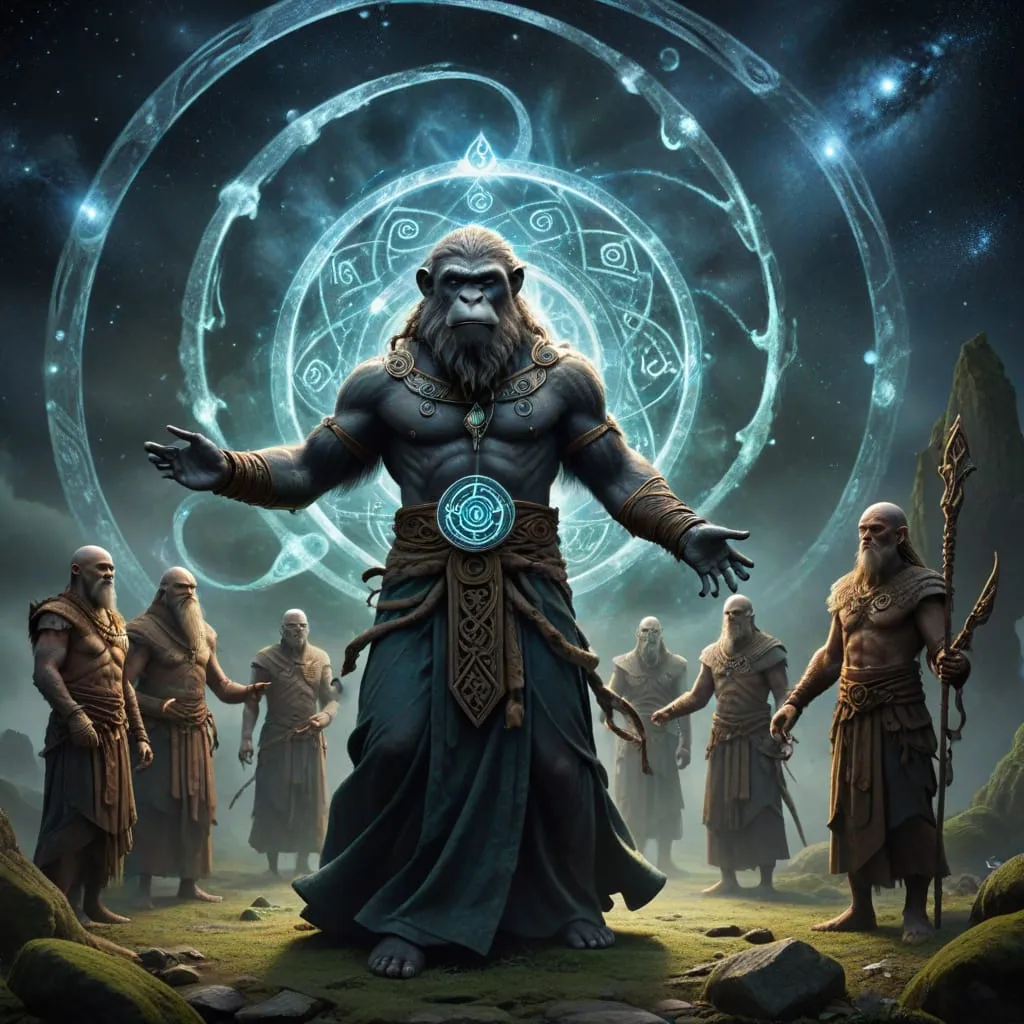
Paradox APE song