

A Low-Carb, Fat-First Perspective on Prevention and Intervention
Abstract
The dominant paradigm of Alzheimer's disease (AD) as a proteinopathy, a disorder driven by the accumulation of amyloid-β plaques and tau tangles, has failed to produce effective treatments. A growing body of evidence supports a radically different model: Alzheimer's disease is fundamentally a metabolic disorder of the brain, characterized by cerebral insulin resistance and an inability to utilize glucose for energy. This condition, increasingly referred to as "Type 3 diabetes," creates an energy crisis in the brain that precedes cognitive decline by decades. This paper synthesizes current research on the metabolic origins of Alzheimer's disease and proposes a low-carbohydrate, fat-based dietary intervention focused on providing alternative fuel sources to the starving brain. Key components include a high-fat, very-low-carbohydrate diet (to induce ketosis), medium-chain triglyceride (MCT) supplementation (to rapidly elevate blood ketones), and daily intake of cod liver oil (to supply omega-3 fatty acids and fat-soluble vitamins). The paper also presents a personal N=1(observation) testimony demonstrating the feasibility and transformative potential of this approach for brain health and metabolic resilience.
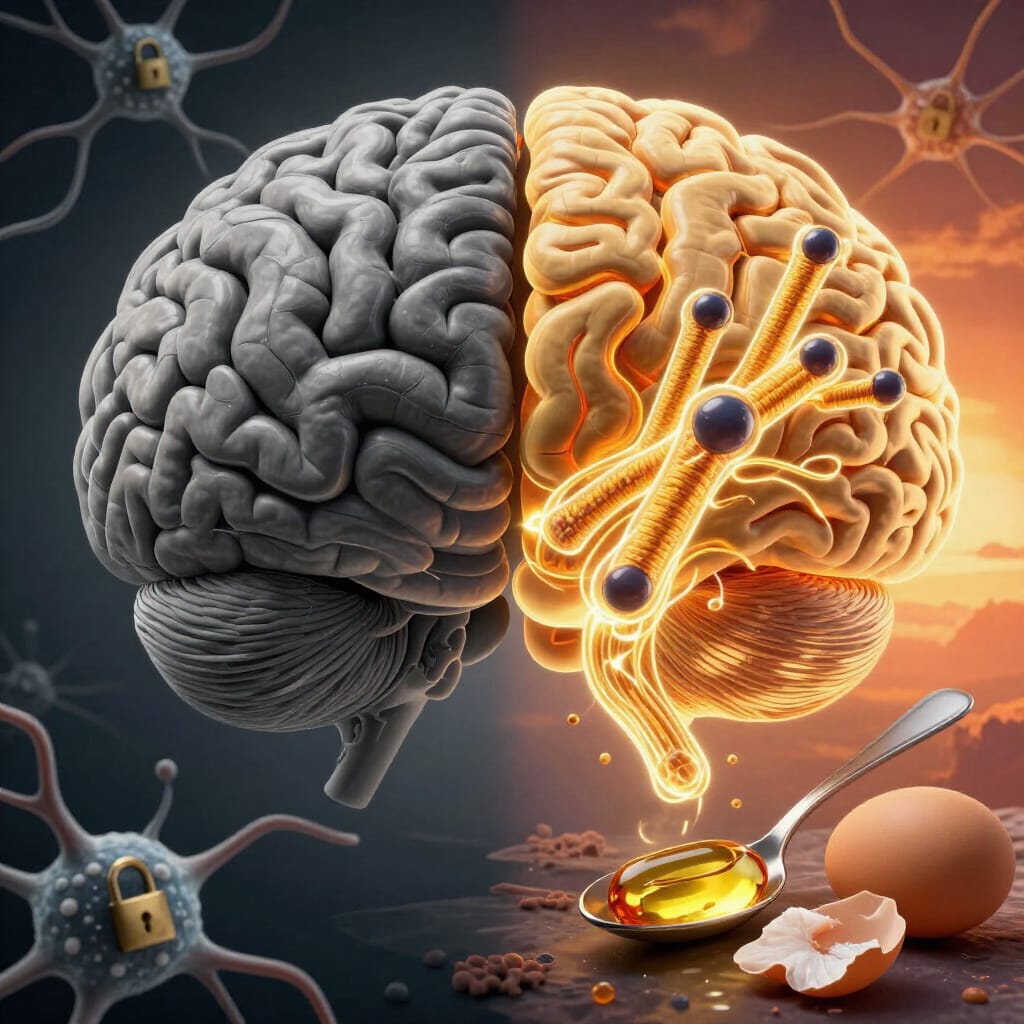
1. Introduction: The Failed Paradigm
For decades, Alzheimer's research has been dominated by the amyloid cascade hypothesis: the theory that the accumulation of amyloid-β (Aβ) plaques triggers a cascade of events leading to tau tangles, neuroinflammation, neuronal death, and ultimately cognitive decline. This paradigm has guided the development of countless therapies aimed at clearing amyloid from the brain. The results have been uniformly disappointing.
The near-tripling of Alzheimer's prevalence by 2050 demands a fundamental rethinking of the disease. A new paradigm has emerged: Alzheimer's disease is not primarily a protein aggregation disorder but a metabolic disorder of the brain. The failure of amyloid-targeting drugs is not an indictment of the science but a reflection of a core misunderstanding of the disease's origins.
This paper will argue that:
The brain, like the rest of the body, requires energy to function. Glucose is its primary fuel.
In Alzheimer's disease, the brain becomes resistant to insulin and cannot efficiently utilize glucose, leading to an energy crisis.
This crisis, detectable decades before symptoms appear, drives the pathological hallmarks of the disease, including amyloid accumulation and tau tangles, rather than the reverse.
An alternative fuel source, ketones, derived from dietary fat, can bypass the metabolic block and restore brain energy.
2. The Metabolic Paradigm: Alzheimer's as Type 3 Diabetes
Key evidence shows cerebral glucose hypometabolism emerges decades before Alzheimer's symptoms, linked to brain insulin resistance (“type 3 diabetes”) and mitochondrial dysfunction. Research by Verma and colleagues describes how cerebral insulin resistance impairs the signaling pathways critical for neuronal survival, leading directly to the accumulation of both amyloid plaques and neurofibrillary tangles, while simultaneously causing oxidative stress and accelerating cognitive decline.
This metabolic failure creates a self-reinforcing cycle of neurodegeneration: as brain energy declines, so do the mechanisms needed to maintain and recycle cellular components, leading to progressive synaptic loss and cognitive decline.
3. The Therapeutic Shift: From Glucose to Ketones
If the Alzheimer's brain cannot use glucose, the only logical solution is to provide an alternative fuel. This is the central premise of a ketogenic approach to Alzheimer's disease.
Ketones, β-hydroxybutyrate (BHB) and acetoacetate, are produced when the body metabolizes dietary fat in the absence of sufficient glucose. Unlike glucose, ketones do not require insulin to enter neurons. This makes them an ideal alternative fuel for the insulin-resistant Alzheimer's brain.
A large body of preclinical and clinical research supports this hypothesis. Studies have demonstrated that medium-chain triglyceride (MCT) supplementation can increase blood ketone levels, providing an alternative energy source for the brain in individuals with mild cognitive impairment or Alzheimer's disease. In a 2026 clinical trial by Ota and colleagues, 20 patients with mild-to-moderate Alzheimer's disease consumed an MCT-based ketogenic formula daily for 12 weeks. At 8 weeks, significant improvements were noted in immediate and delayed memory, and at 12 weeks, both verbal memory and processing speed remained significantly improved. The trial demonstrates that ketogenic interventions, by providing the brain with an alternative fuel, can produce clinically meaningful improvements in cognitive function.
4. The Building Blocks: Omega-3 Fatty Acids (Cod Liver Oil)
Beyond ketosis, long-term brain health depends on the structural integrity of neurons. This requires the building materials found in omega-3 fatty acids. Cod liver oil provides these essential building blocks, specifically docosahexaenoic acid (DHA) and eicosapentaenoic acid (EPA), the primary structural fats of the brain.
Epidemiological studies consistently show that an elevated intake of fish and long-chain omega-3 PUFAs reduces the risk of developing neurodegenerative diseases, particularly dementia and Alzheimer's disease. Mendelian randomization analyses have provided causal evidence of a protective effect of oily fish intake. DHA and EPA promote the integrity of neuronal membranes, protect myelin sheaths, and reduce brain inflammation. Observational studies have found that long-term use of omega-3 supplements is associated with a significantly reduced risk of cognitive decline.
Cod liver oil also uniquely provides fat-soluble vitamins A and D, which are essential for immune function and may further contribute to neuroprotection. Some people choose cod liver oil to help prevent Alzheimer's disease, as the omega-3 fats operate in the brain and may potentially protect it from the condition.
5. The Scaffold: Protein
Ketones and omega-3s are the fuel and the building materials. Protein is the scaffold that holds it all together. Adequate protein intake provides the building blocks for neurotransmitter synthesis, cellular repair, and the maintenance of neuronal structure. In a fat-based protocol, protein is essential for binding the energy and ensuring that the fuel is used for repair and function rather than being wasted.
6. The Unified Protocol: A Low-Carb, Fat-First Approach
The evidence points to a unified intervention strategy. The following protocol is designed to address the root metabolic causes of Alzheimer's disease:
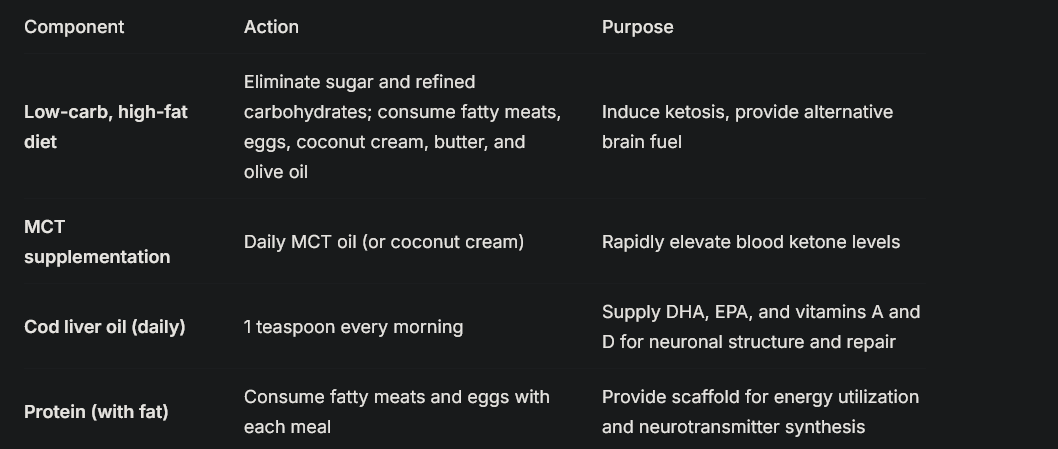 The protocol is not about quick fixes or miracle supplements. It is about restoring the brain's natural metabolic environment, one meal at a time. It requires consistency and patience.
7. Personal Testimony
I have personally experienced the cognitive deficits associated with chronic carb-locked metabolism, brain fog, memory loss. After adopting a low-carb, high-fat diet with daily cod liver oil and adequate protein, the fog cleared. Memories from earlier decades have begun to surface spontaneously. Emotional resilience, mental clarity, and a sense of youthful energy have returned. This personal experience is entirely consistent with the scientific literature: providing the brain with the fuel and building materials it requires, while removing the toxic burden of sugar and filler, can restore cognitive function and defend against neurodegenerative decline. I also try to avoid processed meats that have fillers.
8. Conclusion
Alzheimer's disease is not a mystery. It is metabolic starvation of the brain. The primary fuel, glucose, is locked away due to insulin resistance, leaving neurons in an energy crisis that drives the disease's pathology. The solution is to provide an alternative fuel (ketones) and the necessary structural building blocks (omega-3s), while removing the fuel that feeds the dysfunction (sugar and refined carbohydrates).
The research is clear. The mechanism is understood. The intervention is simple, safe, and profoundly effective. Cod liver oil, one teaspoon daily, with adequate protein and a low-carb, high-fat diet, may be the most powerful preventative tool against Alzheimer's disease. A person does not need to wait for a cure. They can start today, in their own kitchen, by changing what is on their plate.
References
Metabolic Drivers of Alzheimer's Disease: Integrating brain Hypometabolism, insulin Resistance, and systemic dysregulation. International Review of Neurobiology, 2026.
Effects of a medium-chain triglyceride-based ketogenic formula on cognitive function in patients with mild-to-moderate Alzheimer's disease. Ota, M., et al. 2026.
Omega-3 polyunsaturated fatty acids in neurodegenerative disorders: Mixed designs = mixed results. Dyall, S.C., et al. Progress in Lipid Research, 2025.
Type 3 Diabetes: A Molecular Link Between Cerebral Insulin Resistance and Neurodegeneration via AGE–RAGE Signaling. Verma, A., et al. European Journal of Neuroscience, 2025.
Nutrition and Neuroprotection in Aging: A Review of Omega-3, Flavonoids, B-Vitamins, MCT Oil, and Ketogenic Protocols for Dementia Prevention. Pattirajawane, I.D. Journal of Tropical Pharmacy and Chemistry, 2025.
Red blood cell ω-3 status and longitudinal cognition in individuals at risk of Alzheimer disease. 2025.