

Preface: A Message from the Author
We don’t live on a planet that hates us. We live on a planet that loves us, one that gives us what we need, not always what we think we need. Water, wind, sun, and soil are not curses, they are the original blessings of nature. The problem is not the planet. The problem is our perspective.
When we treat water as a disaster, we waste the very resource that could power our future. When we resist change, we suffer needlessly rather than grow. The reality is clear: the Earth has changed, and we must change with it. This is not a metaphor. This is not a drill. It is literal:
Adapt or die.
Sometimes what we call a disaster is simply a lesson in disguise, a push to see the world differently. A flood, a drought, a fire, these are not punishments. They are messages. Nature is not cruel; it is honest. And if we stop resisting, and start listening, we might realize that even the hardest moments are part of something greater.
This paper is more than a call to adapt, it is a call to see clearly. To recognize that the planet is not working against us. It is calling us forward. If we shift our perspective, we may find that what once looked like a curse… was always a gift.
1. Introduction: The Age of Irreversible Change
Climate change is no longer a distant forecast, it’s a lived reality. Floods, droughts, wildfires, and heatwaves are now regular features of life across the globe. Yet governments, corporations, and even individuals still cling to the illusion that we can “stop” nature. That with enough meetings, carbon pledges, or technology, we can undo what’s been set in motion.
This is not only false, it is dangerous. The climate has already changed. The weather patterns are no longer what they were, and they never will be again. Some regions are drowning in rain. Others are drying into dust. The idea that we can return to the past is a fantasy.
What we can do is adapt, and thrive, if we act wisely. To do that, we must change how we think about the planet. Water is not our enemy. It is not a force to be “controlled” or “survived.” It is a gift from nature, and if we learn to work with it, to redirect it, store it, and value it, we will find that the same forces we feared can become our greatest assets.
2. The Changing Climate Landscape
The new climate reality is not uniform. Instead, we are seeing divergent patterns emerge:
Increased rainfall and flooding in regions like eastern Australia, parts of Asia, and Northern Europe.
Prolonged drought and desertification in areas such as the American Southwest, the Mediterranean, and parts of Africa.
More extreme temperature fluctuations that destabilize ecosystems and infrastructure.
These trends are not anomalies, they are systemic shifts. Infrastructure built for 20th-century conditions is failing under 21st-century stresses. Without urgent adaptation, more communities will face catastrophe.
3. The Danger of Reactionary Thinking
Governments are largely stuck in a reactive cycle: rebuild after disaster, offer relief payments, then wait for the next event. This approach is not only unsustainable, it is foolish. Believing we can “stop” nature through policy alone is a form of hubris. Nature is not an enemy to defeat; it is a system to understand and adapt to.
4. Learning From the Past: The Roman Example
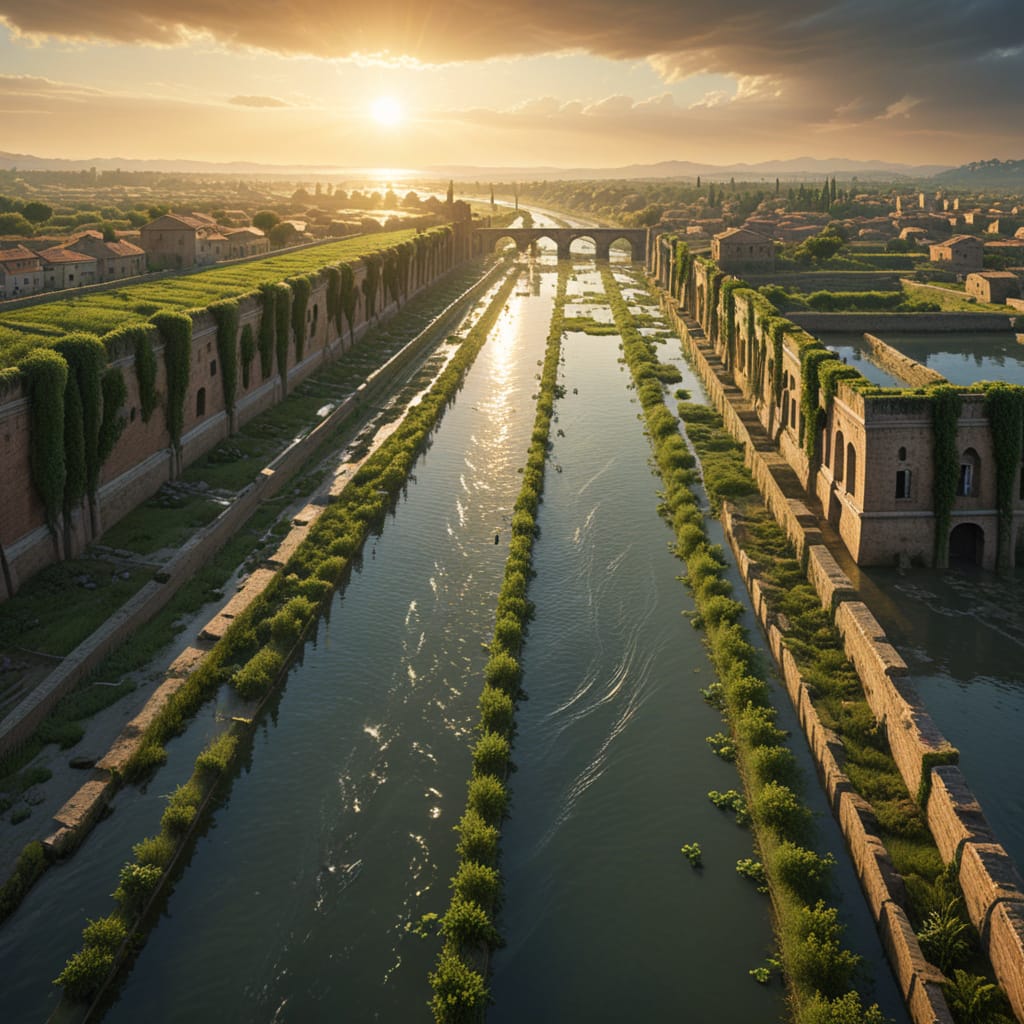
More than 2,000 years ago, the Romans mastered the art of water distribution through vast aqueduct systems. With primitive tools and no modern pumps, they transported water across mountain ranges and valleys to supply entire cities. Today, with far more advanced technology, humanity should be capable of similar feats on a far larger scale.
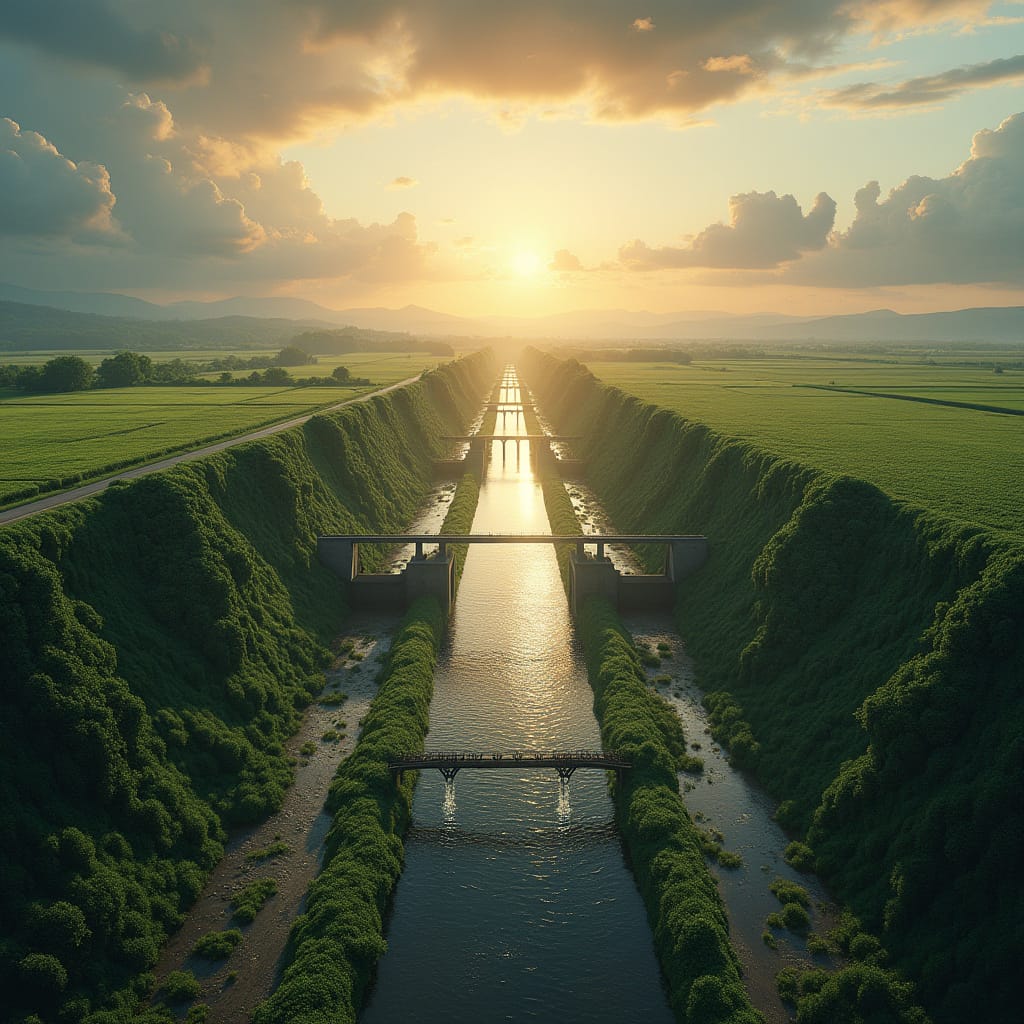
Regions suffering from flooding should not treat excess water as a problem to eliminate, but a resource to redirect. With proper water management systems, retention basins, diversion channels, underground storage, and inter-regional aqueducts, we can turn destructive floods into life-giving reserves.
Conversely, areas growing hotter and drier must invest in large-scale water storage, drought-resistant crops, and long-distance water transport infrastructure. If ancient civilizations could adapt to their environment, modern nations have no excuse for failure.
5. Proactive Climate Adaptation: Key Strategies
Governments must embrace the following core strategies:
Water Redistribution Infrastructure: Divert floodwaters to drought-prone regions using modern aqueducts, reservoirs, and pumps.
Flood-Resistant Urban Planning: Redirect water away from floodplains through engineered systems. Where this is not possible, reinforced banks and barriers should protect critical areas. Complement with green infrastructure like sponge cities and retention parks.
Drought-Ready Agriculture: Support hydroponics, drip irrigation, and salt-resistant crops.
Energy-Water Nexus: Integrate renewable energy systems with water movement (e.g., solar-powered pumping stations).
Climate-Resilient Policies: Shift budgets from recovery to prevention, and embed adaptation into all levels of urban and national planning.
6. The Moral and Economic Imperative
Adaptation is not just a matter of engineering, it is a moral and economic imperative. Every dollar spent on proactive planning saves many more in disaster recovery. But beyond financial logic lies a deeper truth: water is not a threat, it is a gift.
If we respect nature’s gift, water can bring immense benefits: generating renewable energy, sustaining agriculture, supporting manufacturing, cooling data centers, and replenishing ecosystems. Countries like Australia, with vast interior drylands, have an opportunity to unlock previously uninhabitable regions by channeling excess coastal floodwaters inland. With bold water redistribution strategies, the very force that once destroyed homes can give rise to new ones.
7. Conclusion: Adapt or Die
Nature is not going back. The climate has changed. Governments must rise to the challenge not with resistance, but with resilience. We must stop trying to reverse the inevitable and start preparing for it. The survival of nations depends not on denial or delay, but on the courage to act boldly and the wisdom to adapt.
Water is a blessing from nature, but if we ignore its rhythms, it becomes a curse. By working with nature, redirecting water intelligently, and building infrastructure with foresight, we can transform danger into opportunity. Dry lands can bloom. Flooded coastlines can be safeguarded. And our economies, powered by water in all its forms, from food to fuel to data, can thrive.
This is not a battle against nature, it is an invitation to harmonize with it. The time to act is now. The path is clear. Adapt or die.
References:
IPCC (2023). Climate Change 2023: Synthesis Report.
World Bank (2022). Cost-Benefit Analysis of Climate Adaptation.
UNDRR (2021). Making Cities Resilient 2030.
National Geographic (2022). Ancient Rome’s Water Systems and Modern Lessons.