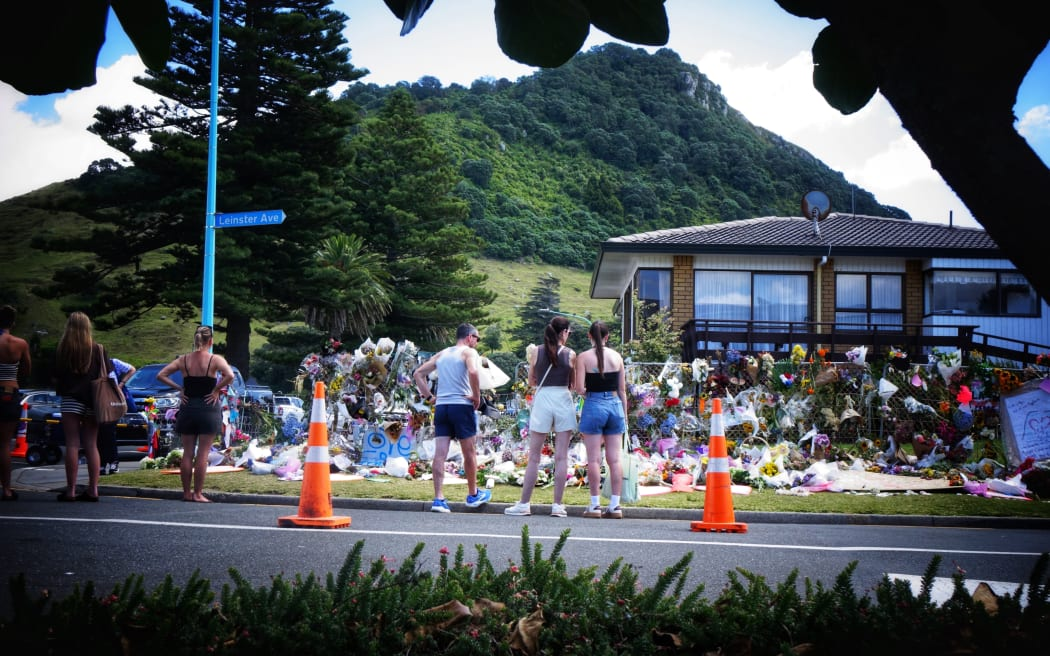

Abstract: This paper examines the catastrophic failures surrounding the Mount Maunganui landslide of January 2026, not as a series of administrative errors, but as a profound breach of the social covenant between the New Zealand Police and the public they swear to serve. Through an analysis of the documented timeline and the psychology of institutional response, it argues that the incident reveals a dangerous prioritization of control and procedural self-preservation over the core oath to “protect and serve.” This shift transforms the public from citizens to be protected into a problem to be managed, fostering a community-wide trauma of abandonment. The paper concludes that without a fundamental reckoning and cultural change, this apathy will continue to manifest, eroding public trust and safety.
Introduction: The Oath and The Abyss
Every police officer in New Zealand swears an Oath of Allegiance, committing to “well and truly serve Our Sovereign Lady the Queen” and, by direct extension, her people, “without favour or affection, malice or ill will.” At its heart, this is a sacred promise of protection. The Mount Maunganui tragedy presents us with a stark, heartbreaking question: What happens when the systems built upon that oath appear, from the public’s perspective, to act in direct contradiction to it?
This is not a critique of individual officers who may have been afraid or were following orders. This is an examination of the institutional psychology that led to a sequence of decisions where control triumphed over care, and procedure overrode protection, with fatal consequences.
Part 1: The Timeline of Abandonment, A Breach of Duty
The failure began not in the chaotic minutes after the landslide, but in the quiet, critical hours before it.
The Missed Call to Protect (6:18 AM): A citizen, acting with commendable civic duty, called Police. She reported not just “disorder,” but a clear geological hazard, active slips threatening a populated campsite. The official police response states they did not attend because “it was unclear whether the disorder resulted in any property damage.” This is a breathtaking misprioritization. The call was a plea to protect people from a moving mountain. The system processed it as a query about property and disorder. The oath to protect was not triggered because the system was listening for crime, not for peril. This was the first, fatal substitution: the role of protector was overshadowed by the role of regulator.
The Control of Compassion (Post-9:30 AM): Following the major collapse, by multiple witness accounts, a cordon was established. Reports state that pleas from those who heard screams and wished to render aid were met not with organized mobilization of local resources, but with enforcement of the boundary. The arrest of a civilian attempting to help is the ultimate symbol of this moment. The instinct to save a life was treated as a threat to procedure. From the institutional perspective, this was about managing a hazardous site. From the human perspective, it was the embodiment of the oath breaking: those sworn to protect were now physically preventing help.
The psychology here is one of projection. The institution, prioritizing its own operational safety and liability, projected its own risk-averse framework onto the scene. The chaotic, compassionate, human-driven response of the community was seen not as an asset, but as a variable to be controlled. The public was not viewed as partners in a rescue, but as unpredictable entities who might become additional casualties, a liability to the operation’s clean metrics.
Part 2: The Psychology of Control vs. The Ethic of Protection
There is a deep and disturbing difference between a philosophy of control and one of protection.
Protection is active, courageous, and human-centered. It asks: “What must be done to safeguard life and well-being?” It accepts measured risk in service of a greater good. It aligns with the oath.
Control is passive, cautious, and system-centered. It asks: “How do we manage this situation to minimize institutional risk and maintain order?” It defaults to inaction if the action is messy or dangerous. It aligns with bureaucracy.
In Mount Maunganui, we witnessed control:
Controlling the narrative of the 6:18 AM call, downgrading a hazard warning to a disorder report.
Controlling the physical space after the collapse, prioritizing the integrity of the cordon over the potential integrity of a rescue attempt.
Controlling public behaviour, even when that behaviour was driven by the very altruism the police oath should champion.
When an institution defaults to control, the people cease to be its charge and become its subjects, or, in the raw emotional terms, its prey. We are not partners; we are problems to be contained. This is the core of the community’s betrayal. It was not merely that help was slow; it was that the desire to help was pathologized and punished.
Part 3: The Chilling Implications, “If Not Now, When?”
The question strikes a crucial nerve: “If they behaved like this for such an obvious need, how do you think they deal with a case with two or three people?”
This is the most important point. The landslide was a massive, obvious crisis. If the institutional response is apathy and control in the face of screams from a buried campground, what confidence can we have in its empathy and protective vigour in a silent, hidden domestic violence case, a missing persons report, or a mental health crisis? The psychology is consistent. If the system is designed to avoid risk and assert control in a disaster, that same design will apply to everyday incidents. The individual in distress becomes not a person to save, but a situation to manage, a case file to process, a potential complaint to avoid.
The point of a police force that does not protect is simply to be a state-managed risk mitigation service. It exists to manage societal problems for the state, not to champion citizens within it. This is a hollow, terrifying prospect for any society that calls itself just and caring.
Conclusion: A Call for Moral Re-Armament
This paper is not written in rage, but in profound grief and concern. The hope is for awareness, not annihilation. The failure at Mount Maunganui is a symptom of a cultural sickness within our institutions, a drift from a covenant of courageous protection to a contract of cautious control.
To honour the six lives lost and to rebuild the fractured covenant, we must demand more than an inquiry into timelines. We need an inquiry into heart and purpose.
We must ask:
How is the oath to protect made real in policy, training, and on-the-ground decision-making?
How do we reward courageous initiative aimed at protection, even when it defies rigid protocol?
How do we reintegrate the human, compassionate impulse into the heart of emergency response?
Apathy in the face of obvious need is a contagion. If we, as a community, accept the rationale of control over protection in this case, we sanction it for all cases. We must instead demand a moral re-armament of our institutions. We must insist that those who swear to protect us do so with the courage the oath demands, remembering that they are not managers of the public, but its guardians. The alternative, a life where we are but prey to the very forces meant to keep us safe, is a future no loving community can accept.
Our shared humanity, and our love for one another, demands we address this. For the six who were lost, for the community that was traumatized, and for every future citizen who may one day need not just a controlled response, but a courageous protector.