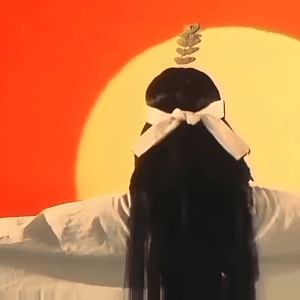

This piece of text I am writing is about the film “ROMA” by Alfonso Cuaron.
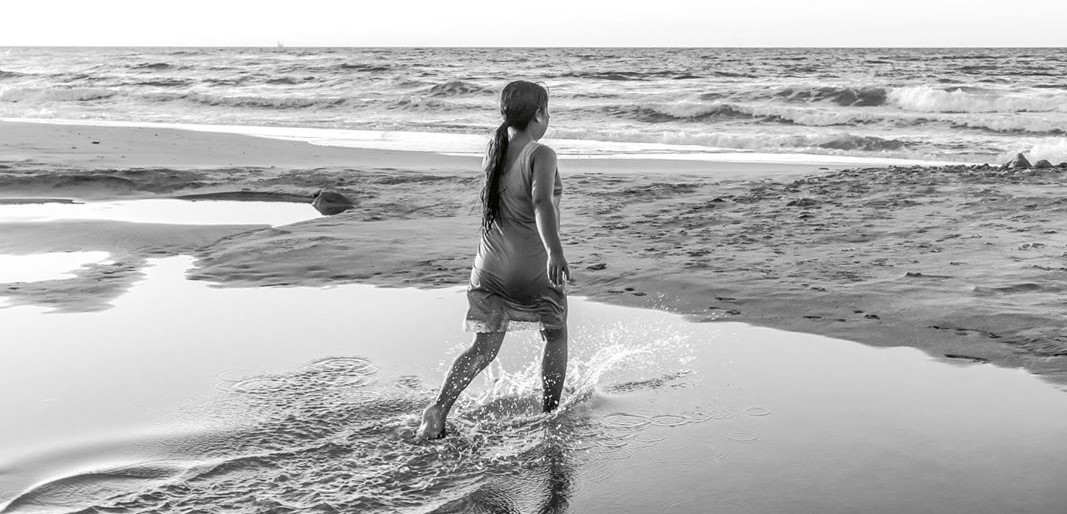 A little kid in the film says this line (“When I was older..” ) to our protagonist, whom I’ll introduce in a bit. It’s a line you might even miss if you blink, but it really caught my attention. “When I was older…” - the kid casually talks about experiences from his older self. To my surprise, this line was also used as the title of a song released later and credited as “inspired by the film ROMA,” composed by Finneas and Billie Eilish. I felt warm comfort in the idea that they had been struck by this particular moment too. It is a beautiful suggestive song, I invite you to check it out.
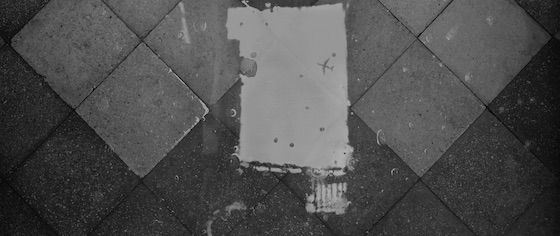
ROMA opens with a shot of a floor being washed. We watch the floor for over a minute before it even begins to be cleaned. Then, water is splashed across the screen. After quite some time, as the water came and went like the waves of a small sea, I began to feel impatient. I liked the way this disturbed me as a viewer: it forced me to stay there and watch this particular floor, with no further context. After a while, as I drifted into my own thoughts, I was delighted by the reflection of a plane flying across the sky , mirrored on the surface of the water. Something is happening, there is a moving world around this floor. By this point, I was in a completely different state of mind. I was no longer a consumer-viewer; I was involved, drawn into this state through quiet immersion.
 In the film we follow Cleo, a domestic worker who helps a couple take care of their four young children in the 1970s Mexico City.
It is a film created to reflect the real memories of the director, as an intimate portrait of the woman who raised him: “There are periods in history that scar societies, and moments in life that transform us as individuals”. It is not a nostalgic black and white film: we are looking at the past from the standpoint of the present. This is also why it is shot as digital black and white (60mm, pristine, no grain). Cuaron in one interview says that he was fully immersed into his childhood memories and tried to find doppelgangers of the people that surrounded him, and recreated the places that he knew. It is like a ghost of the present visiting the past, only to observe it: not trying to pass judgement or make commentary.
The story follows Cleo, but although it is her intimate story and point of view it is a film of wideshots: we are always hyper-aware that there is a chaotic world that surrounds her and things are always happening also on a greater scale: in the city, in society, in nature. We always see our protagonist AND her environment. In these environments I found myself just catching other details while fully following the story of Cleo. I realised I was forming unique memories based on what element of the frame my psyche decided to latch onto.
One of my favorite moments in the film that I also shared as a reel is this one:
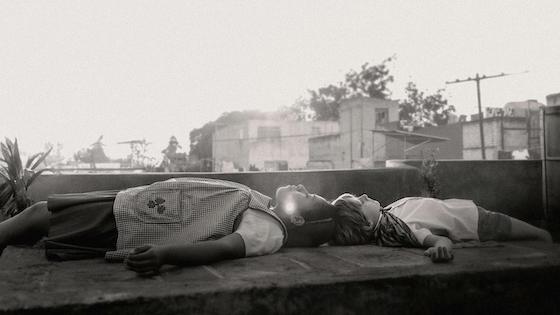
Cleo is taking care of laundry and one of the kids is staying in the veranda with her. He is playing pretend and immersed in his world. Cleo calls him but he replies: "I can't. I'm dead". A playful exchange begins between Cleo and the little boy. She validates his phrase and tells him to “come back to life”. He refuses, so Cleo just goes right next to him and lies down pretending to be dead just like him, with her face facing the sun and the sky. She finds a sudden justified moment to find rest from her many tiring domestic tasks while also continuing a play pretend with the little boy.
Lets go to moments where we have to endure time passing together with the protagonist: Cleo tells her lover that she is pregnant while they are watching a film at the cinema. He gets up and leaves and we suspect that he has ditched her there. But we wait there with her, as the minutes go by very very slowly. He does not return, and she feels abandoned. And we do too
Another moment from the film that I found myself thinking about in the days that followed:
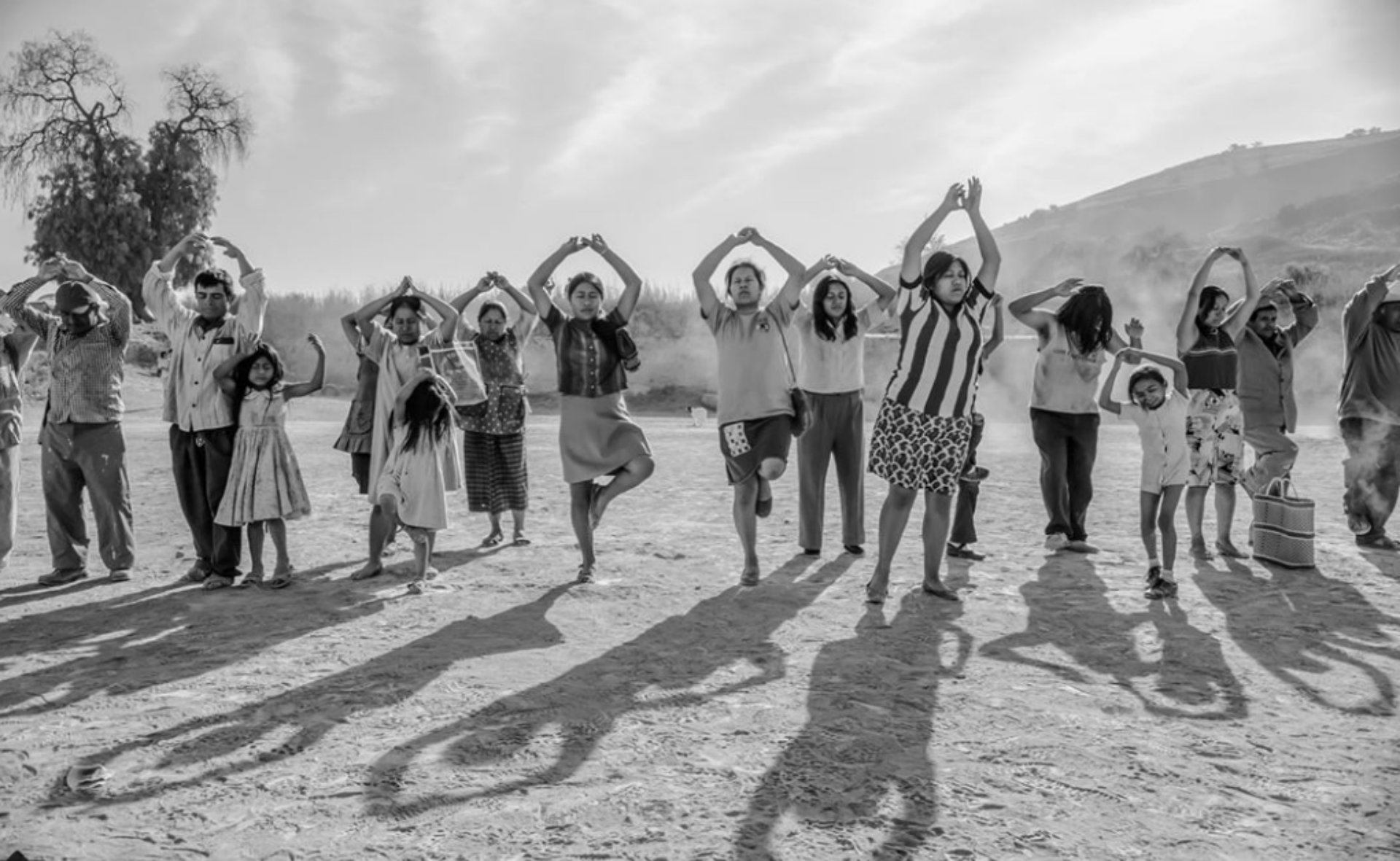
At a certain point in the film, Cleo goes to look for the man that left her in a martial arts camp. The situations there lead to this little scene that I adored: The man leading the boys through the poses invites all watchers to close their eyes to do a pose he is demonstrating.
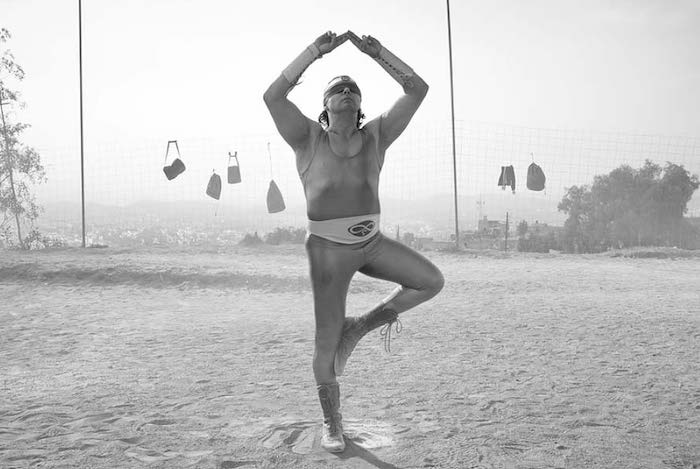 It is symbolic that Cleo is the only one that can do this pose, but no one can see it because they have their eyes closed. And she cannot see that others cannot do it and misses the opportunity to feel good about herself and feel special in that moment. She leaves thinking that if she did it, others probably did it too.
 A sailor in the open sea: the open sea comes into play in another beautiful moment. Cleo does not know how to swim, and she is taking care of the kids while on vacation. One of the kids in the sea starts drowning and is taken away by the waves, and Cleo without hesitation jumps to save him.
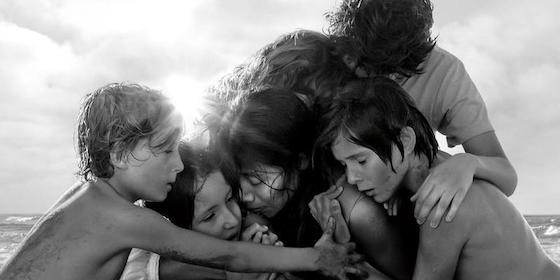 This hug after having saved the little kid reminded me of this Gustav Klimt painting called "Death and Life" (1910)

I hope you enjoy watching or re-watching ROMA. I did enjoy it, but I realized how much only after quite some time passed. A final trick that this film played on me and my timeline of real life.
i will visit you soon again, City of minds
If you liked this writing, please support the page with a cute coffee :)
It is a big push for me to keep posting. Hugs from me.