

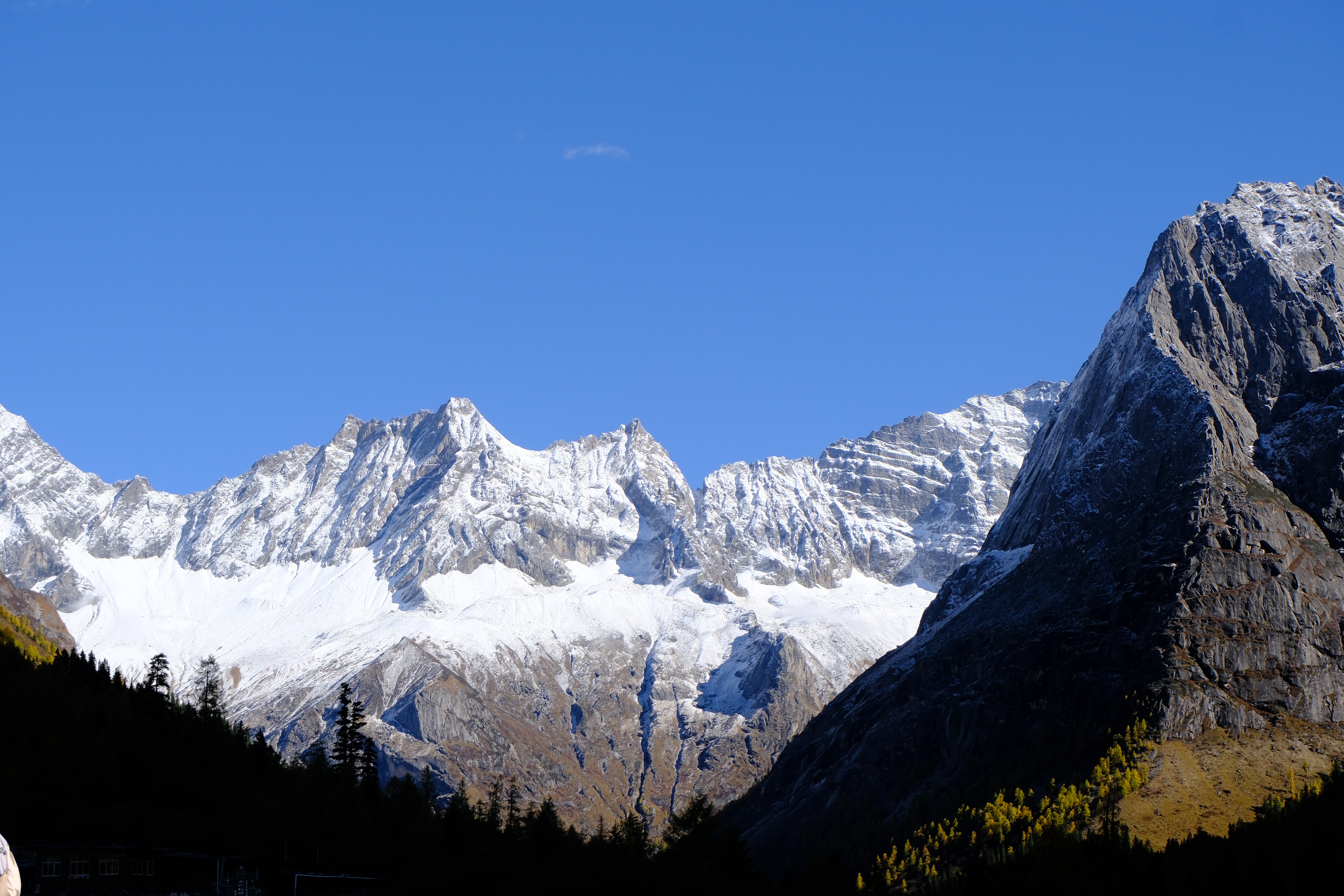
 If you are dreaming of the majestic snow-capped peaks of Western Sichuan but also shudder at the thought of high-altitude trekking, I have the perfect solution for you: Shuangqiao Valley (双桥沟).
Located within the stunning Mt Siguniang (Four Sisters Mountain 四姑娘山) scenic area, these valleys are often referred to as the Oriental Alps. Unlike its neighbouring valleys that require hours of hiking, Shuangqiao Valley is the most accessible, offering jaw-dropping alpine views without the exhaustion.
Whether you're a photographer hunting for that perfect shot or trying to organise a family trip with the elderly and the young, this guide has you covered.
Disclaimer ‼️ Despite being located within the Mt Siguniang scenic area, Shuangqiao Valley is actually the only valley from which you cannot see Mt Siguniang.
Why Visit Shuangqiao Valley
Shuangqiao Valley is the most developed of the three main valleys at Mt Siguniang with a complete sightseeing bus system which takes you all the way into the valley and allows you to work your way back down towards the entrance. It's basically a "choose your own adventure" style of travel, perfect for those short on time or energy. Comparatively, Haizi Valley (海子沟) and Changping Valley (长坪沟) are explored on foot.
Essential Visitor Information
Before you head out, here's all the practical information you need to know:
Location: Xiaojin County, Aba Tibetan and Qiang Autonomous Prefecture, Sichuan (about a 4 hours car journey from Chengdu)
Ticket Price: 150 RMB for adults (inclusive of entrance ticket and bus ticket), 110 RMB for 7-18 year olds, free for 6 year olds and younger, 70 RMB for 60+ year olds (peak season prices between April to November; 30 RMB discount for off season)
Where to buy:
WeChat mini program: 阿坝旅游
Opening Hours:
7:30-17:00 (April 1 to November 30) with last entry at 16:00
8:00-17:00 (December 1 to March 31) with last entry at 15:00
How to Get There
Chengdu is the best city base for those looking to make their way into the Oriental Alps. From Chengdu, you will have several options:
By bus: busses depart from Chadianzi Station (茶店子车站) in Chengdu in the mornings and can be booked through the station itself or via Trip.com; you will receive the driver and car information by text or email the day before your visit and you locate them on the day of travel.
By car/private driver: this will be the most flexible option and takes you through the Dujiangyan-Wolong route for about 210km; the roads are paved but winding so drive carefully. If you're travelling as a group, hiring a private car or driver will likely be more convenient and comfortable.
The Route Explained: Top to Bottom
As mentioned earlier, part of the appeal of Shuangqiao Valley is the one-direction bus route. You'll hop on a bus at the entrance to the valley and then ride down for about an hour to the highest point in the valley (approx. 3,840m). From this point on, you can choose to get on or off at the stops that interest you. Below are some details about each of the stops to help you decide whether or not to hop off the bus:
Redwood Forest (红杉林)
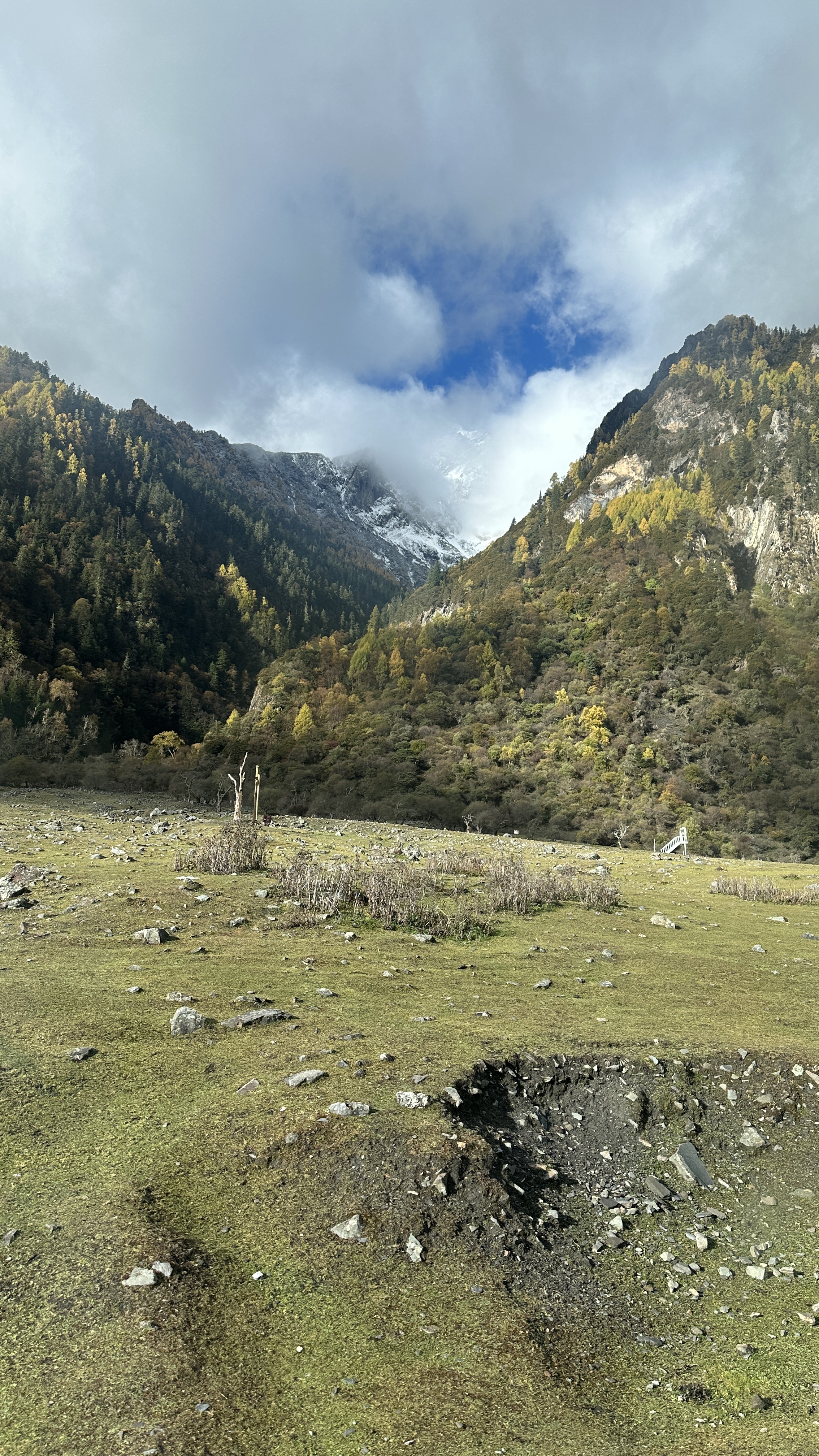
This is the first stop of the bus (and also the end of the valley that can be reached by bus for tourists). It is a U-shaped glacial valley surrounded by towering redwood trees. It gets fairly crowded here, being the drop off point for all visitors flooding into the park.
Depending on the timing of your visit (I arrived at about 9am), parts of the valley will still be shaded and it was quite cold in late October. There are many vendors here (though you may not have the best cell signal) selling hot foods; if you haven't eaten for the day, definitely stop for a bite as many of the stops between here and the entrance of the valley will not have facilities for food.
Being the highest point in the valley, you will also likely feel some discomfort from the high altitude if you haven't acclimatised to the area yet.
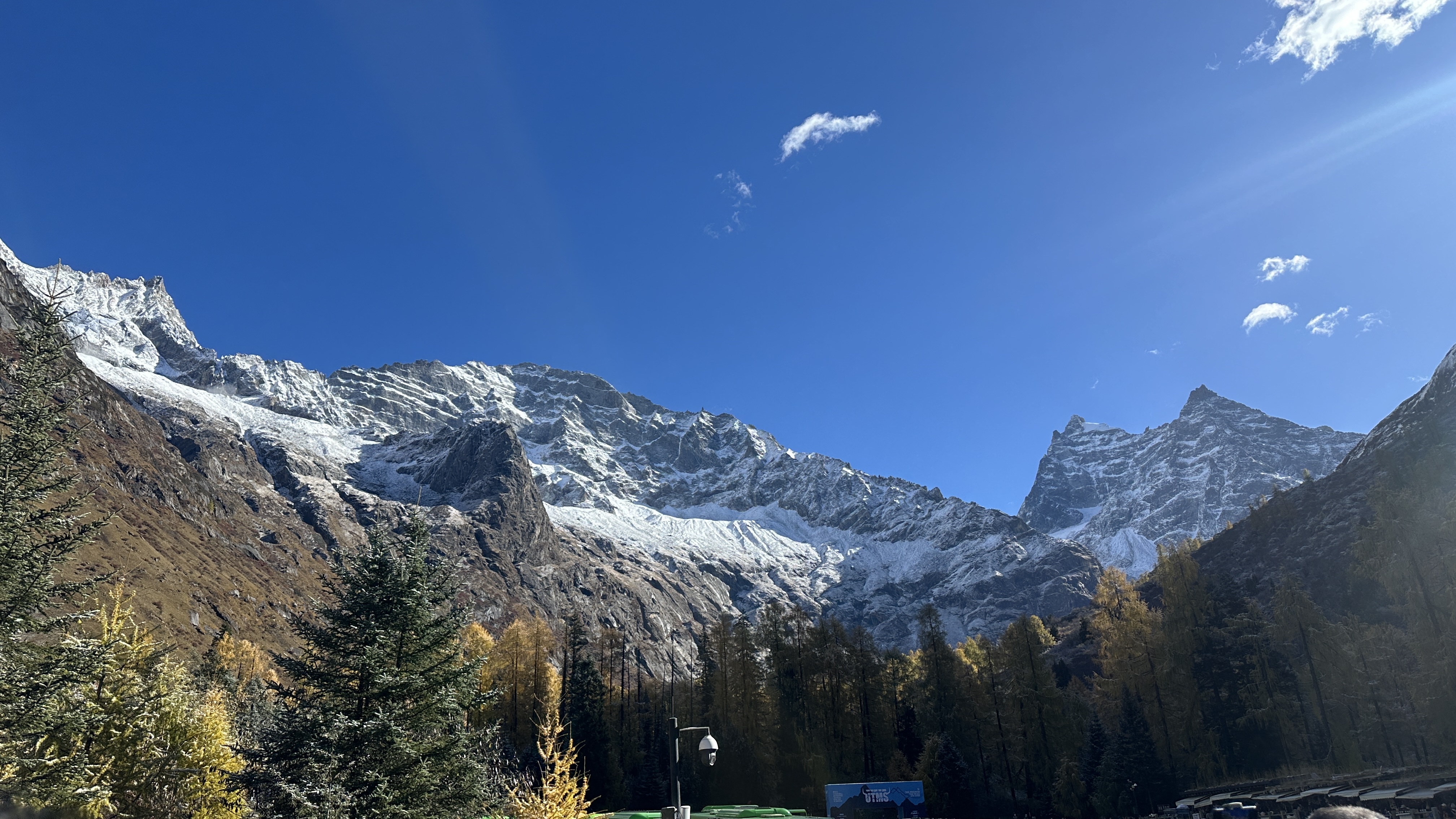
From Redwood Forest, you can view Jade Rabbit Peak (玉兔峰) and Jade Rabbit Second Peak (玉兔二峰); in between these two peaks, there is a little rock formation that looks like the namesake of the mountains, a little rabbit (the twin peaks off to the right of the below photo):
 Budalafeng (布达拉峰)
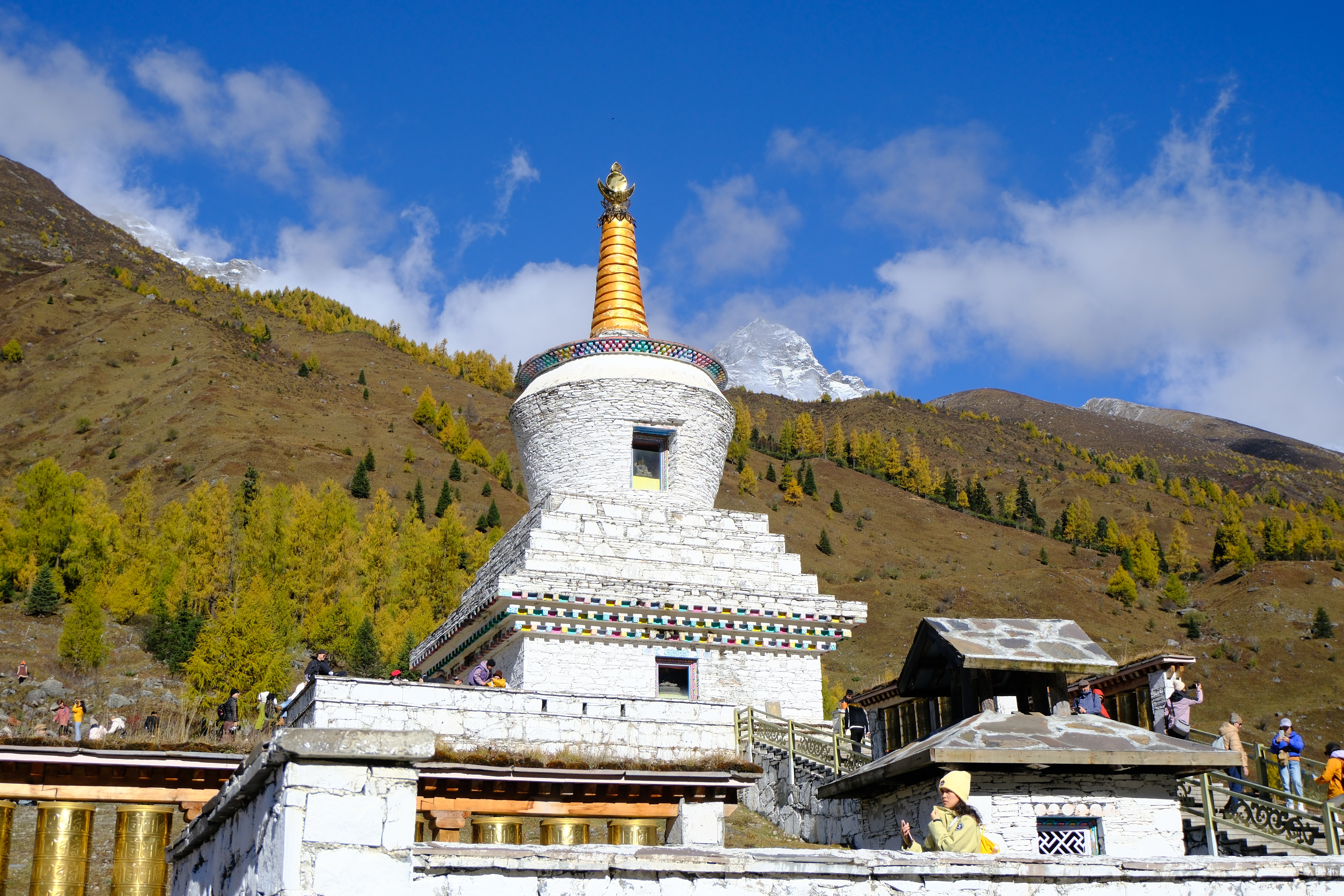
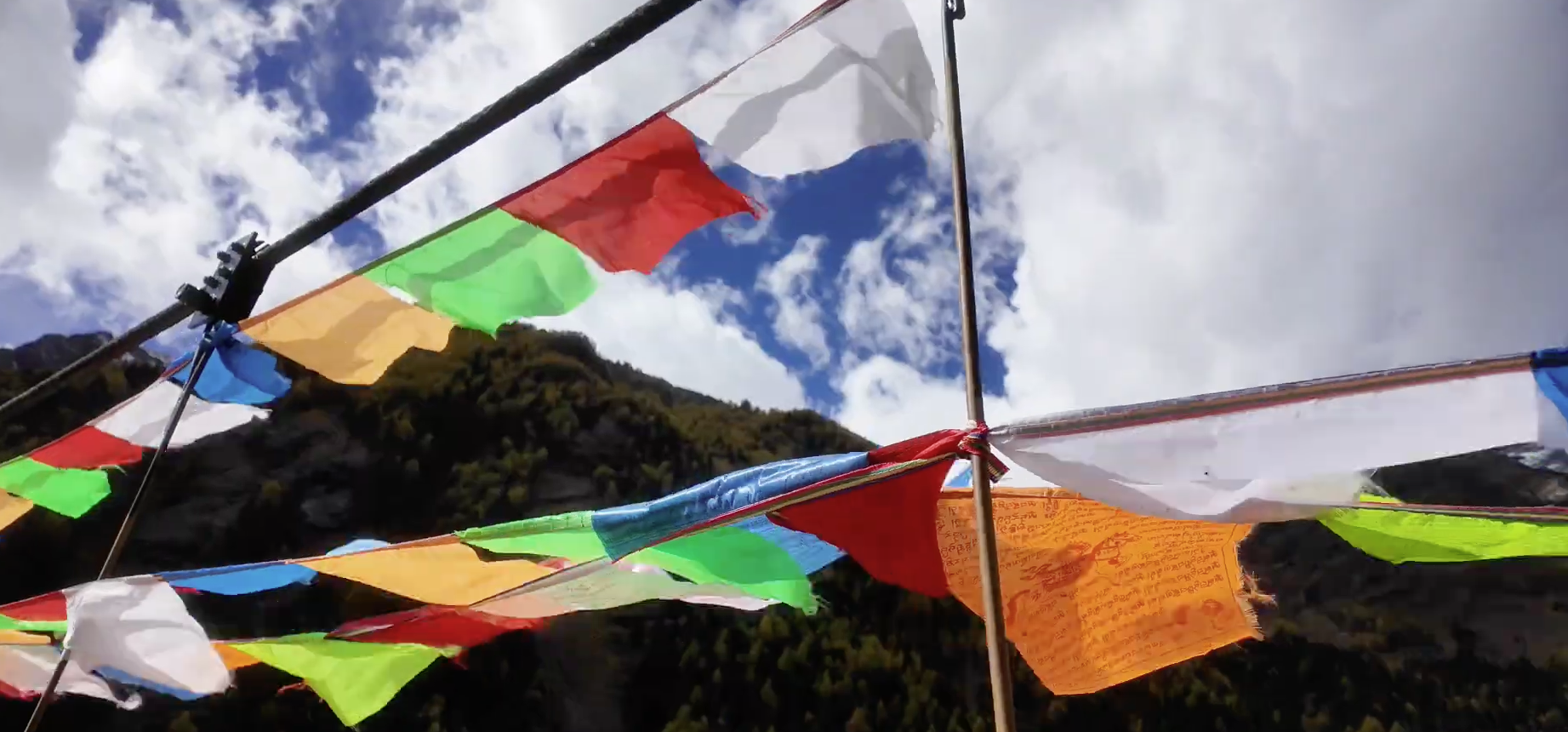
Bus stop number 2 is Budalafeng which is named for a mountain that bears striking resemblance to the Potala Palace. This is arguably the most popular spot within the scenic area, where a lot of people will stop to get a photo on the road with stupa and prayer flags in the background. This area is fairly flat so the road seems to go on and on.
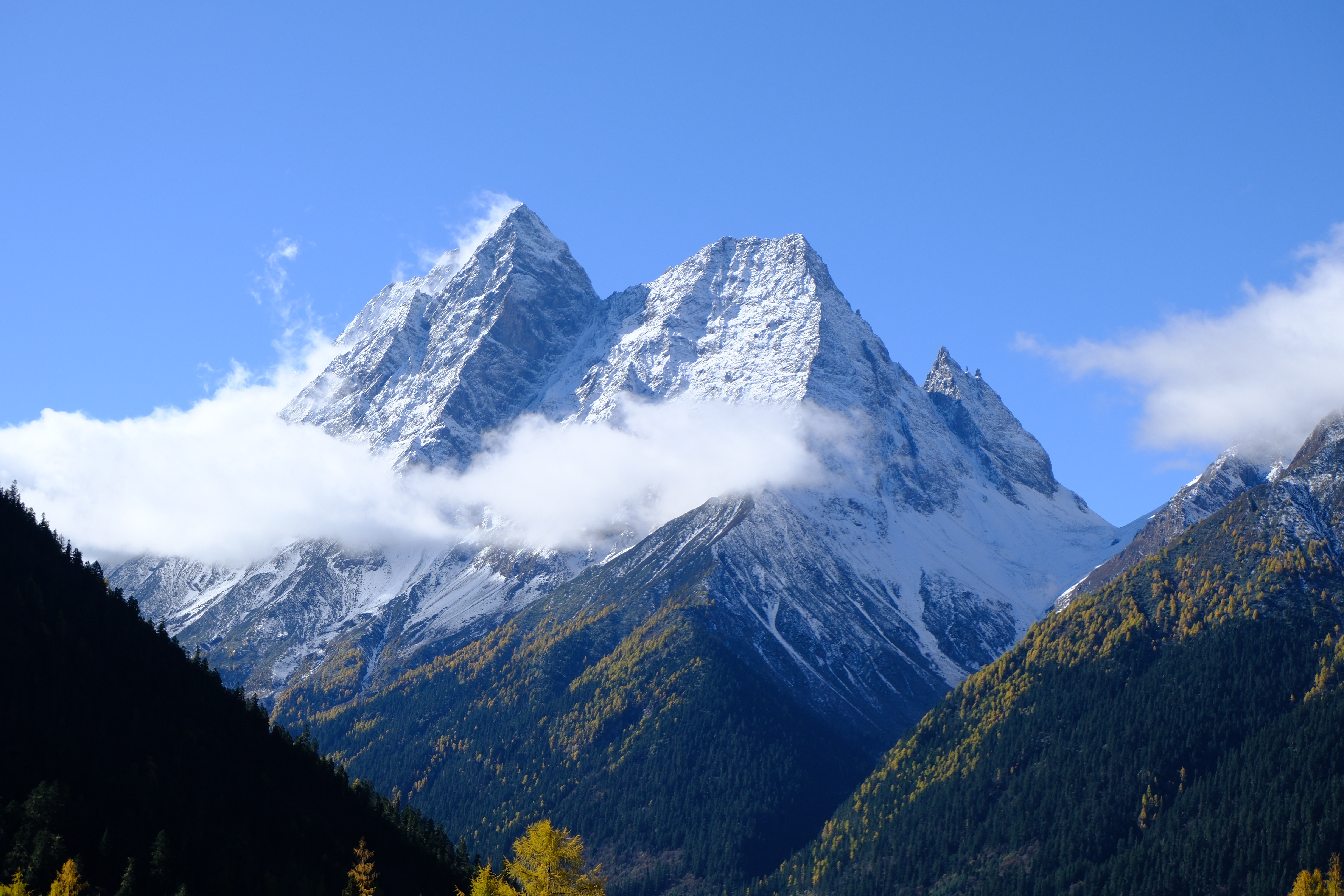
 Several stunning mountains can be viewed from this bus stop, such as Hunter's Peak (猎人峰):
 After you've gotten your photos, make sure you do not miss a hidden gem here which is so often skipped. You will want to walk back in the direction of the Redwood Forest for about 15-20 minutes; the path is on the opposite side of the road from the bus stop, and it will take you down towards Zhuganacuo or Zhugana Lake (珠噶娜措). The lake offers calm waters and incredible reflections of the surrounding peaks.
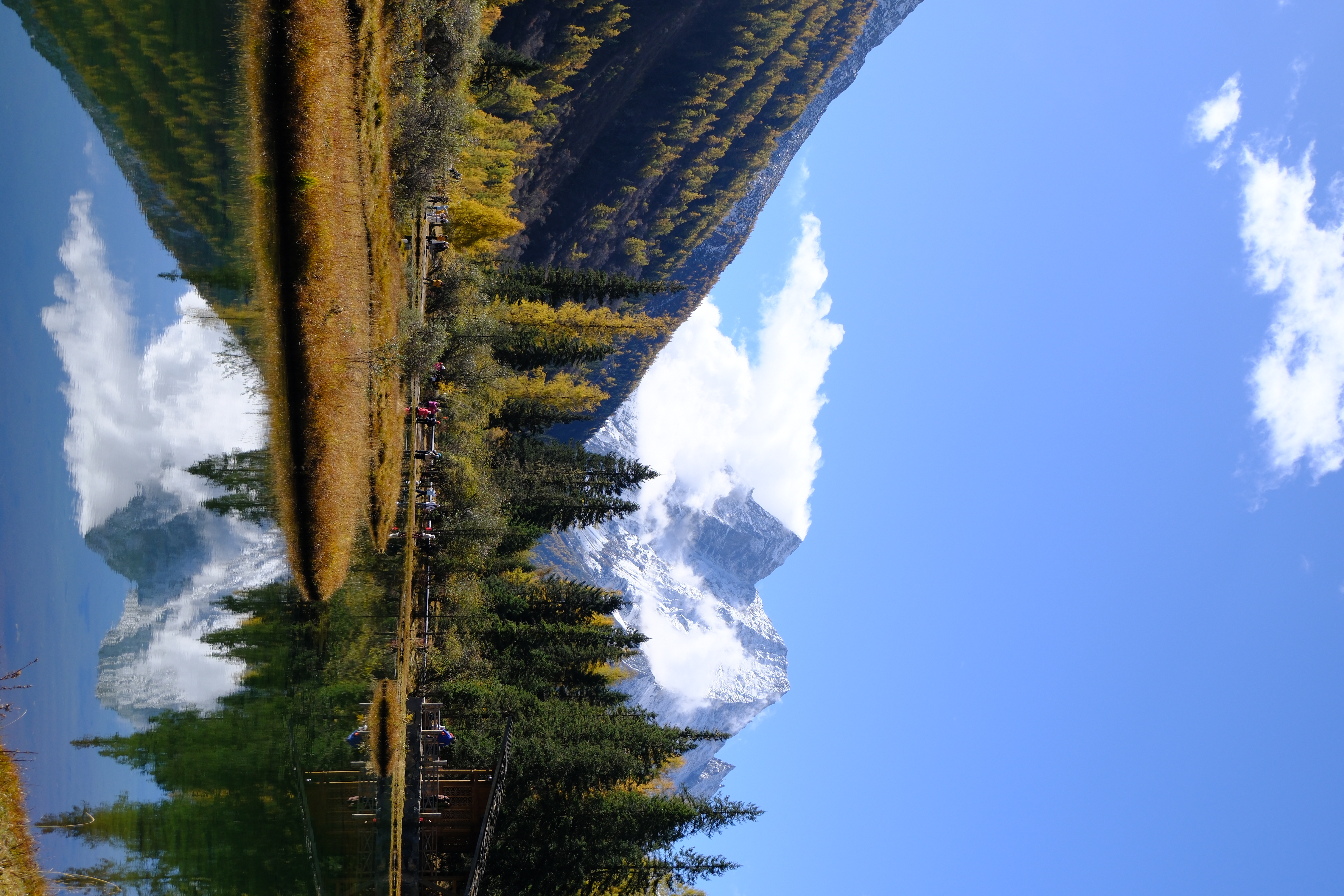
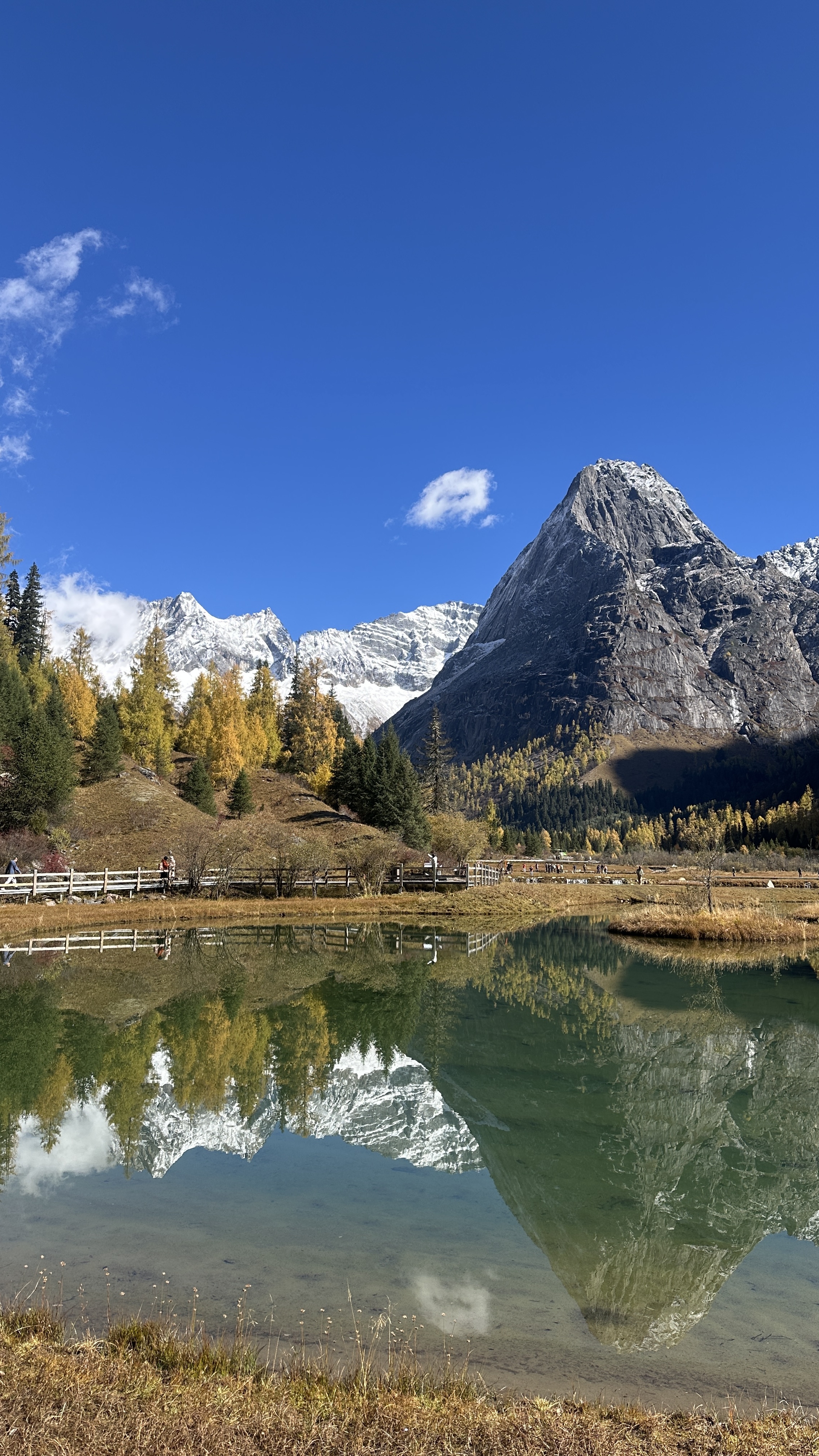 There are a few vendors near the stupa selling hot food and two minute noodles if you get hungry around this bus stop. I tried a local baked bread (it was super hard and I don't recommend it) as well as a 酥油茶 or butter tea, which had a very light flavour similar to milk tea.
Four Sisters Lake (四姑娜措)
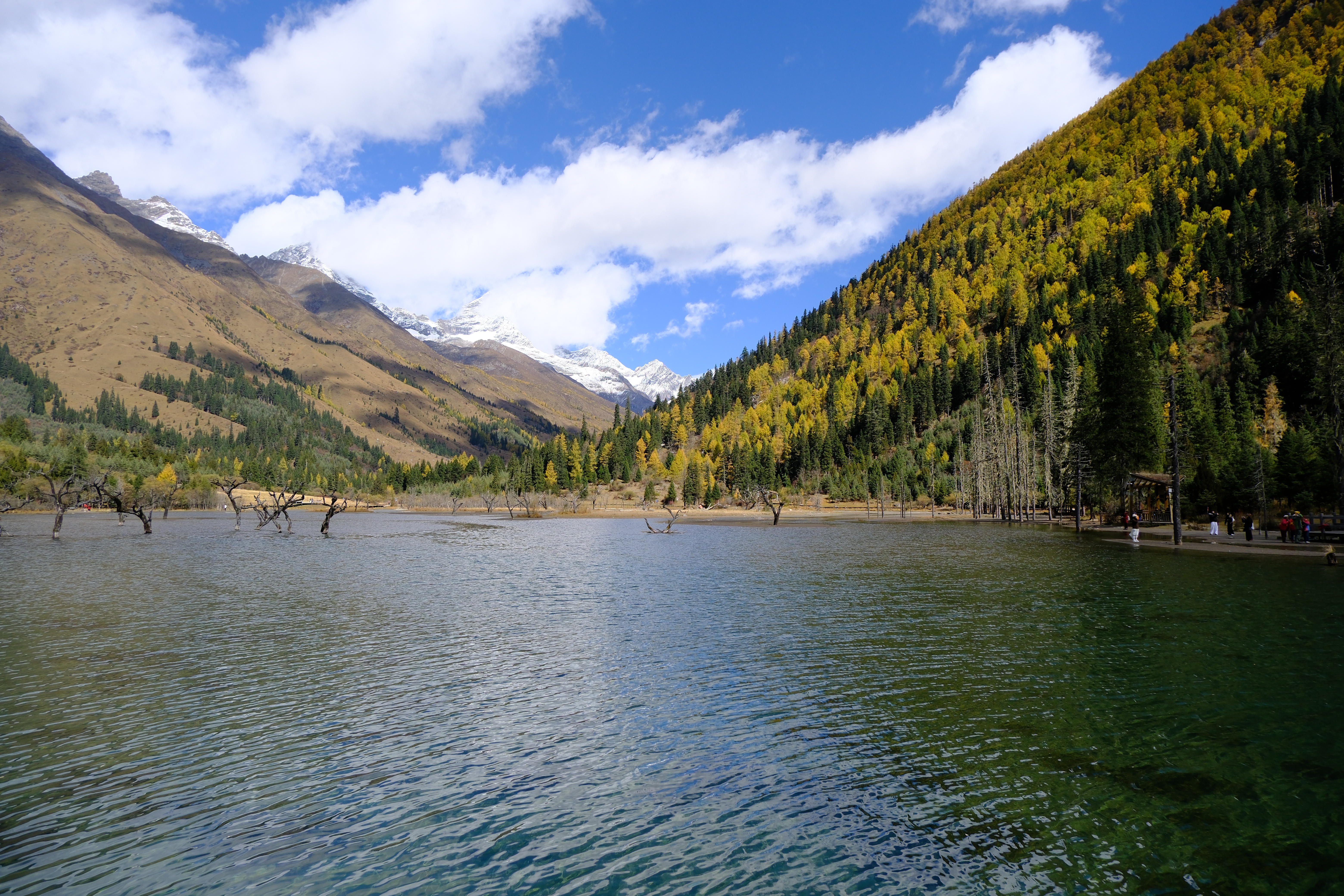
The first lake in this valley offers classic alpine scenery with dead trees rising from turquoise waters with snow-capped peaks in the background. An easy boardwalk circles the lake, making it super accessible.
This area is super stunning as the sunlight hits it but those looking for photography opportunities may not enjoy it as much on a very overcast day. The vibes are quite similar to Jiuzhaigou so if you've visited that and also find yourself drained by the high altitude, I don't think you would be missing much if you skip this. There is also another lake accessible via the bus later on, so you can choose to skip this. In my opinion both look very similar (high chance that this might actually be the second lake haha):
 Raft Ride at Fishing Bay (撵鱼坝)
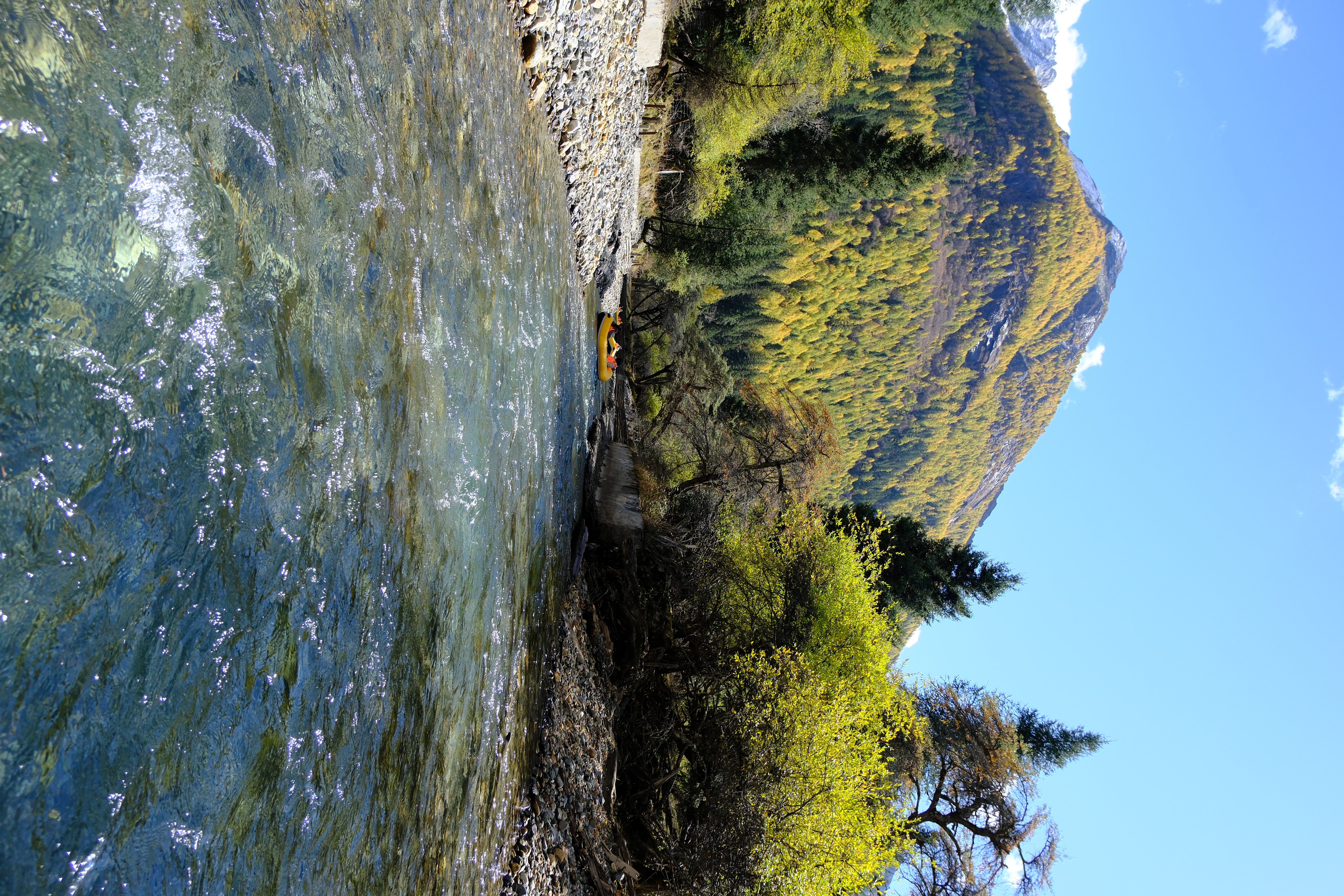
At this bus stop, you can enjoy an optional raft down the valley for 100 RMB and about 20 minutes. If you get off here you can also walk from this stop to the next bus stop, but the raft is an incredibly fun way to see the valley from a different perspective. You might get a little bit wet from the water splashing but mostly it was very peaceful. It's two people to one raft, and it is closed in winter as parts of the stream freezes over.
 Longzhu Lake (隆珠措)
Longzhu Lake is similar to Four Sisters Lake; it is beautiful but if you are short on time or low on energy you could also skip this one if you've visited the previous lake.
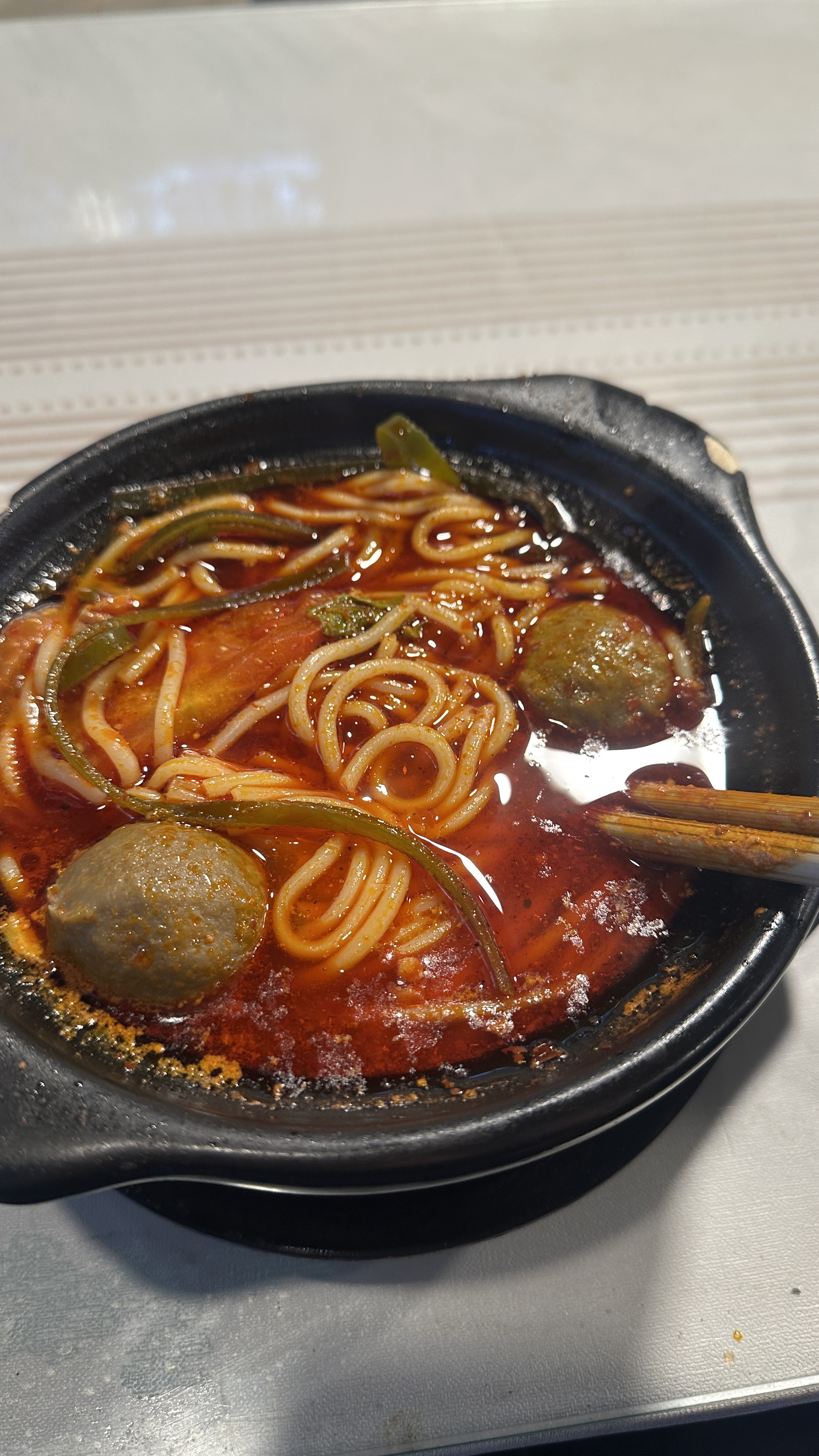
From this bus stop, you can walk towards the Mt Siguniang Eco-Museum (the second last bus stop within the valley) - it's a short walk of about 20 minutes. This part of the park has the most infrastructure for food and shopping options; I was absolutely drained by the time I got here so I stopped for a bowl of piping hot rice noodles, but there are a range of Western and Chinese options.
 Ginseng Fruit Plan (人参果坪)
This is the last stop of the bus. The valley opens up into a wide alpine meadow and is a peaceful spot to end your day before catching the final bus back to the entrance. I caught a peak of this on my way into the valley and decided I'd skip it on my way out as I was running a fever.
 How to Have a Smooth Trip
Beat the altitude: As the highest point within the valley is 3,840m, you'll want to take it easy; don't run, walk slowly and make sure you stay hydrated. You can buy an oxygen canister outside the scenic area or at Redwood Forest to have on hand.
Dress in layers: As a high-altitude area, the weather changes fast. Make sure you are dressed appropriately with layers that you can adjust.
Sun protection is key as the UV rays at this altitude are intense. Bring sunglasses and apply sunscreen even in winter.
Pack some snacks and make sure you know the stops where you can buy food as they are not always readily available throughout the valley!
Conclusion
Shuangqiao Valley offers the opportunity to experience the beauty of Western Sichuan without an arduous hike. It is the perfect balance of adventure and comfort but for those seeking something a little bit more wild, I would suggest Changping Valley or Haizi Valley instead.