

I Said America Wasn’t Ready for Authoritarianism. I No Longer Think the Conditions Are the Same.
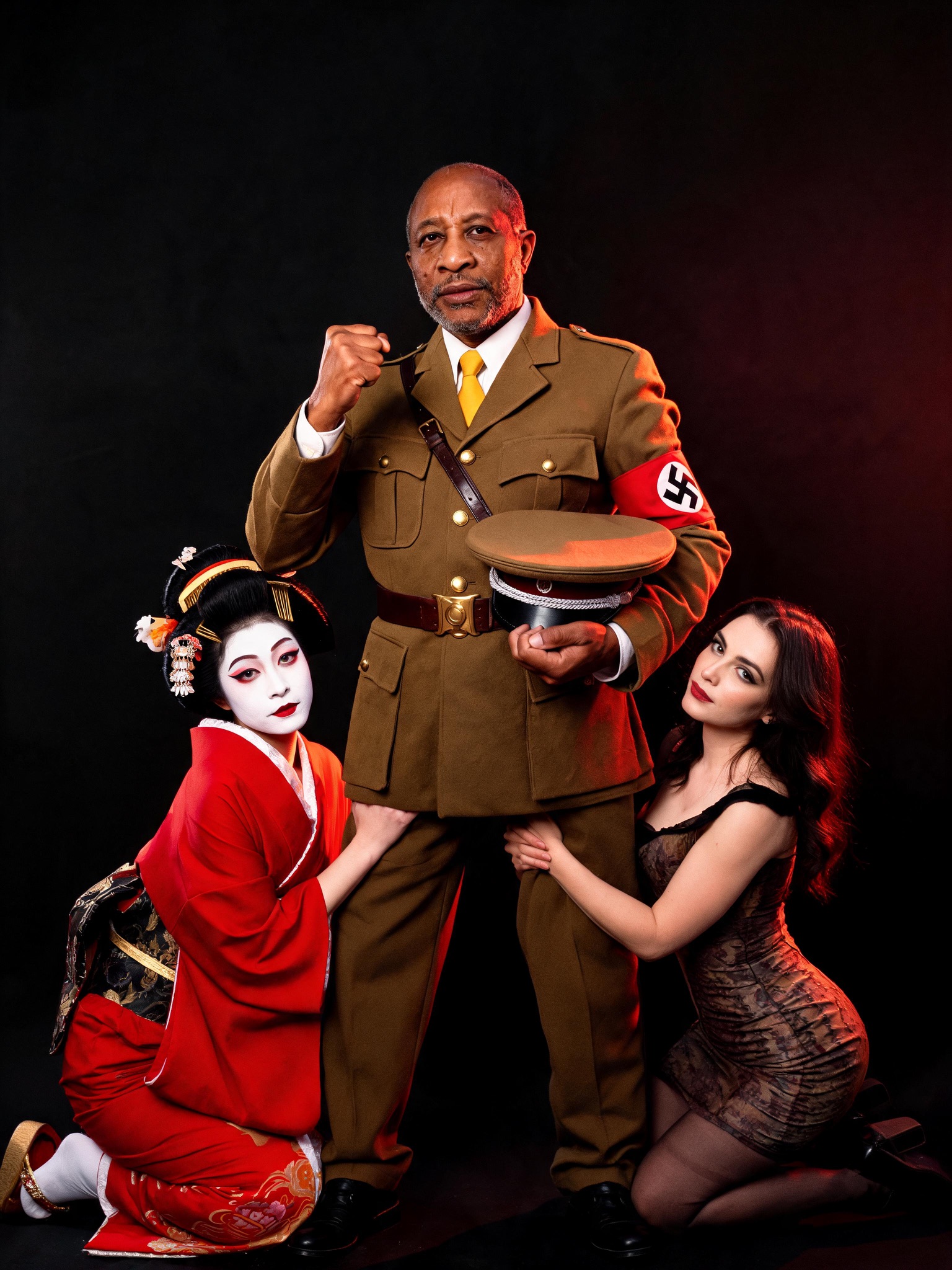
During Donald Trump’s first presidency, I rejected comparisons between the United States and the Germany that eventually surrendered its democracy to Adolf Hitler.
My reasoning wasn’t that Americans were inherently better than Germans. It wasn’t that our Constitution possessed some magical power that made authoritarian government impossible. And it wasn’t based on a belief that Donald Trump was incapable of authoritarian behavior.
My argument was about conditions.
Authoritarian movements do not seize powerful democratic societies merely because an authoritarian-minded leader appears. The society itself has to become receptive to extraordinary solutions.
During Trump’s first term, I didn’t believe those conditions existed in the United States.
Today, I am considerably less confident.
This isn’t an argument that America has become Nazi Germany. It hasn’t. Nor am I predicting that dictatorship is inevitable. My argument is narrower: several conditions that were largely absent or insufficiently developed during Trump’s first term have become substantially more relevant to American politics.
And the road from Trump I to Trump II runs through something his critics sometimes overlook:
COVID and the Biden years.
What I Thought Was Missing During Trump I
When Trump entered office in 2017, America was bitterly polarized.
Immigration rhetoric could be inflammatory. Racial tensions were substantial. Trump attacked institutions and political opponents in ways that alarmed many Americans.
But something was missing.
Actually, several things were missing simultaneously.
There wasn’t a catastrophic economic crisis comparable to the conditions that destroyed confidence in Germany’s Weimar Republic.
Americans had not recently experienced prolonged nationwide emergency government that dramatically interfered with everyday life.
And although Trump’s immigration rhetoric frequently portrayed illegal immigration as a threat, the politics of identifying entire populations as dangerous internal outsiders had not reached its present form.
Most importantly, American institutions continued functioning.
That distinction matters when discussing Germany.
The Nazis did not become powerful simply because Germans suddenly became hateful. The Great Depression devastated Germany. Unemployment soared, banks collapsed, political violence increased and parliamentary government appeared increasingly incapable of solving the country’s problems.
The U.S. Holocaust Memorial Museum describes the Depression as producing both an economic and political crisis. As parliamentary government became dysfunctional, German governments increasingly relied upon Article 48 emergency decrees to govern outside ordinary parliamentary processes. (USHMM Encyclopedia)
The Nazis exploited that environment.
America in 2017 was nowhere near it.
Then Came COVID
COVID changed my analysis.
The pandemic demonstrated something enormously important about modern American society: under conditions perceived as sufficiently dangerous, Americans would tolerate extraordinary governmental intervention in ordinary life.
Businesses closed. Schools closed. Public gatherings were restricted. Governments imposed stay-at-home orders. President Trump declared a national emergency. Later, under President Biden, the federal government attempted vaccination requirements affecting large employers, while imposing requirements in other areas.
The Supreme Court eventually blocked the Biden administration’s OSHA vaccination-or-testing requirement for large employers while permitting a separate vaccination requirement covering workers at facilities participating in Medicare and Medicaid.
People can still argue about whether individual COVID policies were justified.
That isn’t my point.
My point concerns political psychology.
Millions of Americans learned that extraordinary circumstances could produce extraordinary governmental authority.
Millions of other Americans simultaneously became convinced that government had grossly exceeded its legitimate authority.
Those reactions appear contradictory.
I think they are potentially complementary.
One portion of the population became accustomed to extraordinary government during an emergency.
Another emerged deeply distrustful of government and convinced that supposedly neutral institutions could become instruments of coercion.
Neither necessarily creates authoritarianism.
But together they change the political environment in which authoritarian arguments can operate.
Then Came the Biden Years
This is where my argument will probably anger people on both sides.
I believe the Biden years added fuel to a fire that was already burning.
Trump faced two federal criminal prosecutions, alongside separate state prosecutions and civil proceedings. Hundreds of January 6 defendants were prosecuted.
Whether that constituted legitimate enforcement of the law or political weaponization remains fiercely disputed.
That distinction needs to be preserved.
There is evidence supporting the seriousness of many of the underlying investigations and prosecutions. There is not established evidence that President Biden personally ordered prosecutors to fabricate cases against Trump.
But politically, something else happened that may ultimately prove just as consequential:
Millions of Americans became convinced that the government was being used against their political movement.
Trump built an enormous portion of his return to power around precisely that proposition.
That perception now has consequences.
After returning to office, Trump ordered the government to investigate what he calls the previous administration’s “weaponization” of federal power. Reuters subsequently documented multiple government efforts examining officials involved in investigations and prosecutions of Trump and January 6 defendants. The administration says these efforts are intended to expose misconduct; critics describe them as retribution. (Archive)
This creates a dangerous political feedback mechanism regardless of which side one believes behaved improperly first:
Our side was persecuted, therefore extraordinary action against their side is justified.
Then the next government says exactly the same thing.
The boundary separating justice from political retaliation becomes increasingly difficult for citizens to see.
And every cycle makes the next one easier to justify.
Trump II Is Not Trump I
This is why I think simply comparing Trump’s personality in 2017 with Trump’s personality today misses the point.
The important variable isn’t Trump.
America changed.
Trump returned to office after a pandemic, lockdowns, vaccine-mandate battles, January 6, two impeachments, four criminal indictments, bitter disputes over elections, increasingly widespread distrust of institutions and years of Americans hearing that the opposing political faction represented an existential threat.
His second administration has also exercised executive power considerably more aggressively.
Reuters, examining the first year of Trump’s return, described a dramatic expansion of presidential power while also reporting the administration’s position that Trump is exercising legitimate constitutional authority to fulfill his electoral mandate. (Investing.com)
Immigration enforcement has become central to that exercise of power.
At the same time, the country’s economic position deserves careful description.
I would not claim that the American economy has already collapsed.
It hasn’t.
But America has experienced successive shocks: the enormous COVID disruption, subsequent inflation, tariffs and trade conflict, immigration-related labor disruptions and now war with Iran and its effects on energy prices and global supply chains.
Reuters’ assessment of Trump’s second-term economy describes exactly that tension: considerable economic resilience alongside tariff shocks, immigration-policy effects and an Iran war that has increased oil prices and threatened supply chains. (MarketScreener UK)
That distinction matters enormously to my argument.
I am not saying America has reached Weimar Germany’s economic catastrophe.
I am saying one of the barriers that made such a comparison implausible during Trump’s first term has become less reassuring.
The Mistake Is Waiting for 1933
Comparisons with Nazi Germany often become useless because people immediately jump to Hitler after he had consolidated power.
That’s too late.
The relevant question isn’t:
Is America Nazi Germany?
Obviously not.
The useful question is:
What happened to a democratic society before authoritarian seizure of power became possible?
Germany’s democracy deteriorated incrementally.
Economic catastrophe destroyed confidence.
Political violence became increasingly normal.
Government became increasingly dependent upon emergency powers.
Political opponents increasingly regarded one another as existential enemies.
Large portions of society wanted somebody capable of imposing order.
Conservative political elites eventually believed they could put Hitler into government and control him.
They were catastrophically mistaken.
USHMM emphasizes that Hitler’s appointment alone did not immediately make him dictator. Germany’s constitution still existed when he became chancellor on January 30, 1933. The decisive destruction of constitutional government followed. (USHMM Encyclopedia)
Then came the Reichstag fire.
The Nazis portrayed the fire as evidence of an imminent Communist threat. The resulting Reichstag Fire Decree suspended freedom of speech, freedom of assembly, freedom of the press and other constitutional protections and permitted detention of political opponents without specific charges. (USHMM Encyclopedia)
The population didn’t wake up one morning and collectively vote for dictatorship.
The conditions allowing dictatorship had developed first.
The Conditions I Would Watch in America
My original three conditions remain important, but I would now add a fourth.
First: scapegoating must become normalized.
A society in crisis needs people whom a political movement can identify as responsible for its suffering—foreigners, minorities, immigrants, ideological enemies, alleged subversives or some combination of them.
The critical warning isn’t merely prejudice. Prejudice exists in virtually every society.
The danger comes when increasingly severe government action against an identified population becomes socially acceptable because that population is portrayed as responsible for a national emergency.
Second: extraordinary government power must become acceptable.
The justification can change.
Pandemic.
Terrorism.
Immigration.
War.
Civil disorder.
Economic emergency.
The historical danger arises when the public becomes less concerned with whether government possesses a power than with whether its preferred leader is exercising that power against the correct enemy.
Third: economic security must deteriorate sufficiently.
People with functioning institutions, employment, savings and confidence in tomorrow have something to lose from political revolution.
Desperate populations behave differently.
The Great Depression didn’t automatically create Nazism. But it transformed the political possibilities available to the Nazis. Germany’s economic collapse caused unemployment to surge, banks to fail and confidence in democratic government to deteriorate. (USHMM Encyclopedia)
America has not reached that condition.
That qualification is essential.
But successive economic shocks mean I no longer regard economic stability as the permanent firewall I once did.
And finally:
Fourth: institutional restraints must fail—or people must become willing to let leaders bypass them.
This is the final threshold.
Courts must become irrelevant, compliant or ignored.
Legislatures must surrender authority or become incapable of exercising it.
Political opposition must cease being regarded as legitimate.
Government bureaucracies must increasingly answer to individuals rather than impersonal law.
Law enforcement must become accepted as an instrument for punishing political enemies.
And citizens must begin regarding constitutional restraints as obstacles preventing their side from saving the country.
That is the condition that turns authoritarian rhetoric into authoritarian government.
It is also the condition America has not fully crossed.
Courts still constrain presidents. Congress still possesses independent constitutional authority. States still challenge Washington. Opposition political parties remain legal. Elections remain contested. Independent news organizations openly attack the government.
Those aren’t trivial distinctions from Germany in 1933.
They are enormous ones.
My Position Has Changed Because the Conditions Changed
During Trump’s first term, I thought comparisons to Germany’s authoritarian collapse exaggerated America’s circumstances.
I still believe that assessment was reasonable for that period.
What has changed isn’t simply Donald Trump.
The country endured a once-in-a-century pandemic. Americans experienced extraordinary government intervention in ordinary life. Another portion of the country emerged believing that intervention represented governmental tyranny. Trump and his supporters subsequently became convinced that prosecutors and government institutions had been weaponized against them. Trump returned to power promising retaliation against what he calls that weaponization. Economic shocks accumulated. Immigration politics intensified. War introduced another source of uncertainty.
Each development has its own history and legitimate competing interpretations.
My concern is what happens when they begin interacting.
That was one of the central lessons of Weimar Germany.
No single ingredient created the Nazi dictatorship.
Economic catastrophe alone didn’t do it.
Antisemitism alone didn’t do it.
Emergency powers alone didn’t do it.
Political violence alone didn’t do it.
Distrust of democracy alone didn’t do it.
It was the convergence of economic desperation, scapegoating, political polarization, acceptance of extraordinary governmental authority and institutional breakdown that created an environment in which an authoritarian movement could transform political power into dictatorship. (USHMM Encyclopedia)
That is why my assessment today differs from my assessment during Trump’s first presidency.
The question isn’t whether Donald Trump is Hitler.
The question isn’t whether Democrats or Republicans are Nazis.
Those comparisons distract from the more important question.
Are Americans creating the conditions under which they would eventually accept authoritarian government if they became sufficiently frightened, angry, economically desperate and convinced that ordinary constitutional government could no longer protect them?
During Trump’s first term, my answer was that the necessary conditions weren’t there.
Today, several of those conditions look different.
The final barrier remains institutional: whether Americans continue insisting that constitutional restraints apply even when those restraints prevent their own political side from getting what it wants.
History suggests that this is the barrier that matters most.
A democracy is in its greatest danger not simply when somebody wants authoritarian power.
It is in danger when enough people decide that authoritarian power is preferable to allowing their enemies to prevail through the ordinary rules of democracy.