
Subscribers get bonus perks: ask me unlimited gameplay questions about any review and get personal responses within 24 hours!
In a year that has seen several astonishing RPGs and plenty of well-crafted Indie RPGs, Chained Echoes coming to mind at the top of that second list, Sea of Stars manages to stand out. Developed by Sabotage Studios, this is the quintessential Indie game. There are some flaws, but the positives far outshine the limited issues.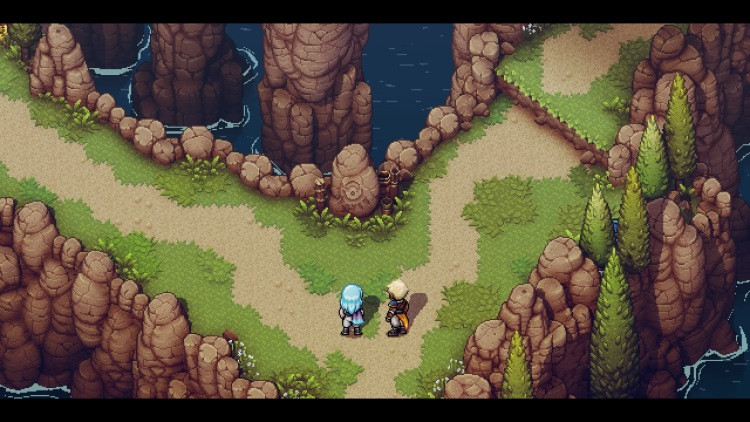 I’ll catch some flak for saying this, but I have to be honest in saying I found the first 45 minutes somewhat boring. The opening isn’t as exciting as Randi falling from a waterfall in Secret of Mana or Rudy outrunning a boulder, Indiana Jones style, in Wild Arms 1. Of course, not every game can reach those heights, but this is much tamer and slower in comparison. However, Sea of Stars quickly opens up, and by the time you reach the mountain path, I’d be shocked if first-timers aren’t pulled in.
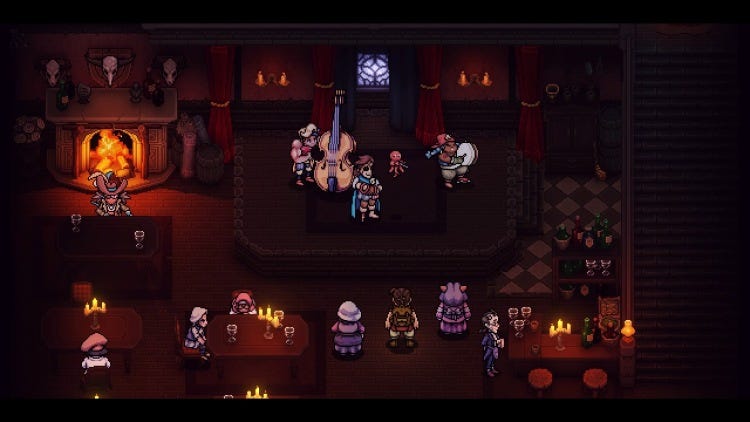 It is remarkable just how picturesque and wondrous each location is, bursting at the seams with charm. Sabotage Studios has caught the essence of 16-bit RPGs perfectly while painting their unique, magnificent masterpiece. There is some inspiration to be clear, with Secret of Mana and Chrono Trigger being two of the largest, but Sea of Stars manages to feel new and worth exploring. Each location is a pleasure to investigate, detailed, and inviting, with an undeniable allure.
The story isn’t the most intriguing. We’ve seen the trope where the young protagonist(s) have a unique power that no one else has. In this case, Valere and Zale have moon and sun magic that must be used to defeat the abhorrent creations of a sinister mage, and eventually the mage itself, the Fleshmancer. Zale is one of the two main characters that can be chosen at the start of the game, and the central theme of his character arc is related to destiny and free will. The other selectable character, the one I chose, Valere, is instantly likable and driven. They are later joined by Carl, no Karl, wait sorry, Garl, (what kind of name is Garl?), who is dedicated to his two friends. Better still is Serai, a pirate, ninja hybrid who comes and goes as she pleases through a mysterious portal, the equally as perplexing Resh’an, who gives off heavy Gasper vibes (Chrono Trigger), and last but not least, B’st, a character whose character is as unique as their design.
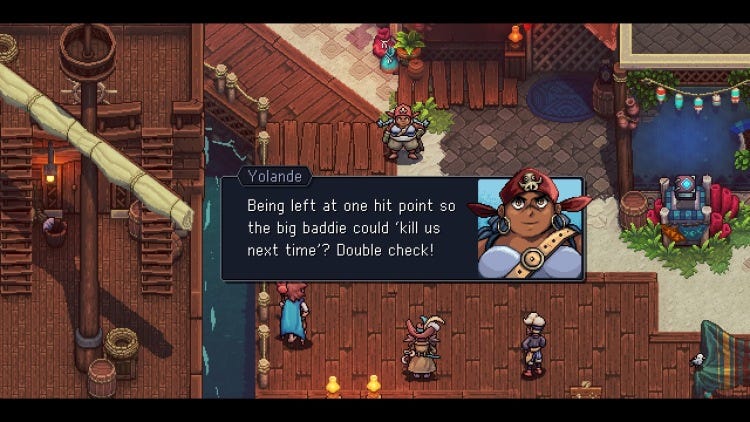 If you’ve played Super Mario RPG, timing is everything in Sea of Stars. Timed well, you can increase damage, extend attacks, and decrease damage. Though the difference between timing a block or a hit often seemed negligible in any specific turn, it adds up against bosses throughout ten or twenty turns or more. While I never saw the game over screen, most of the bosses tested my limits, and I eked out most battles by the skin of my teeth by the time I reached the 2nd third of the game. By the way, most of the bosses are equal parts impressive and imposing.
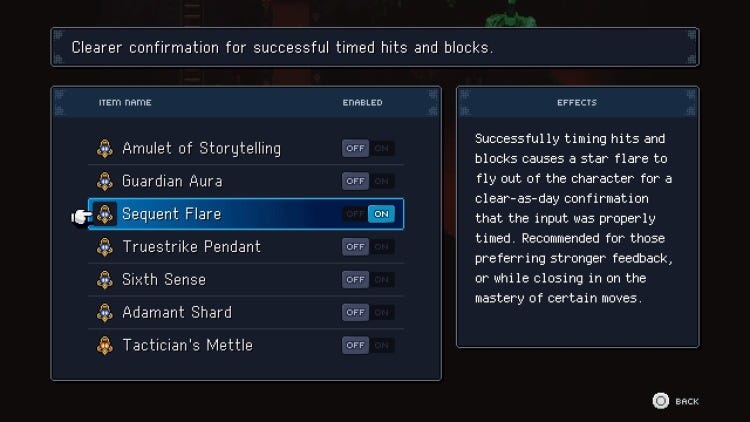 As far as imposing, the temptation to use relics is there, believe me. But, other than trying 3 or 4 for a few minutes, I managed to beat the game without using any. I tried out one that locates treasures, but after finding about half a dozen chests, I got tired of it. There is another relic that makes it very clear how well your timing is, the sequent flare, but after just one try, I found it more distracting than helpful, especially when using Valere’s moonerang as my eye focused on the flare flying out of Valere to signify good timing rather than the attack. The amulet of storytelling was the biggest temptation, especially later on when the story splits the party into three teams of two. The auto-healing that comes from this amulet looked appealing for getting through this juncture, but combining that with double HP felt like overkill, so I begrudgingly kept it off, but I came close to using it once or twice. Be prepared for the potential of a similar inner struggle, to use or not to use.
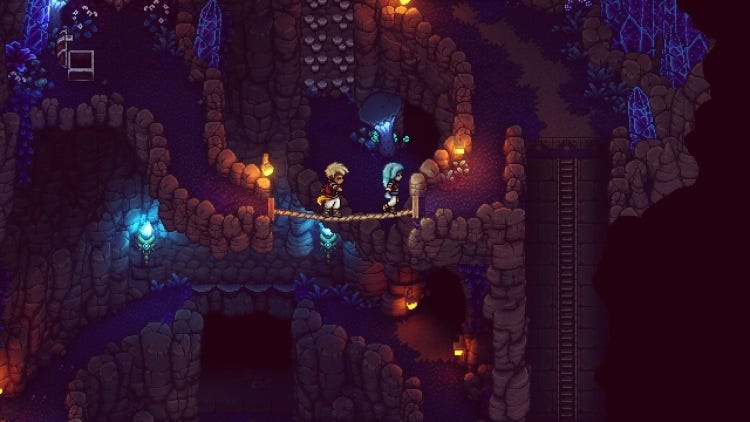
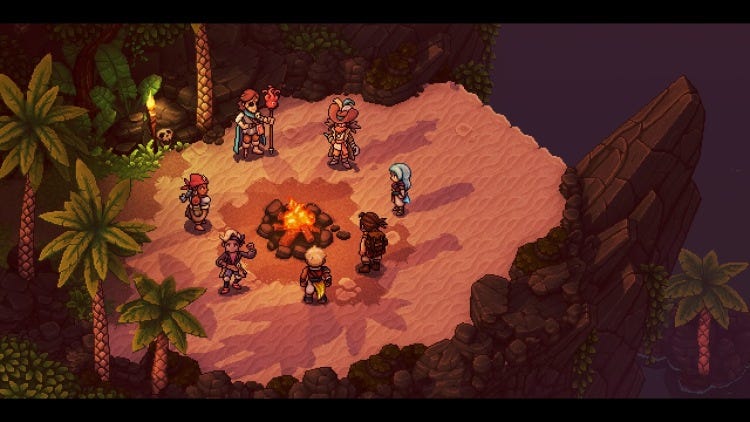 Without auto-healing after each victory, this turns into a game of resource management. Thankfully, there are a lot of fireplaces to cook and rest. Since there aren’t too many foes and they don’t respawn as long as you don’t exit the dungeon completely, I had zero qualms about running back several screens to rest. Sometimes, toward the end, after each battle. There are only ten slots for food, and conserving food for bosses is paramount to success, so this was a suitable strategy in my eyes. Otherwise, each character only has a few unique attacks, so most battles tend to play out the same. There are some combinations of attacks that can be unleashed once gems are filled up. Some attacks only require one gem, while others need two or three but are far stronger. Every character also has devastating ultimate attacks that, once the diamond on screen fills up, can help to turn the tide of even the hardest fights. plus there is the bonus of neat animations. My favorite aspect of the game is being able to seamlessly swap characters in and out of battle. Considering how low MP is for the entire game, this ability is indispensable. However, using a normal attack heals a character for a small amount of MP, and some items heal greater amounts when in a pinch. Resh’an has the best healing spell in the game, made better when powered up. Spells and attacks can be powered up by absorbing mana on the battlefield. Mana appears after attacking foes with normal attacks, and up to three balls of Mana can exist on the battlefield at once; the more of it on the field, the more it adds. A well-placed powered-up attack (or heal) will help to ensure victory and add an element of strategy. Each attack falls under a specific category, and every enemy has locks that can be opened if they are hit with specific attacks from a certain category or categories, kind of like Octopath Traveller 2’s break system. If planned well and all of their locks taken out, enemies are effectively stun-locked for a short time.
Levels are few and far between, but allow for some customization. You are given four random choices and can level two stats between HP, MP, physical attack, magic attack, physical defense, magic defense, and a few others. I got the MP whenever I could, but otherwise focused on building defense. Customization outside of battle is more limited and amounts to getting the newest equipment in the most recent town. It is unlikely you’ll ever be swimming in money, but it is not scarce either, and during my playthrough, I usually had just enough to get everything I needed, except for the end when I had to sell excess ingredients. Otherwise, no grinding was required for money or levels.
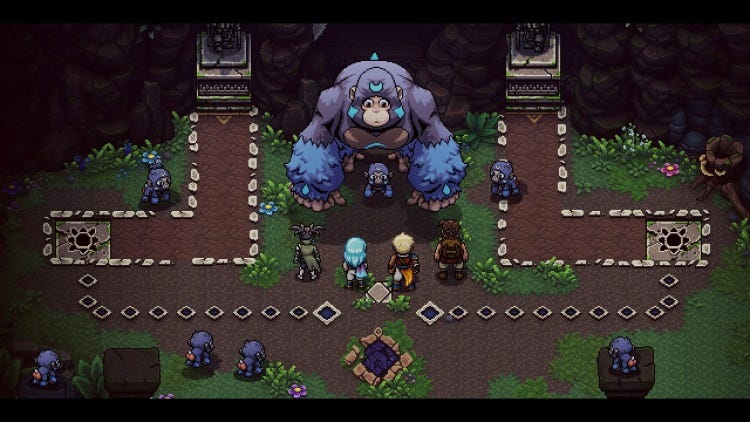 If you’ve played Lufia 2 or Zelda: Link to the Past, you should feel right at home in the dungeons of Sea of Stars. Simply put, they are constructed in a way that feels intuitive. They flowed well and while I felt like I had to use my brain, I never felt like I was at a loss for how to progress, never had to aimlessly wander around trying to recall specific past rooms or areas, and even when multiple rooms were involved in trying to get deeper into a dungeon, it was done in a way that just makes sense. There was this perfect middle ground between simplicity and complexity that I appreciated. Around the midway point, the ability to play with time and sunlight, to solve puzzles, is introduced, an interesting mechanic.
One flaw that could work against Sea of Stars is how linear most of it is. Until the ability to fly is gained much later, it is pretty much a point A to point B with a few diversions, such as fishing to break up the loop. Even with the ship midway through the game, there aren’t a lot of options, though you can choose the order of lightning rods to break, for example. However, there isn’t a lot of time wasted on things like fetch quests, so the plot can take center stage for the duration. As much as I love series like Xenoblade or Yakuza with their plethora of side stories, it does tend to feel more disjointed because the possibility exists to focus solely on side stuff for hours at a time (though this also helps with world-building) to the extent that the story becomes a “distant” memory. Nope, the story has a steady flow in the case of Sea of Stars. There is a sizeable post-game, but as of this date, I have decided to (temporarily) forgo it in the interest of shrinking my backlog. The main game should take around 25 to 30 hours. I collected about 32 conches, out of a possible 50, but going back to turn those in was burdensome and time-consuming.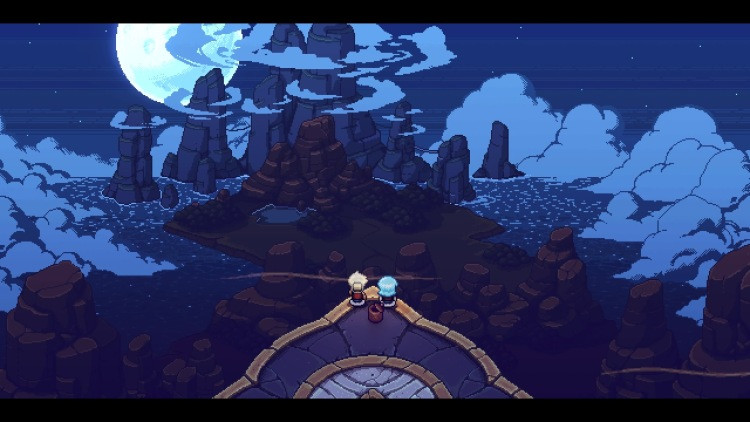 One aspect that helped me feel immersed in the game was the music. It covers a wide gamut of emotions, and it is fitting for each scene, from the laid-back beaches to lofty peaks, and every conceivable plot point, from the enigmatic to the heart-wrenching to the ridiculous comedic relief, and, like Frog’s theme from Chrono Trigger, also the heroic. There is nothing exceptionally memorable, but it always fits the situation.
Sea of Stars excels at quenching that thirst for an old-school RPG that pays homage to the classics. On the surface, this could be too difficult for newcomers to the genre, but relics can be purchased that offer the possibility to enjoy this at a more leisurely pace and offer a wide variety of ways to tweak difficulty. It is easy to see a lot of love went into making this game, and it should come as no shock that the creators behind Chrono Trigger praised this game, well-earned praise. This is an obvious choice for any fan of the genre.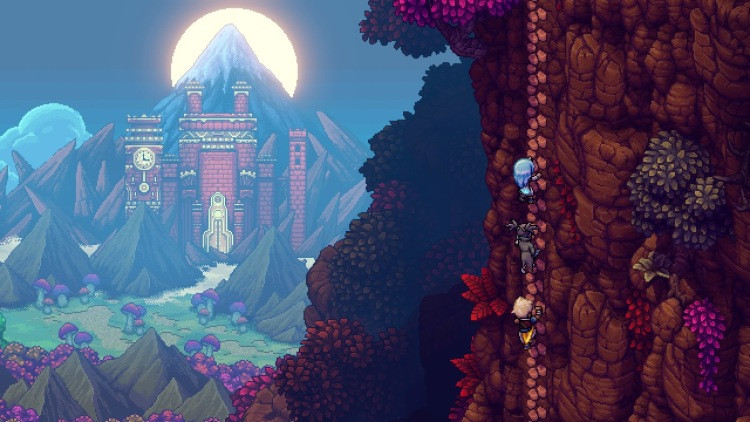 If you like what you’ve read, purchase the game here!
This post contains affiliate links. I may earn a small commission at no extra cost to you.