
Subscribers get bonus perks: ask me unlimited gameplay questions about any review and get personal responses within 24 hours!
Be sure to check out my review of Blasphemous.
I remember being holed up in my room one rainy summer day as a young teen and diving into my latest gaming purchase. I was having a blast until, without warning, the power cut out. Bored out of my skull, I lit a candle and searched my book collection to pass the time. Having already read everything, I turned to an old bible as a last resort. I remembered hearing about the intense closing of the book Revelations, and eventually got lost in its vivid imagery and horrifying, potent depictions. To this day, I recall the nervous feeling and rapid heartbeats as I advanced through the book. The hellscape that is Blasphemous 1 and 2 seems inspired by Revelations in creating a dreadful world.
Now, let's be honest: the sophomore slump is real, and it can be hard for a sequel to live up to the expectations set by its predecessor. Even when most things go right, people, myself included, can be nitpicky and find faults in otherwise great products. For those looking for the shock-value scenes from the first, the second is more toned down but still has some bizarre imagery, such as the flask lady or Cesare. The story didn't draw me in the way the first game did. The Penitent One is back and must confront the resurgence of the Miracle and twisted religious atrocities driven by a mysterious, potent entity. Throughout my 30+ hours with the game, a common theme quickly emerged: this concept of suffering, and even when looking for repentance, sometimes our fates are sealed for the worse. Blasphemous 2 is the opposite of sunshine and rainbows, touching on topics such as corruption and death without hesitation, unapologetically brutal and, at times, bluntly so. To get a full picture of the world, be aware that much of the lore is found in item descriptions and via other, more obscure avenues.
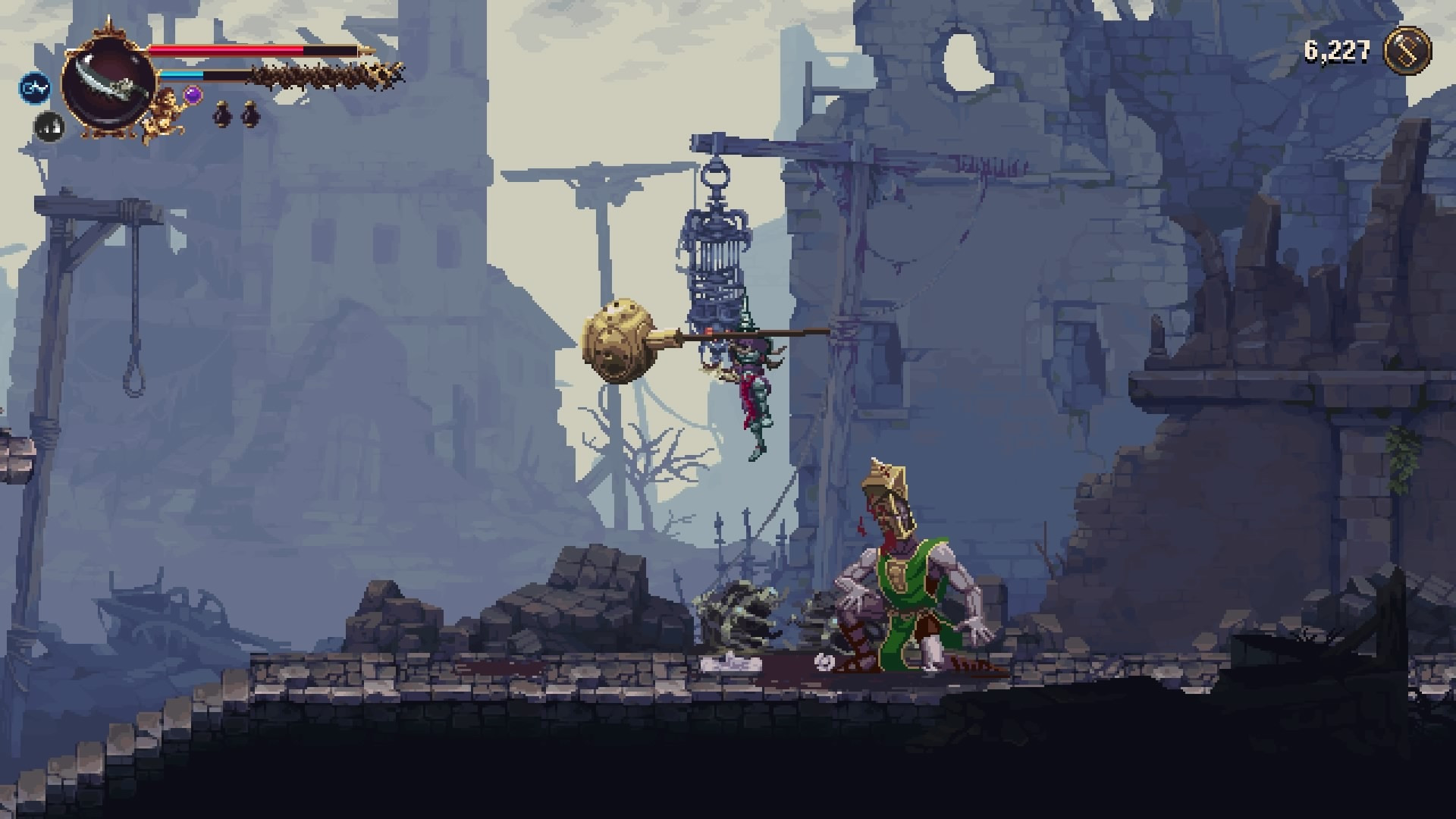 One of the obvious shortcomings is that most of the enemies from the first game are reused for the second, with only a few new sprites here and there. Whether the bosses are better or not is up for debate, but they aren't as ghastly and do not dominate the room quite like in the first game. However, I found them better designed, rewarding deliberate moves and timely dodging, and each victory was well-earned. I don't like parrying in games and never felt punished for my strong preference towards evasion, even against the infamous second-to-last boss with his lightning speed and hits like a Mack truck.
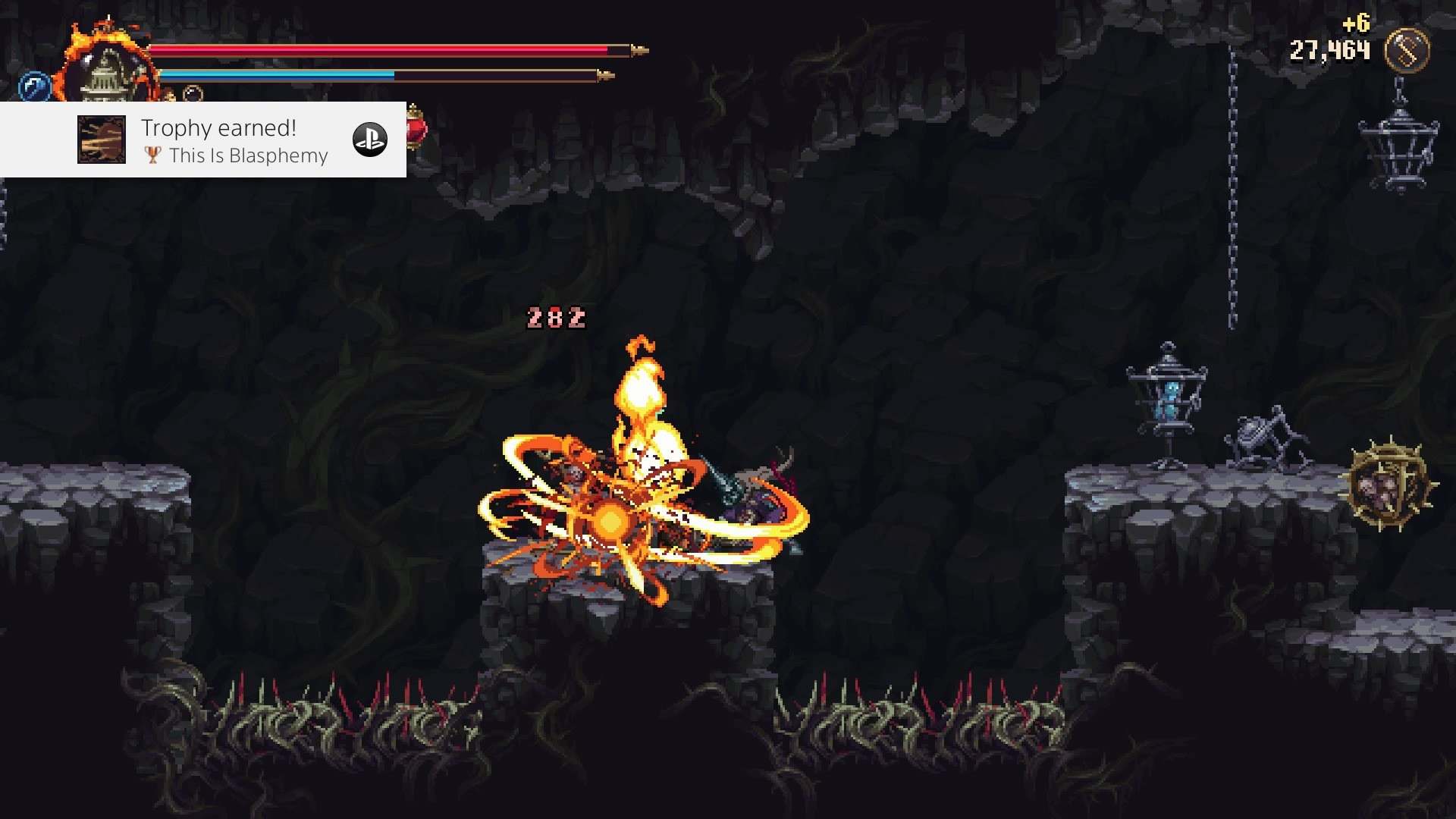
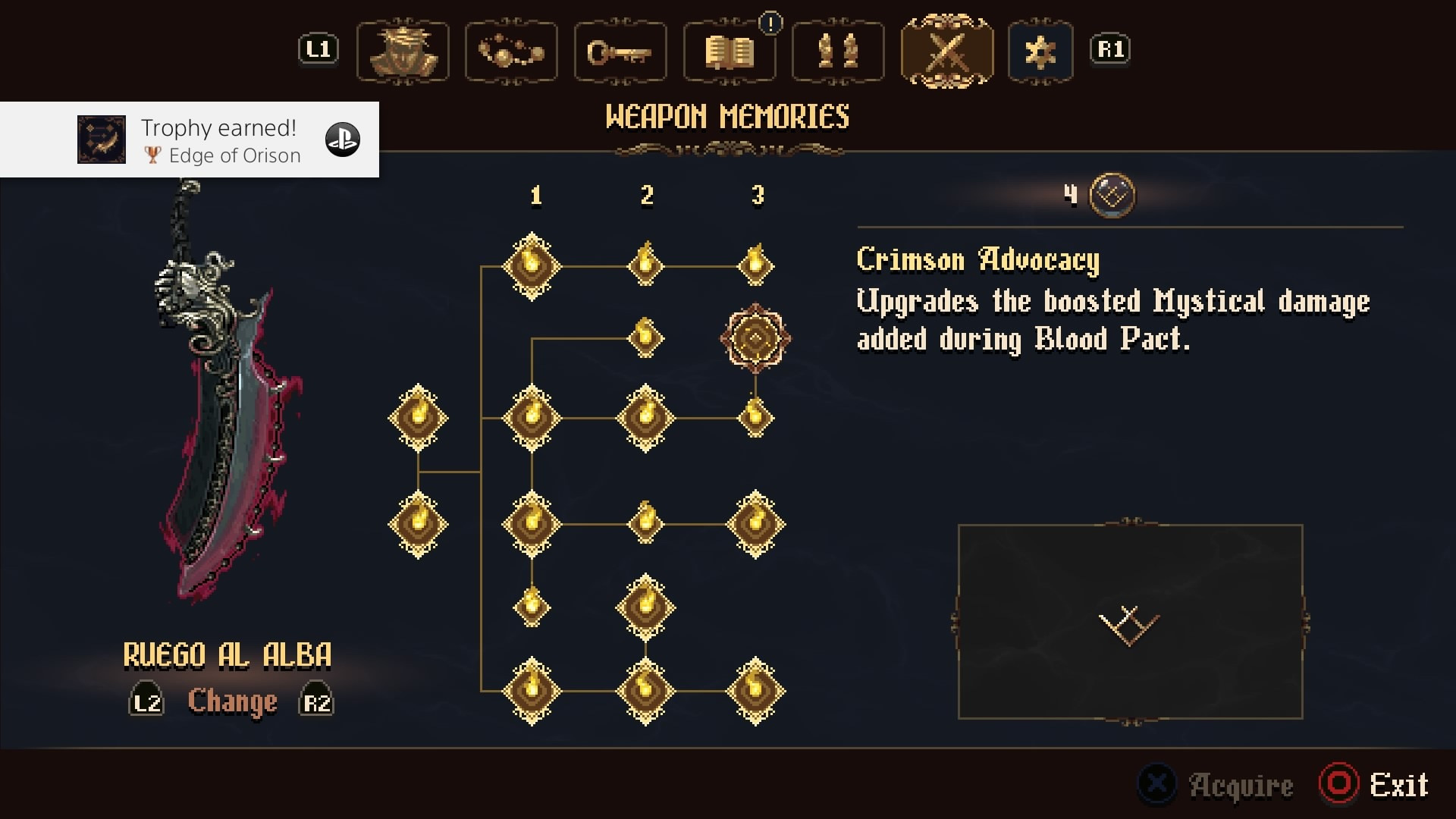 There are more options to dispose of the evil pervading the land; however, highlighted by 3 weapons to choose from. I was most drawn to the Ruego Al Alba, which is middle of the road in power and speed and most similar to the weapon from the first game. From what I read online, a lot of people love the Veredicto for its pure strength, but it felt too lumbering, and I noticed it left me open to counters, especially from faster enemies, too often. The Sarmiento and Centella appeared enticing at first with a rapid flurry of attacks, but is the weakest of the three, and the temptation to stick around and get a second succession of quick hits sometimes allowed enemies their shot at damage. Each weapon also had special moves, like the fire strike of the Veredicto, the electric slices of the Sarmiento and Centella, and the blood pact of the Ruego Al Alba. But beyond that, I enjoyed how weapons could gain field skills to help bypass obstacles and open up more of the world, and each weapon has basic skill trees to expand their power.
There are several well-hidden secrets and other visible locations just out of reach. Thankfully, the map allows you to mark places of interest to return to later. Unlike the first game, which didn't have typical Metroidvania mobility upgrades, the 2nd game was more basic, such as the famous double jump and dash. Like most games in the genre, re-exploring old areas to get to new places with the latest move upgrade was empowering and usually worth it, though the tears of attornment prizes after a tough platforming was a letdown. One thing I've learned while diving into this genre is that patience is a virtue, and having a good memory helps in remembering specific locations.
 There are a lot of items that can be used to customize the Penitent One, such as rosary beads, which function like traditional equipment. At the start of the game, 1 slot is open to place a bead that provides extra benefits such as improved physical defense, elemental protection, or increased tears or martyrdom points. The beads aren't as versatile, but they are still just as valuable in providing much-needed defensive buffs. Four Abandoned Rosary knots can be found throughout the gigantic map, which adds 4 slots. These knots must be brought back to an NPC near the main city. By the end of the game, the strategic use of these rosary beads could be the difference between bitter defeat and triumphant victory.
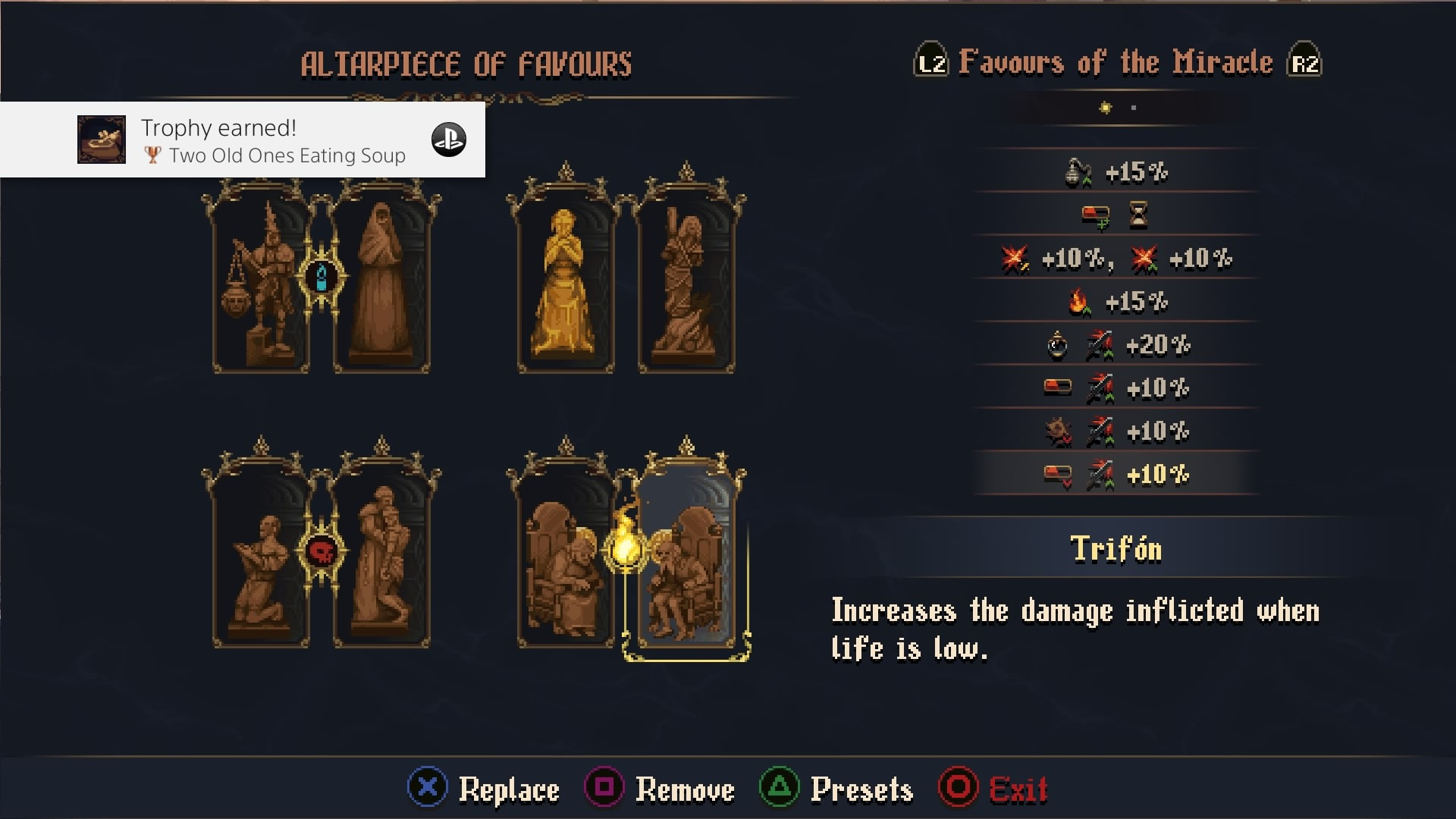 Alterpieces are small figurines placed on the hero's back, serving as equipment that grants passive bonuses. These bonuses add an extra layer of preparation for major encounters. Specific combinations of alterpieces can provide significant boosts, encouraging frequent experimentation. However, it was frustrating to have to return to the sculptor every time a change was needed. Much later in the game, the ability to change alterpieces at save points is introduced, allowing for strategic adjustments on the fly.
Tears of Atonement serve as the game's currency and can be obtained by defeating enemies and completing side content. If timed correctly, you can perform an execution move on near-dead enemies, similar to a Fatality in Mortal Kombat, which increases the amount of Tears earned. It's worth noting that, in the heat of the moment, the execution prompts can be easy to miss, especially in the middle of a combo, as they appear as small yellow icons above an enemy's head when they're about to die. Tears can be used to purchase important and useful items from various vagabond merchants.
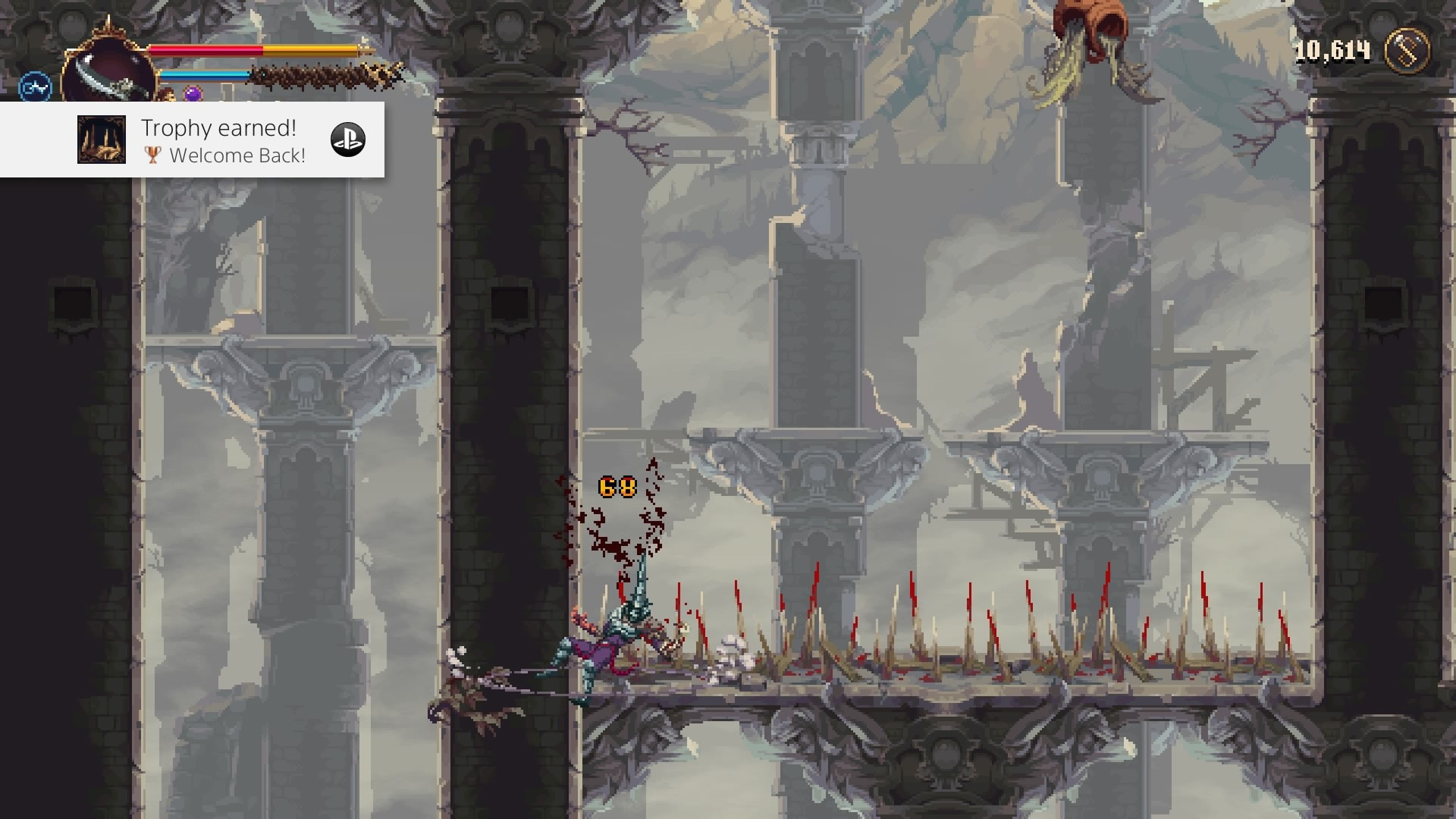 The platforming is about as difficult as the first game, but the penalty, for example, falling in spikes, is greatly reduced. Instead of instant death, it's a loss of about 20% HP. Still, a game over can sneak up on you and happen in an instant if you get careless. The most immediate impact of death is being sent back to the nearest save point, as well as an increase in guilt. The more guilt the Penitent One has, the less maximum fervor he has at his disposal for prayers (magic spells). So you must visit special statues and pay Tears to get rid of guilt.
The number of prayers has increased, as well as having them split between more powerful, costly chants and less powerful, less costly quick verses. I didn't use them much and mostly just slashed away at my enemies and bosses, but they came in handy at times, such as quick energy bursts to get rid of those annoying flag-carrying skeletons.
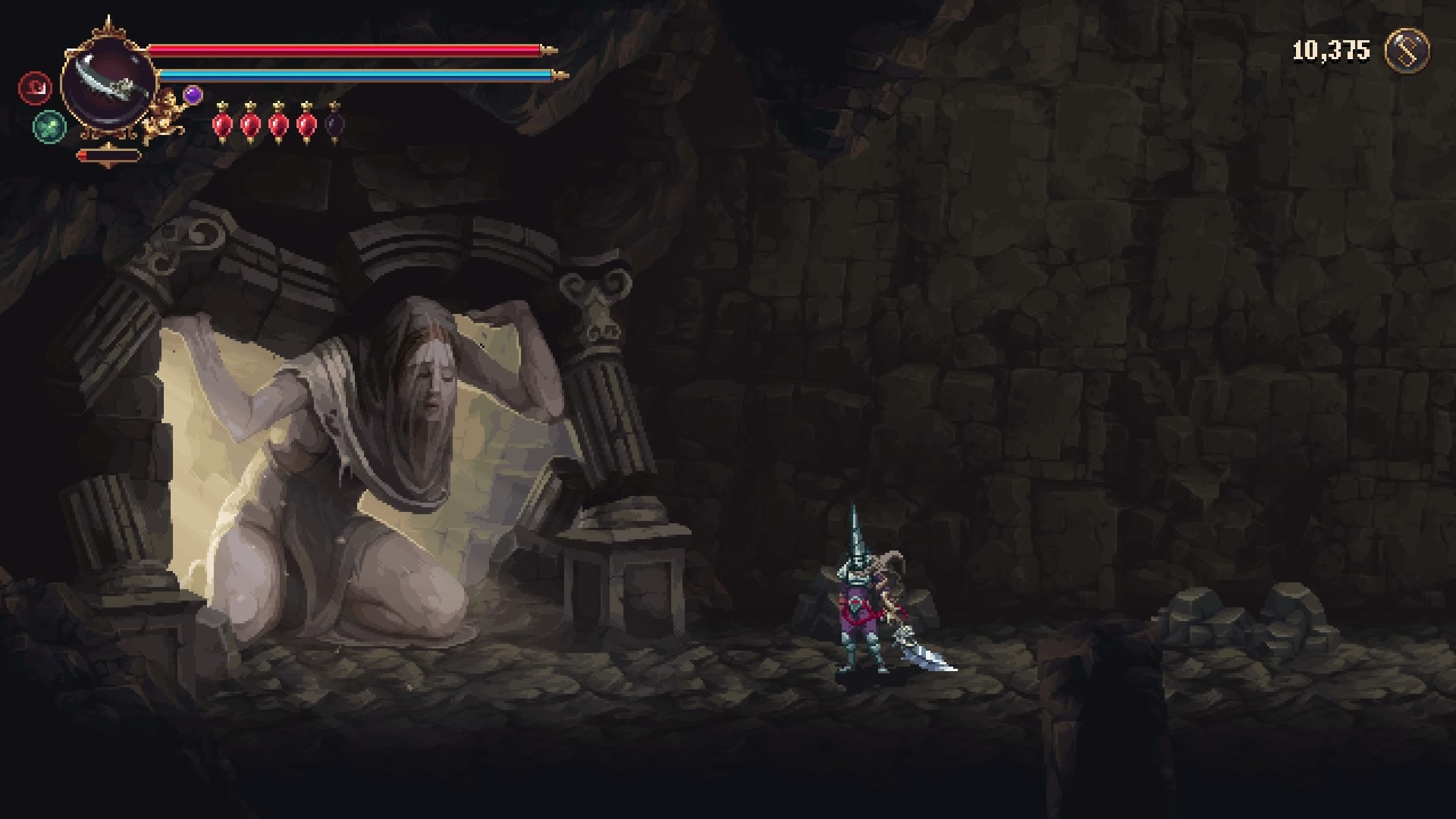 As gritty and down-at-the-heels as the first game was, moving around and backtracking was frustrating. The level design in Blasphemous 2 is better. The world is just as intricate but easier to navigate. More importantly, some benefits allow for seamless fast travel, even between save points (not just the hands, as in the first game).
There is a typical ending and the true ending, which is obtained after significantly more legwork. This includes finding 33 cherub babies scattered throughout the world. But don't fret; most of them are in plain sight, and I found 29 of them naturally moving through the game. The last few are well hidden, like Waldo, and require scouring the various areas. I was impressed by how much the developers were able to hide, in pretty inventive ways, such as 9 sisters, 5 sick daughters, 10 secret signs, 10 gold lumps, and 3 tributaries.
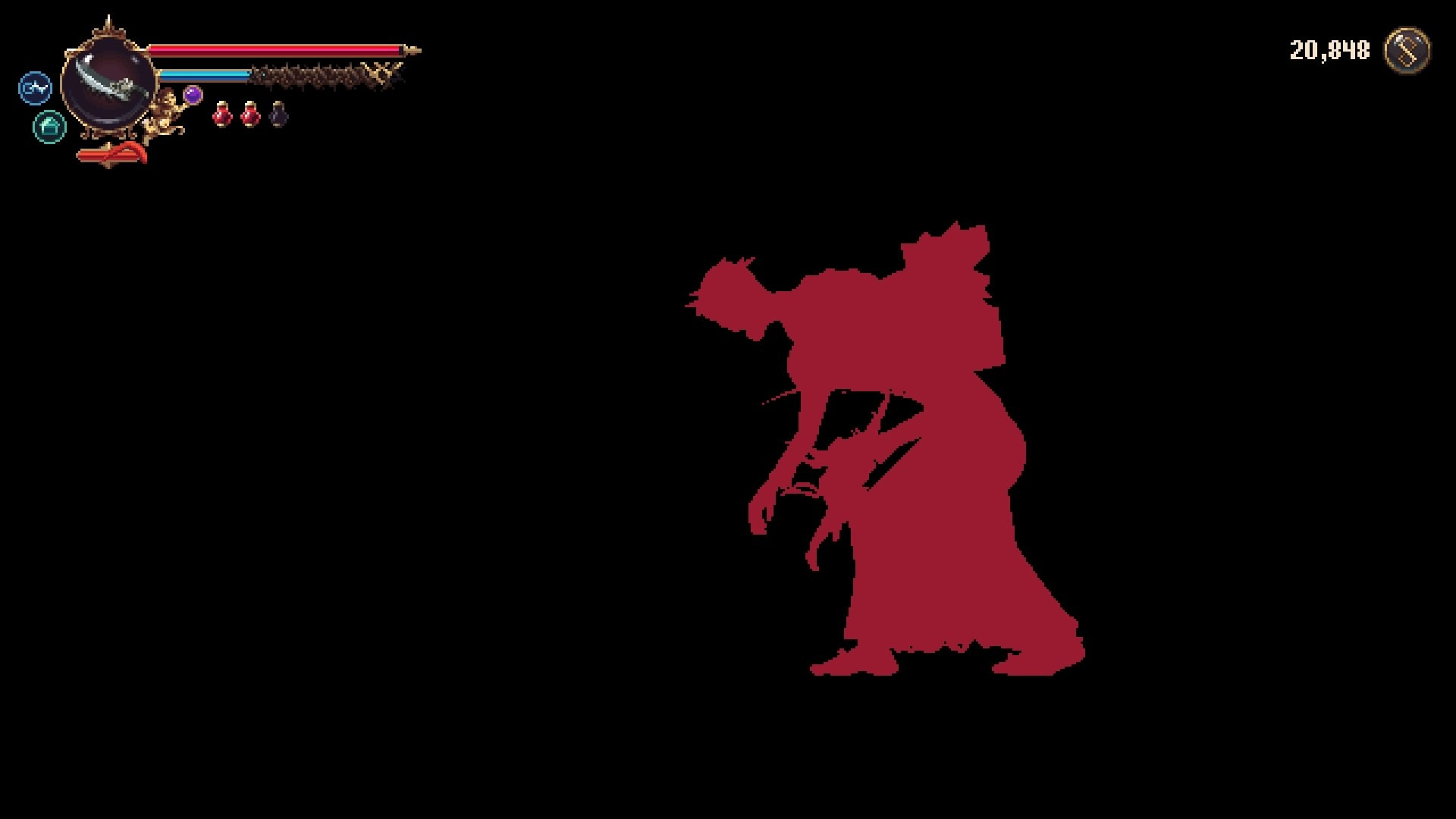 I admire the deceptively simple but extremely effective tracks that play during boss fights. Just wait until you encounter Afilaor, with its slow buildup and unsettling vibe, culminating in a wild finish. The last few strikes coincide with an aural sense of urgency, amplifying the tension in those final, desperate strikes, an intensity not often seen in the majority of boss fights across gaming. The music isn't even complex most of the time, but the ticking clock as the fight progresses vs Orospina is truly memorable. The sound effects of a successful slash striking a key blow versus a boss or even a lowly enemy is satisfying. During exploration, that unnerving ambiance continues, and the town has a low-key poignancy not heard in many gaming towns.
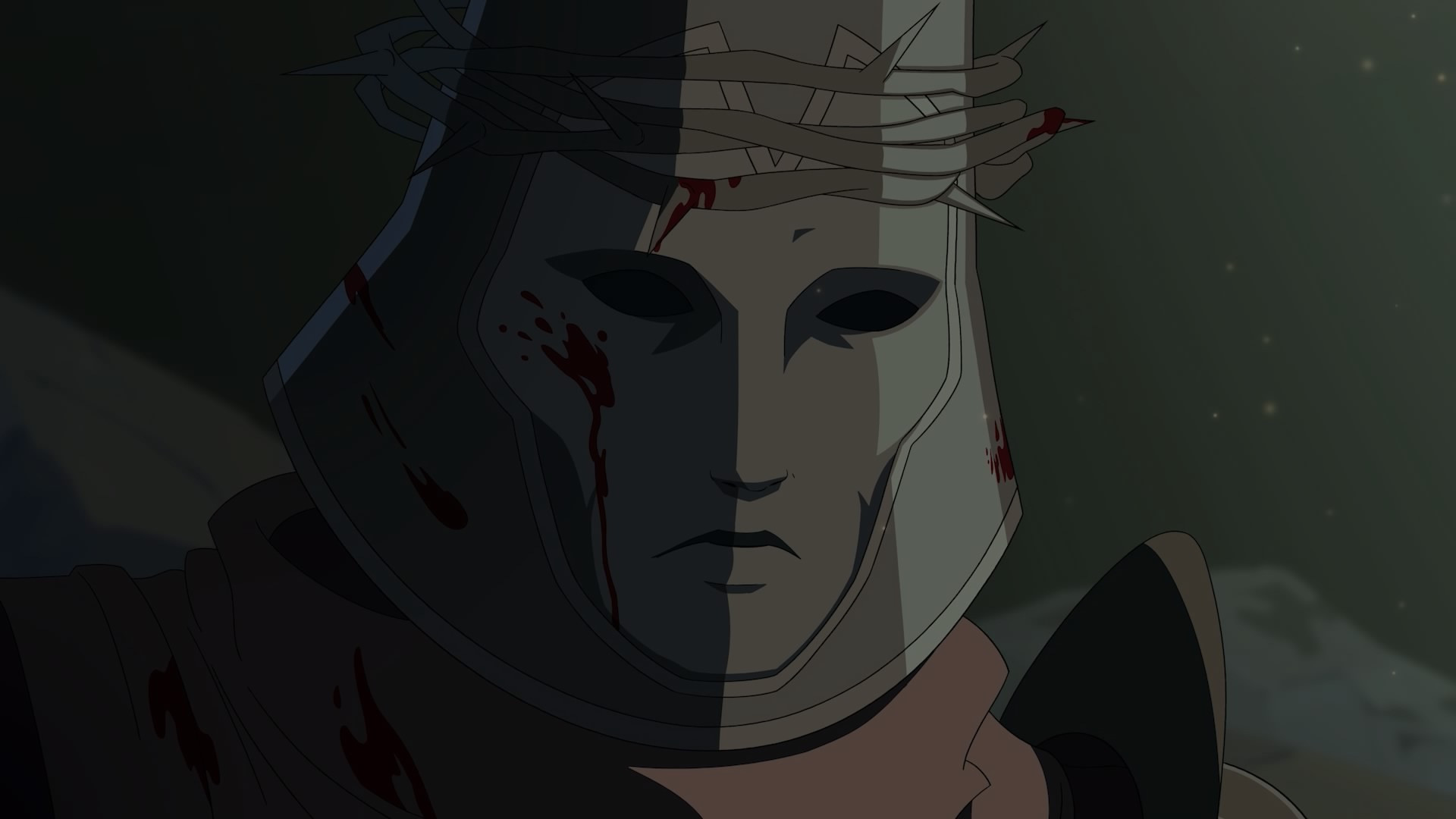
Visually, the game is an extension of the first, with slightly updated sprite work, but it still feels like a throwback to the late '90s and early 2000s, essentially a gorier Symphony of the Night. I was more indifferent than expected about the cutscenes; while they were well-done animations, they didn’t have the impact I had hoped for.
 Blasphemous 2 is a commendable effort and a solid follow-up to the first game. The adage, "don’t fix what’s not broken," certainly applies here, but if the series continues to a third game, innovation will need to take the lead. The sequel is missing a certain je ne sais quoi, or spark, that the first game had, perhaps because it’s hard to be surprised once the formula is established. Nevertheless, Blasphemous 2 is still highly worth playing.
If you like what you’ve read, buy the game here for the Switch, here for the PS5, or here for the Xbox Series X.
This post contains affiliate links; I may earn a small commission at no extra cost to you.