
 Overview
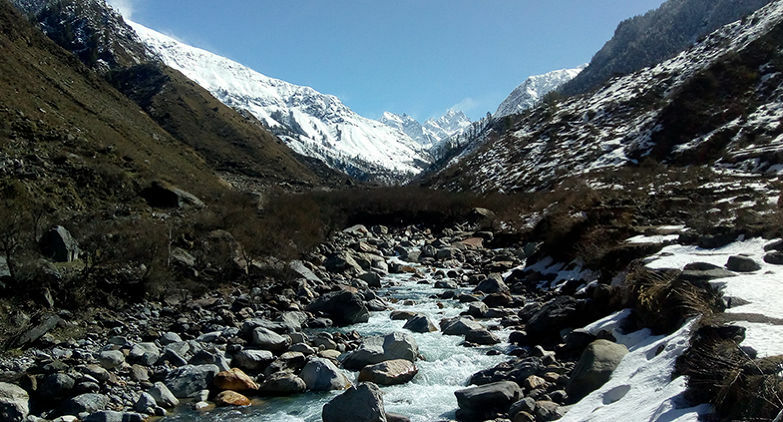
One of the most captivating valleys in the Garhwal Himalayas is Har Ki Dun Trek, which is situated at a height of 12,000 feet. Other places have also called it "The Valley of the Gods." The valley is incredibly rich in flora and fauna and is beautifully surrounded by alpine vegetation. The Yamuna River originates in this valley, which is connected to Baspa Valley by the Borasu Pass. People from all over the world travel here to experience this trek's breathtaking scenery, alluring beauty, serene surroundings, and alluring greenery.
This 6-7 day trek is regarded as India's best river valley trail and has drawn hikers from all over the world. The valley's beauty is what draws most people there. You simply cannot miss the expansive, lush valley, the people's culture and hospitality, or the outlying settlements along the way, while on your trek.
The Har Ki Doon Trek: Why Should You Go?
In Har ki Dun, mythology and geography converge. For those who are new to trekking and want to see the most beautiful mountain vistas, there is the Har ki Dun Trek. Due to the cradle-shaped mountains, trekking is also known as a hanging valley. At 12000 feet, the majestic snow-capped peaks seem nearby. This trek is intended for those who enjoy the outdoors or are curious about Indian history.
You will undertake the journey that the Pandavas made to heaven in the Mahabharata. The charming river that meanders through the hills can be seen as you stroll along the trails. If you're lucky, you'll be able to see how the rising sun's rays illuminate the valley. Additionally, you could enjoy watching the valley turn red and orange in the evening.
What Time Is Best To Go On The Har Ki Doon Trek?
March through June, as well as September through December, are the ideal times to visit the trek. The spring season, when the snow is melting, makes March to June a great time to travel. The weather is mild and pleasant. A different period is from September to December when snow can be seen despite the fact that it is winter and the weather is extremely cold. As you stroll through the trails, the sun's rays hit the snow's pure white canvas. Along the trail, you can see frozen rivers and lakes as well.
Trek route for Har Ki Dun
Day 1: Arrive at Dehradun
Begin your journey in Dehradun and drive to Sankri.
The final major town along the way, Purola, has a sizable market. The trekkers are advised to purchase anything they might have forgotten in Purola itself. After Purola, the drive is through a lovely pine forest.
From various locations along the route leading away from here, one can see Kedarkantha's peak.
By early evening, you arrive in Sankri.
On a clear day, one can see the Swargarohini peak from here.
In a hotel or in a camp, take a nap at night.
Day 2: Sankri to Puani Garat
Start as early in the morning as you can because the trip will take a while.
After breakfast, get into an SUV and travel along a rough forest road, crossing one or more streams along the way.
In about an hour, you will arrive at Taluka, a small village with a few stores and two government guest houses.
The journey begins from here on a stony path, while Taluka is filled with the scent of cedar trees.
The Supin River is gushing through rapids; stroll close by.
Continue your trek after passing the communities of Farmer and Gangad for a few hours until you reach the remote campsite at Puani Garaat.
Set yourself up at Puani Garaat Camping.
Day 3: Puani Garat to Kalkatidhar
The village of Osla, which is situated on a sloping spur about 100 metres above the river Supin, is where you should start your day.
The first part of the trail to Osla, which can take 30–40 minutes to complete, is the steepest of the entire trek.
The river can be seen far below as the trail gradually ascends higher from Osla and passes through a few fields.
Given that today's journey is relatively brief, there will be time to adjust to the high altitude and get ready for the next journey.
Take a break while enjoying the sunshine at the picturesque Kalkatidhar campsite.
The trekking route has been made better by the ban on camping at Har Ki Dun, which has preserved the area's natural beauty while also allowing for more comfort.
Day 4: Har Ki Dun Trek
On day 4, as you will visit Har Ki Dun and Marinda Tal, a small lake formed as a result of a boulder blocking the river stream 2 km ahead of Har Ki Dun, the trek can be viewed as being rather lengthy.
A short distance from where the trek begins, a hidden and roaring waterfall is found, along with a small tea shop.
To see the snow-covered peaks of the Ruinsara valley, including Black Peak, the highest peak in the area, travel to the confluence of the rivers Supin and Ruinsara.
After ascending along the true right of the river, enter the final section that is enclosed in a forest. Later, this section opens up to a very panoramic spot in Har ki Dun that is situated at the intersection of two valleys.
After arriving at the destination, take some time to unwind and enjoy the surroundings before continuing the journey to Marinda Tal, which is 2-3 km away.
The trail continues to ascend gradually until it reaches a lake created when a sizable boulder blocks a river's path as it descends from the base of the Borasu Pass.
Make your way back to Kalka Tidhar along the same route after a brief stop at Marinda Tal, because it gets much simpler to travel downward from there.
Reach the campsite by early evening and take a nap.
Day 5: Kalkatidhar to Puani Garat
After a filling breakfast, set out on the short walk back to Osla.
The valley descends towards Taluka as you travel along the route, going around the curve of the ridge where the two streams coming from Har Ki Dun and Ruinsara, respectively, converge. You can also get a good view of the trail leading all the way to Osla.
You can catch a glimpse of a trail to our left marked by the sight of a bridge down over the stream just a little ways from this intersection. This rarely-used trail connects to the trail that leads to Ruinsara Lake.
Once in Osla, visitors are free to wander the village, engage in local conversation, and take in the Garhwali culture.
From here, proceed to Puani Garat, your previous campsite, where you can spend some time relaxing in the sun.
Spend the night at the Puani Garat campsite.
Day 6: From Puani Garat to Sankri
Set out from this lovely residence early in the morning after breakfast and begin your trek toward Taluka along the same trail you used on Day 1.
Trekking downhill causes the perspective to change significantly, making the views appear different.
The walk is enjoyable and takes less time than before.
When you finally reach Taluka, where a car will take you back to Sankri.
In a camp by the riverside or a guesthouse in Sankri, call it a day.
Day 7: Sankri to Dehradun
On day 7, as you depart Sankri after breakfast, the trek to Har ki Dun comes to an end.
It's still amazing to drive up to Mori through the distinct, less travelled areas.
Dehradun is reached by late afternoon or early evening after travelling through the towns and arriving in Kempty-Mussoorie.
Things to keep in mind before you go for the Har Ki Dun Trek
Carrying enough warm clothing and the appropriate footwear for the trek is advised.
Avoid wearing earbuds on the hike, as they might reduce your audibility.
Display an authorised ID when checking in.
Professional guides are available to guarantee high safety, more information, and the individualised care required to fully appreciate a trek.
Camping is a very simple activity. You shouldn't count on luxury. Only a few places might have access to electricity.
Reduce the amount of luggage you bring because more luggage equals more hassle.
Before starting the Har ki Doon trek, consult a doctor. While trekking, bring a first aid kit and some basic medications.