
If there was one thing I worried about the most before coming to the temple, it was waking up at three o'clock every morning.
I've never been a morning person.
For as long as I can remember, I've always gone to bed late. Most nights, I don't fall asleep until one or even two in the morning. That's just how my life has been for years.
I usually spend my evenings working on my phone, replying to messages, editing photos, planning tours, or writing content. Before I know it, it's already the middle of the night.
So when I decided to ordain as a mae chi, I knew this was going to be one of the biggest challenges for me.
If I had to wake up at three in the morning, I also had to learn how to fall asleep much earlier than usual.
It sounded easy.
It wasn't.
The first few nights, I lay on my sleeping mat with my eyes wide open, telling myself,
"You need to sleep now."
The more I tried, the more awake I felt.
My body simply wasn't used to it.
When the temple bell rang at three o'clock on the first morning, my first thought was,
"Already?"
I wanted to stay under my blanket for just a few more minutes.
But everyone around me was already awake.
One by one, people quietly folded their blankets, rolled up their sleeping mats, put on their white robes, and walked toward the temple hall.
Nobody complained.
Nobody said they were tired.
So...
I got up too.
The first few mornings were hard.
I was sleepy almost all the time.
But after three or four days, something changed.
I didn't suddenly become a morning person, but waking up at three didn't feel as impossible as it had on the first day.
My body slowly adjusted.
And honestly, that surprised me.
After the morning chanting, we had breakfast before everyone started their daily responsibilities around the temple.
There was always something to do.
Some people swept the temple grounds.
Some helped in the kitchen.
Some cleaned the public bathrooms.
Others took care of different areas around the temple.
We simply did whatever needed to be done.
One of the responsibilities I always appreciated was cleaning the public bathrooms.
It may sound strange to some people, but I never saw it as an unpleasant job.
Every time I scrubbed the floor or cleaned the toilets, I felt like I was cleaning something inside myself as well.
As the dirt slowly disappeared, I quietly imagined I was washing away the greed, anger, attachment, and all the unnecessary thoughts that had built up inside my own mind.
It became more than just cleaning a bathroom.
It became part of my practice.
Another adjustment was the way we ate.
We had two meals a day.
Breakfast and lunch.
Once lunch was over, that was the last meal until the following morning.
No dinner.
No snacks.
Nothing to eat for the rest of the day.
I knew that before I came to the temple, but experiencing it was something completely different.
The first few evenings weren't easy.
Around the time I would normally have dinner, my stomach quietly reminded me that it was time to eat.
For the first few days, I could definitely feel the difference.
But little by little, my body adjusted.
By the end of the week, it didn't feel nearly as difficult as it had in the beginning.
One thing that made me smile every lunchtime was the way we ate.
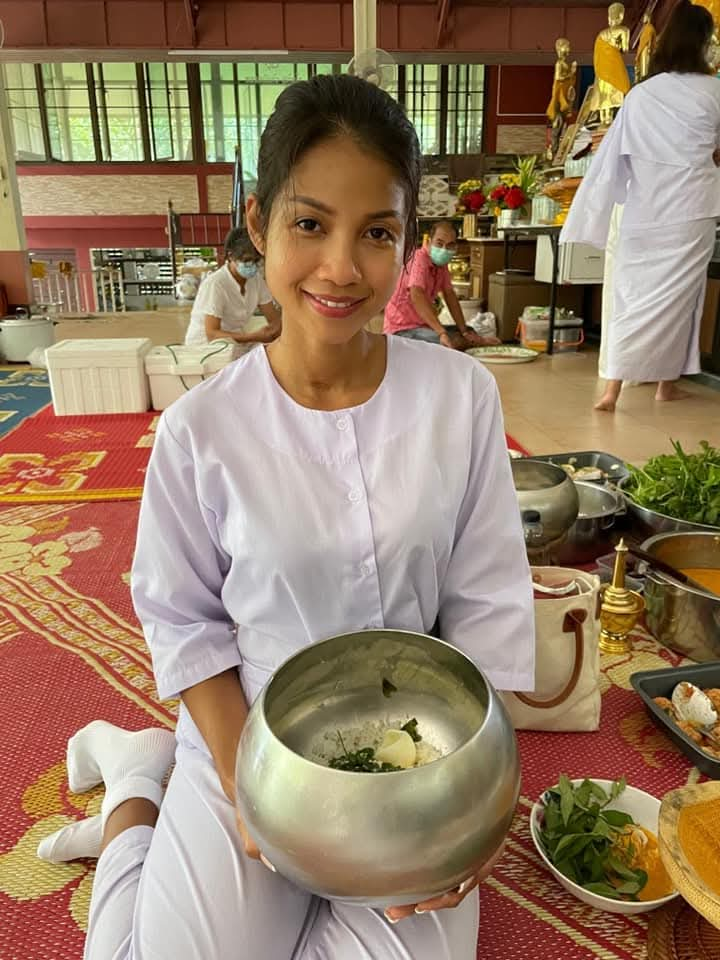
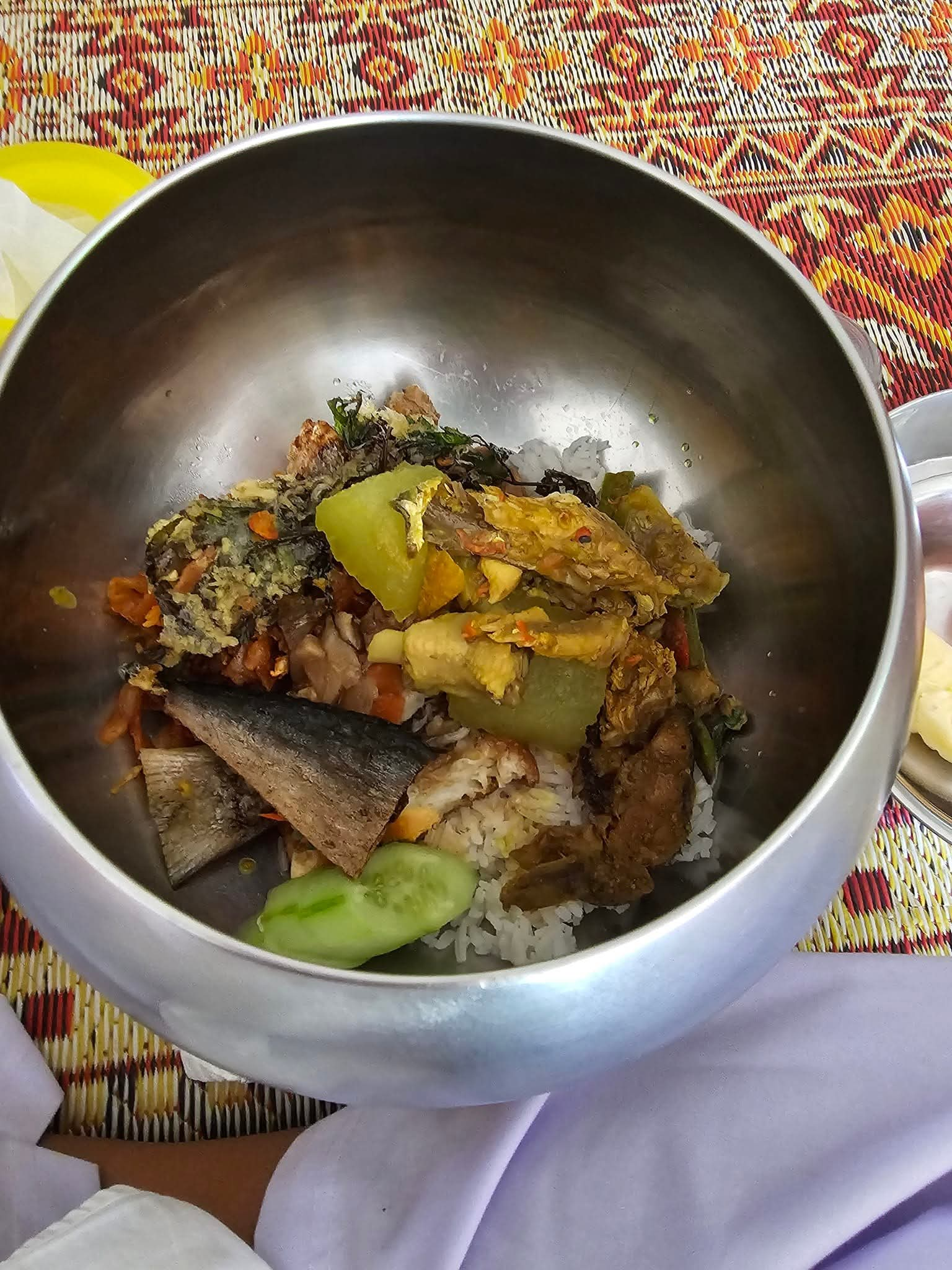
At the temple where I stayed, we ate from an alms bowl, just like the monks.
Everything went into the same bowl.
Rice.
Soup.
Curry.
Vegetables.
Fruit.
Dessert.
Everything.
The first time I looked into my bowl, I couldn't help laughing.
I remember thinking,
"Everything goes in here?"
It looked so different from the way I normally ate at home.
But after a few days, I stopped thinking about it.
It simply became normal.
Life at the temple was simple in every way.
There were no private bedrooms.
Everyone slept together in one large hall.
Depending on the temple, there could be twenty people or even more sharing the same room.
Each person had a sleeping mat, a pillow, and a blanket.
That was all we needed.
The bathrooms were shared too.
You simply waited your turn, did what you needed to do, and made space for the next person.
It wasn't something I had ever experienced before, but it didn't take long before it felt completely normal.
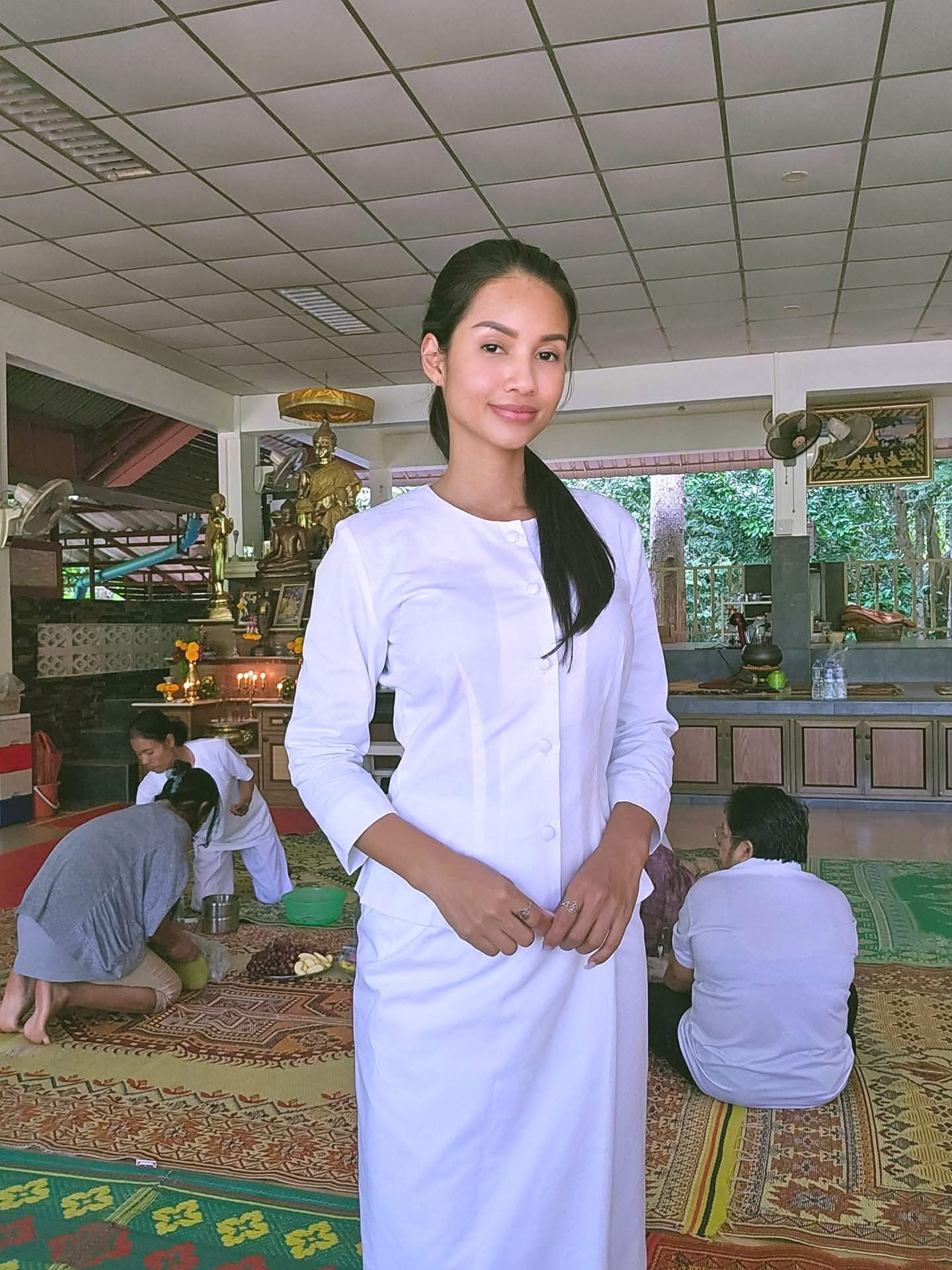
As a woman, another adjustment was wearing the same white clothes every day.
No makeup.
No perfume.
No jewellery.
After a few days, I stopped thinking about how I looked.
There was no reason to.
Nobody was there to impress anyone.
We were all there for the same purpose.
By the end of the week, I realised how quickly people can adapt.
Things that felt unfamiliar on the first day slowly became part of everyday life.
Waking up at three in the morning.
Sleeping on the floor.
Sharing a room with so many other people.
Using shared bathrooms.
Eating only two meals a day.
Living with only the things we truly needed.
Before I knew it, this simple routine no longer felt unusual.
It simply felt like home.
Looking back now, what surprised me the most wasn't waking up at three in the morning.
It wasn't sleeping on the floor.
It wasn't sharing a room with so many other people.
It wasn't even giving up dinner.
Those things that had seemed so difficult before I arrived slowly became part of everyday life.
What changed the most wasn't the routine.
It was me.
I stopped reaching for my phone every few minutes.
I stopped thinking about what I was missing outside the temple.
I stopped needing so many little comforts that had quietly become part of my everyday life.
For seven days, life became incredibly simple.
Wake up.
Chant.
Work.
Meditate.
Eat.
Rest.
Sleep.
Then do it all again the next day.
There wasn't much variety.
There wasn't much entertainment.
But somehow, I never felt bored.
When you remove so many distractions, you begin to notice things you normally overlook.
The sound of birds before sunrise.
The breeze moving through the trees.
The smell of the earth after the rain.
The peaceful silence between the sound of the temple bell and the morning chanting.
Those little moments became part of every day.
By the end of the week, I realised I wasn't counting the days anymore.
I wasn't waiting to go home.
The routine that had felt so unfamiliar on the first morning had quietly become my normal life.
And that's what surprised me the most.
I had come to the temple thinking I would spend seven days giving things up.
Instead, I left feeling like I had gained something I didn't even know I was looking for.
Not something I could hold in my hands.
Just a quieter mind...
and a lighter heart.