
“When the Federal Reserve Cuts: Currency Shifts, Risk Flows & Forex Set‑Ups for Traders”
Introduction
This week, global markets are registering a major turning point: the Fed is cutting rates, the U.S. dollar is showing signs of strain, and currency markets are bracing for regime change. For the forex trader at AutoPilotFX.pro, this isn’t just headline noise — it’s a potential structural moment.
In this post we’ll cover:
Why the Fed is cutting now
How such cuts ripple through the FX world
Which currencies carry risk or opportunity
Specific trade ideas for the week ahead
Final thoughts plus a tailored CTA for forex‑traders
1. Why the Fed is cutting interest rates
There are several key factors driving the Fed to ease policy.
Softening labour / growth data
Despite robust inflation threats, labour market indicators and growth momentum have started flashing caution. As one article puts it: “Markets are pricing in interest rate cuts in late 2025.”
The policy rate is being adjusted from a “higher‑for‑longer” mindset toward a more moderate outlook.
Inflation still sticky; policy stance cautious
Though inflation remains above target, the Fed has signalled that policy is “modestly restrictive” and additional cuts depend on data.
The willingness to cut doesn’t mean abandonment of inflation control — but it does mean a transition.
Global synchronised easing and currency implications
A wave of international central‑bank moves is lowering rates globally. As one piece noted: “A global wave of interest rate cuts … is driving down the value of major currencies, potentially fueling an extended bull market.”
This context matters: when many major economies ease, the relative FX implications become more complex.
2. How rate cuts impact the FX market
For a forex trader, the mechanics of how a major central bank like the Fed cuts rates are crucial.
Yield differentials and currency flows
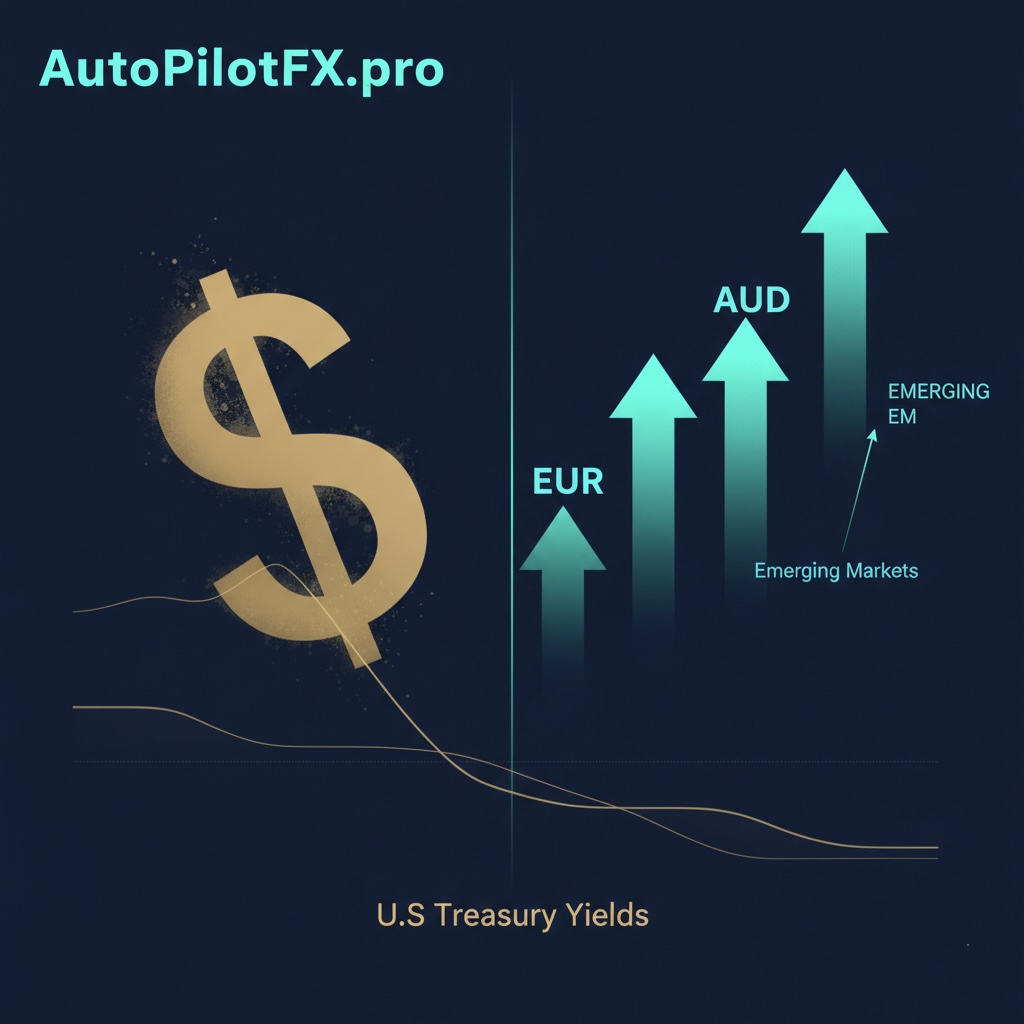
When U.S. yields drop, the dollar often loses some of its yield premium, meaning flows may shift away from USD assets toward higher‑yield or alternate currency zones.
FX educative commentary shows how rate changes affect forex, bonds, etc.
Trade‑flow and safe‑haven shifts
A weaker USD may trigger capital rotation into currencies of economies with stronger fundamentals or higher carry.
However, if the rate cut signals weakness rather than easing, the dollar might still strengthen as a safe haven. The direction matters.
Global currency weakness & emerging‑market ripple
When many currencies weaken simultaneously due to global easing, the net effect can be cross‑currencies moving differently from USD pairs. For example: “When multiple currencies weaken at the same time … they remain stable against each other but lose credibility with investors.”
For traders this means paying attention to cross‑currency pairs and not just USD‑centric ones.
FX regime change under way?
The combination of Fed cuts + dollar strain + global flows suggests we may be entering a new currency regime. For instance, sticky inflation + rate cuts produce a unique environment compared to previous cycles.
Also, the concept of “dedollarisation” — gradual erosion of USD dominance — is relevant.
3. Which currencies and trades are most likely to react
Here we highlight key currencies, their setups and implications for FX traders.
Currencies likely to benefit
AUD / NZD: With risk sentiment improving and lower USD pressure, commodity‑linked and Asia‑exposed currencies may gain.
EUR: If the USD weakens and European fundamentals hold, EUR/USD could rally.
Emerging‑market FX: With global easing and potential carry revival, EM currencies may outperform.
Currencies under pressure
USD: If the Fed cuts and yields decline, the USD could lose its carry advantage and safe‑haven premium.
JPY: Paradoxically, if risk‑on flows dominate, the yen may weaken further, though safe‑haven demand could still support it in volatility episodes.
Trade setups for the next phase
Long AUD/USD: On improved risk sentiment + falling USD yields + commodity support.
Long EUR/USD: On structural USD weakness + European positive surprises + carry differential.
Short USD/JPY: If global flows rotate out of USD and into higher‑yield/Asia‑risk currencies.
Carry‑trade revival: Target high‑yield currencies vs. USD if the Fed cut cycle accelerates.
4. Trade‑management & risk considerations
Timing matters
Be careful: the first cut may be priced in well ahead of time. The market often reacts more to the forward guidance than the actual cut.
Data is king
Track U.S. inflation (CPI, PCE), employment figures, further Fed communications, and yield curves. These steer the market more than the cut itself.
Yield curve dynamics
Cuts are one thing; whether long‑end yields fall, flatten or even rise matters deeply for FX.
Also monitor funding stresses, safe‑haven flows and global volatility spikes.
Crossing carry trades with fundamentals
Carry is attractive when global risk appetite is stable. If risk‐off returns, carry breaks down fast. Ensure you hedge or have stop‑losses.
Scenario alert
There are two main possible regimes:
Bull‑run in risk assets + USD declines → carry/EM FX outperform.
Growth scare + safe‑haven demand + USD rebounds → traditional FX safe‑haven flows dominate (USD, JPY, CHF).
Stay prepared for both.
5. What this means for AutoPilotFX.pro traders this week
At AutoPilotFX.pro, our focus is on translating macro shifts into actionable currency setups. Given the Fed’s rate‑cut backdrop, here are our key trade ideas and monitoring flags:
Key setups to watch
Long AUD/USD on break above 0.70 (for example) followed by confirmation of risk‑on flows and declining U.S. yields.
Long EUR/USD if U.S. employment/inflation disappoints and Eurozone data surprises on the positive side.
Short USD/JPY assuming the yen remains under pressure and USD loses its carry/safe‑haven edge.
Monitoring checklist
U.S. non‑farm payrolls and unemployment rate
U.S. CPI and Core PCE inflation prints
Fed rhetoric and dot‑plot updates
2‑year and 10‑year U.S. Treasury yields
Risk‑sentiment indicators (VIX, global equity flows)
Commodity prices, especially base metals, as a signal for AUD/NZD
Emerging‑market FX flows and central‑bank commentary
Execution tips
Use position sizing aligned with FX volatility: avoid over‑exposure when markets may chop.
Set stop‑losses near logical technical levels (e.g., recent swing lows) and update as price moves.
When entering carry trades, watch funding conditions: if global funding stress re‑emerges, carry trades auto‑liquidate.
Use layered entries: if you see confirmation of USD weakness + risk‑on, add to the position.
6. Final thoughts
We are at a pivotal moment in FX markets. The Fed’s shift toward rate cuts, combined with broader global easing and potential structural weakening of the dollar, may be setting the stage for a new currency regime. For traders at AutoPilotFX.pro, this is an opportunity — but one that calls for disciplined risk‑management and a readiness for multiple outcomes.
The headline is simple: If the dollar loses its edge, carry and non‑USD currencies will have their day in the sun. But if growth falters and safe‑haven demand returns, the opposite could happen—fast.
Your job as a trader? Stay nimble, use the macro structure, and trade from a place of probability not hope.
Want to trade from the macro edge—not the noise? At AutoPilotFX.pro, we deliver live FX setups, macro‑flow alerts, and scenario‑driven trade ideas built around central‑bank shifts, global capital flows and currency regime changes. Join our community and prepare your portfolio for the next major move in currency markets.