
The last note was still hanging in the air.
She had just finished playing "The Lord's Prayer," the way she had done hundreds of times before, at the instrument she had made her own across decades of Sunday mornings inside Ebenezer Baptist Church in Atlanta, Georgia.
It was June 30, 1974.
Alberta Williams King was sixty-nine years old, and she was exactly where she had always been, at the center of the congregation's worship, her hands moving across the organ keys with the practiced certainty of a woman who understood that the music she made was not decoration but ministry.
What happened next in that sanctuary has never received the public attention it deserved, and that silence is itself a statement about whose grief the country has historically been willing to hold.
A man seated in the front pew stood up, drew two pistols, and opened fire inside the church.
Alberta King was shot and killed at the organ bench.
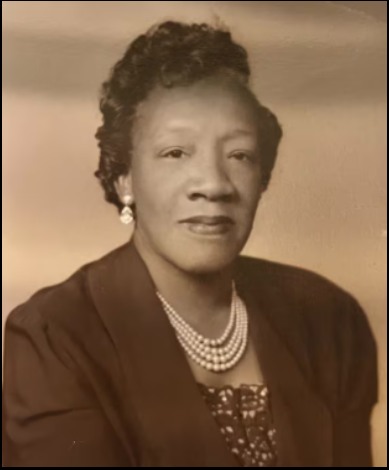
To understand the full weight of what was taken that morning, it is necessary to understand who Alberta Williams King actually was, not only as the mother of a famous son but as a person in her own right whose life and faith and labor shaped everything that came from her household.
She was born in 1904 in Atlanta, the daughter of Reverend Adam Daniel Williams, the pastor of Ebenezer Baptist Church, which meant she grew up inside the church not as a visitor or a congregant but as part of its living architecture, absorbing from childhood the understanding that the Black church was not simply a place of worship but the primary institution through which Black communities organized their survival, their dignity, and their resistance.
She married Michael King Sr., who later changed his name to Martin Luther King Sr., and together they raised their children inside Ebenezer with a deliberate and consistent message: that despite everything the Jim Crow South was designed to communicate about Black worth, their children were as good as anyone alive.
That message was not passive.
It was taught through example, through discipline, through the way Alberta carried herself through a world that required Black women to absorb indignity daily and still present themselves with grace, and through the music she played every Sunday that told the congregation, without a single spoken word, that their souls were worth something magnificent.
She was known inside Ebenezer simply as Mama King, a title that carried the full weight of everything she represented to the people who worshipped there across the decades of her service.
Then came the years that would have broken most people.
On April 4, 1968, her son Martin was shot and killed on the balcony of the Lorraine Motel in Memphis, Tennessee, and Alberta King buried the child she had raised to preach love in a nation that answered him with a bullet.
The following year, in 1969, her son Alfred Daniel King, known as A.D., died in a drowning at his home in Atlanta under circumstances that were ruled accidental but that his family and others have questioned across the years since.
She buried two sons in two years.
She walked back into Ebenezer Baptist Church and kept playing the organ.
That act of returning, of sitting down at the instrument and continuing to make music inside a grief that would have justified silence, was not performed for an audience or recorded as an act of public resilience for others to admire.
It was simply who she was, a woman whose faith was not theoretical but structural, built into the way she moved through the world and refused to let the world's violence have the final word over her spirit.
Marcus Wayne Chenault, the man who shot her on June 30, 1974, was a twenty-three-year-old who had traveled to Atlanta with stated intentions of killing Black ministers, a detail that situates the attack not only as an act of individual violence but as an assault on the institution the Black church represented and on the particular women who held that institution together from the inside.
Alberta King was not a peripheral figure in that church.
She was its musical foundation, the woman who had shaped the sonic and spiritual environment in which a generation of Black Atlantans had formed their faith and their sense of themselves.
Shooting her at the organ bench was shooting the church in its heart.
The assassin also killed a deacon, Edward Boykin, and wounded another congregant before he was subdued.
Alberta King died at Grady Memorial Hospital shortly after the attack.
Her husband, Martin Luther King Sr., was present in the church when his wife was killed, and he survived to bury a third member of his immediate family to violence, continuing to lead Ebenezer with a grief that defies ordinary language.
The attack on Alberta King has been folded into the margins of the King family narrative for fifty years, mentioned as a footnote after the central story of her son's assassination, treated as a secondary tragedy rather than a profound loss in its own right.
That framing diminishes her.
Alberta Williams King was a creator of history, not merely a witness to it, a woman who understood that the survival of Black communities ran through the church, and that the church ran through its women, the organists and choir directors and Sunday school teachers and prayer warriors who showed up every week and built something durable out of devotion and labor that the broader world rarely stopped to name or honor.
She taught her son that all human beings possessed dignity.
He carried that lesson into the streets and the courtrooms and the mountaintops of American public life, and the world celebrated him for it.
She taught it first, inside a household shaped by her hands and her music and her unshakeable conviction that her children deserved to know their own worth.
Black history has a particular debt to the women who worked at the foundation of the movement, whose names did not appear on the march permits or the Senate testimony but without whom the structure above ground could not have stood.
Alberta Williams King is one of those women, and her story deserves to be told in full, not only as the mother of a martyr but as a woman who lived with extraordinary grace, survived extraordinary loss, kept playing the music through all of it, and was taken from her congregation at the instrument she had consecrated with decades of faithful service.
The killer took her life inside the sanctuary.
He could not take the sound she had already given.
It lives in every Black church where a woman sits down at the organ on a Sunday morning and plays like the music itself is an act of survival, because it always has been, and Alberta King knew that before most of the world was paying attention.
Her name was Alberta Williams King.
She was a movement all by herself.
And she deserves to be remembered that way.