

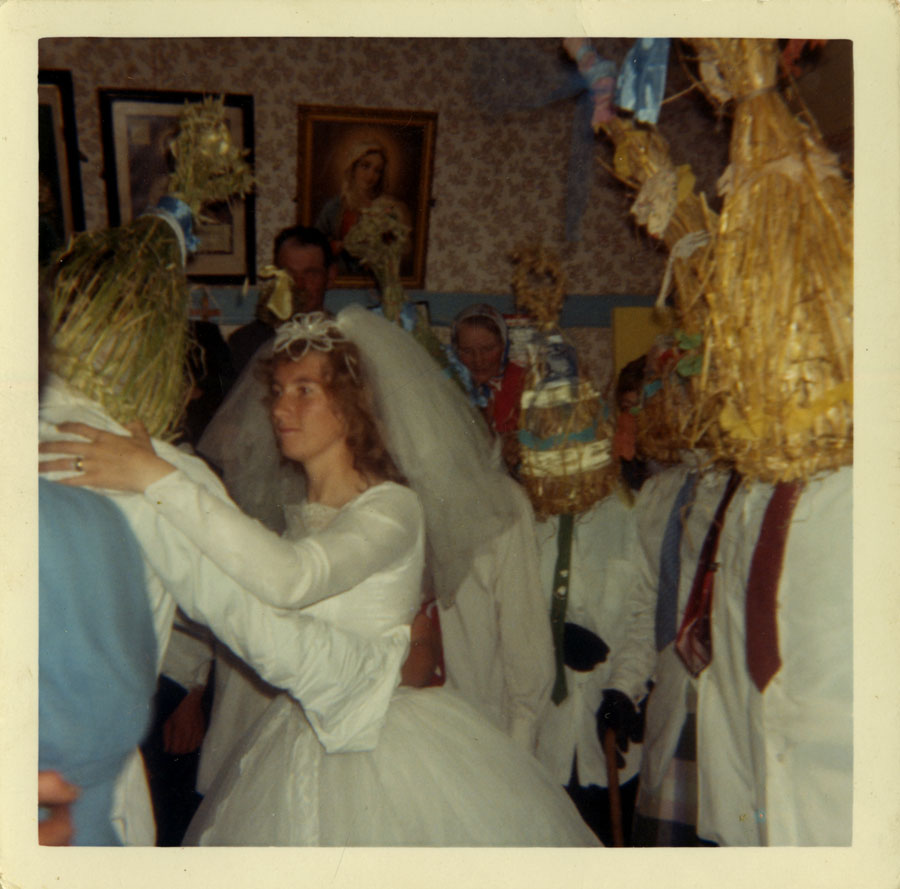
Before the Famine, people in Ireland typically married young, and usually for love or the want to start a family. While matchmakers were involved, they were usually trusted relatives or well-connected neighbours rather than professional arrangers. Weddings commonly took place at night, often in the bride’s family home, and were deeply communal occasions, with friends and neighbours participating throughout the celebrations.
But after the Famine, social and economic priorities shifted significantly. With land inheritance and security becoming central concerns, marriage increasingly took on a more calculated, practical character. Late marriage became more common, and romantic considerations were often secondary to questions of property, stability, and survival.
There is also evidence that some religious commentators at the time interpreted the Famine through a moral lens, suggesting it reflected divine judgement. In particular, certain clergy figures (across denominations) criticised perceived immoral behaviours such as unmarreid couples living together and having children outside of marriage, especially in parts of the West of Ireland.
So my the late 1800s, the Church was central to marriage celebrations with weddings taking place early in the day after the morning mass. The wedding breakfast that followed was held at the bride’s home and included family, friends, neighbours and the priest who had conducted the ceremony.
The Wedding Breakfast Menu
The tradition of the wedding breakfast was a practical one. Guests would have fasted before Mass, so the meal quite literally broke the fast. Of course the wedding breakfast contained a wedding cake. Before elaborately iced cakes, the bride’s cake was often a wheaten bannock or fruit cake.
The bride always took the first slice and unmarried girls and would pocket a crumb and place it under their pillow, in the hope of dreaming about their future husband. It was said the man would reveal himself in the dream.
Typical menus included:
Roast Meats like Goose, Chicken, Turkey or Ham (Served with boiled spuds and vegetables)
Potato Farls and Boxty (Fried, baked or griddled, easy to make in bulk and handy for large crowds)
Stewed Rabbit or Mutton (Slow cooked in thick gravy, served with crusty bread)
Apple Tart and Rhubarb Pie (Homemade with fruit from the garden. Served warm or cold, always with tea)
Fruitcake and Tipsy Cake (Fruitcake soaked in whiskey became the norm in the Victorian era. Tipsy cake was lighter, soaked in whatever drink was available. A forerunner to the modern Irish wedding cake.)
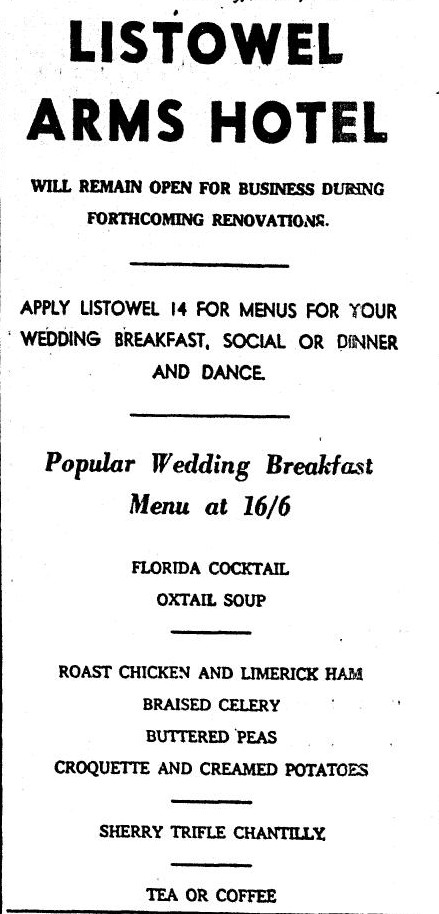 [Sample Wedding Breakfast Menu, 1969]
Customs
Wedding customs varied greatly by region, but all involveed community. In parts of County Antrim, neighbours fired gunshots into the air as the bride and groom left for their new life. In fishing communities, flags were raised on boats to mark the occasion.
Roads might be blocked in playful protest, forcing the couple to pay their way through with a token or drink. Where the bride was taking over as lady of the house, she might be formally presented with the tongs or another tool symbolising her new domestic role.
Races were sometimes held on the way home from the church, with small prizes from the bride. In some areas, the bride would throw a sock containing a piece of bridecake to the guests. Whoever caught it was said to be next to marry.
The wedding cake or bride cake may also be broken above the bride’s head before being shared among the guests or sent to relatives abroad or who couldn’t travel to the wedding. There are accounts of priests charging for slices of cake to supplement their fee.
Guests often brought food or drink as a contribution to the feast, or a collection was taken to buy more drink for the celebration.
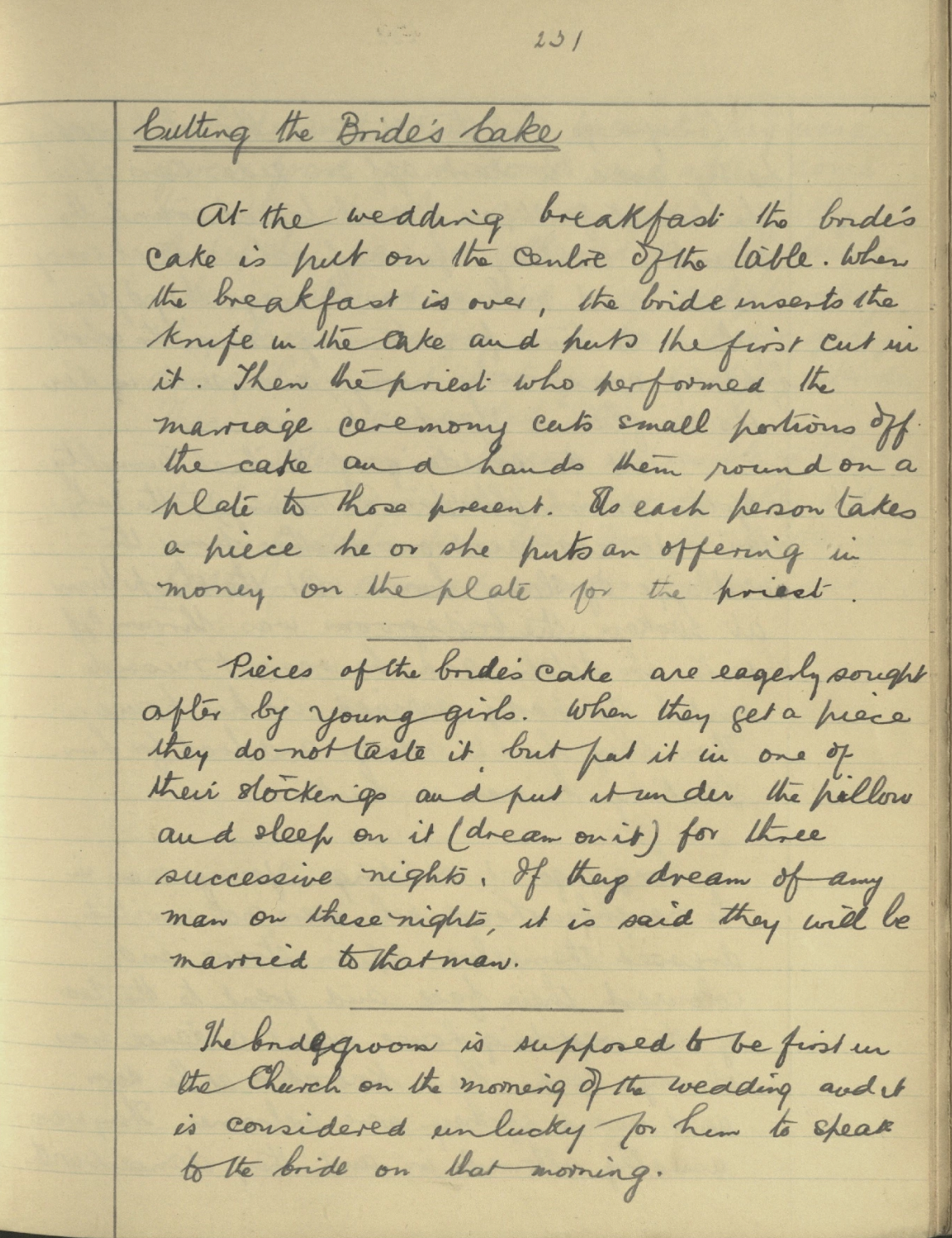
[Transcript: Cutting the Bride’s Cake]
At the wedding breakfast the bride’s cake is put on the centre of the table. When the breakfast is over, the bride inserts the knife in the cake and puts the first cut in it. Then the priest who performed the marriage ceremony cuts small portions off the cake and hands them round on a plate to those present. As each person take a piece he or she puts an offering in money on the plate for the priest.
Pieces of the bride’s cake are eagerly sought after by young girls. When the get a piece they do not taste it, but put it in one of their stockings and put it under the pillow and sleep on it (dream on it) for three successive nights. If they dream of any man on these nights, it is said they will be married to that man.
The bridegroom is supposed to be first in the Church on the morning of the wedding and it is considered unlucky for him to speak to the bride on that morning.
[ENDS]
Strawboys
Once the eating was done, the dancing began. The priest often stayed and sometimes led the first set and then in some places, in came the Strawboys.
Disguised in straw masks and elaborate costumes, the Strawboys were uninvited but expected guests. They appeared at rural weddings to entertain, cause mischief and bless the couple with music and a bit of craic. There are also know as Mummers, Wren Boys, Brideogs, Ragmen and more — their presence was mostly considered good luck although some areas became known for particularly rowdy groups (see record from School’s Collection earlier)
To refuse them was seen as unlucky. So the groomsman was usually sent out to welcome them properly. The popularity of the couple was judged by the number of Strawboys who turned up.