

 Summer Solstice, Midsummer… St. John’s Eve? Do they all mean the same thing in Ireland or what’s the craic? Well, they’re related, but not the same thing.
Summer Solstice (around 21 June) is the astronomical longest day of the year.
Midsummer is the traditional celebration of this peak summer period and rooted in seasonal customs, folklore, and farming traditions. (In the astrological calendar Midsummer is the start of summer, but this is not what people in Ireland would have followed, they were most closely tied to the land than the skies)
St. John’s Eve (23 June) is the eve of the feast of John the Baptist. In Ireland, it became the main date for Midsummer celebrations, blending older solstice traditions with the Christian calendar.
For centuries, communities marked the occasion with hilltop bonfires, dancing, courting, and sometimes a bit of fighting…
In short: the solstice is the astronomical event, Midsummer is the celebration, and St. John’s Eve is when Ireland traditionally celebrated it.
How it was celebrated
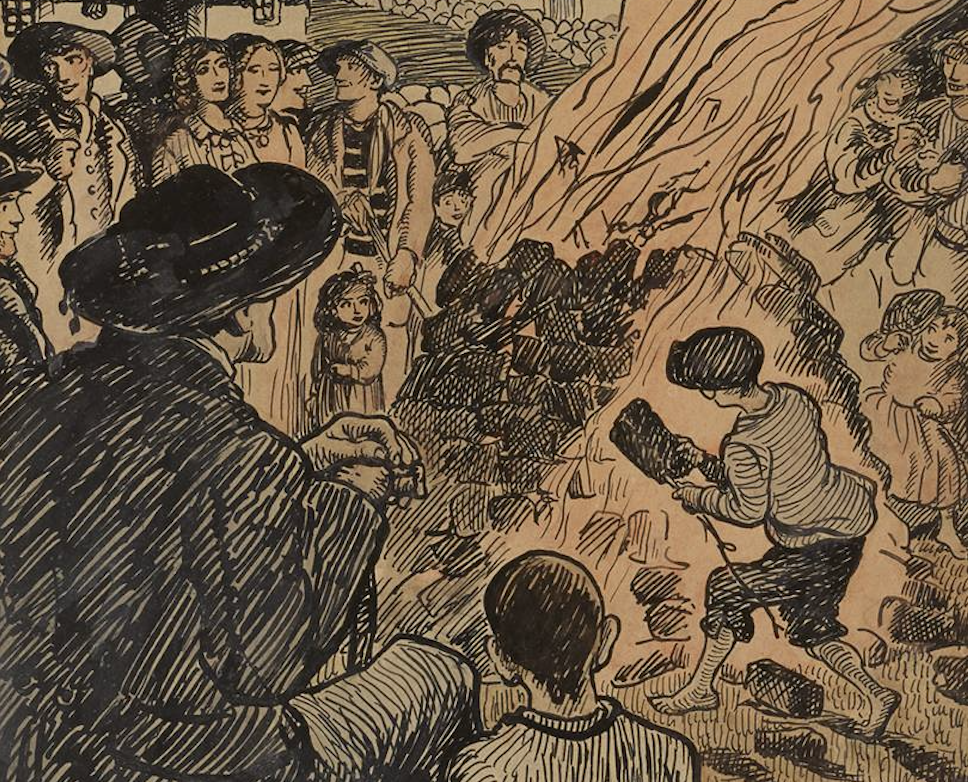
At sunset, bonfires were lit on hillsides and in village greens, watched and tended until well past midnight. People gathered around the fire for some music, dancing and feasting. Small sticks tossed into the flames symbolised the troubles they wished to burn away like money woes, heartache, quarrels. Others prayed for a good harvest.
The festival is closely tied with ancient sites in Ireland like The Hill of Tara and Loughgrew Cairn in Meath, Lough Gur and Grange Stone Circle in Co. Limerick, Carrowkeel Cairn G in Co. Sligo and Drombeg Stone Circle in Co. Cork.
Midsummer also marked the start of the swimming season, with a strong belief that those who observed the festival were protected from drowning in the months ahead.
Food
In folklore, July was known as the “hungry month,” when the last of the stored food was running low and the harvest not yet in. Many poor households survived on green cabbage and old potatoes so Midsummer was a welcome bit of merriment.
Spuds were roasted in the fire, and in the west of Ireland, white bread soaked in hot milk, sweetened with sugar and spices, was heated in a pan over the flames and shared among the people.
Bonfires were also carefully positioned so the smoke would drift over the fields where the most important crops were growing. Embers were scattered into each field, or to each of its four corners, as a blessing.
Special torches, made from straw, bushes, or oil-soaked rags, were lit and carried around the land. But if someone with ill intentions stole an ember, they could use it to cast a spell to steal or harm your crops.
Fishermen and the Sea
Along the coasts, fishermen marked the date as the beginning of the summer fishing season. Boats and nets were blessed. In Co. Antrim, a pretty tasty sounding dish was noted:
“The salmon-fishermen of the River Bush hold a communal dinner which is considered the event of the year. It is known locally as 'The Salmon Dinner', and the menu consists of fish-soup, freshly caught salmon, potatoes, and Bushmills whiskey.”
Herbs and Healing
Herbs gathered at Midsummer were said to be especially potent. St John’s Wort (Hypericum perforatum), known as the fairy herb, was prized for its healing powers.
Crushed, it gave off a scent like incense and was believed to protect against witchcraft and evil. It was used to treat wounds, rheumatism, bruises and “airy fits” (bout of depression).
Foxglove was also gathered at this time of year and used in traditional remedies for swelling. Its Irish name, méaracán na mban sí means the banshees' thimble.
Image: St. John's Eve Bonfire Night by Jack B Yeats