

When I first started building online, I made the same mistake most people make.
I tried to be everywhere.
Instagram. Twitter. LinkedIn. Facebook. Pinterest. You name it.
I thought more platforms meant more growth.
It didn’t.
It meant more stress, less focus, and very little result.
If you’re running a business, choosing the right social media platform is not about being everywhere. It’s about being where it actually matters.
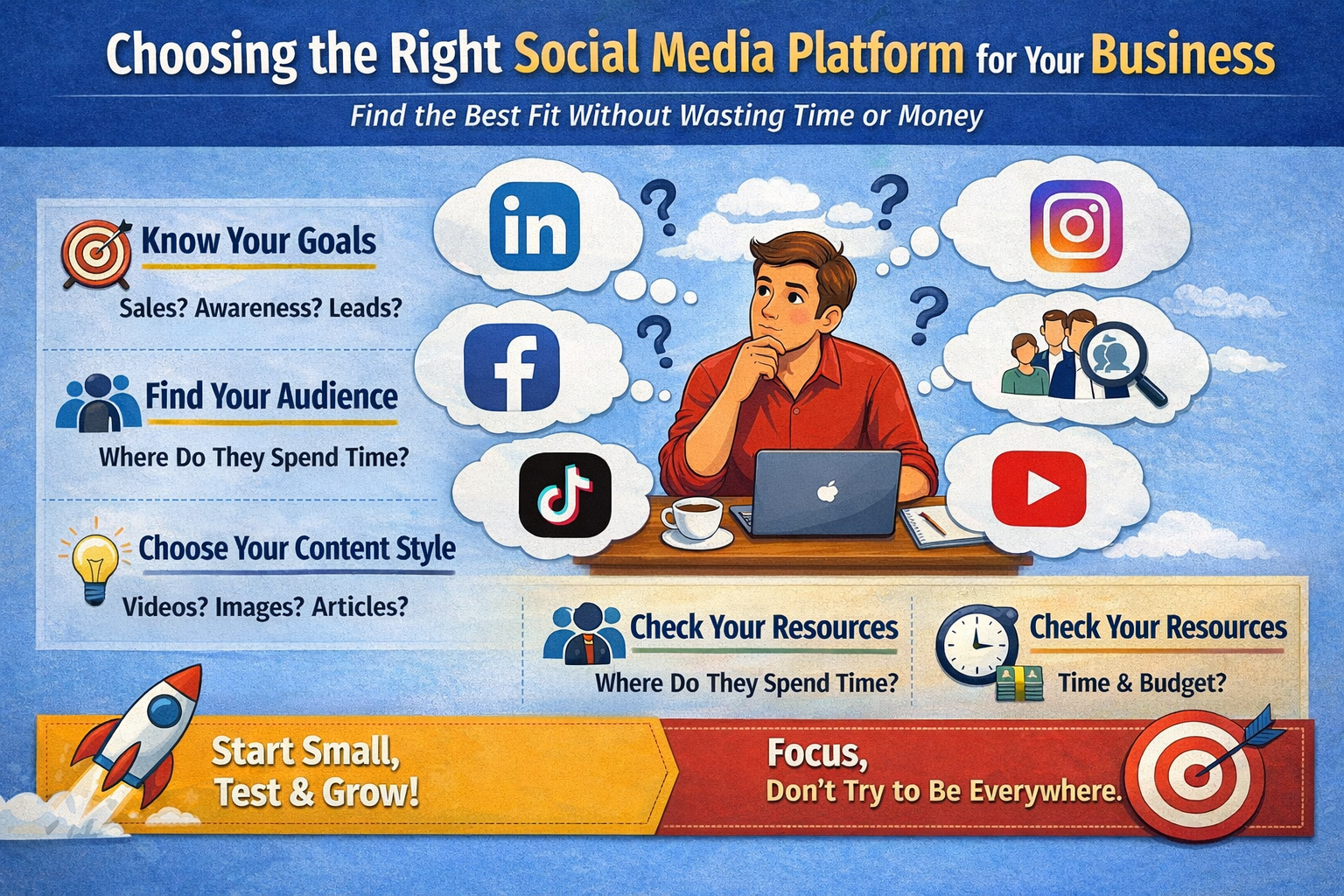
Let’s break this down in simple terms.
1. Start With Your Business Goal
Before choosing a platform, ask yourself one simple question:
What do I actually want from social media?
Do you want:
More sales?
Brand awareness?
Website traffic?
Community building?
Leads for your service?
Each platform works differently.
For example:
If you want to build authority and trust, LinkedIn can work well.
If you sell visual products (clothing, food, decor), Instagram or Pinterest may be better.
If you want conversations and fast growth, X (Twitter) can help.
If your audience is local, Facebook can still be powerful.
If you don’t know your goal, every platform will look “good.”
Clarity first. Platform second.
Before we move forward, let me share something important.
If you're still confused about which platform to choose, chances are you're also wondering:
“How do I actually make money once I pick one?”
That’s exactly why we created The AI Side Hustle System.
 It’s a simple, step-by-step guide that shows you:
How to pick the right platform for your skills
How to create content without spending hours every day
How to turn that content into income
How to build a side income even if you’re starting from scratch
No complicated strategies.
No tech headaches.
Just clear steps you can follow.
If you’re serious about building something online instead of just posting randomly, this will save you months of trial and error.
Get Instant Access - LIMITED TIME: Save 70% + FREE BONUS EBOOKS - Only 24 Hours Left at This Price!
Now, let’s talk about the next big piece of the puzzle. 👇
2. Know Where Your Audience Spends Time
This part is simple, but many people ignore it.
Your audience already has favorite platforms.
You don’t need to convince them to move.
You need to meet them where they are.
Ask yourself:
Who is my ideal customer?
How old are they?
What kind of content do they consume?
Where do they hang out online?
For example:
Professionals and B2B clients → LinkedIn
Younger audience → Instagram, TikTok
Entrepreneurs and creators → X
DIY lovers and planners → Pinterest
You don’t need complicated data in the beginning. Use common sense and simple research.
If you’re unsure, ask your customers directly.
3. Match the Platform With Your Content Style
Every platform favors a different content format.
Be honest with yourself.
What are you comfortable creating?
Love writing? → X or LinkedIn
Enjoy short videos? → Instagram Reels or TikTok
Like long-form content? → YouTube
Prefer visuals and graphics? → Instagram or Pinterest
Don’t choose a platform that forces you into a style you hate.
Because you won’t stay consistent.
And consistency is what actually builds growth.
4. Be Real About Your Time and Energy
Running a business already takes time.
Social media should support your business, not drain it.
If you:
Work alone
Don’t have a team
Have limited hours
Then focus on one main platform.
Master one.
Grow one.
Learn one.
You can always expand later.
But spreading yourself thin from the beginning usually leads to burnout.
YOU MAY ALSO LIKE: You don't need a degree to make money online ➜ just the right System
5. Observe Your Competitors (But Don’t Copy Them)
Look at businesses similar to yours.
Where are they active?
Where do they get the most engagement?
What kind of content performs well?
This gives you clues.
But remember — just because something works for them doesn’t mean it will work the same way for you.
Use it as guidance, not a rulebook.
6. Start Small and Test
You don’t need a perfect plan.
Pick one platform.
Commit to it for 60–90 days.
Post consistently.
Track simple numbers:
Engagement
Website clicks
Leads or sales
Then ask:
Is this bringing results?
If yes, double down.
If not, adjust or test another platform.
Growth is not about guessing.
It’s about testing and improving.
RELATED: How to Turn Content Creation Into Your Full-Time Career in 2026
Common Mistakes to Avoid
Here are mistakes I see often:
Trying to be on every platform
Posting without a clear goal
Copying trends without strategy
Giving up too early
Choosing a platform just because it’s popular
Popularity does not equal profitability.
Focus does.
Final Thoughts: Focus Wins
You don’t need millions of followers.
You don’t need five platforms.
You don’t need to go viral.
You need:
The right audience
The right platform
The right message
One strong platform is better than five weak ones.
Choose wisely.
Stay consistent.
Build slowly.
That’s how social media starts working for your business — instead of the other way around.
One Last Thing
If this helped you or gave you something to think about, I’d love your support.
Creating like this takes time, energy, and a lot of coffee — and every bit means a lot.
☕ If you’d like to support my work, you can buy me a coffee.
(And thank you — truly. It keeps me going.)