

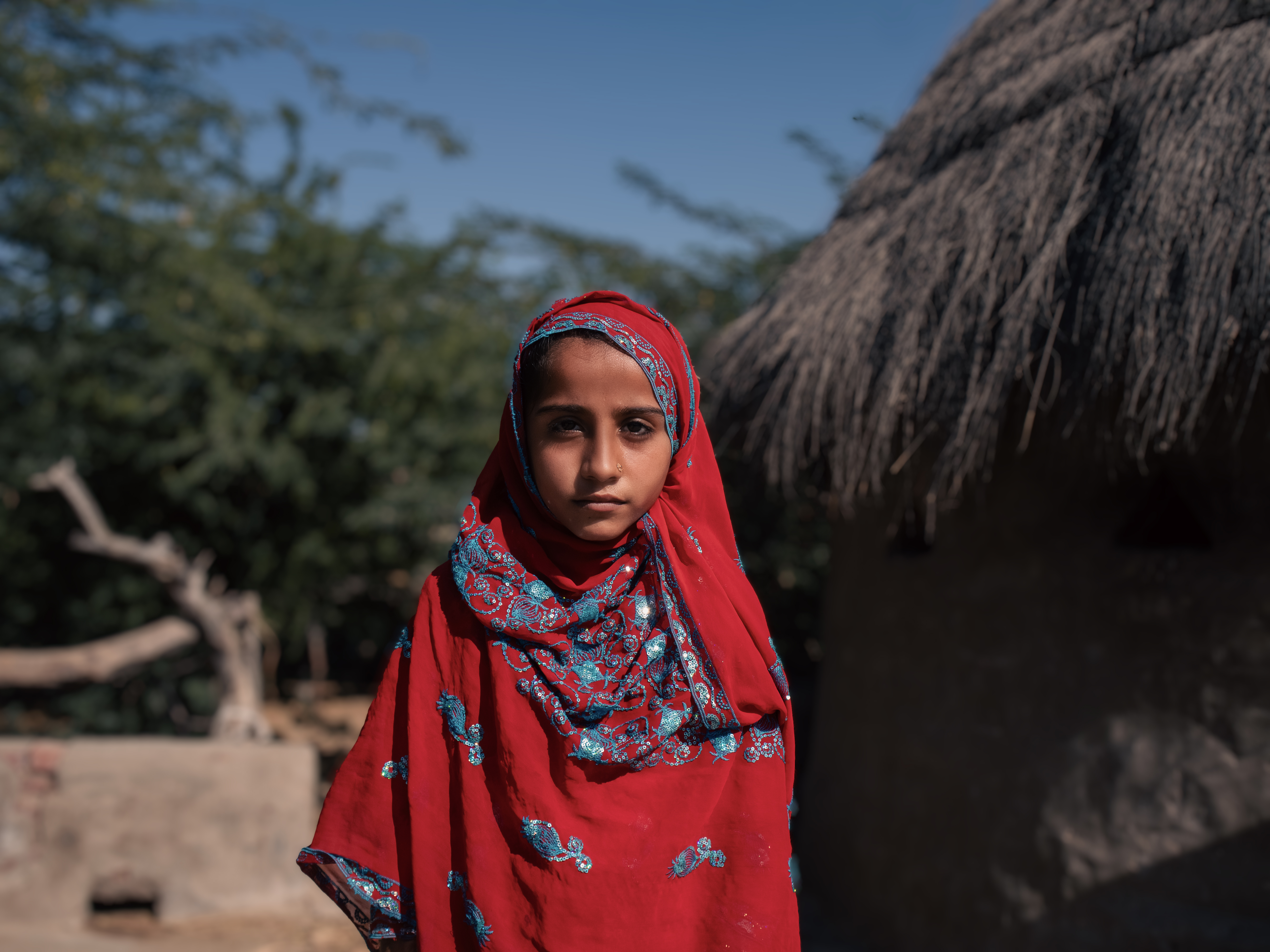
 The blazing sun hung high above the vast, golden expanse of the Tharparkar Desert in Pakistan. Sand stretched endlessly in every direction, broken only by patches of thorny shrubs and the occasional cluster of dry, brittle trees. The wind carried whispers of sandstorms, swirling grains that stung bare skin and filled the air with a dull haze.
Sania, a slender 14-year-old girl with a determined glint in her tired eyes, trudged barefoot along the cracked, dry earth. Her skin, sun-kissed and rough from the relentless heat, glistened with sweat. Her faded, hand-stitched shawl fluttered around her, barely shielding her from the sun's merciless glare.
For as long as she could remember, her life had been a battle—a silent war against hunger, thirst, and the elements. Her family, like many others in the region, lived in a small mud-brick hut at the edge of a dying village. They had once relied on the seasonal rains to grow their meager crops and feed their livestock, but the rains hadn’t come for two years. The land had turned to dust, and the wells had run dry.
Sania’s stomach growled, a dull ache that had become a constant companion. She hadn’t eaten in two days, and what little they had—coarse millet or a handful of dried dates—was gone. Her younger brother, barely six, lay inside their hut, too weak to walk. Her mother, frail and weathered, sat silently beside him, staring at the horizon as if willing a miracle to appear.
The burden of survival had fallen on Sania’s young shoulders. Her father had ventured to the nearby town weeks ago, searching for work or food, but he hadn’t returned. So Sania, small but brave, took it upon herself to find water. Without it, they would not last another day.
She carried an empty clay pot, cracked from years of use, as she walked toward the distant dunes where a dried-up riverbed offered faint hope. Each step was heavy, her legs trembling under the weight of exhaustion and despair. The desert seemed endless, the heat oppressive, but Sania refused to give up.
Her mind wandered as she walked, remembering the stories her grandmother used to tell her before she passed away. Stories of a time when the desert was alive—when trees bore fruit, and rivers ran clear. Sania clung to these memories, though they felt like tales from another world.
As she approached the riverbed, her heart sank. The sand there was just as dry as the rest of the desert, and no sign of water remained. She dropped to her knees, scooping handfuls of sand in desperation, but the earth offered no relief. Tears welled in her eyes, but she quickly wiped them away. Crying would not bring water.
Looking around, Sania spotted a group of women and children digging a shallow pit nearby. She rushed to them, her pot swinging at her side. “Have you found water?” she asked, her voice cracked from thirst.
An older woman, her face etched with lines of hardship, shook her head. “The well is gone. But sometimes, if you dig deep enough, you can find a little moisture in the sand.”
Sania knelt beside them and began to dig, her hands blistering as she clawed at the hot ground. Hours passed, and her hopes dimmed. But then, a small miracle—someone shouted, “Here! There’s water!”
It wasn’t much, just a tiny trickle of muddy liquid pooling at the bottom of the pit. But to Sania, it was life. She carefully filled her pot, every drop precious. The water was murky and unclean, but it was all they had.
By the time she returned to her village, the sun was sinking below the horizon, painting the sky with hues of orange and purple. Her mother greeted her with a weak smile, relief washing over her face as Sania handed her the pot.
That night, as they drank the gritty water and shared a tiny piece of flatbread that a neighbor had spared, Sania looked up at the starlit sky. The desert was quiet, the wind carrying only the sound of whispers. She felt the weight of the world on her shoulders but also a flicker of hope.
Life in Tharparkar was a struggle, but Sania was determined to survive. She dreamed of a day when the rains would return, when the land would bloom again, and when she could run barefoot through the wet sand, laughing with her brother. Until then, she would keep walking, keep digging, and keep fighting.
For Sania, giving up was never an option.