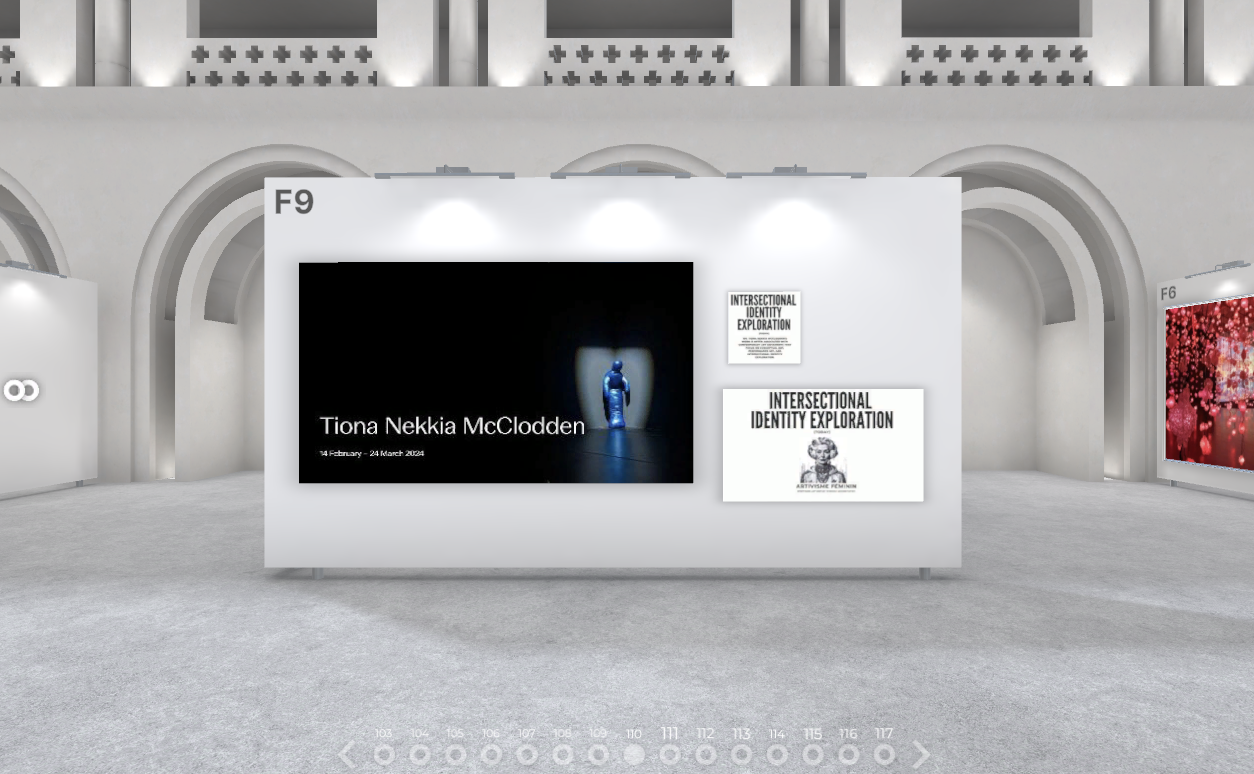

Visit Hall 3 F9 on Anasaea to explore the work of Tiona Nekkia McClodden, Kara Walker, Zanele Muholi, and Shirin Neshat. https://anasaea.com/viewExhibition/FocCNcLqQ8uqnSTam
This movement highlights artists who address identity through race, gender, sexuality, and cultural history.
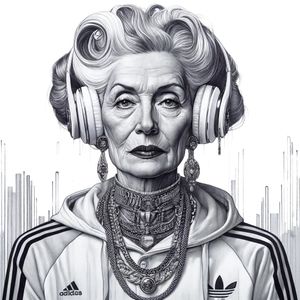
Art Movement: Intersectional Identity Exploration
1980–Present
This period uses art to explore identity as something complex, layered and shaped by social structures. Gender, race, sexuality, religion, class and cultural history are not treated as separate themes, but as forces that intersect and influence how bodies are seen, represented and controlled.
Building on feminist, civil rights, postcolonial and queer movements, artists in this period challenge the idea of a single, stable identity. They use photography, film, performance, installation, digital media and archival research to question who gets represented, who is misread, and who is left out of dominant histories.
Rather than simply asking for visibility, many artists in this period examine the conditions of visibility itself. Who is allowed to appear? Who controls the image? When does representation become recognition, and when does it become another form of categorisation?
Female Artists
Tiona Nekkia McClodden
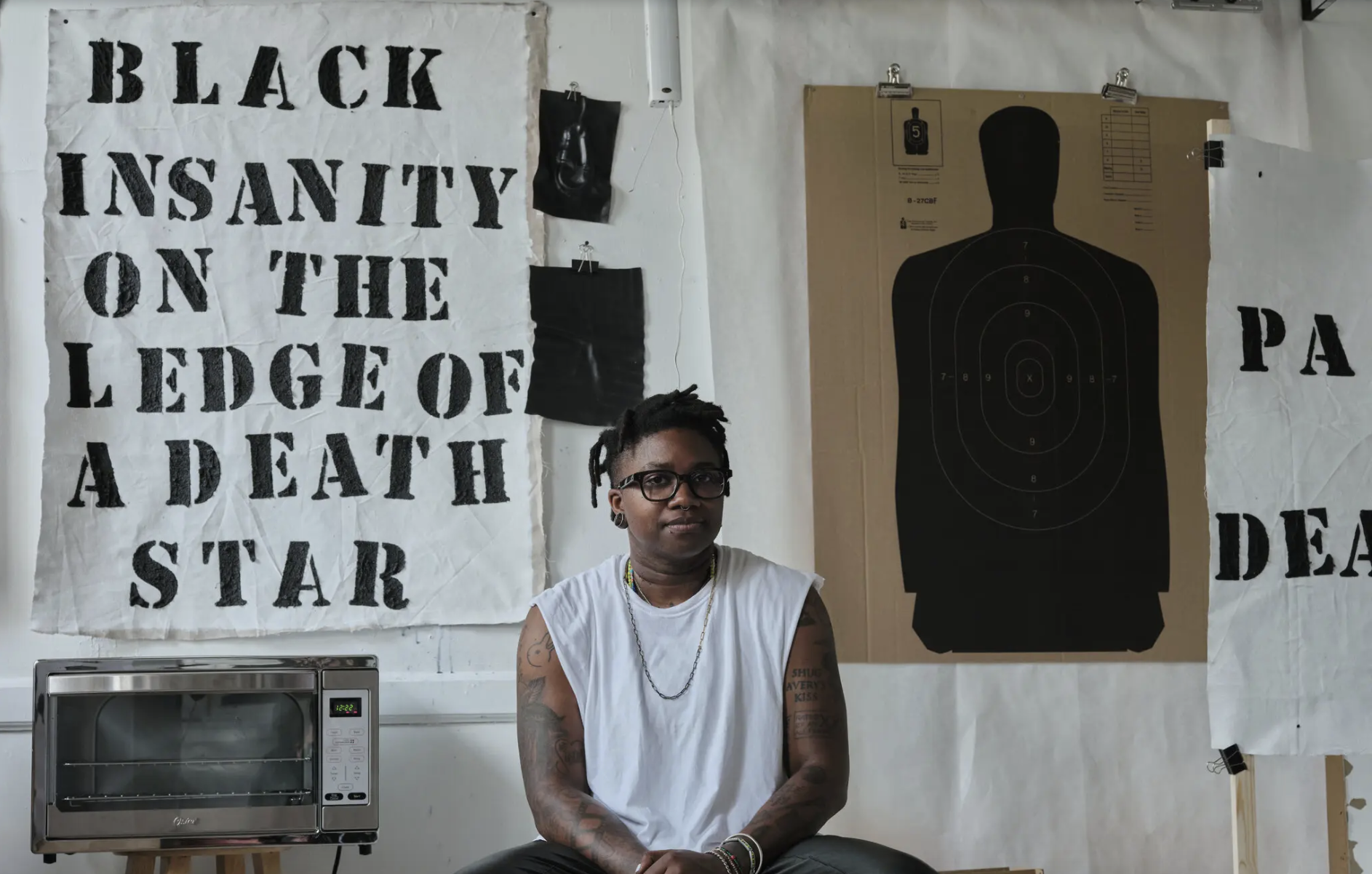
McClodden is an interdisciplinary, research-based conceptual artist, filmmaker and curator whose work explores gender, sexuality, race and Black queer lineage. In works such as Be Alarmed: The Black Americana Epic, Movement III – The Triple Deities, she merges film, performance, sculpture and installation to examine Black female identity within American society and the African diaspora. In her more recent series NEVER LET ME GO, shown in PURE GAZE at White Cube New York, she shifts the conversation from identity as representation toward pressure, abstraction, restraint and the gaze. Her work asks how dignity can be preserved when visibility itself becomes a form of pressure.
Kara Walker
Walker’s silhouette installations, including Gone: An Historical Romance, confront the legacies of slavery, racial violence, gendered power and historical fantasy. Her work uses seduction and discomfort at the same time, forcing viewers to confront how racial and sexual stereotypes continue to shape cultural memory.
Zanele Muholi
Muholi’s photographic series Faces and Phases documents Black lesbian, trans and gender-nonconforming communities in South Africa and beyond. Their work is not only about visibility, but about self-representation, dignity and the right to be seen outside violence, shame or erasure.
Shirin Neshat
Neshat is known for black-and-white photography and video works such as Women of Allah, in which she examines the complex relationships between gender, religion, political power, exile and cultural identity.
Challenges for Women in This Period
Systemic exclusion
Although this period foregrounds inclusion and representation, the art world still struggles with unequal access, especially for women of colour, queer artists and artists working outside dominant Western centres.
Reduction to identity
Artists addressing race, gender or sexuality are often confined to those categories, as if their work cannot also speak about form, material, philosophy, abstraction, history or aesthetics.
Control over visibility
The question is no longer only whether artists are visible, but under what conditions. Visibility can empower, but it can also expose artists to categorisation, consumption and simplification.
Ownership and digital circulation
Artists working with digital media, archives, AI, blockchain and online platforms face new questions around authorship, ownership, reproduction and control over images.
Values in Their Work
Dignity
McClodden and Muholi both insist that visibility must not become consumption. Their work protects the complexity of bodies, histories and identities that have often been reduced by the gaze of others.
Courage
Walker and McClodden confront histories of violence, slavery, sexuality, restraint and control without making them comfortable for the viewer.
Self-representation
Muholi and Neshat show how powerful it is when artists shape their own images and narratives rather than being represented by dominant systems.
Elusiveness
In McClodden’s recent work, elusiveness becomes a form of dignity. Her abstract figures show that a body, identity or history does not need to be fully explained, categorised or consumed in order to be powerfully present.
Reflection on Today
This movement remains highly relevant because identity is still too often simplified into labels. These artists show that identity is not a fixed category, but a field of pressure, memory, representation and power.
Their work asks us to look more carefully. Representation alone is not enough. What matters is who controls the image, who defines the story, and whether complexity is allowed to remain intact.
A Warning for the Future
The future of art must protect complexity. Inclusivity cannot become a decorative language while old systems of exclusion continue underneath. The danger is not only that certain artists remain invisible, but that they become visible only in ways that make them easy to categorise, consume or market.
Artists such as Tiona Nekkia McClodden, Kara Walker, Zanele Muholi and Shirin Neshat remind us that visibility must be connected to autonomy, dignity and historical awareness. Without that, representation risks becoming another form of control.
Visit Hall 3 on Anasaea
Visit Hall 3 on Anasaea to explore the work of Tiona Nekkia McClodden, Kara Walker, Zanele Muholi and Shirin Neshat. This movement highlights artists who address identity through race, gender, sexuality, religion and cultural history, while questioning how identity is seen, framed and valued.