
Today (June 4, 2026) is Fronleichnam or Corpus Christi. In the states of Bavaria, Baden-Württemberg, Hesse, Saarland, North Rhine-Westphalia, and Rhineland-Palatinate it is a public holiday.
Corpus Christi falls on the 60th day after Easter and reminds people of the Last Supper when Jesus shared bread and wine with his disciples, saying "This is my body" (bread) and "This is my blood" (wine). It is a celebration to give thanks.
What does the word "Fronleichnam" mean?
The German word Fronleichnam has many people thinking of a dead body, a corpse or Leichnam. However, the word Leichnam comes from Old High German lichnam meaning Leib, Körper, or 'body', nothing dead about it. The word Fron refers to the old word for Herr or Lord. You can also find it in the German word Fronarbeit when you worked as serf for a Lord of the manor.
Corpus Christi Traditions
The most common tradition on Corpus Christi is the Fronleichnamsprozession. After morning mass, a procession led by the priest takes place in the town. Under a canopy (Himmel, sky) the monstrance containing the holy of holies, the consecrated host (wafer), is carried. It is most often gold and can be extravagantly decorated.
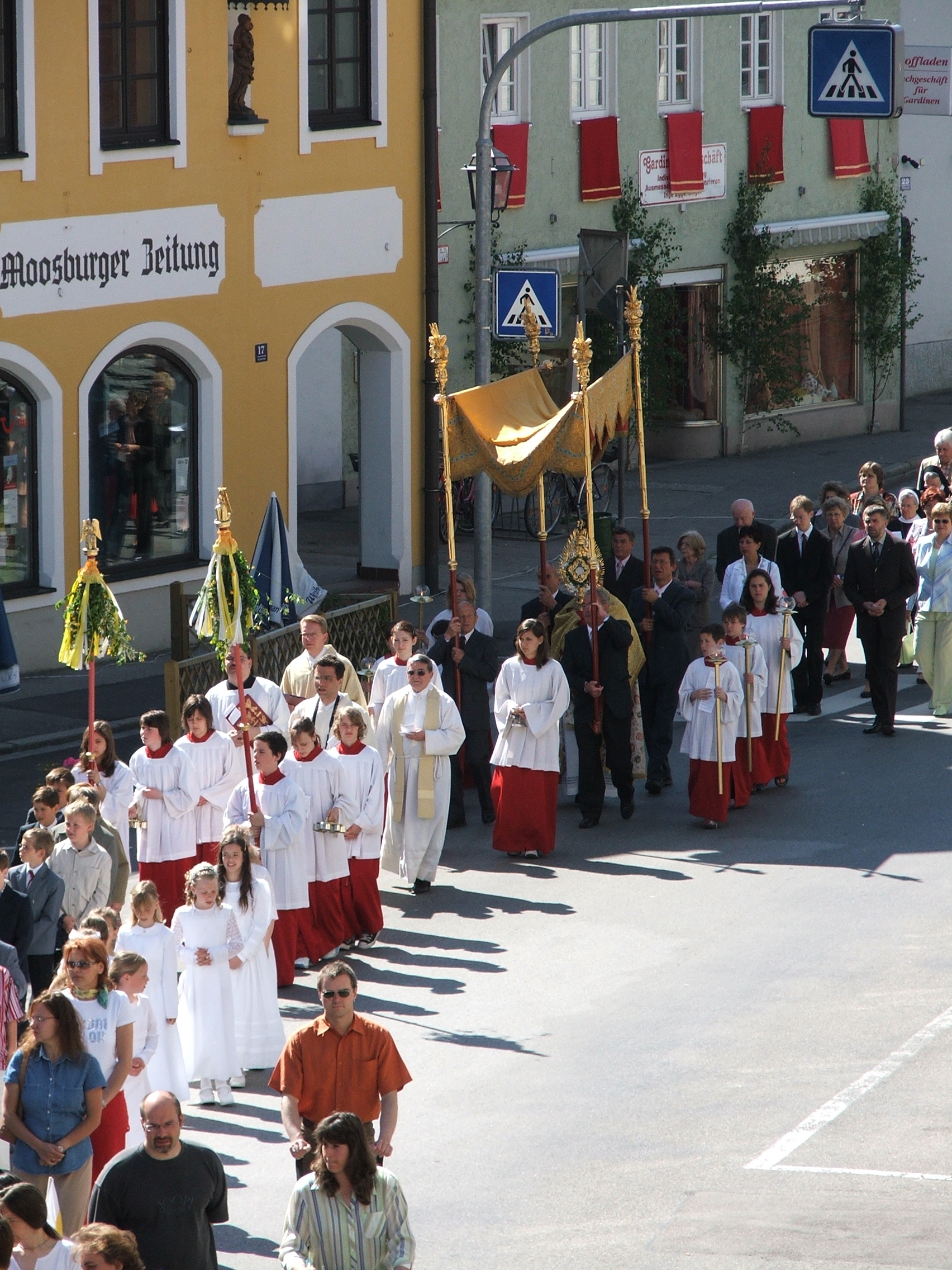 Photo: By Björn Laczay from Moosburg, Germany - Flickr, CC BY 2.0, https://commons.wikimedia.org/w/index.php?curid=1582796
In some parishes, the road where the procession takes place is decorated with birch trees and/or rose petals. Other congregations make Blumenteppiche, placing colorful flower petals on the ground to make a pattern.
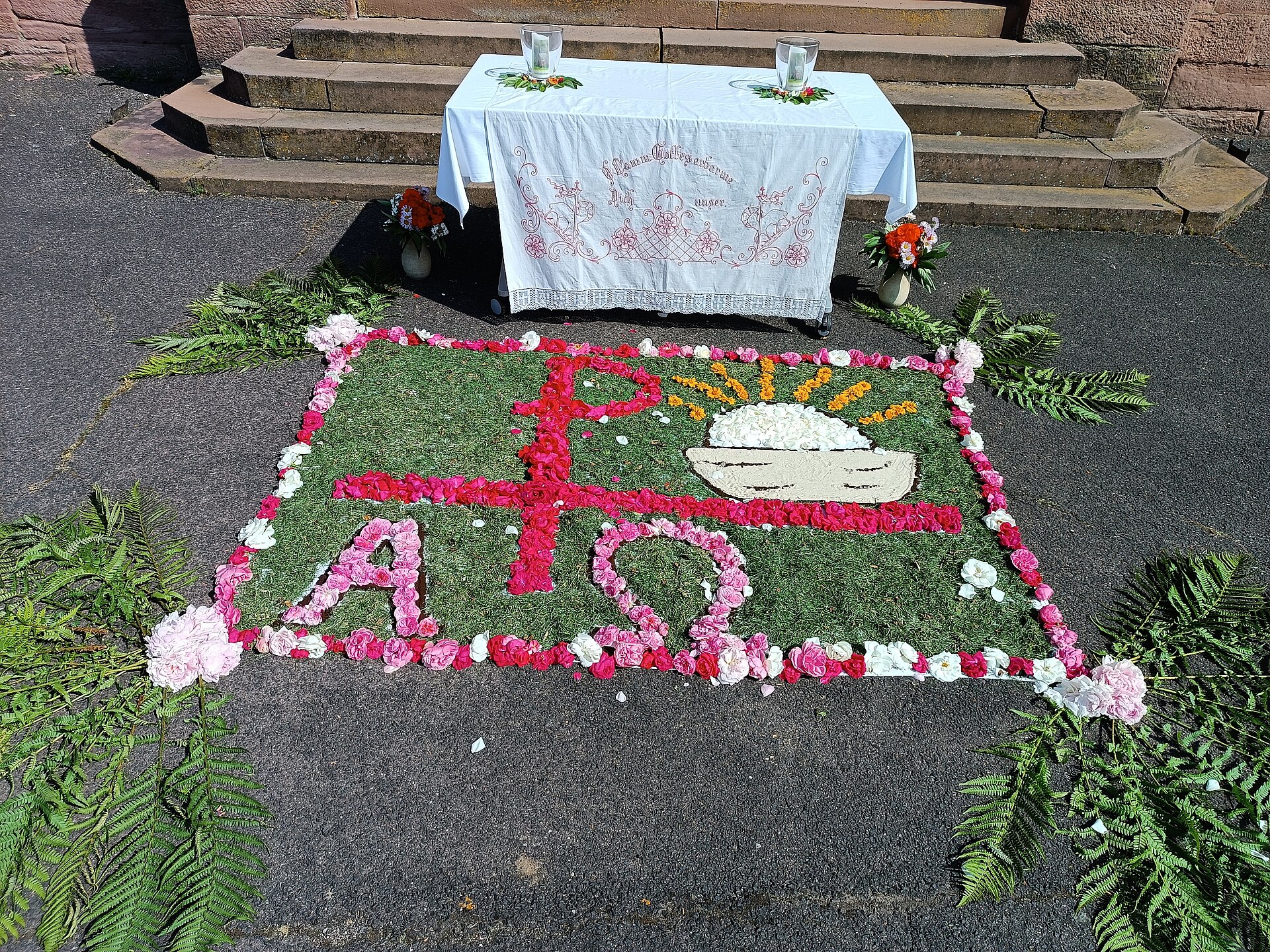 Fronleichnam in Werbach. Photo: By MJ200506 - Own work, CC BY 4.0, https://commons.wikimedia.org/w/index.php?curid=177047857