

In 1973, I was born to Terry and Lynne who were 22 and 21 years old at the time. My sister, Wendy, was only 15 months old when I entered the picture. Throughout early childhood, Wendy and I were often mistaken as twins because we looked alike and were always perfectly paired in matching outfits.
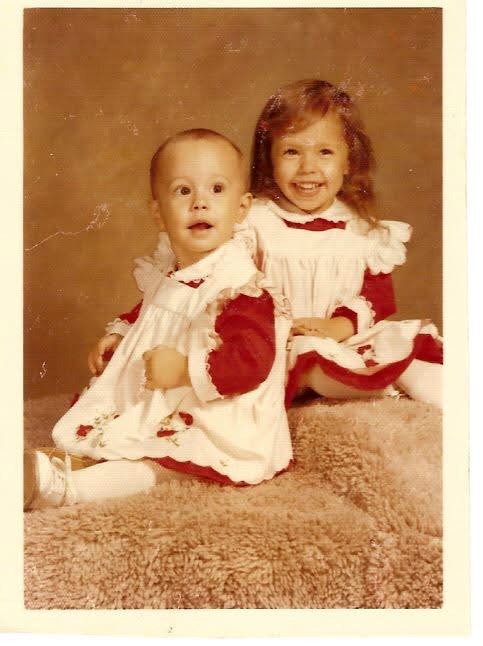
My mom was winning proverbial supermom awards with her Pinterest-level details in our coordinated wardrobes, expertly themed birthday parties, four-course meals, and family functions.
Keep in mind, our childhood happened a few decades before Pinterest or the Internet were invented. My mom just seemed to naturally come by her drive for perfection and attention to details. Our house always looked like it was ready to be featured in Better Homes and Gardens: The Middle Class Midwestern Homes Edition.
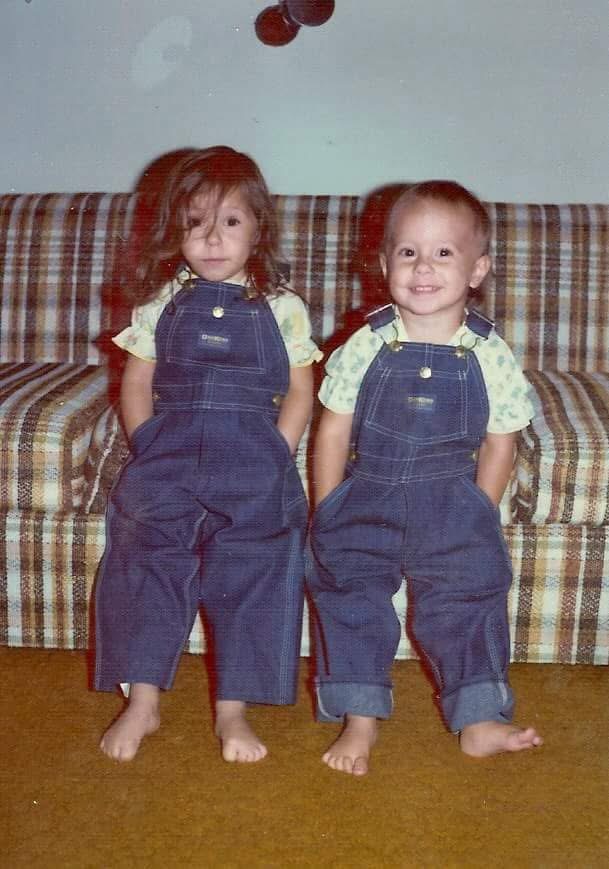
My sister was four years old and I was three when our brother, Brandon, was born. I was absolutely smitten with him.
I dreamed of becoming a mom from the time I could conceive of the idea. My brother was the first baby that was “mine.” I always wanted to hold him and feed him. I believed I was a very helpful tiny mom. I now realize that any mom with an enthusiastic and “helpful” three-year-old is exhausted and just wants to do it herself.
Despite her exhaustion, my mom never discouraged me from helping. She took the time to foster my desire to nurture my baby brother.
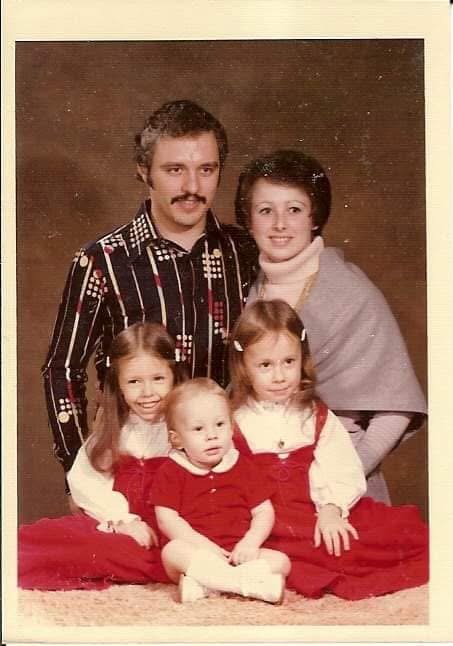
When my mom announced she was pregnant again, I was giddy with excitement. Brandon was still a baby and we were going to have another baby! Six days before my fifth birthday, my little brother Donovan was born. I was absolutely convinced that my mom delivered him as a gift for me.
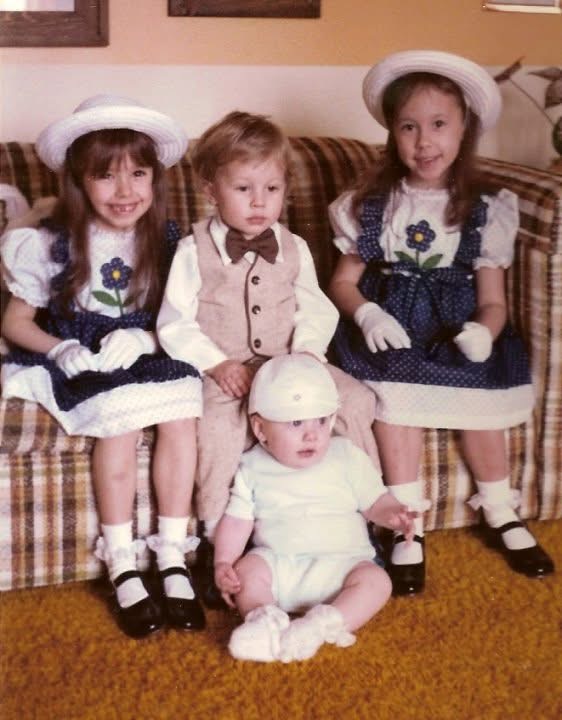
As I reflect on the times I spent snuggling my baby brothers, my memories often take me back to the brown, oversized rocking chair in our orange and brown 1970s living room. That chair not only rocked but could also spin a full 360 degrees. When I wasn’t holding or rocking one of my baby brothers in that chair, Wendy and I would spin it around like we were on the Wheel of Fortune.
Our mom did not appreciate that game.
That chair was the soft place where my mom held her babies, opened Christmas gifts, and hesitantly posed for pictures.
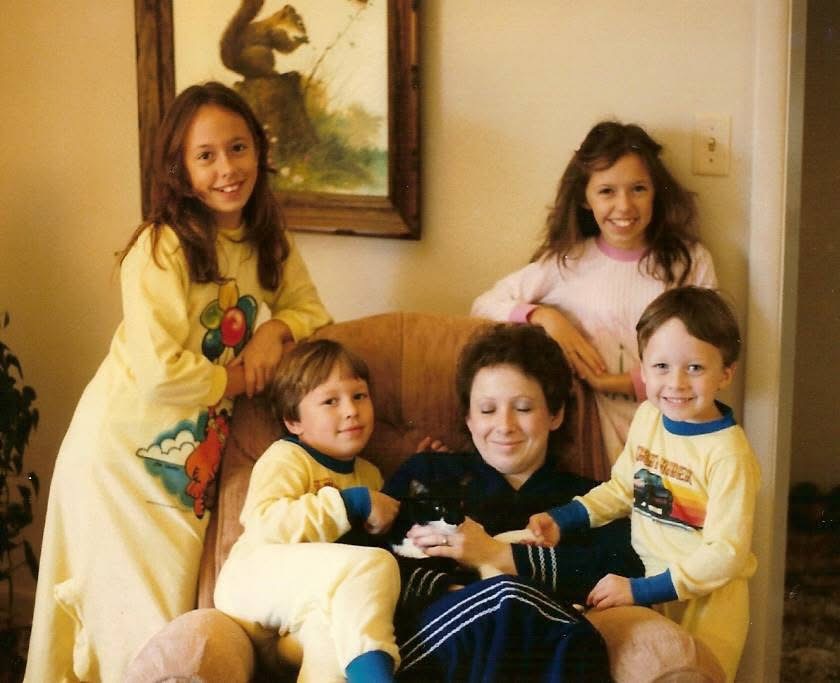
I knew my mom was always happiest when she was surrounded by her kids. She showered us with love and worked hard to be the perfect mom. I wanted to grow up and be just like her: the perfect mom.
What I didn’t realize at the time was that perfectionism would eventually become a debilitating condition that would try to destroy me. (More on that later.)
Secret Trauma
As a young child, I realized that my parents were burned out, stressed out, and overwhelmed. I didn’t know those terms until much later in life, but I could tell they were having a hard time.
I’ve tried to pinpoint the exact behaviors that led me to this realization, but it’s nearly impossible to recall. What I can remember, though, is how much I worried about my mom.
I could feel her despair as if it was my own.
I’m not entirely sure why, but I had a deep knowing that my mom needed more ease and less stress. I figured that if I didn’t rock the boat, she wouldn’t need to worry about me. This cemented my belief that my mom needed me to be the perfect kid.
What I didn’t know at the time, but learned twenty years later, was that my sister had been diagnosed with a rare childhood cancer just before her fifth birthday. My parents took her to the doctor who discovered a large lump on her kidney. She was diagnosed with a Wilm’s Tumor, which at the time had a survival rate of less than nine percent.
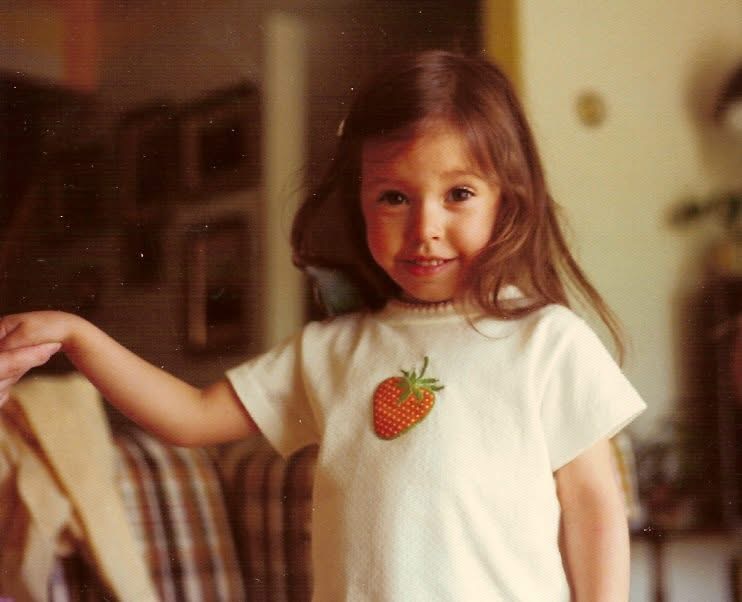
After undergoing surgery to remove her kidney and subsequently receiving radiation and chemotherapy, my sister experienced many years of health issues. Shortly after her kidney surgery, she became violently ill. Sadly, she was so sick that she couldn’t be my partner flower girl for my Aunt Jeannette and Uncle Dale’s wedding. Doctors later discovered that scar tissue from her initial surgery had caused a blockage in her intestinal tract.
Wendy had surgery to remove the intestinal blockage, but her battle with significant health issues had just begun. For years, she experienced a growth hormone deficiency likely caused by the cancer treatments. That deficiency led to uneven growth of bones in her jaw and spine.
At 16 years old, she underwent yet another major surgery. This time doctors reconstructed her entire jaw. I remember how scary it was to witness my sister’s pre-op tears and post-op swelling and pain. My mom and dad stayed strong and positive on the outside. I’ve often wondered how terrified they must have felt on the inside.
Throughout all of these experiences, my parents were stockpiling trauma. They were born in the 1950s when therapy was uncommon and highly stigmatized. The Internet did not exist, so they certainly couldn’t access mental health resources as easily as people can now.
The only resources they had were Wendy’s doctors and their family members. At that time, doctors apparently believed in keeping secrets. They advised my parents to just “go on with life” like everything was normal. It’s my understanding that they believed patients were more likely to die if they knew they were sick.
Unfortunately, this meant that my parents internalized all of their fears, worries, anxieties, and the deep trauma they were experiencing as they watched their first-born baby fight cancer.
My mom and dad each had supportive family members who unfortunately came into this scenario with their own trauma. Both of my grandmas had experienced the deaths of their own babies when my parents were young. I can only begin to imagine how their own unhealed wounds were manifesting as they watched their adult children fighting to keep their first grandchild alive.
Just Be Perfect, Amy
It’s taken me decades of therapy to unpack my early and persistent need for perfection. I honestly believed that, if I could just be perfect, my parents would have one less thing to worry about. I kept my room neat and tidy, my closet was perfectly organized, and my morning routine was meticulous.
When my parents set a rule, I followed it. When people broke rules, I told on them.
I was a straight-A student, a high-achiever, and I always aimed to be the best. When I was in second grade, I experienced my first real “fall from grace” and it haunted me for years.
It happened during the second grade Spelling Bee. Before I walked onto the stage to take my seat with the other spellers, my parents hugged me and encouraged me to do my best.
I knew my best was perfection, so that meant I needed to win. After several intense rounds, we were down to two spellers, me and Gary. I got the word “thermometer” and, in my nervousness, I jumbled the words “thermometer” and “temperature” together
I walked to the microphone and said, “t - h - e - r - m - o…m - a - t - u - r - e,” and I repeated the word for the judges, “thermometer.”
The announcer spoke matter-of-factly into the microphone, “I’m sorry, that’s incorrect.”
Oh. My. God. What had I done? I was about to lose. I was secretly begging Gary to spell it wrong. I needed another chance.
Gary stood from his chair, walked to the microphone, leaned forward, and carefully said, “t-h-e-r-m-o-m-e-t-e-r. Thermometer.”
The announcer enthusiastically spoke into the microphone, “That’s correct! We have a winner!”
I was devastated. I thought, how will I ever face my parents? How are they going to cope with this failure? How are they going to cope with me?
I’m a failure.
I’ve failed them. This is the last thing they need.
That’s a whole lot of perfectionism-driven shame for a seven-year-old.
Needless to say, my parents were proud of me and their mental health did not, in fact, suffer due to my devastating second-grade Spelling Bee loss.
But my battle with perfectionism didn’t end there. The struggle persisted for several decades and definitely got worse before it got better.
Self-Reflection Prompts
How does perfectionism show up in your life?
Can you remember your earliest experiences of perfectionism?
What early childhood experiences are stored in your memory as failures?
Can you examine how perfectionism may have played a role in those experiences?