

# Beneath the Surface: The 5 Most Dangerous Fish in the World
The world’s oceans, rivers, and lakes are home to breathtaking beauty and terrifying power. While the sight of a shimmering school of fish often evokes peace and wonder, the depths also harbor creatures that command respect and caution. From specialized parasites to silent, venomous assassins, some fish pose a significant threat to humans—not out of malice, but often out of defense, instinct, or simple biology.
Based on reports from sources like the Times of India and global wildlife data, we countdown five of the most dangerous fish on the planet. These are not just the largest predators; they are masters of poison, deception, and surprise.
### 1. The Vampire Fish (Candiru): A Tiny Terror of the Amazon
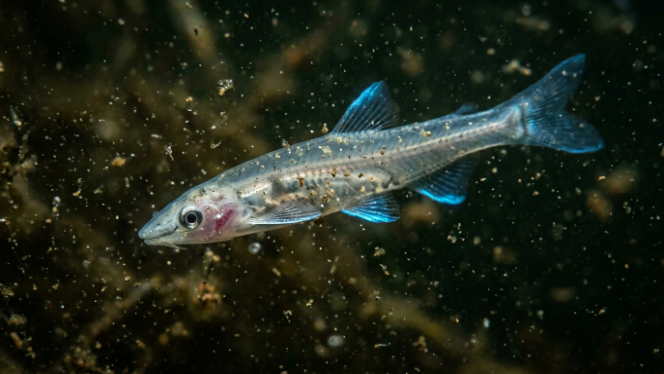
Topping many lists of “most feared” is not a giant shark, but a small, eel-like catfish known as the Candiru, or the “vampire fish.” Scientifically named Vandellia cirrhosa, this translucent creature rarely grows longer than six inches. It lives in the murky waters of the Amazon River, where it has earned a reputation far more frightening than its size suggests.
The Method: The Candiru is a hematophage, meaning it feeds on blood. In its natural environment, it locates larger fish by following the flow of oxygen-rich water leaving their gills. The Candiru then swims inside the gill cavity, erects spines on its head to anchor itself, and gnaws through the gill tissue to drink the host’s blood.
Why is it dangerous to humans? The horror lies not in an attack, but in a mistake. The Candiru is attracted to the flow of ammonia or urea—substances found in mammalian urine. In rare but well-documented cases (mostly anecdotal from local riverine populations), a Candiru has reportedly mistaken a human’s urethra for a fish’s gill opening while the person is urinating in the water. Once inside, its spines make removal incredibly difficult without surgery, leading to severe infection and tissue damage.
The Reality Check: While the legend is terrifying, modern medical science has confirmed very few verifiable cases of Candiru attacking humans. However, the fear is so ingrained in the Amazon region that locals and seasoned travelers strictly avoid urinating in the river. The Candiru remains one of the most controversial and chilling fish on the list because of the sheer horror of its unique parasitic method.
### 2. The Stonefish: The Master of Disguise and Lethal Spine
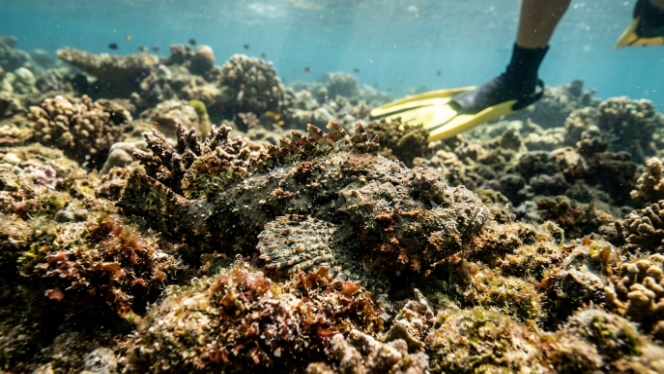
If the Candiru is the most feared, the Stonefish (family Synanceiidae) is arguably the deadliest. Found in the shallow tropical waters of the Indian and Pacific Oceans, from the Red Sea to Australia’s Great Barrier Reef, this fish is a living rock. Its mottled brown and grey skin, covered in wart-like bumps, allows it to blend perfectly with coral reefs and rocky seabeds.
The Weapon: The Stonefish does not chase or bite. Its defense is the 13 sharp, hollow dorsal spines that lie flat against its back. When the fish is stepped on or pressed (often by an unsuspecting wader), the spines spring upright and inject a powerful neurotoxin.
The Venom: Stonefish venom is considered one of the most painful substances known to humans. Victims describe the sensation as being struck by a sledgehammer, followed by waves of excruciating pain that can cause delirium and shock. Without immediate medical treatment, the venom can cause paralysis, tissue necrosis (death of skin and muscle), heart failure, and death within hours.
Prevention and Treatment: Most stings occur when people walk on reefs at low tide. The best prevention is wearing thick-soled water shoes. The only effective treatment is an antivenom, which is widely available in high-risk regions. Because the fish is so well-camouflaged, it represents a silent, stationary threat that has earned it the title of the world’s most venomous fish.
### 3. The Shark: The Ocean’s Misunderstood Apex Predator
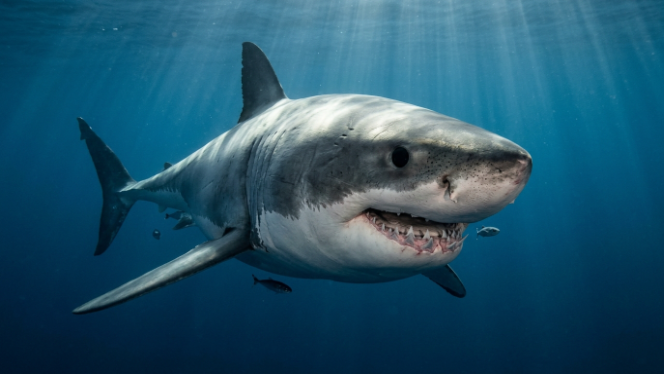
No list of dangerous fish would be complete without the Shark. As the ocean’s apex predator, sharks have dominated human nightmares for generations thanks to films and sensationalist news. However, the reality is far more nuanced.
The Facts: There are over 500 species of sharks, ranging from the tiny dwarf lantern shark (the size of a human hand) to the massive whale shark (a gentle filter-feeder). Of these, only a handful—the Great White, Tiger, Bull, and Oceanic Whitetip—are responsible for the majority of unprovoked fatal attacks on humans.
How they hunt: Sharks rely on an incredible array of senses. They can detect a single drop of blood in an Olympic-sized swimming pool, sense the electrical fields of a beating heart (via the Ampullae of Lorenzini), and feel low-frequency vibrations from struggling prey. However, experts widely agree that most shark attacks are cases of “mistaken identity.” A surfer paddling on a board looks from below like a sea lion or turtle. A swimmer splashing may sound like an injured fish.
The Danger vs. Reality: Statistically, sharks are not nearly as dangerous as popular culture suggests. You are more likely to be struck by lightning or die from a vending machine falling on you than to be killed by a shark. Yet, when an attack happens, the results are often catastrophic due to their powerful jaws and serrated teeth. Conservationists argue that humans are far more dangerous to sharks (killing 100 million annually) than sharks are to humans. Regardless, the shark remains the definitive symbol of oceanic danger.
### 4. The Red-Bellied Piranha: The Razor-Toothed Swarm
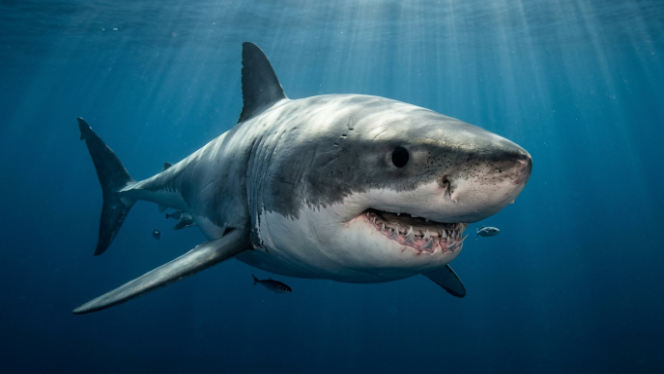
Famous for their Hollywood portrayal as mindless, skeleton-stripping machines, the Piranha (specifically the Red-Bellied Piranha) is a far more calculated threat. Native to the Amazon River Basin in South America, these fish are stocky, silver with a red underbelly, and possess the most terrifying dentition in the animal kingdom.
The Teeth: Piranha teeth are triangular, razor-sharp, and interlocking like a bear trap. They are arranged in a single, powerful row on each jaw. These teeth are continually replaced—when one breaks, a new one grows in its place. Locals often use discarded piranha teeth as cutting tools.
The Behavior: The popular myth of a piranha swarm stripping a cow to bone in seconds is highly exaggerated. Piranhas are primarily scavengers and opportunistic omnivores. They are胆小 (timid) and usually flee from large animals. The danger emerges in specific conditions: drought (when water levels drop, trapping fish in pools), hunger, or the presence of blood. In these stressful situations, a school (which can number in the hundreds) can enter a feeding frenzy.
Attacks on Humans: While fatal attacks are extremely rare, piranhas frequently bite swimmers. A typical bite occurs when a person reaches into a net or disturbs a nest (piranhas guard their eggs fiercely). The result is a clean, circular, cookie-cutter wound that bleeds profusely. While you wouldn’t be devoured alive on a normal swim, stepping into a drought-stricken pool with a starving school of piranhas is a legitimate survival risk.
### 5. The Fugu (Pufferfish): A Delicacy That Can Kill

The final danger does not lurk in the deep sea, but on the dinner plate. The Fugu, or pufferfish, is considered a luxury delicacy in Japan and Korea. But eating it is often compared to playing Russian roulette.
The Toxin: The Fugu contains tetrodotoxin, a potent neurotoxin concentrated in its liver, ovaries, eyes, and skin. This poison is up to 1,200 times more deadly than cyanide. A single fish contains enough venom to kill 30 adult humans. Interestingly, there is no known antidote.
How it kills: Tetrodotoxin works by blocking sodium channels in nerve cells, effectively paralyzing the muscles. The victim remains fully conscious but slowly loses the ability to move, speak, and finally, to breathe. Death occurs by asphyxiation, usually within four to six hours of ingestion.
The Prevention: In Japan, only chefs who undergo three or more years of rigorous training and pass a national exam are licensed to prepare Fugu. They meticulously remove the toxic organs, ensuring no trace of poison remains on the edible meat. A tiny mistake by a chef can be fatal.
### Conclusion: Respect, Not Fear