

The “Rolex 24 Hour-by-Hour” series is back. I launched it last year on Instagram, where it got a lot of love, even though I only had about 500 followers at the time. Now that I’m at literally 10x that number, I know that most of you reading this probably weren’t around for last year’s edition, so I figured I should probably re-introduce the series. For those of you who are new here, this series follows me hour-by-hour through the Rolex 24 at Daytona. I share where I was and what I did every hour during the 24h of Daytona, as a race fan and photographer without media credentials. This year, I’m supplementing my Instagram posts with a supercharged version here on Buy Me A Coffee.
The standard format last year was six photos per hour/post, each with a short 2-3 sentence caption explaining the story behind the pictures, limited by Instagram’s 2200-character limit. I frequently went over that limit, meaning I had to delete parts of what I wanted to share or make several comments to continue my thoughts. I’m keeping that format for my Instagram posts, so as many people as possible can experience the Rolex 24 vicariously through me. But here on BMAC, I’m sharing the whole story, with no limits on how much I can share.
In addition, I will be sharing 10 photos per hour on this platform instead of the six that Instagram gets. Some hours might even have a bonus 11th photo. Each image is accompanied by my in-depth thoughts, including technical breakdowns, random musings, and behind-the-scenes stories. I hope you all enjoy this series!
Hour 1: Green in the Grandstands
1:40PM - 2:40PM
Given that we had a *very* long day ahead of us, we chose to sleep in on Saturday morning, skipping the HSR support races that preceded the main event. I’m not all that upset about this decision, as only 5 of the 11 cars survived the qualifying race on Friday night, and of the 5 that did, 3 were at the HSR Classic 24h at Daytona that I attended back in November.
We didn’t make it to the Speedway until almost noon, thanks to a mandatory Buc-ee's stop to grab lunch before getting to the track. We were able to secure an infield parking pass for Saturday and Sunday, meaning we didn’t have to walk far to reach the grid walk, which we briefly explored. I didn’t bother taking photos due to the sheer mass of humanity that crowded the pit lane and cars. We did get to sign the track, though.
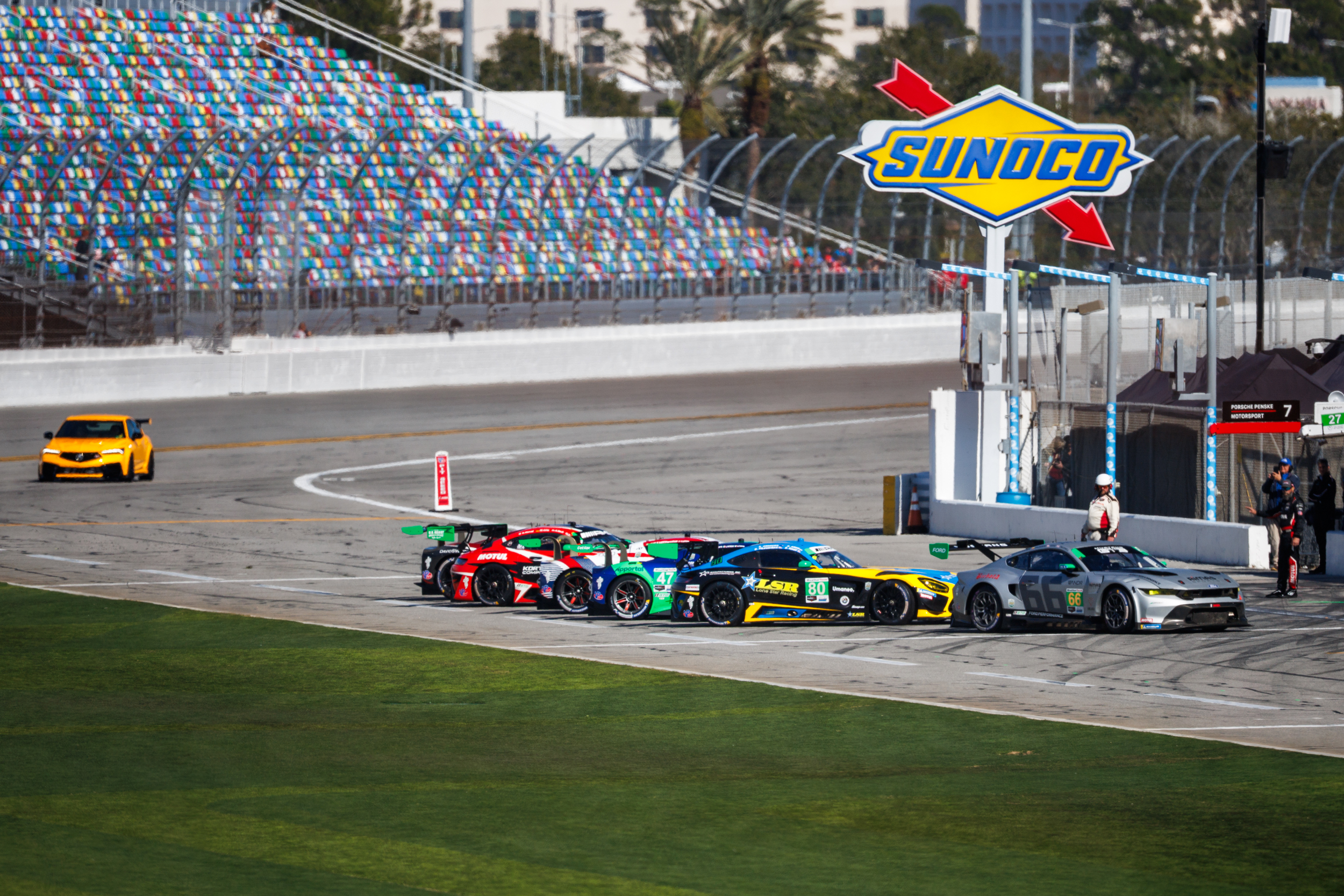 1: The cars head out on track to start their formation lap. In a change from last year, I decided to shoot the start from the grandstands instead of the infield. I specifically wanted an angle that gave me a good view of the start line itself, as this was the only time the cars would be side by side for the entire race. Since we were still quite far from the actual start line, I knew I’d need the 500mm lens for this angle. I chose our starting location specifically because it had a handrail right next to my seat, allowing me to place my lens on top of that to keep it steady instead of destroying my arm by hand-holding the beast. It was too crowded for the monopod to be a viable option (and they’re technically not allowed in the grandstands).
Settings: 1/800s | 500mm | ƒ/4 | ISO100 | 1:35:03PM
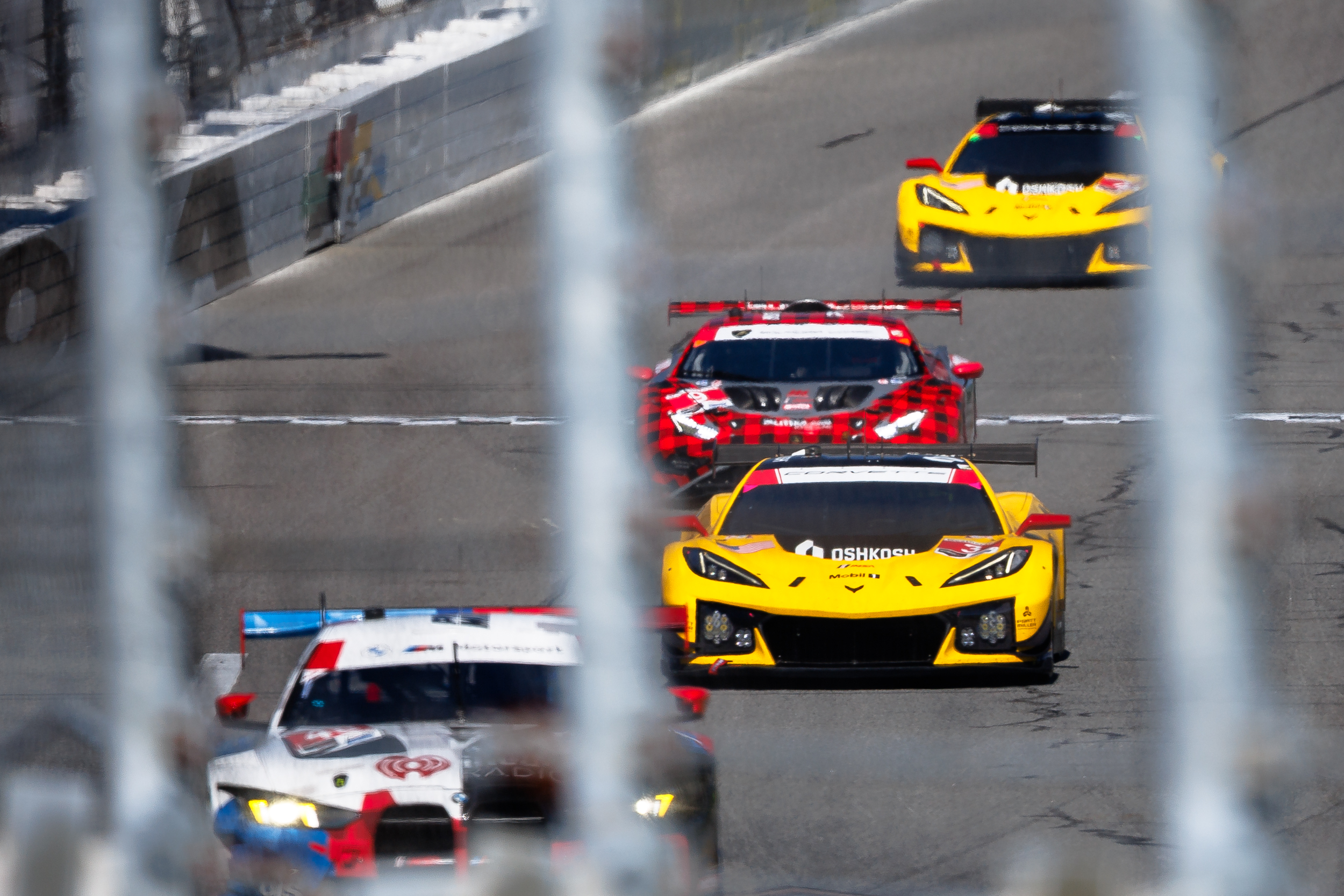 2: As the cars rolled by on their formation lap, I checked my framing on the start line. After the 2016 remodel (and the 2015 Austin Dillon wreck), spectators are no longer allowed on the fence at Daytona. This means I have to shoot through the fence from a distance, resulting in the larger metal poles showing up in my photos. My plan was to use the poles to frame the leaders as they took the green flag. That theory worked for the Prototype field, but the GT field lined up right behind the poles for their start, ruining any chance of a good shot. That is the trouble mixing fixed elements and dynamic subjects in your shot. When it works, it looks intentional; when it doesn’t, you look like an amateur. If you want to try this angle yourself, this is from the very front row of section 156 or 157.
Settings: 1/800s | 500mm | ƒ/4 | ISO 100 | 1:37:40PM
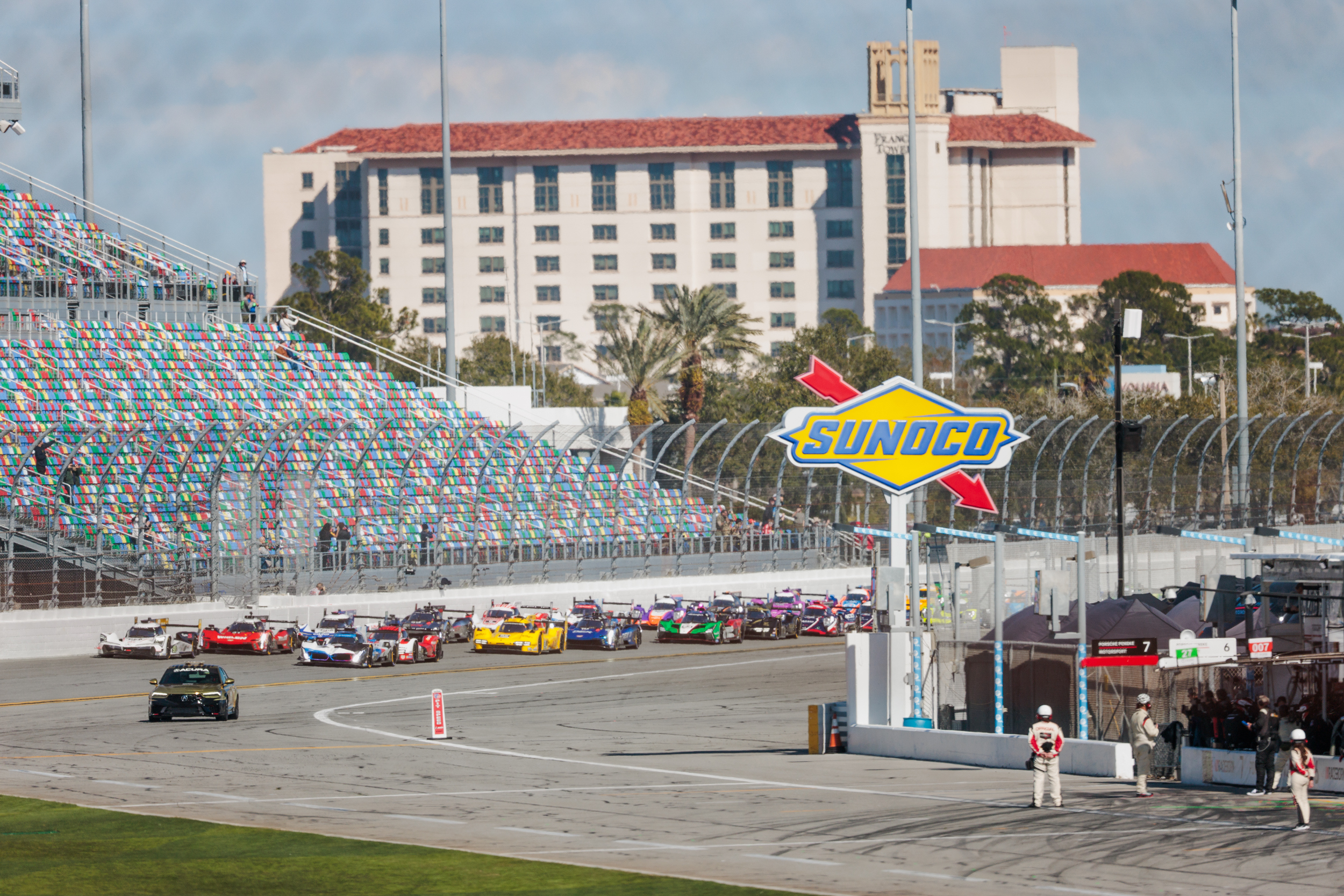 3: Just seven seconds before the flag drops and we go racing for 24 hours. The first pace car drops into the pits as IMSA officials watch. The iconic Halifax Hospital stands tall in the background. According to my camera, the green flag dropped at 1:40:28PM. I didn’t bother with hearing protection for the first few laps. I wanted to feel the cars completely unfiltered before putting in earplugs for the next 24 hours. Having front row seats was awesome. They are the absolute closest you can get to the track while it's hot, less than 30 feet from the cars screaming by at over 190mph. It felt like they punched you as they went by.
Believe it or not, in all 4 of my trips to Daytona, I’ve never been left of the start line while up in the grandstands. My goal is to make it over to that side next year.
I don’t have a start shot to share in this post, as I’ve already shared it on Instagram here.
Settings: 1/800s | 500mm | ƒ/4 | ISO 100 | 1:40:21PM
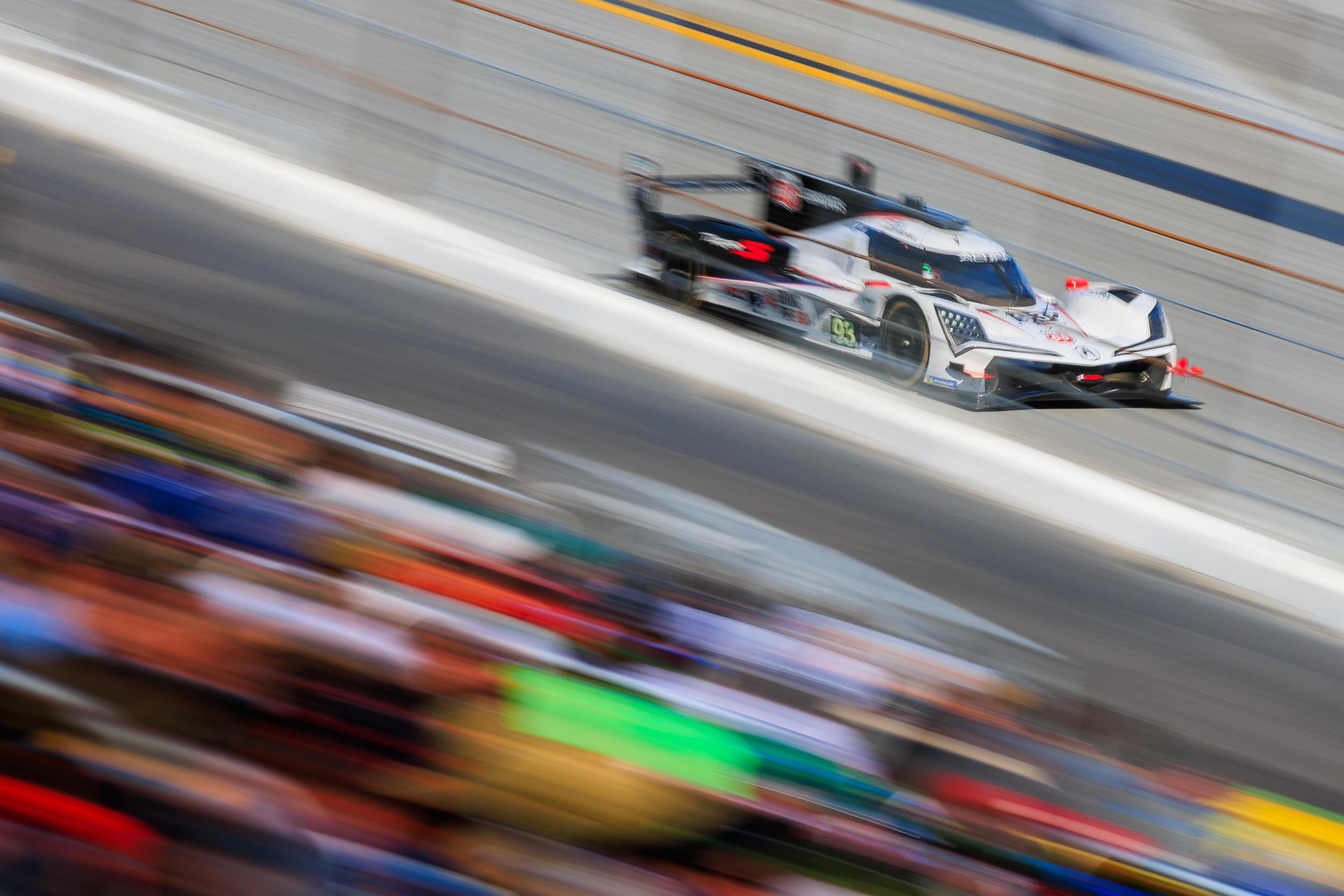 4: This is a shot I attempted at several points during the 2024 race, with mixed (read: poor) results. This year, I finally nailed it by experimenting with multiple shooting locations during Friday’s practice session. Too far left on the grandstands and the cars are blocked by the wall before they start the drop to the infield; any further right and they’re too far off the wall, losing the seat colors in the foreground. This photo was taken in section 176 specifically, right at the top of the stairwell.
I prefer my shots from Friday’s practice over the ones from the race at this location. Most fans don’t show up on Friday, leaving the seats empty, giving the foreground much more vibrant colors. Those rainbow seats were introduced in Daytona’s 2016 remodel. Practice sessions in general are crucial for me as a photographer, because they let me find what angles work and what angles don’t, without the pressure of the race or the hordes of people around me.
Settings: 1/25s | 70-200mm @ 200mm | ƒ/18 | ISO 100 | 2:00:09PM
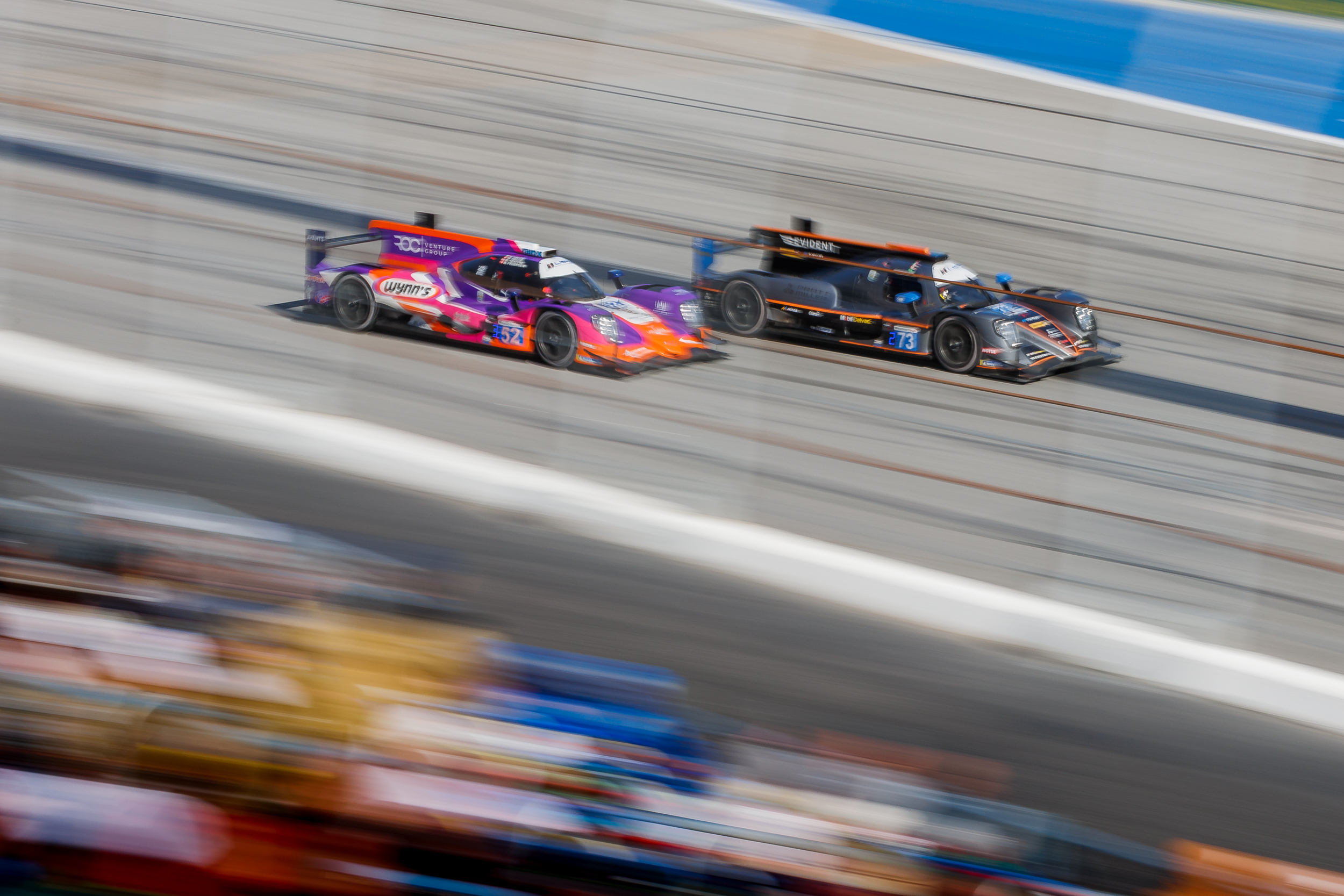 5: Another shot from that same angle, with the #52 and #73 LMP2 battling for position. I personally think the #52 has the peak of LMP2 liveries, while the #73 has the worst in the class – maybe the worst on the entire track. I wanted to share this shot because it shows what happens as the cars drop off the wall and go lower on the track, and how you get less of the stands in view at that point. I stayed in this exact location for about 10 minutes, tucked into a little outcropping by the stairs, continually getting interesting looks from the man seated next to me.
I know I mentioned in the last caption that going further left means losing the cars to the wall, but if you go even further left (past the start line), you get to a point where the cars have yet to reach the wall before they make the tri-oval turn. At this spot, you can get a bit of the infield grass in the background for a nice pop of color. I believe that is section 140ish. I’m going to try that next year.
Settings: 1/20s | 70-200mm @ 100mm | ƒ/22 | ISO 100 | 2:04:33PM
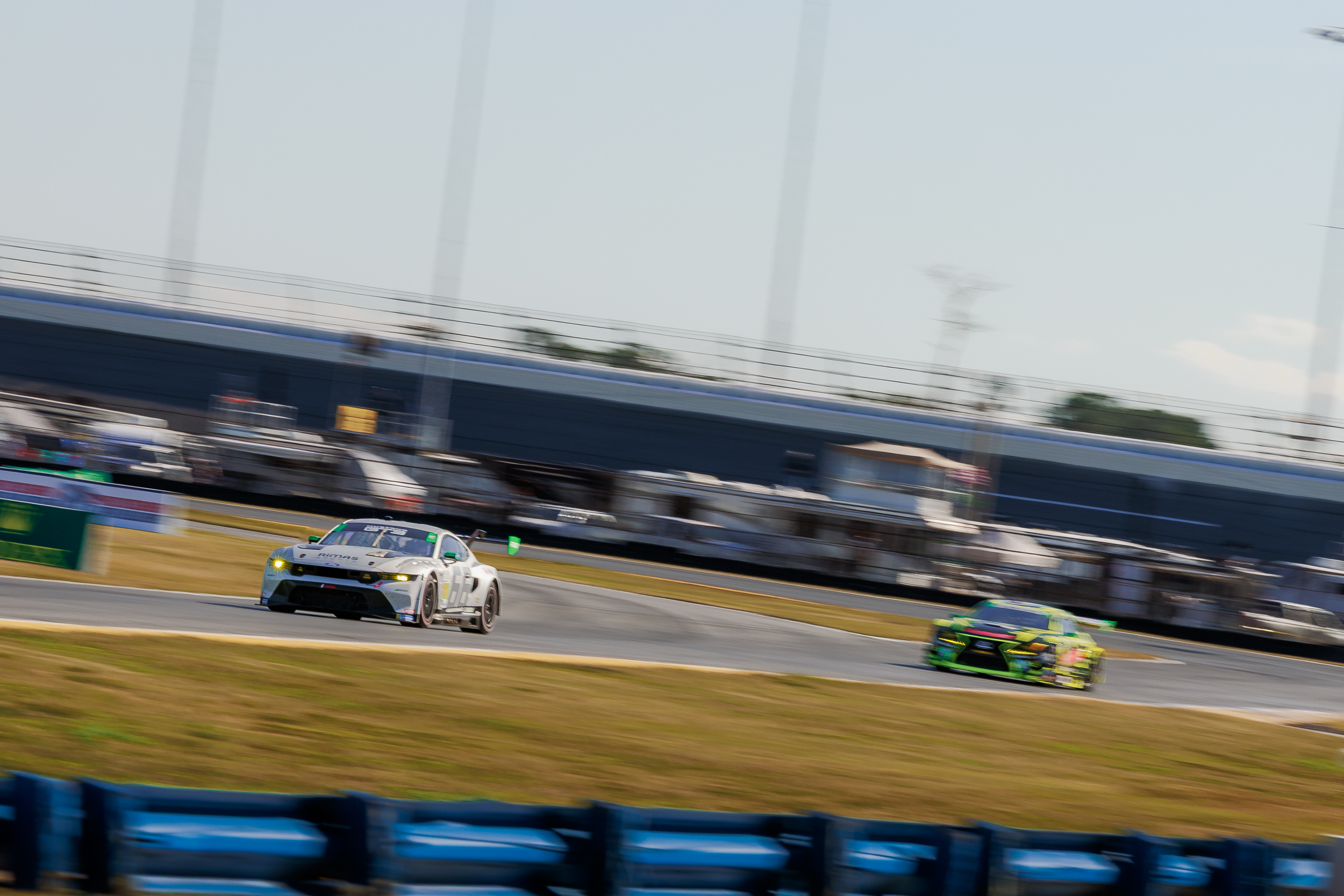 6: 20 minutes later, we call it quits on the grandstands and hike down to the infield at T6. We chose to walk instead of taking the tram. Like us, most other fans were on their way to the infield. The sheer number of people swamped the trams, and we knew we’d lose more time waiting for them than just walking. The plan was to walk the whole infield from T6 to our car by the T3 bathrooms. There, we would restock on snacks and pick up my film gear, and then go on to shoot the sunset somewhere yet to be determined.
The #66 Gradient Mustang livery is still hit or miss for me. It looks great from the angles where you can’t see the IMSA number plate, but it falls apart once you can. I wish they had opted for the standard Ford GTD livery, like the #55 Proton last year, but in their current silver and dark grey color scheme. That would be sublime in my opinion.
This was one of the first of many times where I felt like I was struggling with sharpness during the race. I wasn’t doing great Friday night either, but at the time I figured it was because the temp was in the low 40s and I could barely feel my fingers, much less the camera. Either my technique got really shaky – pun intended – in the two-month offseason, or my lens broke from Friday night’s rain. The shot is a straightforward one, taken at a conservative shutter speed; yet, in most of my pictures here, the car itself isn’t very sharp. Maybe it was the cold. Maybe it was something else.
Settings: 1/40s | 70-200mm @ 200mm | ƒ/14 | ISO 100 | 2:31:26PM
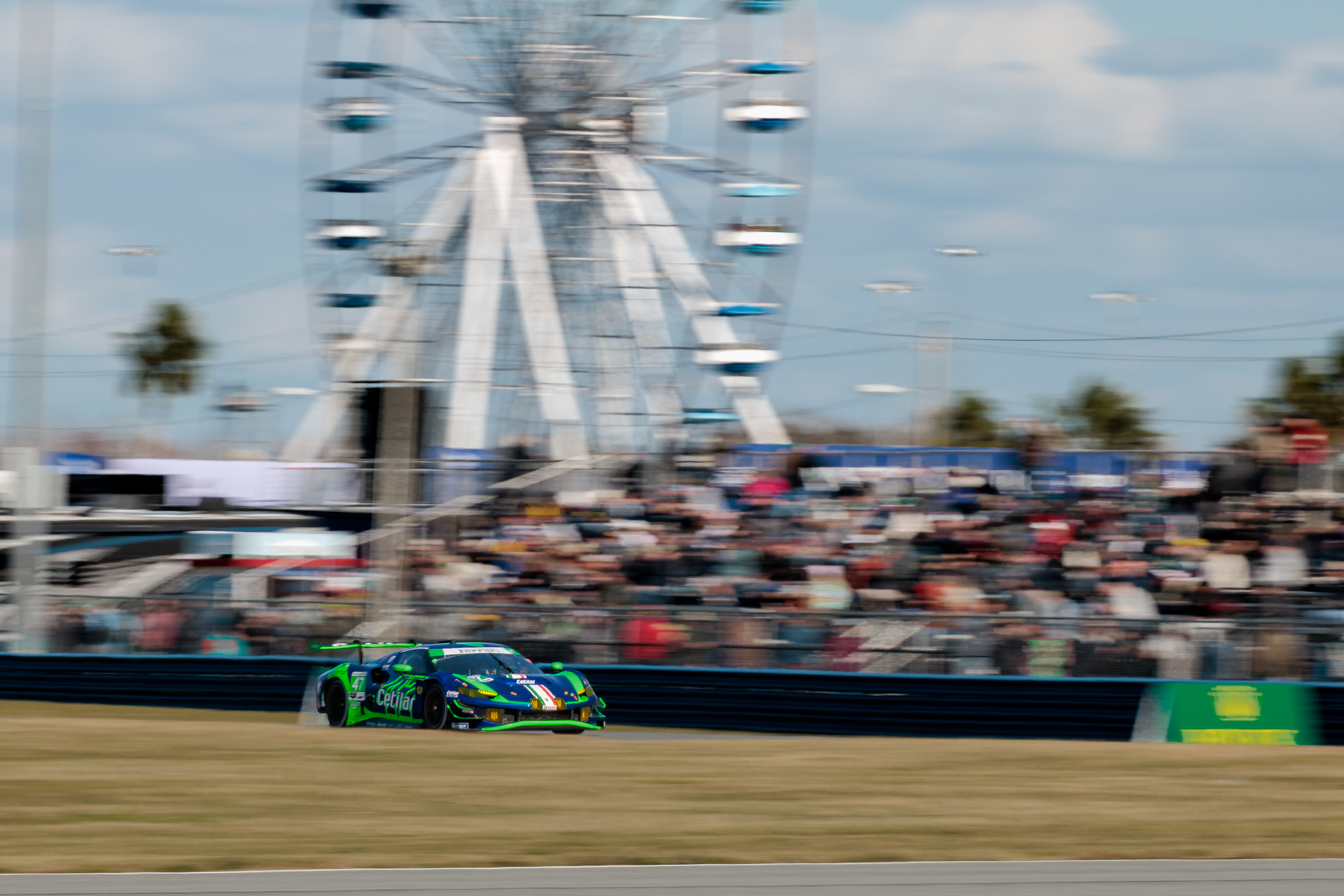 7: At this point, I put on my 2x teleconverter. I didn’t want to break out my 500mm yet, as I buried it in my bag for the trek to the infield, and it's a pain to get out and put back away. I needed a bit more reach than the 200mm alone could give me from this angle.
January was unusually cold this year, leaving the grass dormant and much yellower compared to years past. Initially, I was shooting at 1/40s to get a bit more motion blur in the Ferris wheel and a better separation between the car and background. My keeper rate wasn’t what I wanted, so I switched to 1/60s. The 2x TC does hurt image sharpness, and unfortunately, there’s nothing I can do about that.
Settings: 1/60s | 70-200mm + 2x TC @ 307mm | ƒ/13 | ISO 100 | 2:33:26PM
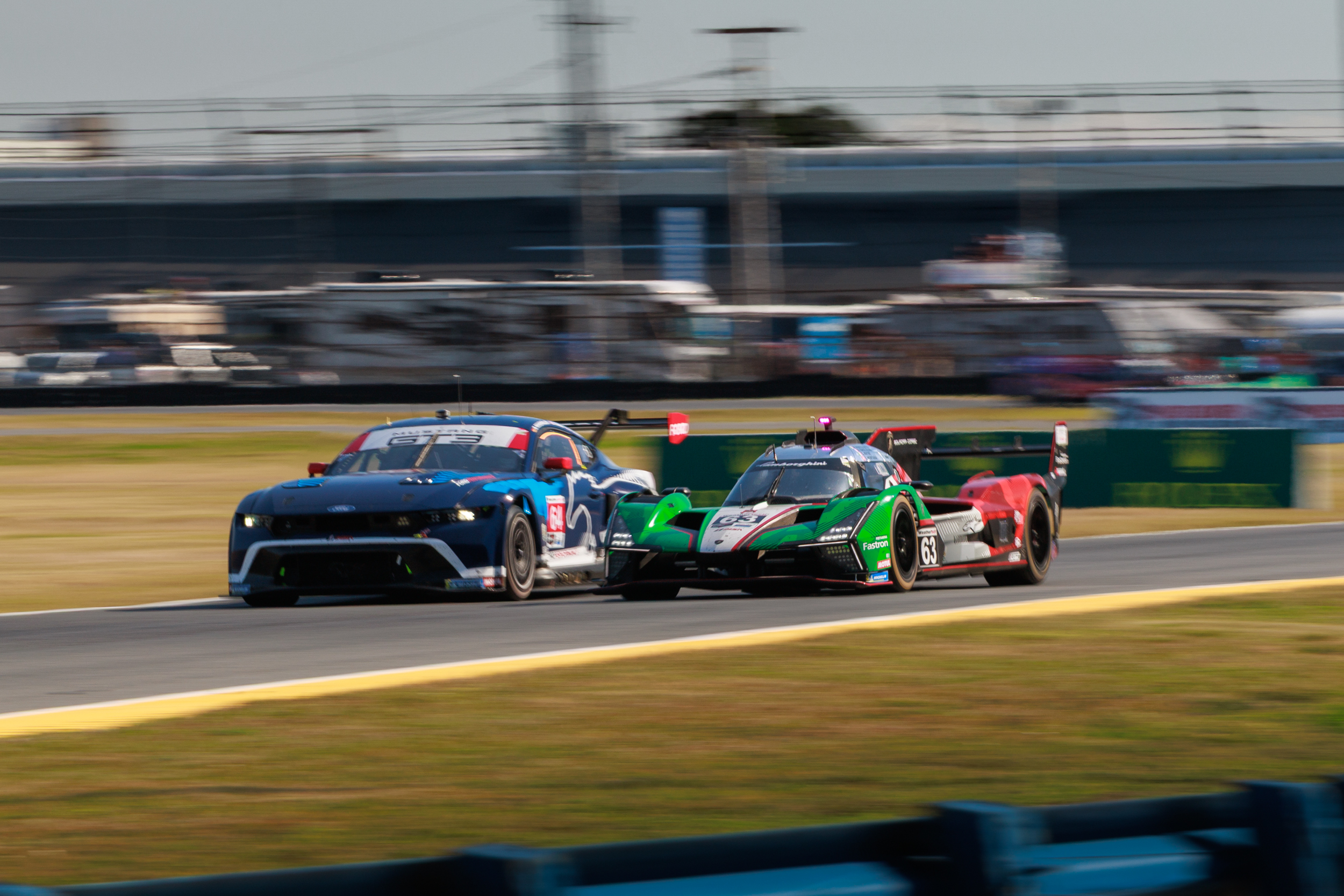 8: This is one of the only photos I got of the Lamborghini SC63 GTP during the actual race. They made their IMSA debut in round 2 last year, skipping Daytona altogether, so this was the car’s first Rolex 24 appearance. I was excited to see the car for the first time. They only competed in the endurance rounds, so I didn’t see them on my trip to Road America either. I was also looking forward to taking some night shots of those awesome headlights and taillights. Unfortunately, they blew up after 34 laps. They didn’t go out at all during Thursday’s night practice either, but it did rain, and they only had the one chassis, so I understand the hesitancy to risk so much before the race even began. Sadly, they just announced the pause of the GTP program for 2026, meaning I‘ll never get that chance. Still, it sounded good and looked cool.
Settings: 1/60s | 70-200mm + 2x TC @ 229mm | ƒ/13 | ISO 100 | 2:34:23PM
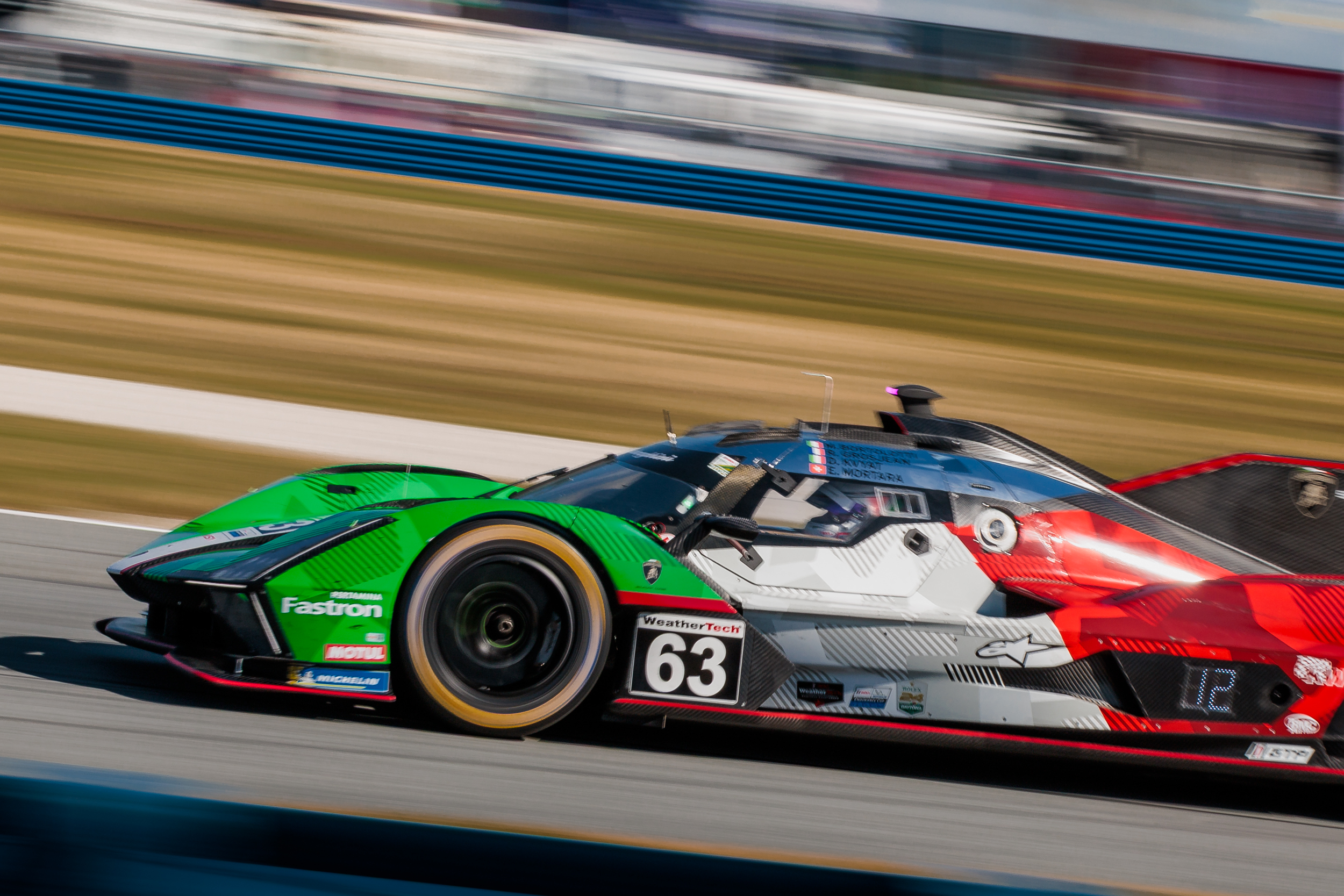 9: I wanted to share another shot of the SC63 since I literally only got like 15 keepers of the car over the entire race, and maybe 30 for the whole week. Their livery was one of the best on track and had me so excited. Not much more to say about this shot other than the sharpness issues I was experiencing. I tried various stabilizer settings throughout the day, but none seemed to resolve my issues.
I did my best with Lightroom’s sharpening settings to minimize the blur. I’m considering buying Topaz Photo AI to help save photos like this, which are 99% there but just a little blurry. If I were super strict with my culling and removed all the ones like this, I’d probably have no more than a dozen keepers for the entire race.
Settings: 1/60s | 70-200mm + 2x TC @ 140mm | ƒ/13 | ISO 100 | 2:34:25PM
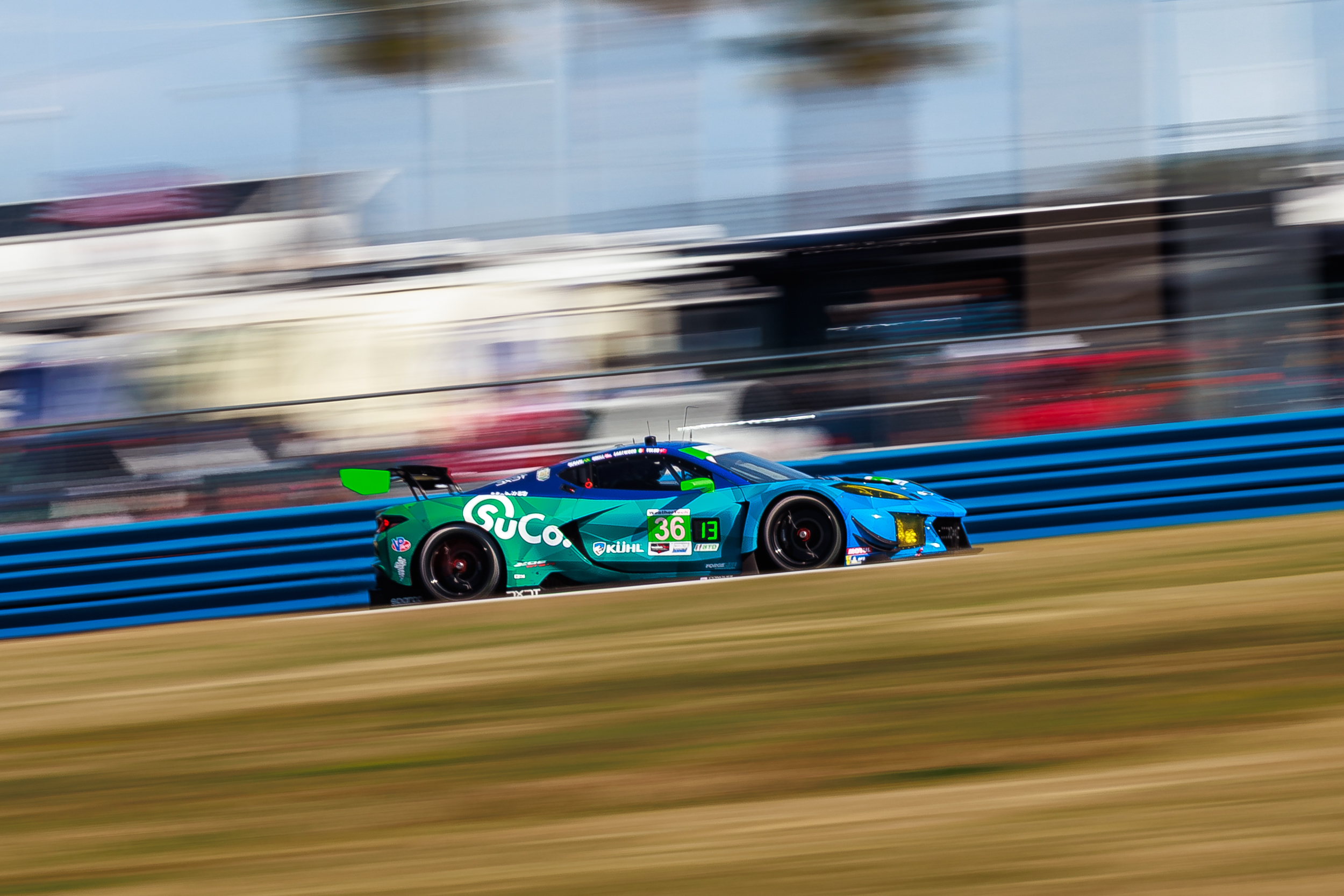 10: I like this angle shooting across the grass towards the kink. Most cars take this portion flat out, loading up their front right suspension. This is the fastest section of the infield, giving the cars the greatest sense of speed on camera, and the blue safety barrier provides a clean background to the image. I’d like to revisit this spot in the future, hopefully without the dormant, yellow grass in the foreground. That being said, the DXDT car complements the colors of the grass and wall well.
Overall, I didn’t have much variety in my compositions during this venture into the T6 area. The area itself only has about 4 or 5 good shooting locations, and the bleachers were too full to even attempt shooting from, further limiting my options. That said, I didn’t help my case either. Once I got set up, I barely moved more than 10 feet before leaving the area entirely. Something I’m working on for next year is spending at most 10 minutes in one place before forcing myself to move a little bit (unless there’s a specific car I need for a specific shot)
Settings: 1/40s | 70-200mm + 2x TC @ 270mm | ƒ/11 | ISO 50 | 2:38:17PM
Photos 1, 2, 5, and 9 are the BMAC Exclusives for this release.
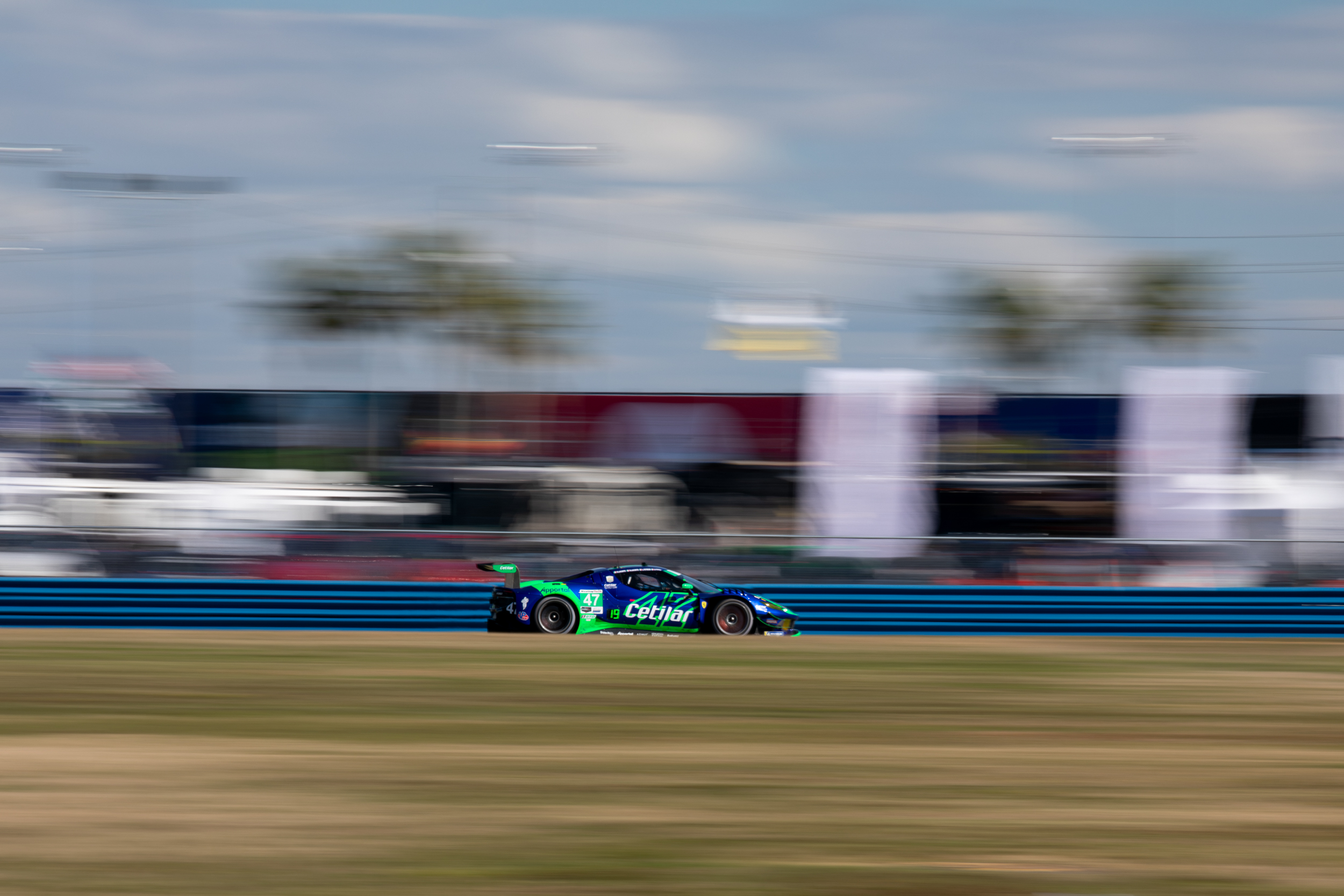 11: You may have noticed that I have used “I” and “We” interchangeably throughout this write-up. That’s because I brought my girlfriend along with me to Rolex this year. With her permission, I’m sharing one photo from each hour that she took. She’s newer to motorsports photography. Her first event was the HSR Daytona Classic in November. She was shooting with my old 5D Mark IV and a rented Tamron 70-200mm for most of the event, sometimes using the 2x teleconverter, and occasionally borrowing my 500mm (mostly when I made her).
The grandstands were too tight to shoot with two people side by side, so she and I split up for about 20 minutes after moving on from our starting location. She spent most of her time alone panning with her image stabilizer on, progressively getting more frustrated as the backgrounds were nice and sharp, while the cars were all blurry. We rectified this once we re-united, and I explained her issue. Once we got down into the infield, she was having fun and getting some quality shots.
Here are her thoughts for Hour 1: “Woah, I finally took a sharp photo! I really like the colors of the 47, especially with the blue fence behind it. I had spent most of the beginning of Hour 1 fighting with my shutter speed and forgetting to check my image stabilization up in the grandstands. When we got to the infield, I finally figured those issues out and started to get into the groove of shooting again. I really like the trees in the background of this shot and the amount of contrast between the fuzzy background and sharp car I was able to pull out.”
Settings: 1/40s | 70-200mm ƒ/2.8 @ 200mm | ƒ/13 | ISO 100 | 2:31:36PM
Hourly Recap:
We started this hour in the grandstands, where I used the 500mm f/4 to capture the race start. After that, I switched to the 70-200mm f/2.8 for some panning shots as the cars dropped to the infield. Once we wrapped up in the stands, we made our way down to Turn 6 on foot, where I continued shooting with the 70-200mm — both with and without the 2x teleconverter — experimenting with different framing and reach. Overall, I struggled with sharpness down in the infield, but got some bangers in the grandstands.
And now for some fun stats:
Temp: 58º | Cautions: 0 | Retirements: 1 | Miles walked: 2.28mi (Total) / 0.65mi (This Hour)
Hourly Photo Stats:
1458 Photos Taken | 282 Keepers | 19.34% keeper rate
Most Photographed Car: #24 - BMW RLL (26 Shots)
Total Race Photo Stats:
1458 Photos Taken | 282 Keepers | 19.34% keeper rate
Most Photographed Car: #24 - BMW RLL (26 Shots)
Thanks for reading this far! I know this is a giant ramble, but it's fun for me to re-live the event, and it gets me excited for next year! It's taken me a long time to get these photos edited and published, and it’s because I’ve really not liked the pictures I took this year. I mentioned it earlier, but I really was struggling with the sharpness of my photos, and seeing it magnified on my computer every time I went to edit put me in a mega slump, to the point where I didn’t want to look at these photos for several months. I’m working through it and have revamped my personal rating system, giving me an objective lens through which to view the photos. That has helped a lot.
I’m hoping to post these twice per week or so, but given this one is over 2800 words, that might not happen. I’ve always been a quality-over-quantity guy, though, so that’s okay to me.