
Founded in 1868 along the shores of the Chesapeake Bay in Hampton, Virginia, Hampton University emerged during Reconstruction, when millions of formerly enslaved Black Americans were building new lives after the Civil War.
The school was founded by Samuel Chapman Armstrong, a former Union Army officer who had commanded Black troops during the war. Afterward, Armstrong worked with the Freedmen’s Bureau, where he witnessed the enormous demand for education among formerly enslaved people. With support from the American Missionary Association and private donors, he established what became the Hampton Normal and Agricultural Institute.
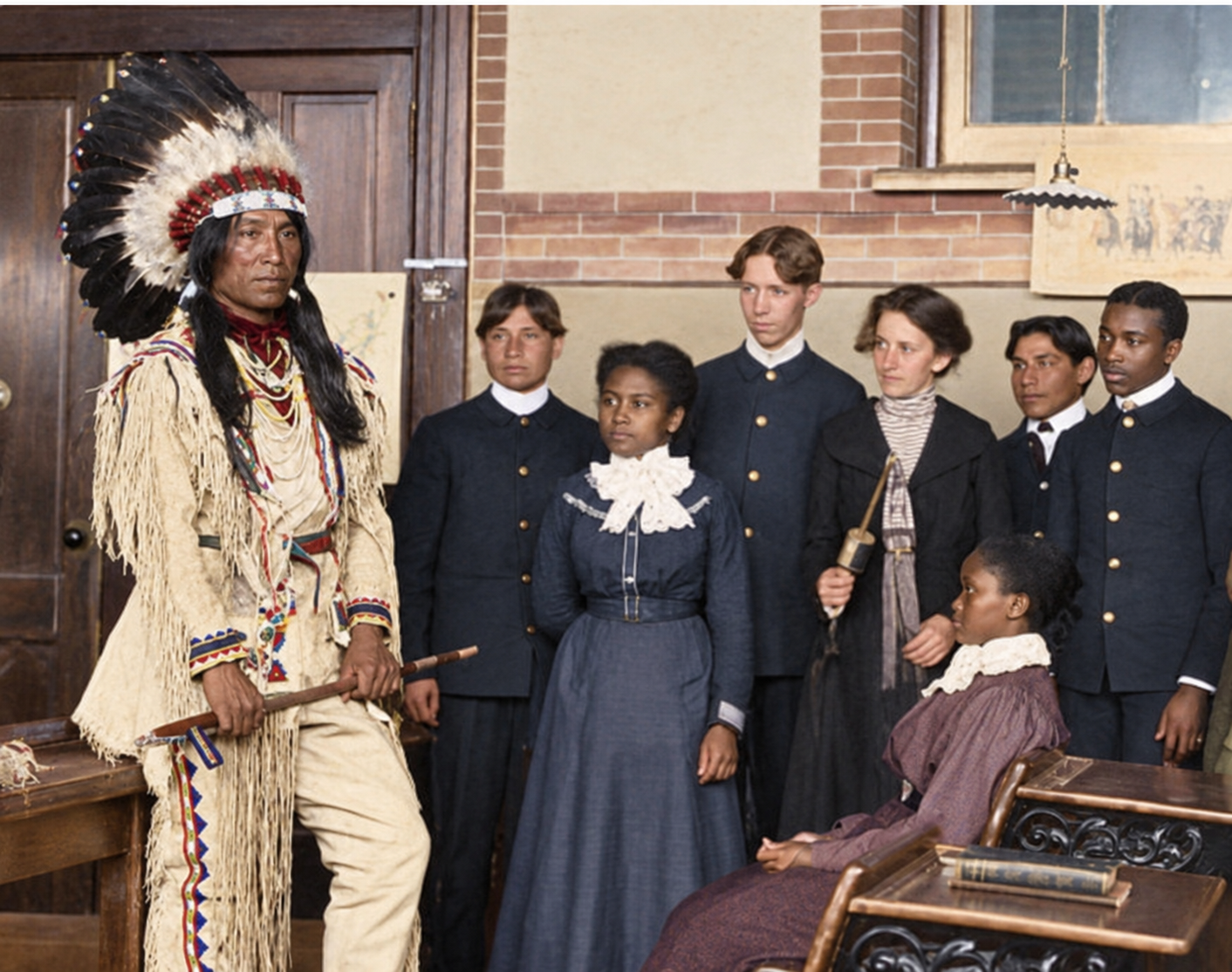
Hampton initially focused on educating Black students and preparing them to become teachers, skilled workers and community leaders. Beginning in 1878, the institution also enrolled Native American students as part of a federal assimilation-era education program. Native students continued attending Hampton until 1923, a complicated chapter of the university’s history that reflected broader U.S. policies aimed at reshaping Native cultures and communities.
One of Hampton’s most influential students was Booker T. Washington. After graduating in 1875, Washington later founded Tuskegee Institute in Alabama in 1881. He carried with him many of Hampton’s ideas about industrial and vocational education, helping make Hampton and Tuskegee two of the most influential Black educational institutions of their era.
That educational philosophy was not without critics. Black intellectuals including W.E.B. Du Bois argued that limiting Black education primarily to vocational training could restrict opportunities for intellectual, professional and political advancement. As debates over Black higher education evolved, Hampton expanded its academic programs.
Beginning in the 1920s, the school strengthened its faculty, raised admission standards and introduced a four-year bachelor’s degree program. Its first bachelor’s degrees were awarded in 1926, followed by graduate programs two years later. Hampton received accreditation from the Southern Association of Colleges in 1932.
Over the following decades, the institution continued to grow beyond its original focus on teacher training, agriculture and vocational education. In 1984, Hampton Institute officially became Hampton University, reflecting its expansion into a broader research and higher-education institution.
More than 150 years after its founding, Hampton remains one of America's historically Black colleges and universities. Its history stretches from the first years of Black freedom after slavery through generations of debates about what education, opportunity and independence should look like for Black Americans.