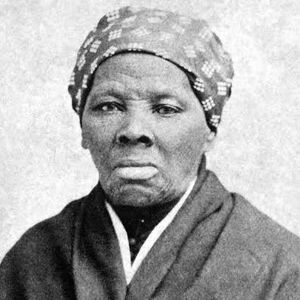
When the history of Black presidential candidates in the United States is discussed, Shirley Chisholm is often one of the first names mentioned. Her groundbreaking 1972 campaign for the Democratic presidential nomination made her the first Black person to seek the presidential nomination of a major American political party and the first woman to seek the Democratic Party's nomination.
But nearly seven decades before Chisholm's campaign, another Black American had already made a remarkable run for the White House.
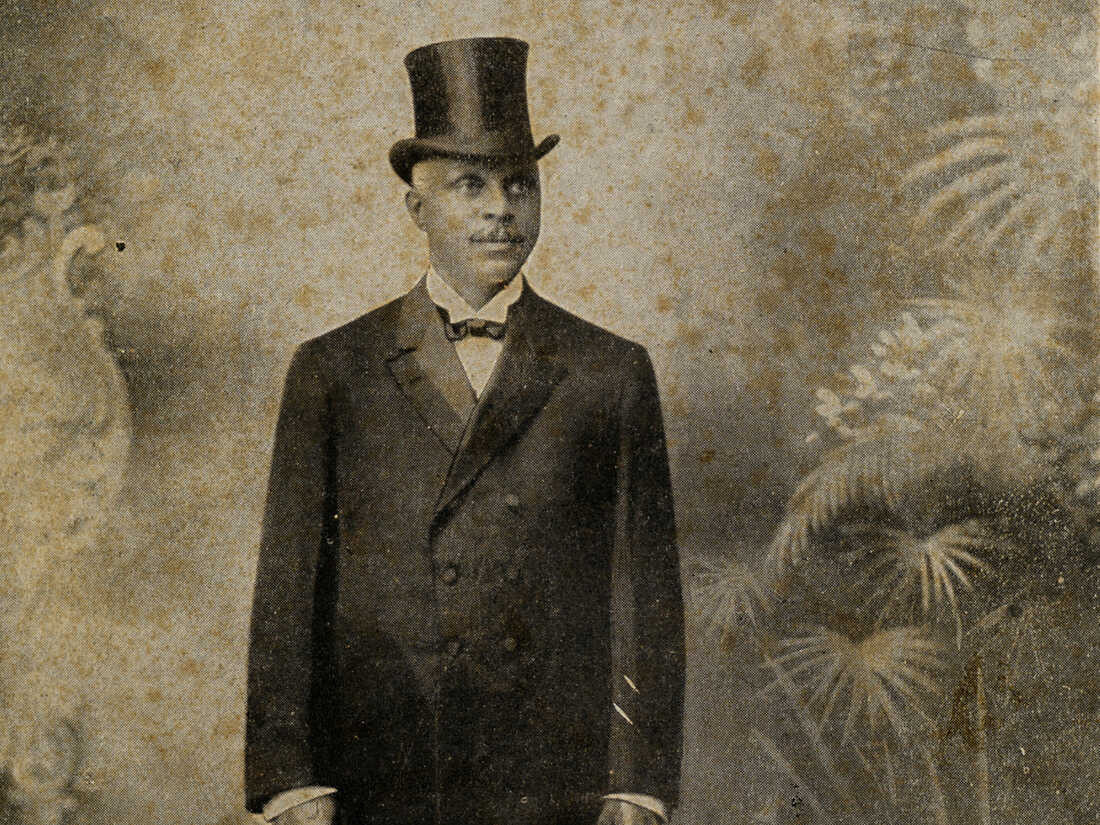
In 1904, George Edwin Taylor became the presidential candidate of the National Negro Liberty Party, also known as the National Liberty Party. His campaign received little national attention and attracted only a small number of votes, but it placed a Black man on a presidential ticket at a time when segregation, racial violence and the widespread disenfranchisement of Black Americans shaped political life across much of the country.
Today, Taylor is generally recognized as the first Black American to run for president of the United States.
From Poverty to Journalism
George Edwin Taylor was born in Little Rock, Arkansas, in 1857. His father was enslaved, while his mother was a free Black woman. Taylor's childhood was marked by hardship, particularly after the death of his mother when he was still young.
Contemporary accounts described him as a child left largely on his own, at times sleeping in boxes before eventually making his way north. He later attended Wayland Academy, a Baptist school in Beaver Dam, Wisconsin, but financial difficulties and poor health prevented him from completing his education.
Taylor eventually found his way into journalism. He worked as a newspaper reporter in La Crosse, Wisconsin, and later became an editor. Journalism gave him more than a livelihood. It provided him with a platform from which he could participate in the political debates surrounding race, labor and economic inequality during the late nineteenth century.
During the 1880s, Taylor became involved with Wisconsin's labor movement and participated in the People's Party and the Union Labor Party. His newspaper, the Wisconsin Labor Advocate, became a voice for the state's growing labor movement.
Taylor's politics were already developing beyond the boundaries of a single political party.
Building a Career in Black Politics
Taylor later moved to Iowa, where he became increasingly involved in national Black political organizations. Between 1891 and 1910, he lived primarily in Oskaloosa and Ottumwa and published a national newspaper called the Negro Solicitor.
He also became active in organizations advocating for the political rights and protection of Black Americans. Among his leadership positions were roles with the National Colored Men's Protective Association and the National Negro Democratic League.
Taylor's political affiliations changed throughout his career. He had connections to the Republican Party, participated in the Republican National Convention of 1892 as an alternate delegate from Iowa, and later became involved with the Democratic Party.
His willingness to move between political parties reflected a larger debate taking place among Black Americans at the time.
For decades after the Civil War, Black voters overwhelmingly supported the Republican Party, which was associated with Abraham Lincoln, emancipation and the constitutional amendments that abolished slavery and established citizenship and voting rights for Black men. But by the late nineteenth and early twentieth centuries, frustration was growing as racial segregation expanded and Black voting rights were systematically attacked, particularly in the South.
Taylor increasingly believed that Black voters should not automatically give their loyalty to either major political party.
The Political World of 1904
Taylor's presidential campaign came during one of the most hostile periods for Black political participation in American history.
The Fifteenth Amendment, ratified in 1870, prohibited denying a citizen the right to vote on the basis of race. In practice, however, Southern states had developed numerous methods to prevent Black citizens from voting, including poll taxes, literacy tests, complicated registration requirements, intimidation and violence.
The political gains Black Americans had achieved during Reconstruction were being systematically dismantled.
At the same time, neither of the country's major political parties offered Black Americans a clear path to national political power. Democrats were closely associated with segregationist governments in the South, while Republicans increasingly avoided aggressively challenging the destruction of Black voting rights.
It was in this environment that independent Black political movements attempted to create alternatives.
George Edwin Taylor Runs for President
In 1904, representatives from dozens of states participated in the political movement that ultimately nominated Taylor for president under the banner of the National Negro Liberty Party.
The party's platform addressed issues that were extraordinary for national politics at the beginning of the twentieth century. It condemned the disenfranchisement of Black Americans, demanded full enforcement of constitutional protections and supported compensation for formerly enslaved people. It also backed independence for the Philippines, which had come under American control following the Spanish-American War.
Taylor understood that his chances of becoming president were virtually nonexistent. The campaign lacked the money, organization and national reach of the Republican and Democratic parties.
But winning the White House was not the only purpose of his candidacy.
His campaign was also a political protest against a system in which Black Americans were expected to support major parties while receiving limited protection of their rights in return.
Taylor argued that Black voters should be willing to exercise political independence and support candidates who directly represented their interests.
The campaign ultimately received fewer than 2,000 votes, and Republican President Theodore Roosevelt easily won the 1904 election.
Yet Taylor's candidacy had accomplished something historically significant. A Black American had been nominated for the nation's highest office more than half a century before the Civil Rights Movement transformed American politics.
Why Taylor's Campaign Was So Unusual
The timing of Taylor's campaign makes his story particularly striking.
By 1904, Black Americans had technically possessed constitutional voting protections for more than three decades. Black men had served in Congress and held public office during and after Reconstruction. Figures such as Frederick Douglass and Blanche K. Bruce had already achieved national political prominence.
Yet the barriers facing a Black presidential candidate remained enormous.
A major party nominating a Black candidate for president was essentially unimaginable in the political climate of the era. Republicans feared losing white voters, while the Democratic Party remained deeply tied to white supremacy and segregation, particularly in the South.
Running independently presented its own difficulties. Presidential campaigns required significant financial resources and political organization, making a serious third-party campaign extremely difficult.
Taylor occupied an unusual political position. He had experience with Republicans, Democrats and labor movements, but by 1904 he was willing to challenge both major parties. That independence helped make his presidential candidacy possible.
A Forgotten Political Pioneer
After years of political activity in Wisconsin and Iowa, Taylor eventually moved to Jacksonville, Florida, where he spent the later part of his life. Although he remained active in his community, he largely disappeared from the national political stage.
He died in 1925.
For decades, his presidential campaign received little attention in popular accounts of American political history. Even discussions of Black presidential politics frequently began with candidates who came much later.
Shirley Chisholm's 1972 campaign remains historic in its own right. She became the first Black candidate to seek the presidential nomination of a major political party and broke barriers for both Black Americans and women in national politics. Jesse Jackson's campaigns in 1984 and 1988 further demonstrated the growing electoral influence of Black voters, while Barack Obama's victory in 2008 made him the first Black president of the United States.
Taylor's campaign belongs to an earlier chapter of that history.
His candidacy took place when many Black Americans were being violently stripped of the political rights supposedly guaranteed to them by the Constitution. He ran not because victory appeared realistic, but because participating in presidential politics itself could make a statement about citizenship, representation and political independence.
George Edwin Taylor's Legacy
Taylor's life also challenges the idea that Black American political thought has ever been politically uniform.
Throughout American history, Black activists and voters have debated whether progress was best achieved through established political parties, independent movements, labor organizations, protest movements or entirely new political coalitions. Taylor participated in several of these traditions during his lifetime.
His 1904 presidential campaign emerged from that debate.
More than a century later, George Edwin Taylor remains far less widely known than many of the Black political figures who followed him. Yet his place in American history is significant. At a time when the country was retreating from many of the promises made to Black Americans after the Civil War, Taylor challenged the political establishment by placing his own name before voters as a candidate for the highest office in the nation.
Long before Shirley Chisholm declared herself "Unbought and Unbossed," long before Jesse Jackson launched his presidential campaigns, and more than a century before Barack Obama entered the White House, George Edwin Taylor had already taken the extraordinary step of running for president.