
Chapter 4:
Embarrassment is Your Enemy! : How Play Can Give You Courage
It’s normal to be scared of lions. Or tigers. Or bears. We even have a kids campfire song about it… lions and TIGers and BEARS! OH MY! Those things are real, dangerous things—things that can actually hurt you. But words? Words are not lions. Words are not bears. They cannot bite you or chase you down. Yet, somehow, many people are more terrified of speaking the wrong word than they would be of fighting a lion! That fear isn’t natural. It’s like stage fright—it feels huge and overwhelming, but it’s really just a trick of your mind.
The truth is, the worst thing that will probably happen if you say something wrong is that you’ll feel a little embarrassed. That’s it. A few seconds of red cheeks and a nervous laugh—and then life moves on. A little embarrassment is a good thing. It means you’re trying new things. It means you’re stepping out of the safe bubble where nothing grows. Nobody becomes great by staying comfortable.
Embarrassment is the cost of the ticket you pay for mastery. Every great musician, every performer, every artist you admire has bombed on stage, forgotten lyrics, played the wrong note, and felt the sting of embarrassment. But they kept playing. They kept showing up. To be great, you must be willing to be embarrassed.
The Mistake Nobody Noticed
Here’s the funny thing about mistakes: often, the ones you think are so big and obvious… nobody else even notices. I’ve heard many English learners say, “I made so many mistakes, but nobody corrected me! Why?!” Well, sometimes people simply don’t notice because they’re too busy listening to what you mean, not the grammar you used. And even when they do notice, they might not say anything—just like we don’t stop our friends mid-sentence to “fix” them. (Can you imagine? “Sorry, Janet, you said ‘less people,’ but it’s ‘fewer people.’ Please restart your story.”)
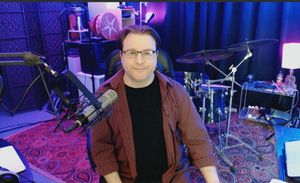
When I performed music in clubs, here is something I experienced many times… There were nights I finished my performance and walked off stage thinking, “That was terrible. I made so many mistakes.” But when I went to talk to my friends in the audience, they’d say, “Wow, that was a great show tonight!” They didn’t hear the little things I was obsessing over. They were just enjoying the music. It’s the same with language. You hear every wrong thing in your own voice, but most people are simply listening to the message, not the mistakes. .
The Monsters in Your Head
Fear of embarrassment is like the “monsters” kids think live under their bed or in their closet. The fear feels real—it’s pounding in your chest—but the monsters aren’t there. We invent them. We build them in our minds, piece by piece, until they seem huge and terrifying. But these monsters are only as big and scary as we allow them to be. The moment you shine a light on them, they vanish.
The Stage Fright of Embarrassment
Embarrassment is like stage fright. It whispers, “Don’t speak. You’ll mess it up,” or “What if they laugh?” But here’s the truth: for many people, stage fright never really goes away. I’ve performed many hundreds of times, and I still get butterflies before I step on stage sometimes. The secret is learning how to perform anyway.
Bravery doesn’t mean you’re not scared. It means you’re scared but you act anyway. If you can’t get rid of fear, that’s fine—be brave instead. Step up to the mic. Play through the wrong notes. Keep talking even when your voice shakes. Shine a light on your fear and see through it!
Find Your Angel
And there may be some who laugh at you or mocks your mistakes? Forget them. Pay them no attention.., no mind… Your real friends will support you. They’ll cheer when you hit the right notes and smile when you mess up, because they know you’re learning.
“A lion does not flinch at laughter coming from a hyena. A gorilla does not budge from a banana thrown at it by a monkey. A nightingale does not stop singing its beautiful song at the intrusion of an annoying woodpecker.” -Suzy Kassem
Here’s another trick I like to use: find your angel. Imagine someone who would never laugh at you—someone who’s always cheering for you. It might be your mom, your dad, your grandparent, or your best friend. Or maybe it’s someone you look up to, like a celebrity, a writer, or a hero. Picture that person standing right behind you every time you speak, nodding and saying, “You’ve got this.”
Sometimes you just need someone standing behind you in your corner, rooting for you, giving you support. So… imagine them.
Practical Exercises: Playing Through the Fear
Okay, enough talk—it’s time to practice. If you want embarrassment to stop running the show, you need to get on stage, even in small ways. Here are five “practice sets” to build your confidence and prove to yourself that mistakes won’t kill you:
1. The 10 Mistakes Challenge
Your mission: Make 10 mistakes on purpose this week. Yes, intentionally. Mispronounce a word. Use the wrong tense. Say something silly and see what happens.
Why? Because when you mess up intentionally, you learn how little people notice—or care. Spoiler: the world will not fall apart when you say “He go to store yesterday.”
2. Speak With Your Angel
Before your next English conversation, close your eyes for 60 seconds and imagine your “angel” standing behind you—supporting you—-your biggest cheerleader.
Say this out loud (three times): “I can make mistakes and still be amazing.”
Or: “I can make mistakes and it’s ok…”
Then go have a conversation while imagining your angel smiling at you, supporting you, the whole time.
3. No-Stopping Stage Drill
Pick any paragraph, song lyric, or text message, and read it out loud without stopping—even if you mess up. Pretend you’re on stage.
Why? Because performers know that if you keep going, most people won’t even notice the mistake. (Trust me, I’ve played entire shows on nights where I thought I was falling apart, but the audience loved it anyway.)
But it takes practice to learn how to let the mistakes fall away and not give them your attention at that moment. Your mistake is one wrong note, but the song is still playing, so you must keep going! Your mistake is just one wrong word or phrase, but the conversation (the song) is still going, so give your attention and focus to that, not to the little mistake you made. A conversation is a performance. You must keep going!
4. Club Stage Rehearsal
Record yourself reading a short paragraph or speaking freely about any topic for 1–2 minutes, as if you’re performing live on stage.
Rule: Don’t stop or apologize for mistakes—just keep going as if every “wrong note” is part of the song.
Reflection: Listen back and notice how small the mistakes sound compared to what you imagined while speaking.
5. The Kind Stranger Practice
Start 3 small conversations in English this week—either online or with someone in person.
Rule: Finish the conversation even if you’re nervous or think you made mistakes. No stopping mid-sentence to “fix” everything.
Journal Prompt: After each conversation, write down what mistakes you think you made—and then ask yourself: Did the other person care? Did they even notice?
Mini-Challenge for the Week
Do at least one of these exercises every day for 7 days. By the end, embarrassment will feel smaller—more like a background hum than a blaring siren. And your confidence? It’ll grow like music that gets louder with each performance.
Final thoughts…
Play is wild. Play is fun.
Play is sometimes rough or risky.
Play allows for mistakes.
Play is a safe space for experimentation, learning, and growth. This perspective aligns with a growth mindset, where mistakes are seen as valuable opportunities for learning and improvement rather than failures.
Think about play as a child…
Jumping in mud puddles… messy.
Finger paints… messy.
Play dough… messy.
Playing and splashing water in the pool… messy.
Learning to ride a bike… messy.
Playing in the sandbox… messy.
Music is play.
Language is play.
Play is messy!
Go out there and play.
Speak boldly.
Make mistakes—glorious, messy, ridiculous mistakes—and laugh when you do. Every time you feel that sting of fear or embarrassment, remind yourself: bravery isn’t the absence of fear. Bravery is playing anyway. Mistakes are like battle scars, they’re proof you’re practicing, proof you’re not afraid to learn courageously.
Go out there and PLAY with the language.
Play is messy!