

Or do they need personalised training, support, inspiration and understanding?
Spoiler alert: People are not all the same, why do people still try to treat them like they are?
I’m seeing the children I taught enter the workforce. I remember their quirks, uniqueness, differing abilities in class and how we supported each and every one of them differently. I remember handing out participation awards and searching for positive reinforcement for some children, as they needed that (normally because most of the time they were getting in trouble and we needed to flip the script!) We genuinely did our best to truly see them, hear them and meet them where they needed to be met.
Education has changed. It’s not a ‘sit down, stay still, you can’t drink water inside, don’t speak unless you’re spoken to’ world anymore. We have encouraged children to speak about their feelings, ask for what they need, acknowledge their different learning styles and choose their friends wisely. We encouraged creativity and supported those who needed extra support with whatever their needs were. My next project is encouraging them to ‘feel’ their feelings (watch this space)
I admit, some schools do that better than others, but I remember a beautiful student I worked with. Very bright, really funny and an absolute delight to be around. She used to love giving me algebra problems she knew I wouldn’t know the answer to! She has CP, is in a chair (or a bit wobbly on her feet), it takes a little longer for her words to come out, and she needed someone to scribe for her at times. I feel as though she was supported well in the school I worked at. When she was going to high school, she visited a couple of different ones: the one her friends were going to, the closer one, and one far away on the other side of town. She chose to go to the one far away from her friends because “when she went to the closer one, not one adult took the time to have a conversation with her and ask her about herself; the other school had staff who took the time to get to know her”. Such a brave choice for a 12-year-old, and I was so proud of her for choosing the school that saw her for the human she was and wanted to become, over a school who probably just saw her disability.
Now these children are coming into the workforce, and since I’ve joined LinkedIn, I’ve seen articles about managing Gen Z and neurodivergent people pop up. I’ve also read about people wanting flexibility, meaningful work, regular feedback, specific examples, work-life balance and managers who understand them.
None of this surprises me, and I’m so glad to see people speak up, express their needs and reclaim their individuality. The thing is, individuality is scary for those who want conformity. But for the world, individuality, expression and being able to be fully ourselves without being judged, and hopefully being understood along the way, is a dream combo!
Maybe Gen Z, neurodiverse people or whatever other group has the spotlight shining on it hasn’t invented an entirely new set of expectations. Maybe they're just more comfortable asking for what they need and questioning things other generations have tolerated for years.
This has me thinking about the word management. More specifically, the idea of managing people.
Is it just me, or does that sound like a whole load of corporate wank? Apologies to all the brilliant managers out there. It's just a weird word to use with ‘people’ attached to it.
Of course we can manage things like schedules, budgets, workloads and resources. I get that someone needs to keep things running and make sure everybody gets paid. But these days, there are managers, management teams, people managers and entire industries dedicated to teaching people how to manage other people. But what exactly do they think they’re managing? Behaviour, personalities, happiness, expectations?
People all work in different ways. Gone are the days of trying to turn everyone into robots and getting them on a factory line of productivity (actually, are they gone?!). People are waking up. They are understanding their learning styles, the ways their brains work and their social boundaries. They also have expectations about how they’d like to be ‘managed’ best. We’re not one size fits all, and that’s what makes humanity so beautiful, but probably difficult for some people to work with.
There are many people around the world, even today, who do what they’re told, how they’re told to do it, even when it goes against their inner knowing. For some, that’s about survival. I know I’m privileged to live in a country where I can speak up, be myself and say no without fearing persecution. That freedom isn’t something I take for granted. But where we have room to question things, ask for what we need and do things differently, why shouldn’t we? If people have trouble with that, then maybe they need to do the work and catch up, rather than expect everyone else to conform to their old ways!
There’s no denying that we all have our own thoughts, feelings, motivations, experiences and ideas about what makes life worth living. Good leaders can influence, inspire, teach, encourage and support their teams. But can we really manage people? I admit, I'd hate to be a manager. Stuck in the middle of the corporate sandwich, with pressure from above, expectations from below. I take my hat off to the middle people, especially those who manage with compassion, empathy and grace.
I imagine managers are like a bridge between the people who plan the thing and the people who do the thing, and they deal with alllllll the problems between those two worlds, because often planning the thing and doing the actual thing are very different things!
Anyway, back to the non-manager people. How about we now look at ‘managing’ as relationship building and start by getting to know the individuals we’re working with?
What a crazy idea!
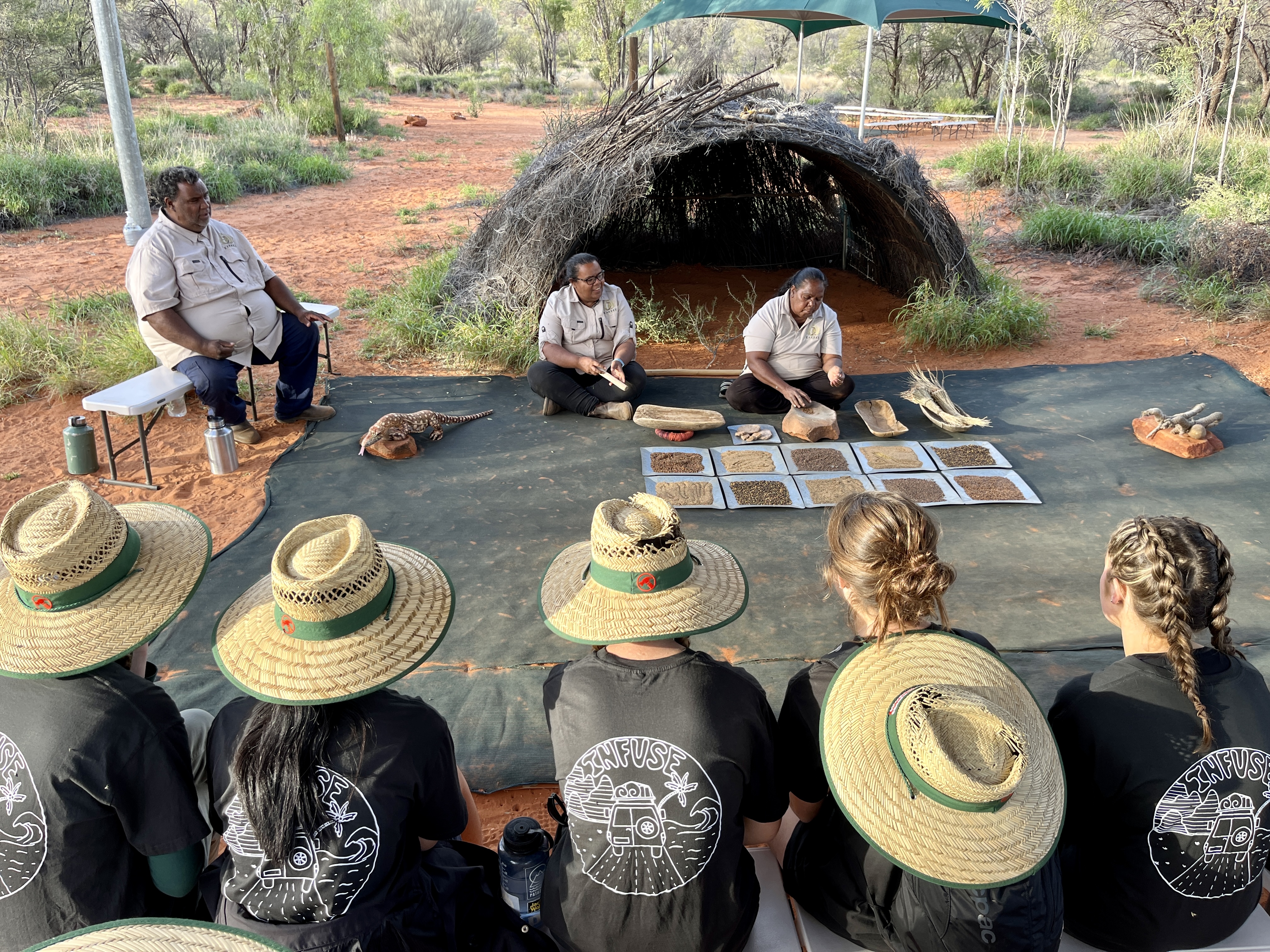
I never judged a school by its performance reviews or professional development programs. I judged it by the people. Were leadership friendly? Could I walk into someone's office if I needed a conversation? Would they truly listen, offer guidance or have a laugh with me about what rhyming words the five year olds came up with today! Teaching, much like tour guiding, can be a pretty independent job. We’re out there making decisions, solving problems and dealing with whatever the day throws at you.
I remember working as a PE teacher at a school where staff meetings regularly involved literacy and numeracy training. Of course, I understand why these things matter, but I also had sports days to organise, events to coordinate and plenty of responsibilities specific to my role. The older principal understood that. If a meeting wasn't particularly relevant to what I was doing, she'd let me get on with my work. She respected my time and trusted me to use it well.
Then a new principal arrived, and suddenly I was expected to sit through those same meetings, whether they were useful to me or not. Nothing about my responsibilities had changed. The meetings hadn't suddenly become more relevant. The only thing that had changed was the person making the rules. That said to me, that being seen sitting in a meeting was more important than what I could have been achieving elsewhere. I didn't feel supported or professionally developed. I felt like my time and position weren't respected.
Was that leadership, or just authority? I’ll admit, I've never dealt well with ‘authoritarian’ approaches. We had a fill-in Ops manager a while back, and when we asked why we needed to do things differently, he replied with, “Because I said so.” Which obviously didn’t work for a team who are used to open communication. And my rebellious self, of course, didn’t want to do the thing because it made no sense!
I get that some things are compulsory. Safety, compliance and shared responsibilities need to be talked about. But when there's room for flexibility, why not use it? Invite people to participate, explain the purpose and trust them to recognise what they need.
I am a kinaesthetic learner. If you give me an irrelevant online training, I won’t retain any of it and will feel as though it was a waste of my time that I can't get back! If you talk at me and don’t allow questions, I won’t remember. Knowing that about me is probably more useful than making sure I’ve ticked the box.
As supposedly a Gen X woman (although one who hates labelling myself as anything), I've been questioning traditional working arrangements for most of my adult life. I've quit jobs because I wasn't happy, chosen flexibility over security and experiences over promotions. I have never believed my entire life should revolve around my employment, and I'm certainly not waiting until retirement to enjoy it. Sorry, Granny and Gramps, who just wanted me to ‘get a good job for security’. Security is a myth. Things can be taken away from us at any point, so we need to be happy and fulfilled along the way. Otherwise, what’s the point?
This doesn't mean I don't have a work ethic. When I commit to something, I take my responsibilities seriously. I just happen to have my own definition of success in life, and it’s probably not too mainstream. I think I embody the little story about the child who was asked by their teacher what they wanted to be when they grew up. The child said, “Happy.” The teacher said they thought the child had misunderstood the question. The child said the teacher had misunderstood the meaning of life.
I remember being called into a performance and development meeting at a school I didn't particularly enjoy working at. We discussed my short-term career goals, which were easy enough. I love learning and growing. But when it came to long-term goals, I was a little stumped. I asked the principal what other people usually said. She looked down her nose at me and replied, "People want permanency." I laughed out loud. "Ohhhh, I couldn't think of anything worse. The only guarantee in life is change!" I don't think that was the answer she was hoping for. I didn't stay at that school much longer. I used up my sick leave and went back to casual teaching the next week, where I was much happier, more valued and able to take days off to go surfing or camping when I wanted to!
The conversation stuck with me, though. For some people, permanency represents security, stability and success. For others, success might mean flexibility, freedom, new experiences or simply enjoying the work they're already doing. Neither is wrong, but why does the world assume everybody wants the same thing?
It’s the same with feedback.
I had a ‘catch-up’ with my boss the other day. It’s always nice to banter and chat about what’s going on. But then, because he probably has to tick boxes, he started reading me the feedback I’ve got from guests on tour. I’ve already read them. It comes to my inbox as well, and it’s all positive. If I had negative feedback, I’d be happy to chat with him about it, but when it’s positive, and I’ve already seen it, I don’t really need to hear it again. I do my best at work, and the feedback shows that. I don’t need a pat on the back. Actually, I don’t like it either.
That's not to say someone else wouldn't love that meeting. For some people, hearing positive feedback might give them confidence, reassurance or a real sense of achievement. But this is exactly my point. We all have different motivations. Some people thrive on recognition; others are motivated by trust, independence, learning, meaningful work, connection or the satisfaction of doing something well.
Positive reinforcement isn't a bad thing but does it work the same way for everyone?
One of the reasons I love tour guiding and casual teaching is the independence. Someone gives me a job, I turn up, do the job, they pay me. Brilliant! No unnecessary fluffing about or micromanaging. I’m completely trusted to do the job I have. There's plenty of responsibility involved, and the occasional unexpected shitshow, but I love being trusted to use the skills and experience I've spent years developing.
Trust is a big part of feeling happy at work for me. I’m happy to take guidance when I need it, but I’ve probably already asked for help because I have a good relationship with my Ops and feel seen and heard. If I didn’t feel comfortable approaching them, I’d be less likely to speak up when things were going to shit or I wasn’t coping.
I’d much rather exchange ideas, ask questions or have a laugh than sit through a conversation just because it’s scheduled. I wasn’t brought up to treat the garbage man differently to the prime minister. I don’t see hierarchy, and if I’m not treated as an equal, I will walk.
Being independent doesn’t mean I never need support. Sometimes I need to vent, sometimes I want another perspective, and sometimes I need practical guidance. I don’t need managing; I need someone I can lean on. Maybe ‘managers’ should be called ‘people people’. Actually, I think Intrepid has a people team already - or something like that!
Of course, not everyone feels confident asking for help, especially if they don't feel safe or secure in their role yet or haven't formed a good relationship with their 'manager'. Getting to know people well, helps you recognise when they need support, and when to trust them to get on with it.
Again, one size doesn't fit all. And treating everyone fairly doesn't necessarily mean treating everyone identically. I wonder how much workplace frustration comes from people feeling unheard, misunderstood or unnecessarily micromanaged/controlled?
Maybe it’s less about ‘us and them’, and more about inclusion?
Not everybody wants to climb some invisible ladder. Not everybody needs a certificate. And not everybody wants another meeting when they have better places to be and things to do! Some people do though – know your staff! For me, I just want to do a good job, have a laugh with the people I work with, get paid and go for a surf.
Maybe good leadership isn't about knowing how to ‘manage’ everyone. Maybe it's about taking the time to truly understand the person in front of you.
Sorry, there’s no hack to humanity. Just be kind, be present and lead with your heart.