

Deliver a sting in your tale
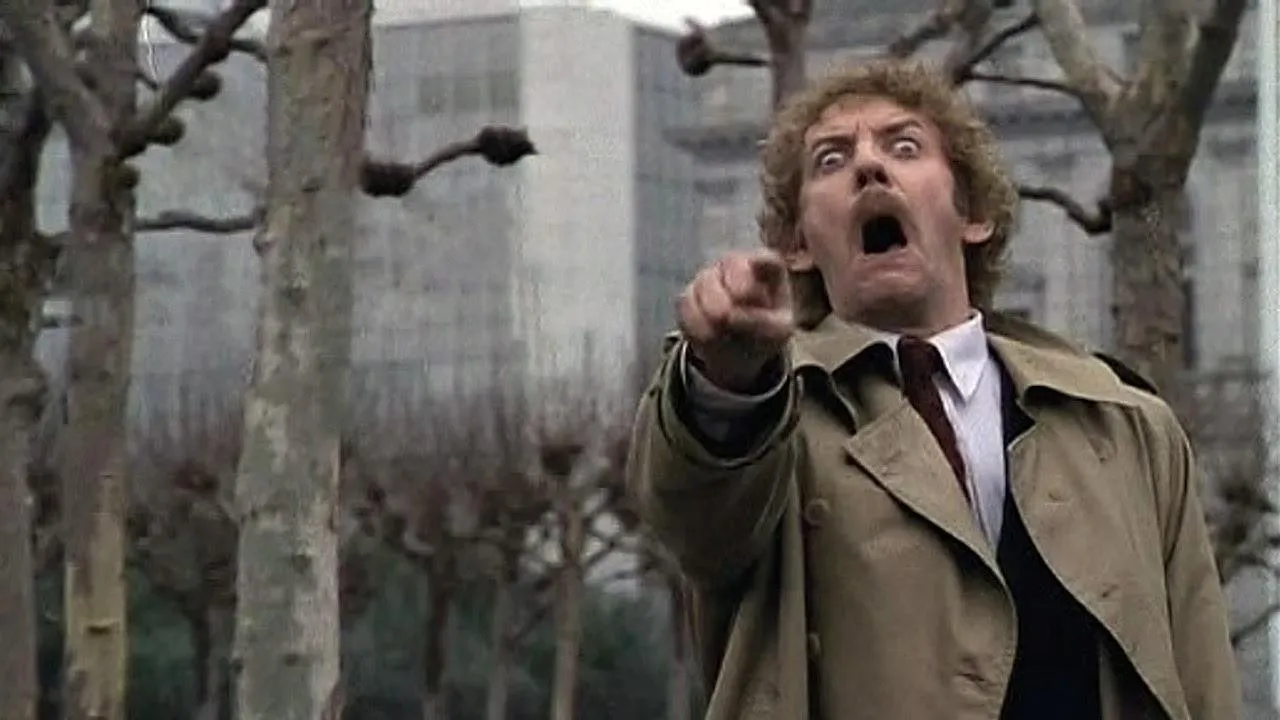
Invasion of the Body Snatchers, 1978 © MGM
A twist is a moment of revelation within a story that throws into question all that’s gone before it. A twist is essentially a specific type of action or ‘beat’. Aristotle called it the ‘peripeteia’ (variously translated as ‘reversal’ or ‘sudden change’), referring both to the sudden downturn in the protagonist’s fortunes that occurs in tragedy (such as Oedipus’ realisation that he’s married his mum) and the sudden change for the good that occurs in comedy (such as the lovesick Duke Orsino in Twelfth Night realising that his favourite page-boy is actually a girl).
Whether for good or ill, the peripeteia means an abrupt reversal in the protagonist's circumstances. Aristotle pointed out that the reversal occurs in conjunction with ‘anagnorisis’ (variously translated as ‘discovery’ or ‘recognition’), the moment at which the protagonist uncovers a hitherto unknown piece of information. In other words, it’s that bit in the movie when the main character realises they’ve just murdered their dad, married their mum, or were a ghost the whole time. This is also the point at which the character might fall to their knees yelling, ‘Nooooooooo!’ And it’ll probably be raining.
The peripeteia or reversal – let’s call it the ‘twist’ from now on – can take place at any point within a story – Robert Rodriguez’ vampire caper From Dusk ‘Til Dawn is a great example of a twist that takes place halfway through a story – although these notes focus mainly on your classic ‘stinger’, the twist that lands on the last page or the final reel and towards which the entire narrative has been building. This type of twist generally favours shorter-form narratives like TV episodes, features, short fiction and novellas.
A twist focuses on a particular aspect of the story: a character’s identity, motive, perception, location, achievement, or else a moment left to chance. The twist will then turn that aspect on its head and reveal an opposite of the most dramatic, comedic, ironic or horrific kind. Wife becomes mother (Oedipus Rex), boy becomes girl (Twelfth Night), the living become dead (The Sixth Sense), bikers become vampires (From Dusk ‘Til Dawn).
The run-up to the twist itself must be in plain sight throughout and yet disguised so that the reader never suspects they’re being duped!
To surprise the reader, a twist must be founded on a basic assumption (on the part of both the reader and the main character) that things are exactly what they appear to be throughout the story. The writer must casually confirm that assumption throughout while leaving enough room to reveal at the climax that that assumption is, in fact, entirely false...