
TLDR: Annotated maps for central London here.
It's fair to say that the south-east of England is not blessed with a large number of unique and exciting sea kayaking destinations. However, there's one relatively local trip that I've been meaning to do for some time - the paddle through Central London.
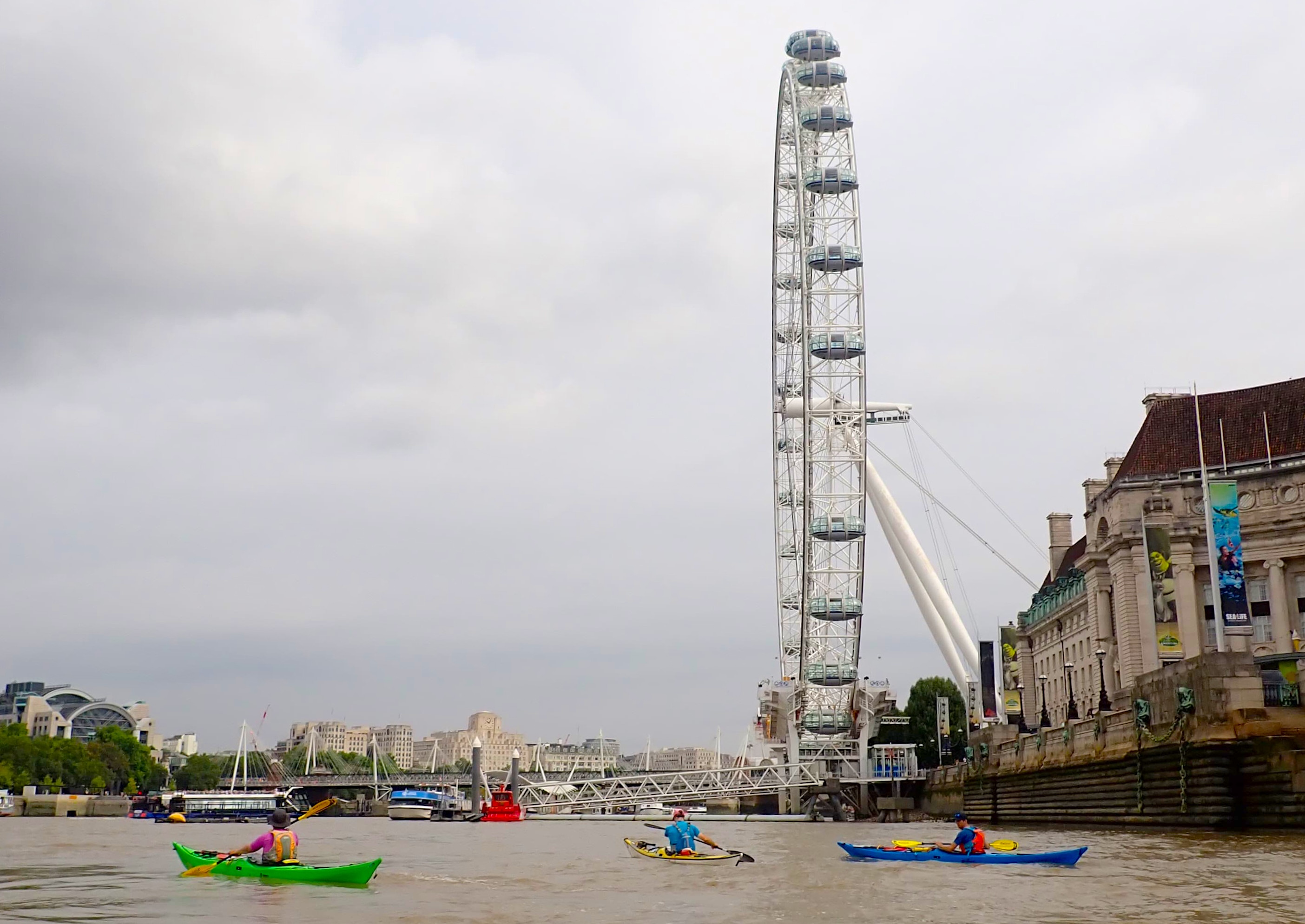
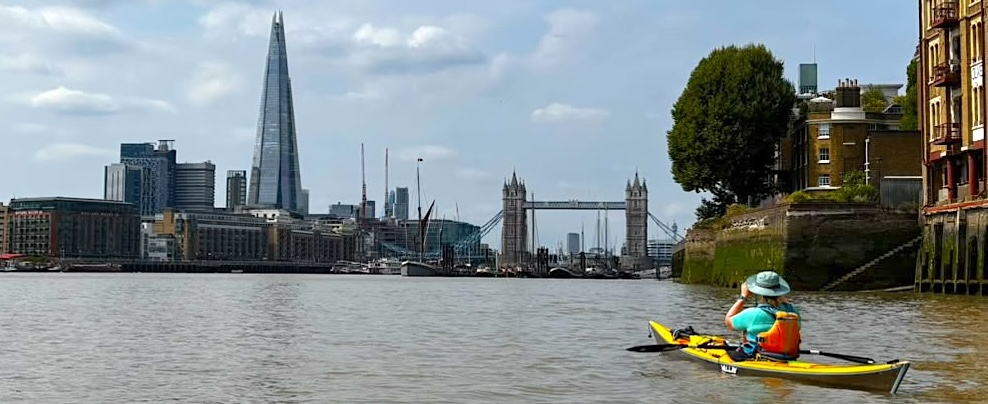 Whilst London doesn't sound like an obvious place to go paddling, a sea kayak is the ideal craft for river-based sightseeing, and there's enough waves and tide to make the trip interesting beyond just staring at the iconic skyline.
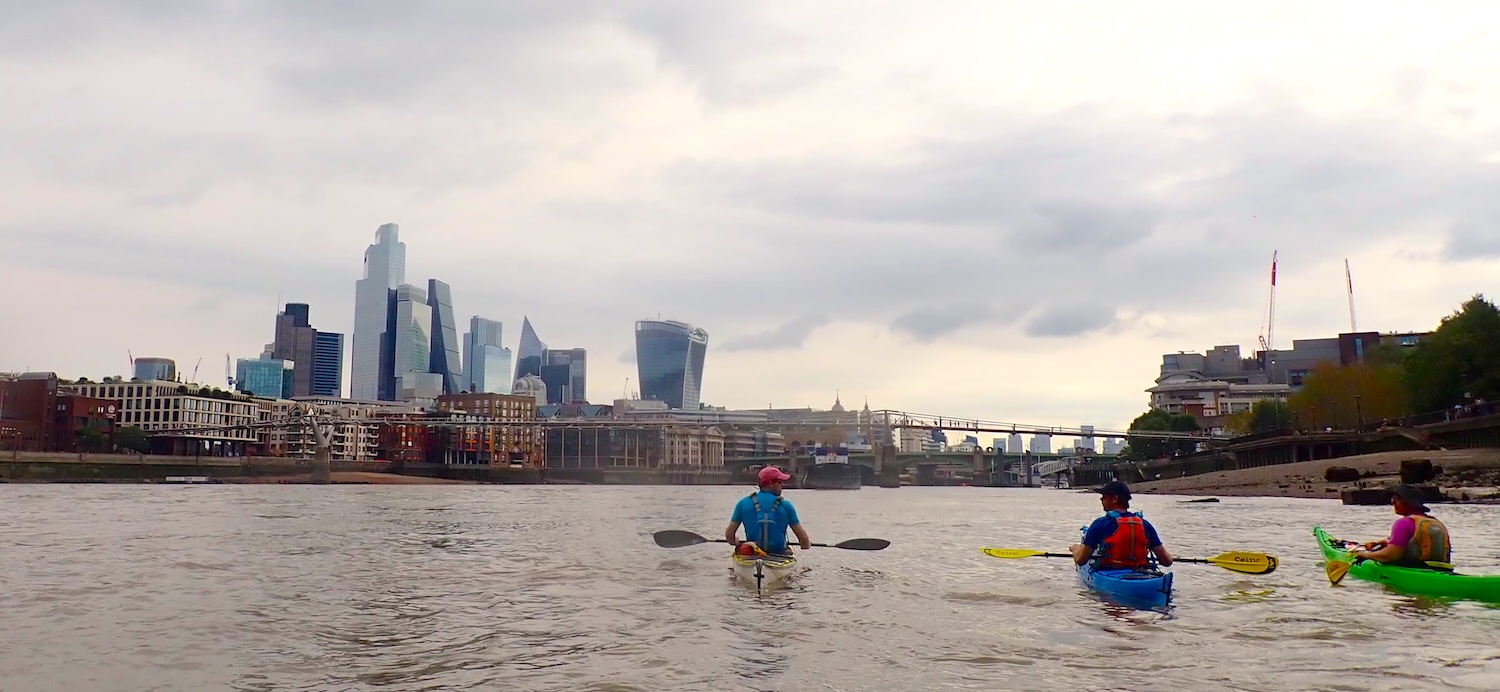 We throughly enjoyed our day out in The City, and I'd recommend the trip. However, it's obviously rather different from a typical day on the sea, so I thought it might be worth sharing some thoughts for anyone considering it.
I should say that the definitive source of information is the Port of London Authority website. They've created the 'Tideway Code' - a detailed guidance document that anyone planning a trip on the tidal Thames should read. It runs to 130 pages, but paddlers should be able to skim much of it. I attempted to summarise the key information that I needed on the water in a set of maps that you can find here - hopefully other paddlers might find them useful too.
Access
There are a number of places that you can access the river - see the maps and Tidelines. The Port of London Authority Tideway Code has maps with 'drawdocks' - i.e. slipways labelled, many of which can be used for launching. Viable options will depend on the tidal streams, but for central London, good options seem to be:
Putney, to the west - large area of slipways, not too busy if you get there not too late in the morning.
Prospect of Whitby pub, to the east - seems to be often used due to its proximity to central London and space for parking, but access is a bit awkward down a narrow alley and steep steps.
Millwall Slipway, a bit further down-river - looks a lot easier if you're happy to paddle the extra mile and a half each way
Parking is obviously an issue, this being London. Restrictions vary, but parking is often unrestricted and free on Sundays, making this an obvious choice of day for the trip. Saturday might be OK too, but you'll need to do more research to check.
Hazards
For a river, there's a lot going on in London, especially in the central section (perhaps Vauxhall Bridge to Tower Bridge) where the river is narrow and busy.
Tidal streams run rapidly up to around 3 knots. The flow runs under and through obstructions like barges and piers, creating a type of hazard that few sea kayakers will be familiar with. The risk can be managed pretty well by avoiding being up-tide of things the tide is running under or through, staying aware of where the flow is pulling you and being proactive in paddling away from obstructions.
The other major issue is boat traffic. You'll encounter the 'Clippers' - fast moving boats that run regularly between the various piers, as well as large but slower moving tourist boats and the occasional sightseeing RIB. If you keep to the side of the river, you can generally keep well out of their way - but see notes below on navigation and 'crux points'.
In some parts of the river, especially in Central London, there are limited places to land, particularly around high water.
One of the reasons for our trip was to scope out the paddle for possible future club trips. We reflected that we'd want group members who:
Are familiar with paddling in tide - able to gauge how quickly their boat is moving, where it's being taken, and understand that 'stopping' in a flow requires active paddling to hold position
Are very unlikely to capsize, even in waves caused by passing boats or any wind/tide interaction (the Tideway Code warns of waves up to 1.2 meters - hopefully that's a worst case if you choose a nice day)
Are able to execute fast and efficient rescues (e.g. in less than 60 seconds) if anything did go wrong
Are able to paddle as part of a tight group
Navigation
Let's start with the central section - Putney to Shadwell:
The most important thing to know if that you should keep to the right hand side (starboard) of the river, and stay close inshore. This means:
Passing inshore of lines of moored boars and barges
Taking the rightmost arch of the bridges that is open and not dried out. Closed arches are marked with an inverted triangle of three red lights or disks. You're not meant to stop moving or cross the river within 75m of a bridge.
Wherever possible, passing inshore of the many piers in the river. The Tideway Code lists a couple of piers where you're advised to only pass inside 'if confident', or even recommended to go outside. However, given the manoeuvrability and size of a sea kayak, we found it easy to go inside of almost all piers, and this keeps you safely out of the way of the boats that regularly come and go. There are a few piers that you can't go inside - see below.
Following that advice carefully should mostly keep you out of the way of the many boats that use the river through central London.
There are two exclusion zones to avoid in central London, marked by yellow buoys - one at MI6 just downriver of Vauxhall Bridge and the other at the Houses of Parliament.
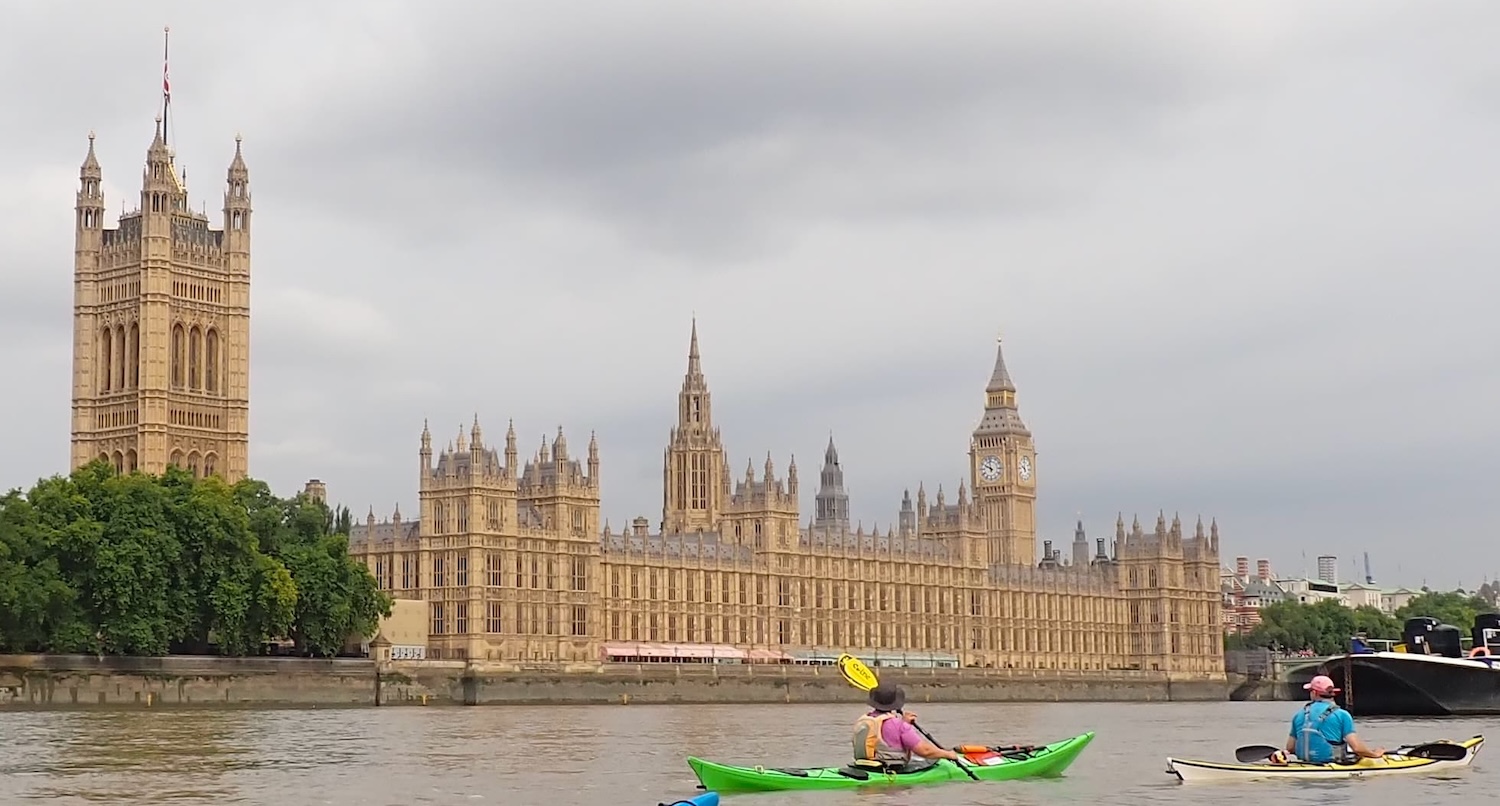 The Houses of Parliament (Palace of Westminster). Just in case you weren't sure what it looks like!
Below Shadwell, there aren't any more bridges and the river becomes wider and quieter. The points above should still serve you well, but it's possible that you might come across the occasional rowing boat going against the tide that wants to take a line inshore of you.
Above Putney, if going with the tide, keep to the right hand side of the buoyed fairway, noting that rowing boats travelling against the tide may pass inshore of you. If going against the tide (why did you plan it that way??) things are a little more complex - see notes on the map.
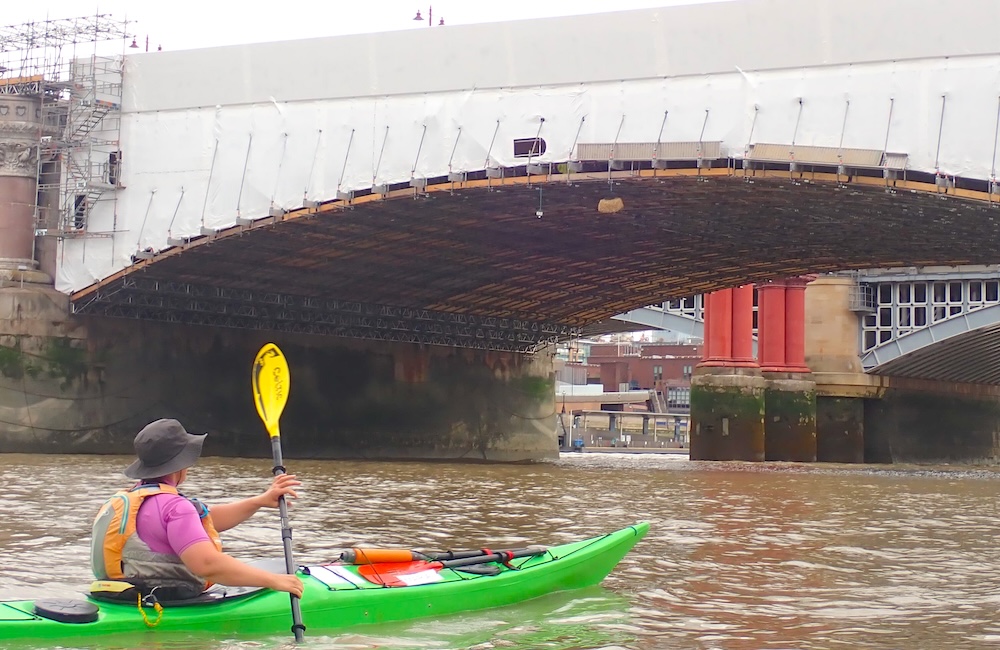 Less critical navigational information: a bridge arch with reduced headroom may be marked with a hay bale!
Crux points
Mostly, you can simply keep out of the way on the right hand side of the river, passing inshore of the boat traffic and the busy piers. However, there's a few points where things get a little tricky:
Waterloo pier (travelling downriver) has barriers that prevent you going inshore of it. The pier is often busy with clippers and tourist boats. You may need to wait before it (paddling constantly to hold position in the tide) and pick your time to pass through. We found this the trickiest spot of the trip.
 Approaching Waterloo Pier. Note barriers (white) preventing passage inshore, and boat (blue top) using the pier.
Embankment pier (travelling up-river) - which you can't pass inside of. Similar consideration as Waterloo, but seemed a little less busy.
Westminster pier (travelling up-river) was easy to pass behind despite the advice to only take this route 'if confident'. Given how busy this pier gets with boats, passing inside seemed much easier than trying to go round. Be aware that just beyond, you'll need to get away from the bank to avoid the exclusion zone at the Houses of Parliament - a move that can feel a little dicy if a clipper is leaving the pier in the same direction.
Rules and regulations
There a lots of rules and regulations, and again, you really should have a read of the Tideway Code. Two final things worth noting:
Boats are meant to be marked with a name with 40mm high letters. We laminated a few printouts to stick on our boats.
You're obliged to contact "London VTS" on VHF channel 14 if paddling between Chelsea Bridge and Cherry Garden Pier. We gave them a call at the start of our day, giving our plans for the complete trip, which seemed to be sufficient.