

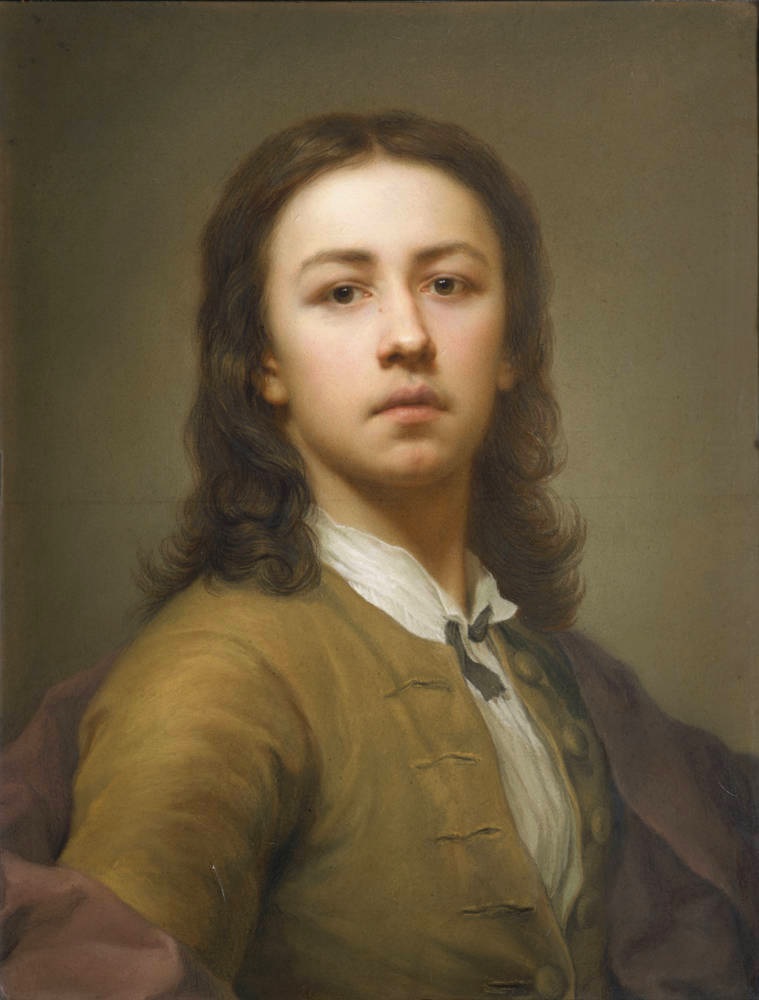
 Self-Portrait in 1744

Anton Raphael Mengs (March 12, 1728 – June 29, 1779) was a German Neoclassical painter.
Early Life
Anton Mengs was born on March 12, 1728, at Ústí nad Labem in the Kingdom of Bohemia, the son of Ismael Mengs, a Danish-born painter who eventually established himself in Dresden, where the court of Saxon-Polish electors and kings was.
His older sister, Therese Concordia Maron, was also a painter, as was his younger sister, Julia.
Anton's and Therese's births in Bohemia were mere coincidence. Their mother was not their father's wife.
Ismael had carried on a years-long affair with the family's housekeeper, Charlotte Bormann.
In an effort to conceal the births of two illegitimate children, Ismael took Charlotte, under the pretext of "vacations", to the nearest bigger town abroad, Ústí nad Labem - 90 km upstream of the Elbe river.
At least in Anton's case, Ismael Mengs took his baby and Charlotte back to Dresden a few weeks after the birth.
There they lived for the next 13 years.
In 1741, Ismael moved his family from Dresden to Rome, where he copied - in miniature - some works of Raphael for the Elector of Saxony in Dresden.
Adulthood
In 1749, Anton Mengs was appointed the first painter to Frederick Augustus, Elector of Saxony, but this did not prevent him from continuing to spend much of his time in Rome.
There he married Margarita Guazzi, who had sat for him as a model in 1748.
In 1749, Mengs accepted a commission from the Duke of Northumberland to make a copy, in oil on canvas, of Raphael's fresco The School of Athens for his London home.
He converted to Catholicism, and in 1754 he became director of the Vatican painting school.
In 1757, Mengs painted a superb fresco on the dome of the church of Saint Eusebio in Rome.
His fresco painting Parnassus at Villa Albani gained him a reputation as a master painter.
On two occasions in 1761, he accepted invitations from Charles III of Spain to go to Madrid.
There he produced some of his best work, most notably the ceiling of the banqueting hall of the Royal Palace of Madrid, the subject of which was the Triumph of Trajan and the Temple of Glory.
After the completion of this work in 1777, Mengs returned to Rome, where he died two years later in 1779, under poor circumstances, leaving twenty children, seven of whom were pensioned by the king of Spain.
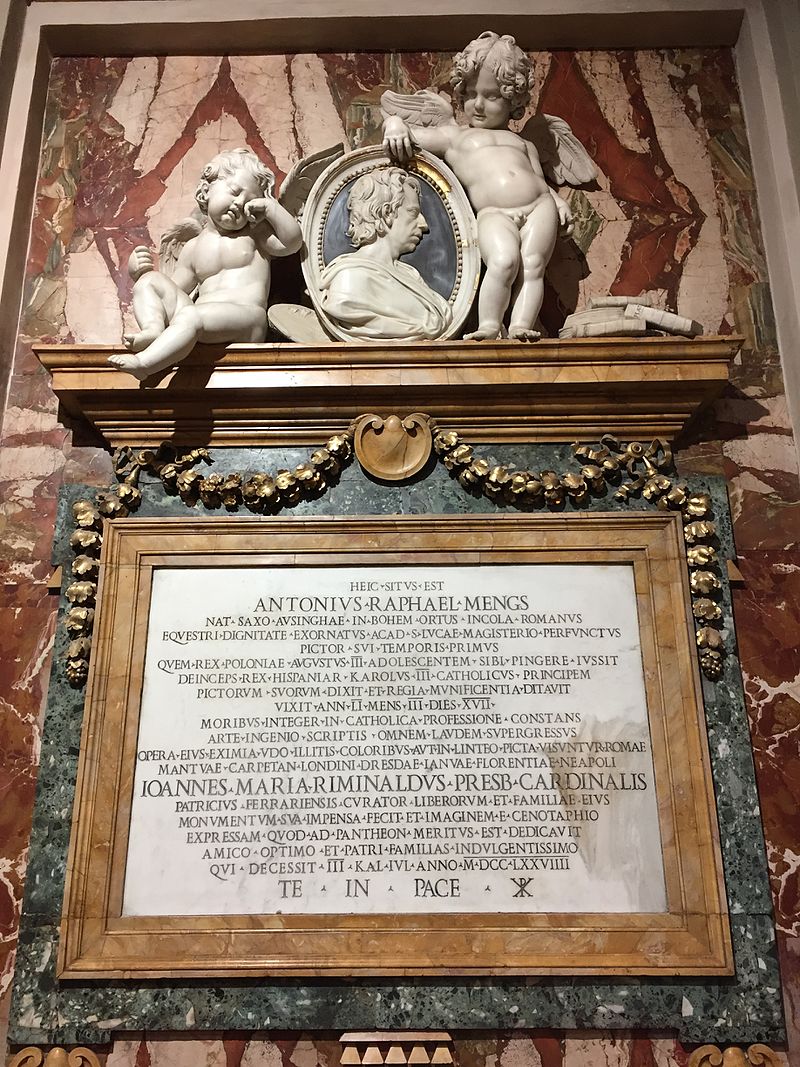
Anton Raphael Mengs was buried in the Church of Santi Michele e Magno in Rome, Italy.
Career
Anton Mengs' portraits and self-portraits show an attention to detail and insight often lost in his grander paintings.
His closeness to Johann Joachim Winckelmann has enhanced his historical importance.
Mengs came to share Winckelmann's enthusiasm for classical antiquity, and worked to establish the dominance of Neoclassical painting over the then popular Rococo style.
At the same time, however, the influence of the Roman Baroque remained strong in his work, particularly in his religious paintings.
Mengs would have fancied himself the first neoclassicist, while, in fact, he may be the last flicker of Baroque art.
Rudolf Wittkower wrote:
"In the last analysis, he is as much an end as a beginning".
Goethe regretted that:
"So much learning should have been allied to a total want of initiative and poverty of invention, and embodied with a strained and artificial mannerism."
Mengs had a well-known rivalry with the contemporary Italian painter Pompeo Batoni.
During his time in Italy, he was friends with Giacomo Casanova.
Casanova provided accounts of Mengs personality and contemporary reputation through anecdotes in his Histoire de ma vie.
Among his pupils in Italy were Anton von Maron (Vienna, 1731 - Naples, 1761).
His pupils in Spain included Agustín Esteve, Francisco Bayeu and Mariano Salvador Maella.
Besides numerous paintings in Madrid, the Ascension and St. Joseph at Dresden, Perseus and Andromeda at Saint Petersburg, and the ceiling of the Villa Albani are among his chief works.
A Noli Me Tangere was commissioned as an altar-piece by All Souls College, Oxford, and is now held in the National Gallery, London.
Theoretical Writings
Anton Mengs wrote about art in several languages, including Spanish, Italian, and German.
He developed an eclectic theory of art that sees perfection as attainable through a well-balanced fusion of diverse excellences:
"Greek design combined with the expression of Raphael, the chiaroscuro of Correggio, and the colour of Titian."

The Background Story:

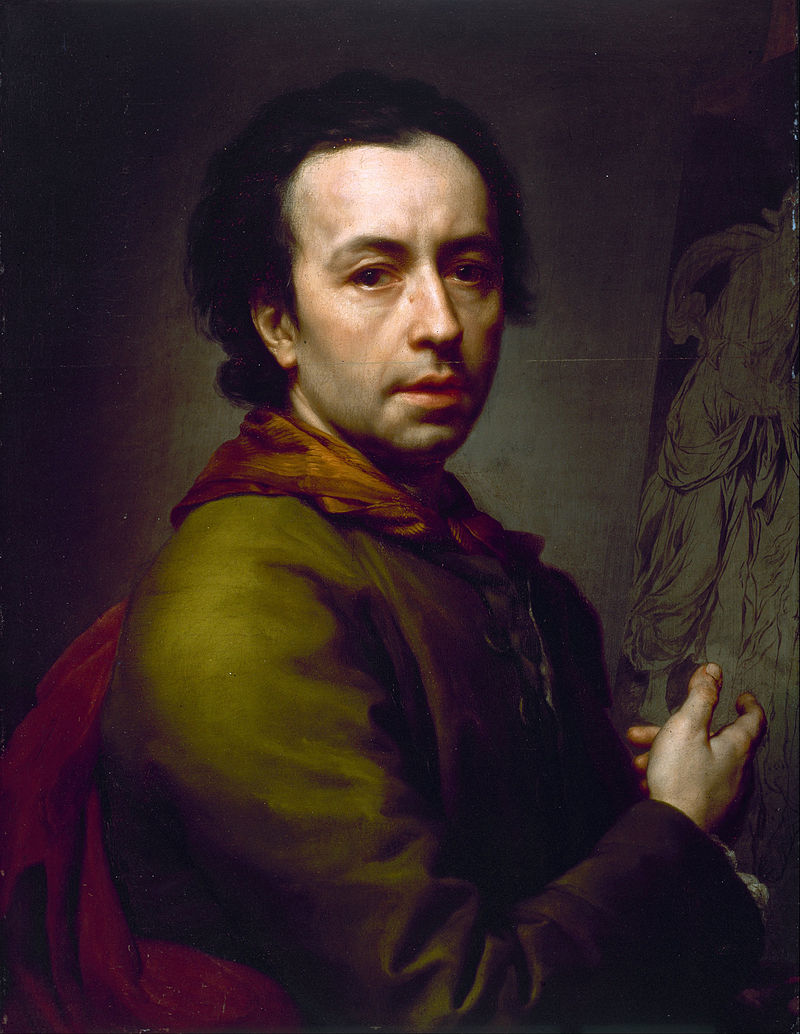 Self-Portrait (1774) - Walker Art Gallery, Liverpool
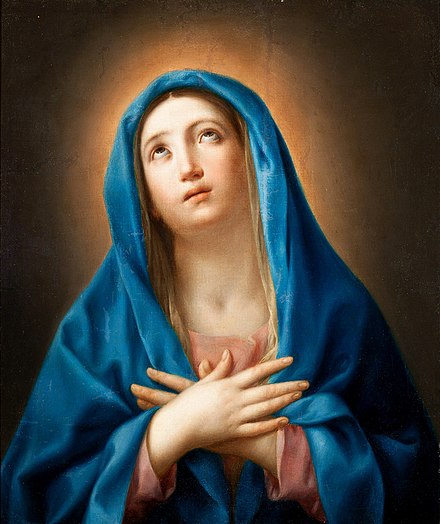 Our Lady of Sorrows (1765-1769) - Museo Camón Aznar
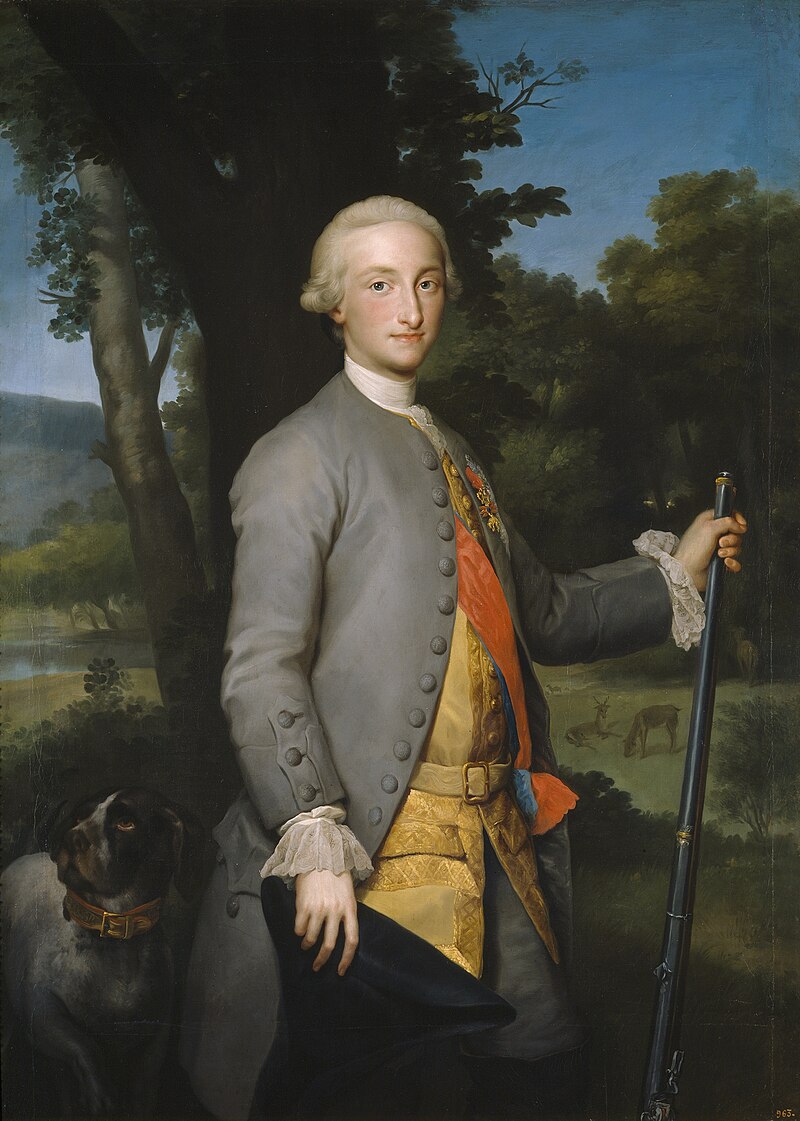 Prince of Asturias - Future Charles IV of Spain (с. 1765)
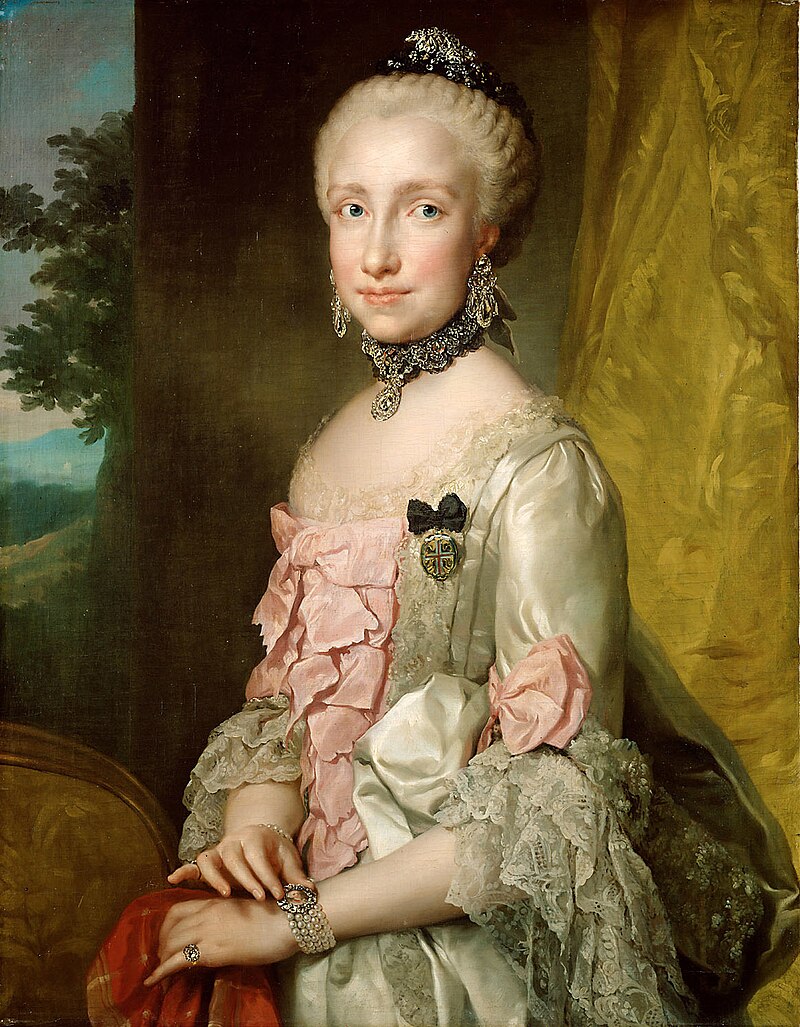 Portrait of Maria Luisa of Spain
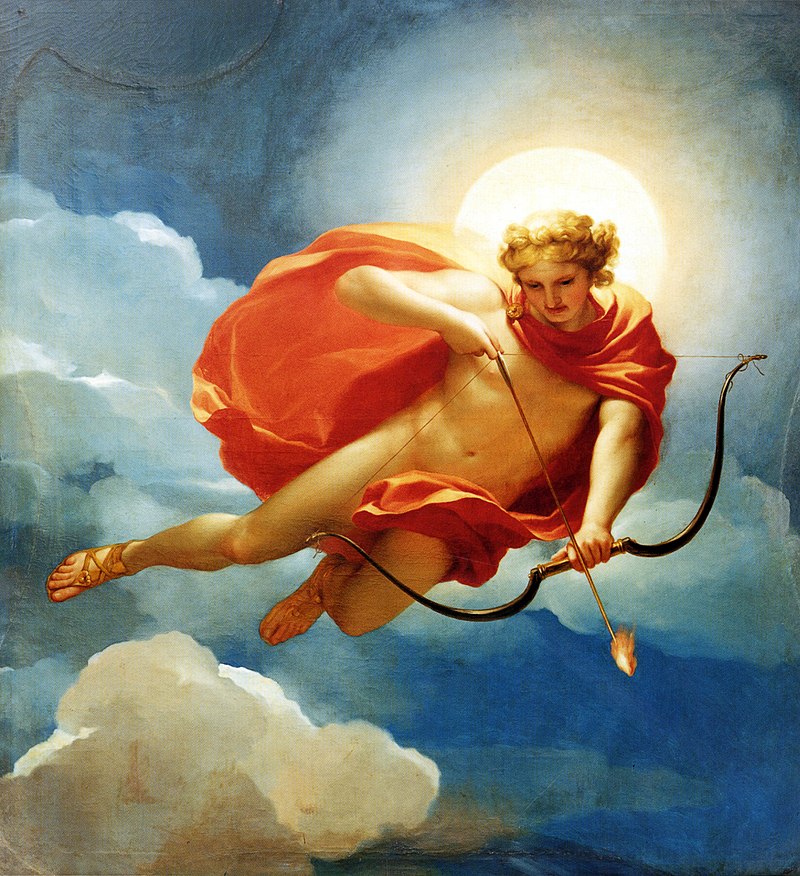 Helios as Personification of Midday (c. 1765)
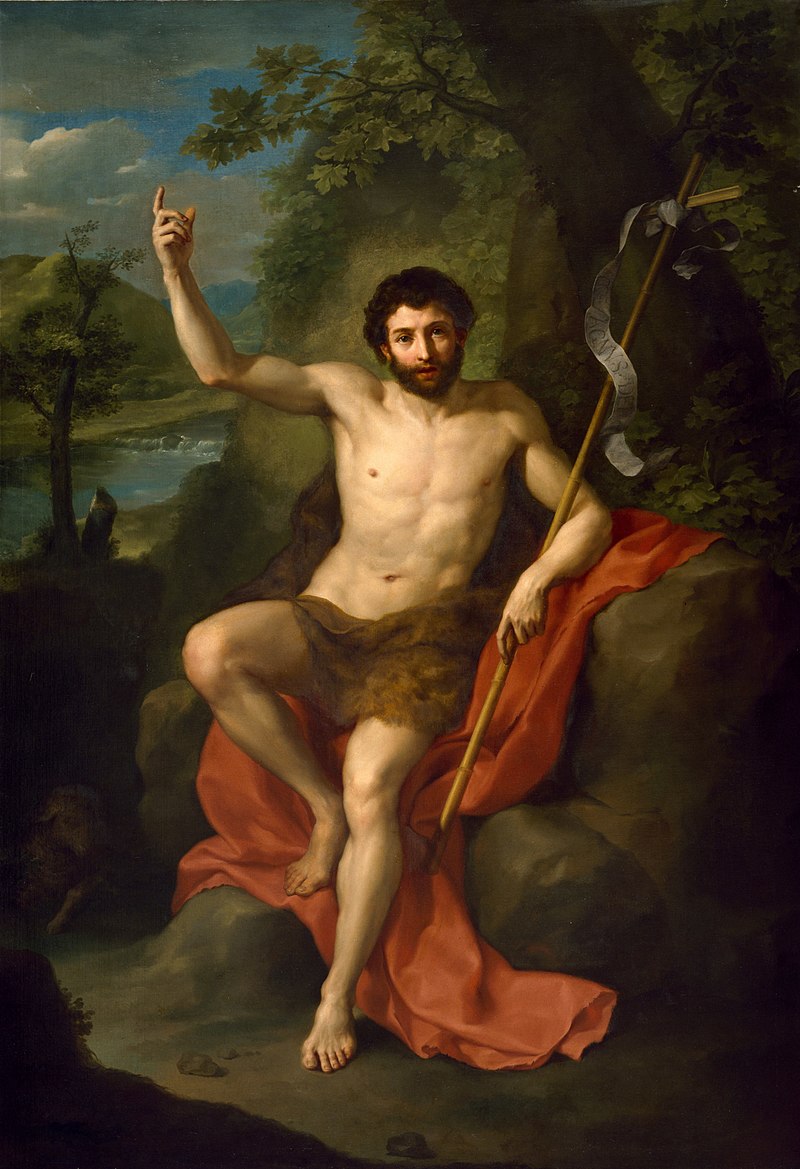 St. John the Baptist Preaching in the Wilderness
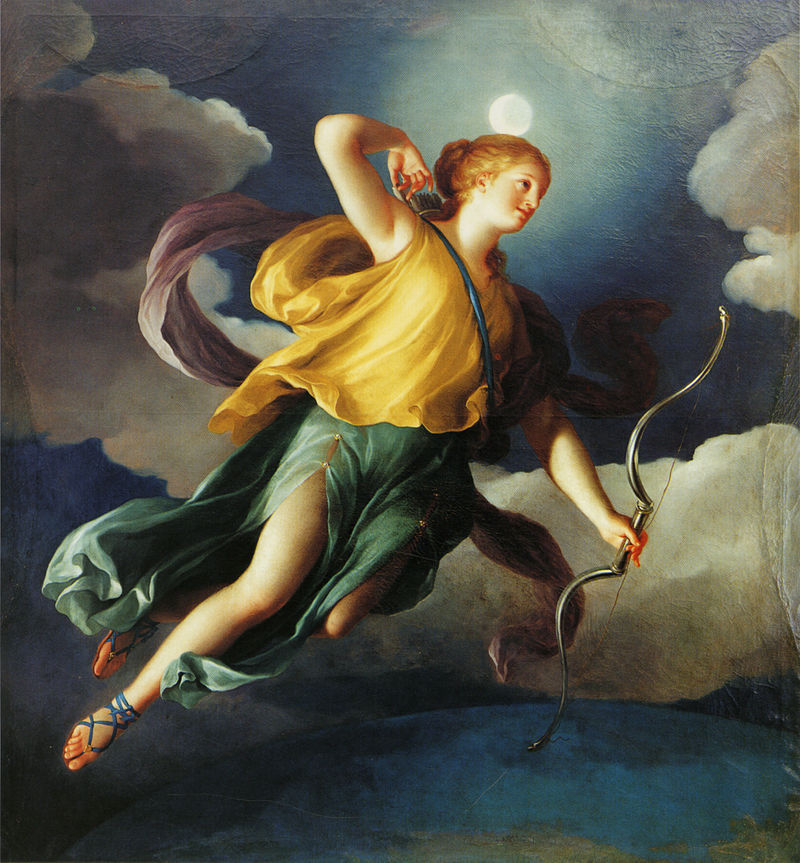 Diana as Personification of the Night (c. 1765)
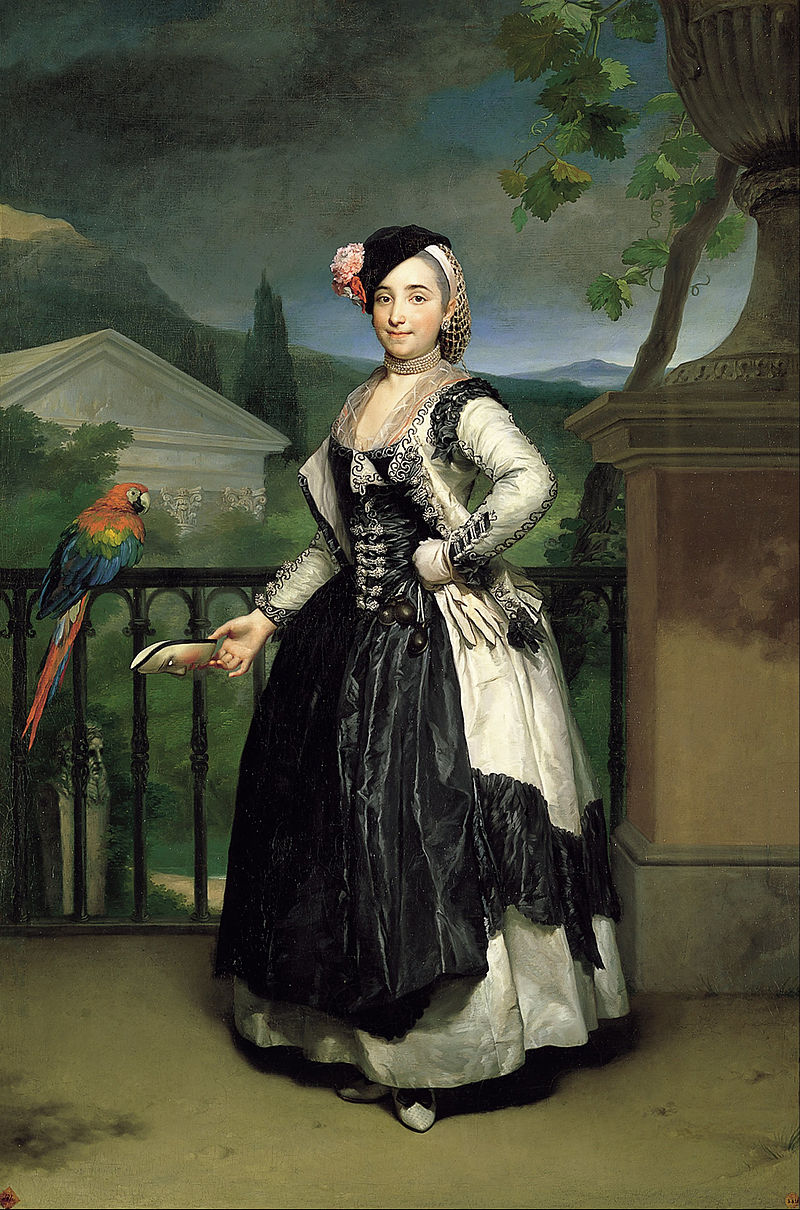 La marquesa de Llano (c. 1775)
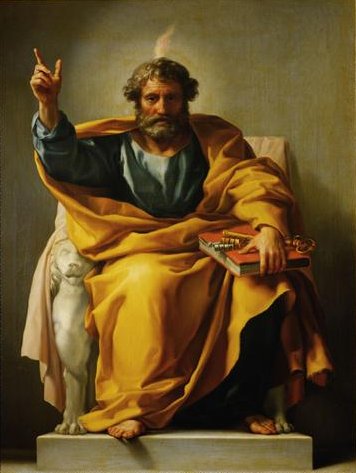 Saint Peter
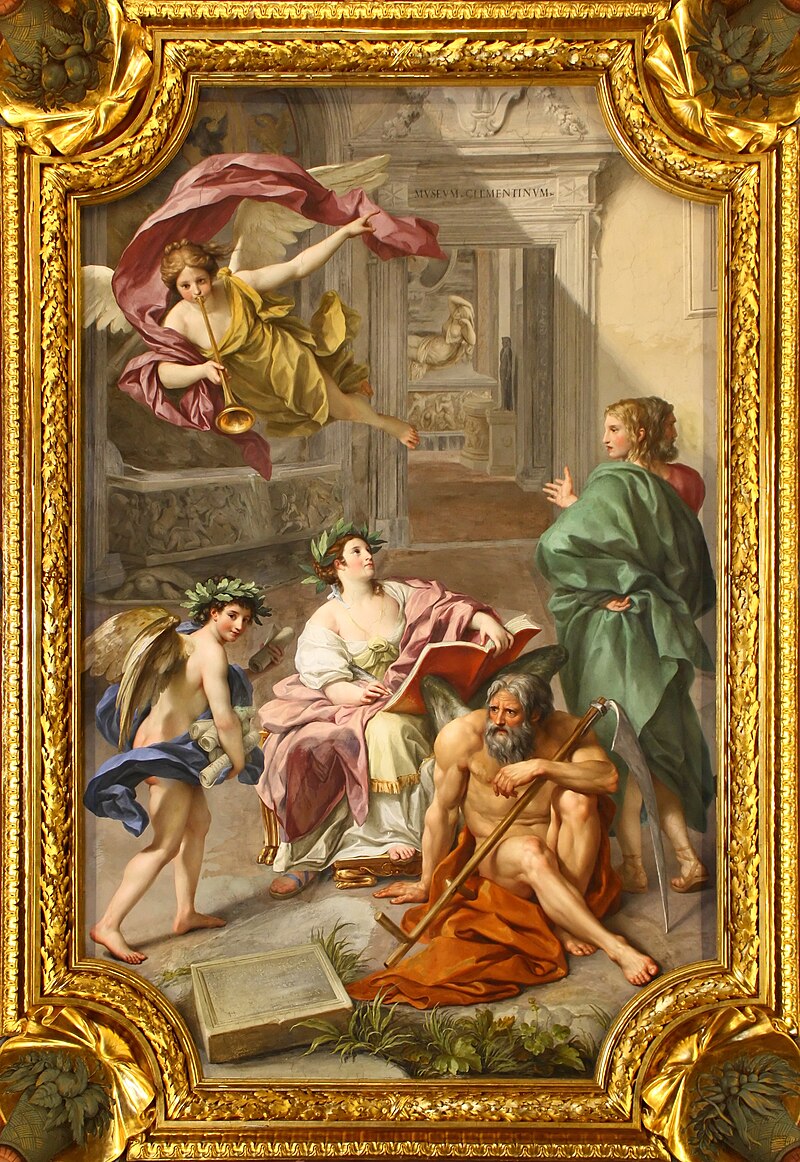 The Triumph of History over Time - Ceiling of the Vatican Library
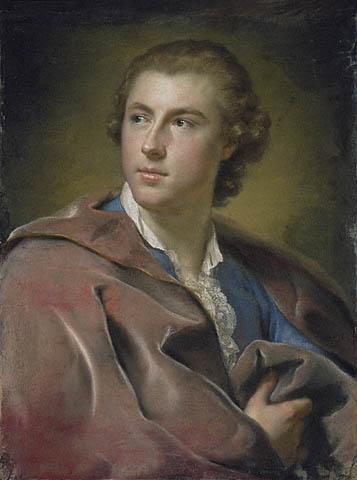 Portrait of William Burton Conyngham (1733–1796)
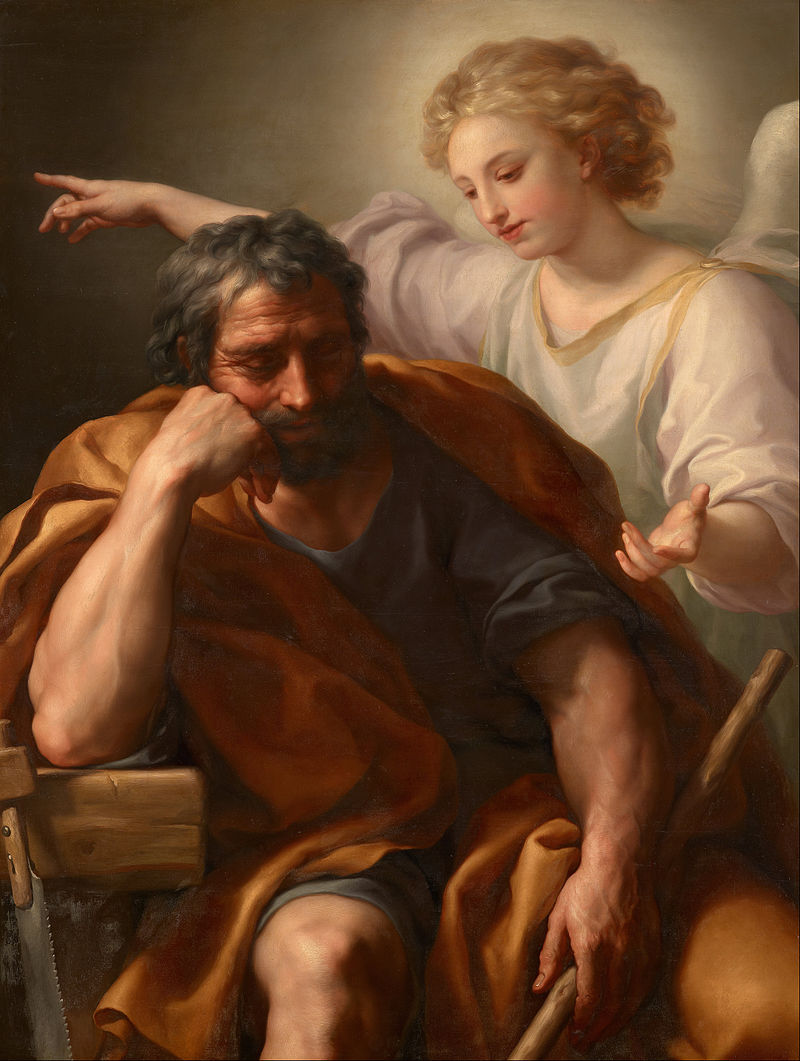 The Dream of St. Joseph (c. 1774)
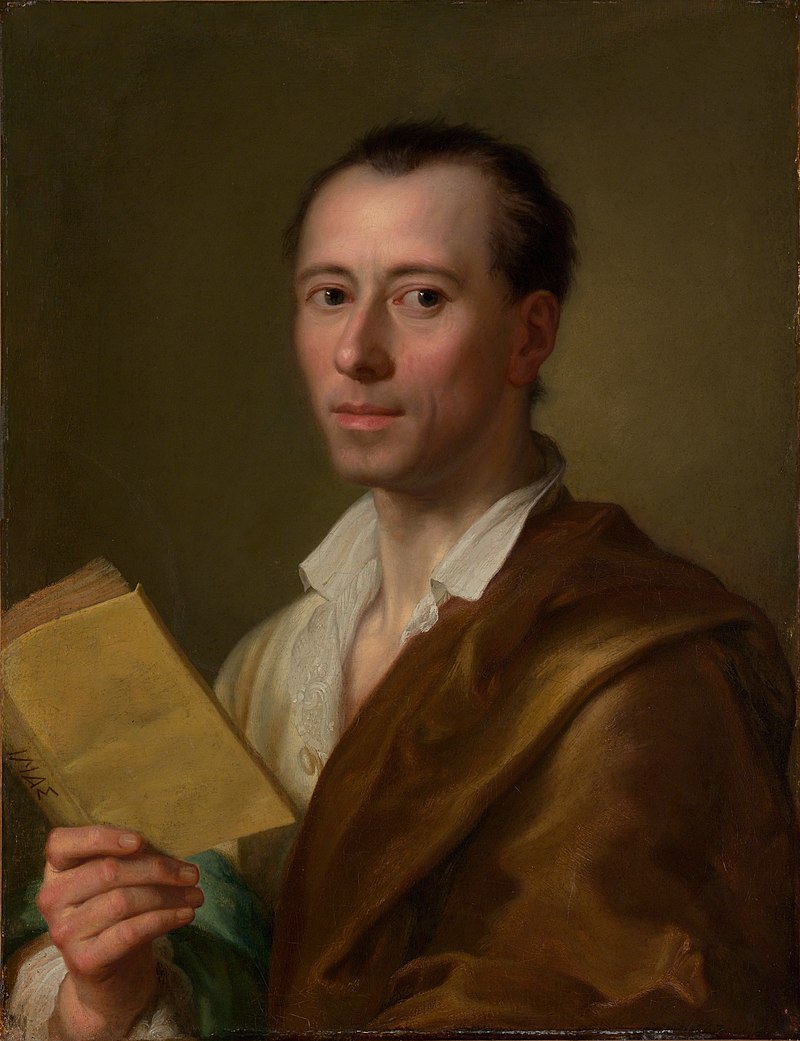 Johann Joachim Winckelmann at the Metropolitan Museum of Art (c. 1777)
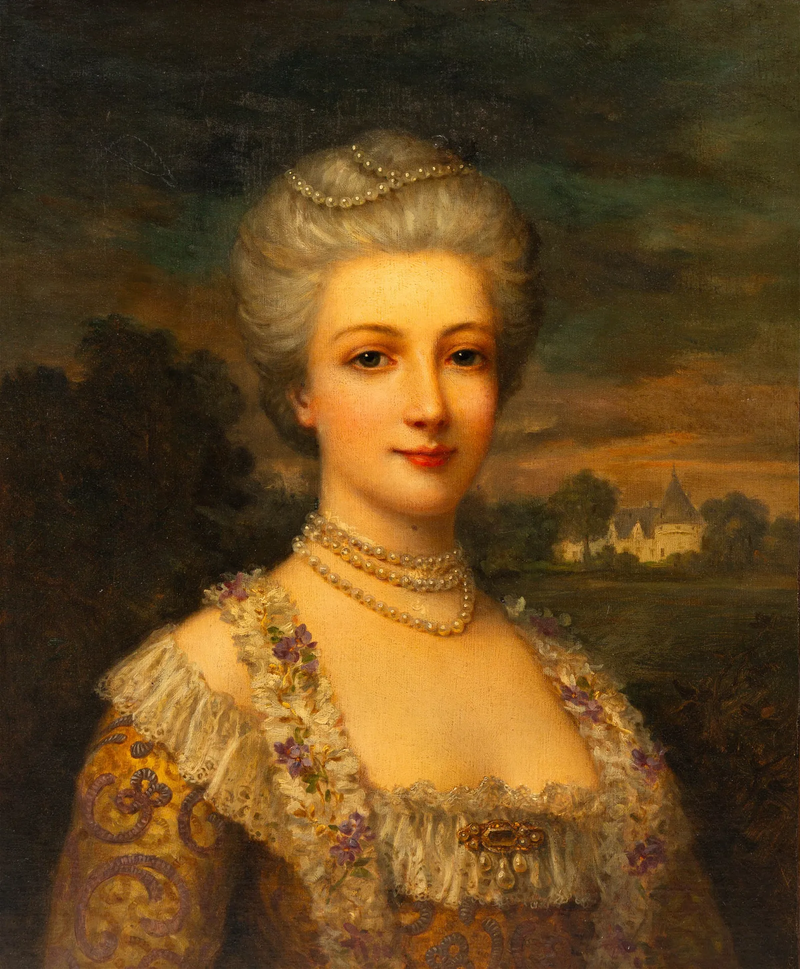 Portrait of an Elegant Lady (1775) -Germany
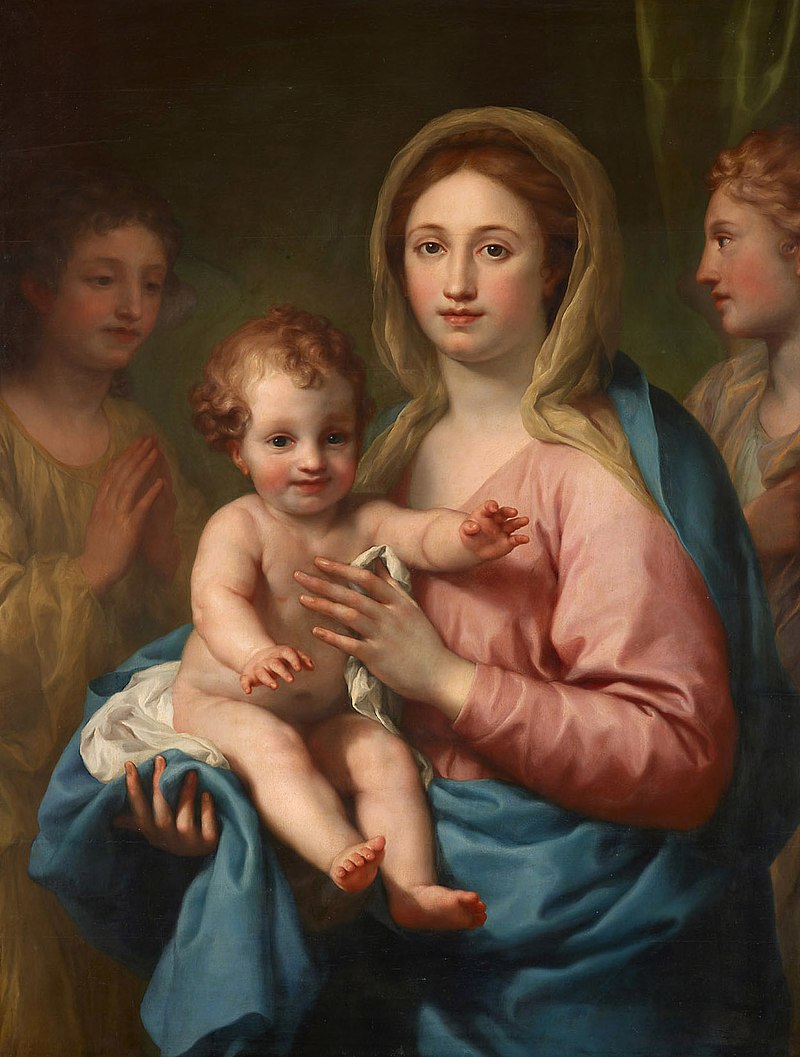 Madonna with Child and Two Angels (1770-1773) - Kunsthistorisches Museum
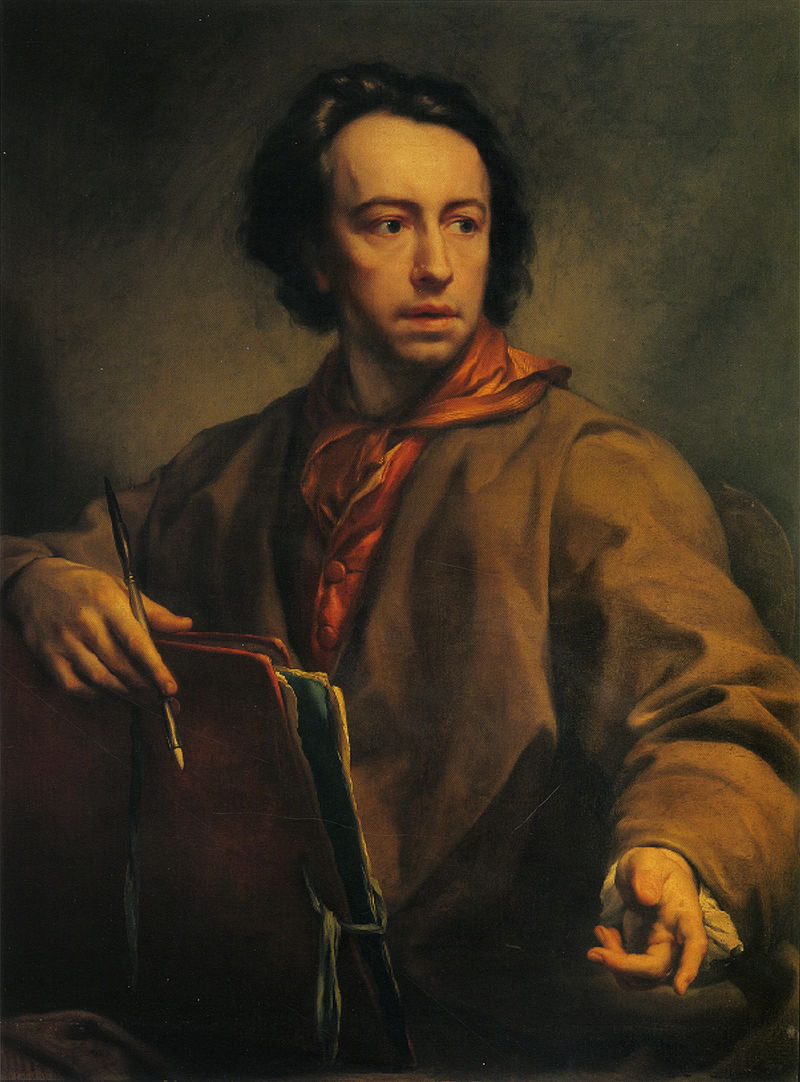 Self-Portrait (c. 1775) - Uffizi, Florence


Thank you for your support of Lichtblick and for being a patron of humorists, writers and the arts.
Best wishes!
~ Mathilda Ferguson

“One ought, every day at least, to hear a little song, read a good poem, see a fine picture, and, if it were possible, to speak a few reasonable words.”
~ Johann Wolfgang von Goethe