

The global economy may be shifting gears and two sectors offer a different outlook as to what happens next.
Over the past few weeks, I’ve been concentrating on the action on two pillars of the economy, the shipping and homebuilder sectors. The shipping stocks are bellwethers for international commerce, while the homebuilders are the lighthouse for the U.S. economy. The action is both sectors says a lot about how the world is adjusting to interest rates, geopolitics, and what may come next.
The anchor for both businesses is interest rates. Yet, able management of product supply has served the homebuilders better than the global shippers.
The Shipping Business
Shares of shipping giant A-P Moeller-Maersk A/S (AMKBY) crashed and burned on 2/8/24 after the company’s CEO warned investors that its profits would plummet due to an oversupply of shipping capacity. In addition, he noted that the increased traffic, and the higher prices being charged for transporting cargo through the Red Sea, due to the attacks on ships using the traditional route, won’t be enough to make up for the loss of business.
His specific words were: “We will see that there are too many ships in the world compared to the number of containers that need to be transported. Even if a year from now we're still sailing south of Africa, excess capacity and pressure on prices will persist."
It seems that the increased number of ships and containers that were built to compensate for the effects of the pandemic have created a glut. Furthermore, he said that when the Red Sea hostilities are resolved and the Suez Canal reopens, “prices will fall immediately.”
What he didn't say, also speaks volumes. Specifically, he made no mention of how the evolving situation in the Chinese economy may affect his business.
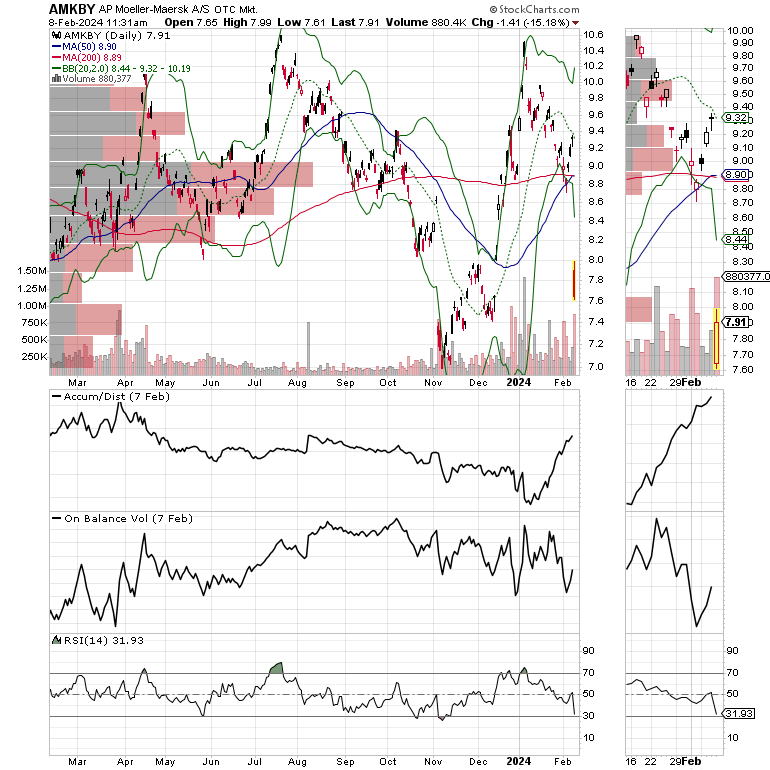
The price chart for the stock speaks for itself. What’s most interesting, though, is that the crash in Maersk, did little to taint the price in the broader shipping sector. You can see that the price chart for the SonicShares Global Shipping ETF (BOAT) remains in a trading range.
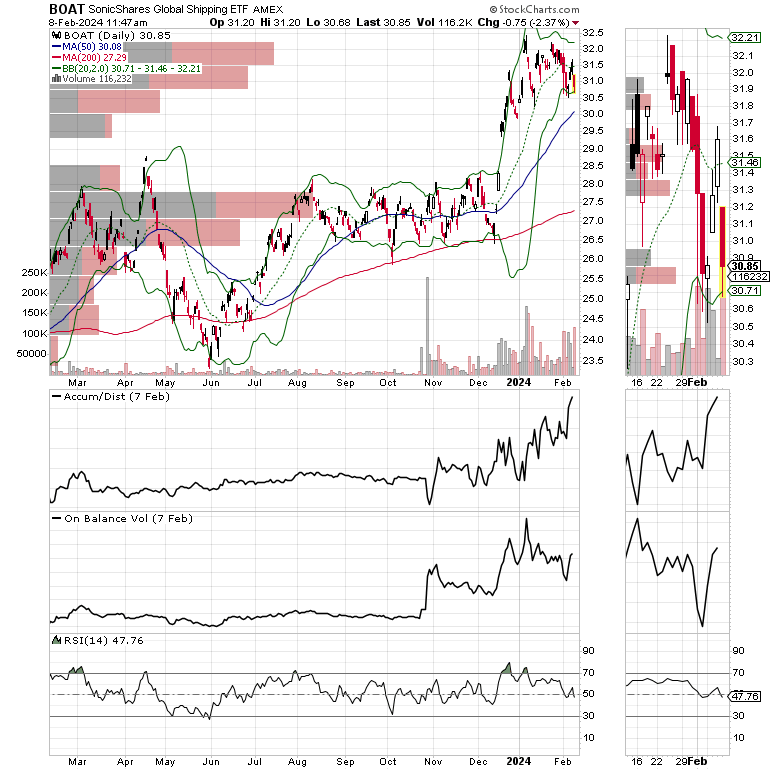
You can attribute much of this stability in the sector to the still unknown outcome of what will happen in the oil market as a result of the ongoing Middle East Conflict.
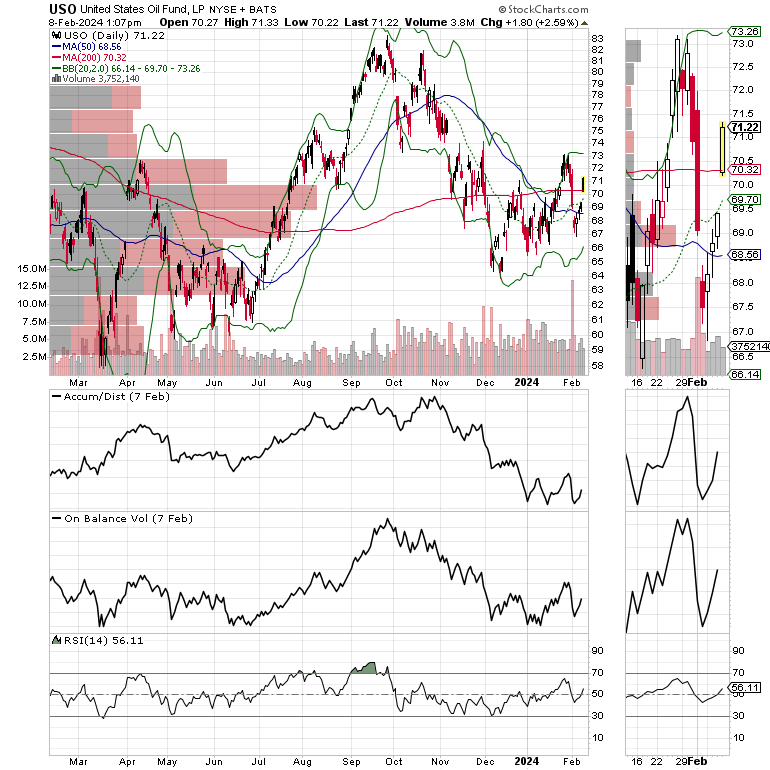
The United States Oil Fund ETF (USO) has likely bottomed out. Note it continues to flutter about its 200-day moving average and the $70 area. A decisive move above $74 would likely accelerate the gains in the ETF, as it would signal that oil prices are on the rise.
Homebuilders Remain Stable Despite the Fed’s Hawkish Stance
The bearish action in the shares of Maersk didn’t extend to the rest of the sipping sector. This resembles what happened in the homebuilders when D.R. Horton (DHI) missed on its earnings expectations. As I described previously, the homebuilders are in a better position that the shippers, as decreased supplies of single family homes remain in their favor.
At the same time, both DHI and Meritage (MTH) reported a slight slowing in sales, while other homebuilders are reporting ongoing growth in their orders while projecting higher earnings for 2024.
XH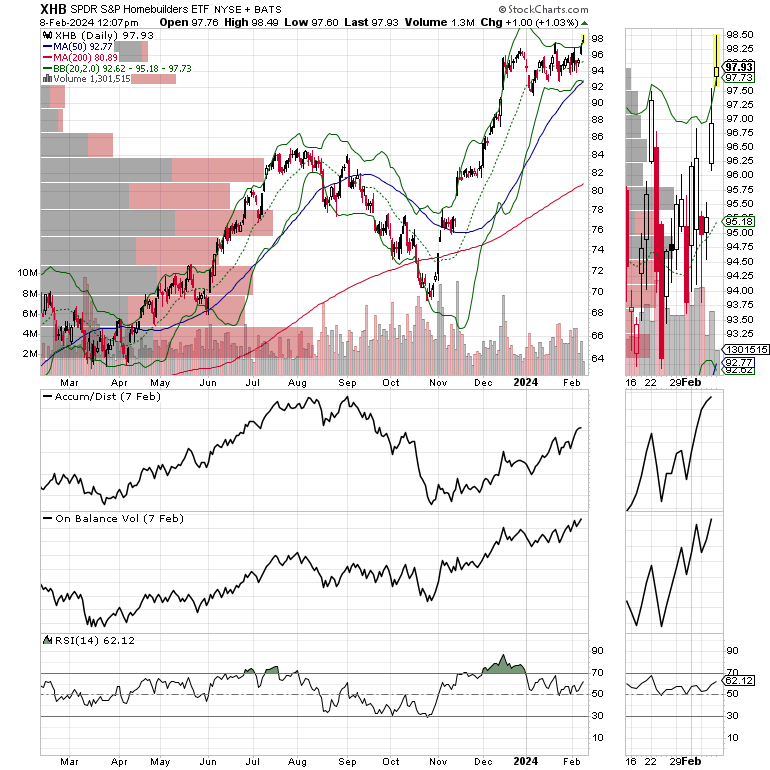
The price chart for the SPDR S&P Homebuilders ETF (XHB) just broke out to a new high, at least temporarily laying to test the market’s concerns about the homebuilder sector.
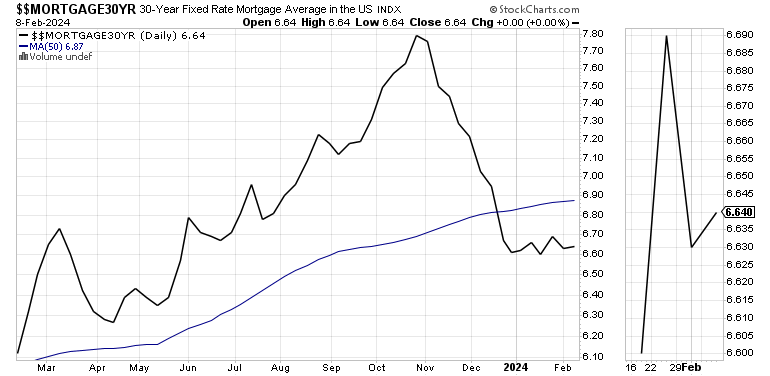
On the bullish side, mortgage rates have stabilized, which suggests that business should remain stable for homebuilders, barring a worsening of unemployment climate or a worsening of the geopolitical situation.
Where it All Comes Together
Because the global economy runs on debt, interest rates set the tone for activity. The U.S. Ten Year Note yield (TNX) is the bellwether for mortgage rates, and in many ways sets the tone for global debt, via its influence on international bond markets.
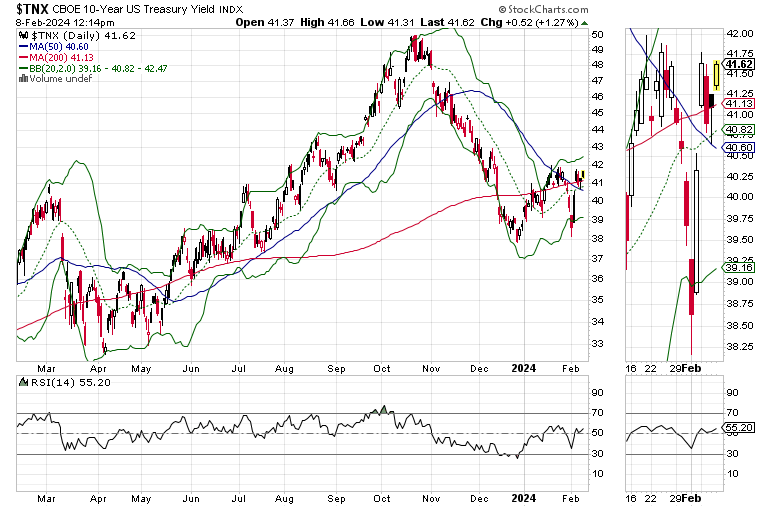
Recently, TNX has traded in a volatile, and somewhat narrow trading range. Indeed, the dramatic drop in yields which started in October 2023 and the subsequent decline in mortgage rates, as I correctly predicted, has been partially reversed.
On the other hand, despite signs that the decline in inflation has slowed, and the Fed’s hawkish talk, TNX has struggled to climb above 4.2%, on multiple attempts. This is of some comfort, but it is countered by the fact that TNX remains above its 50 and 200-day moving averages.
The stark difference in the price trends for Maersk, and the homebuilders is partially related to interest rates. While lower rates would likely benefit both, investors are responding directly to management decisions over the last three years which have now come to roost.
Bottom Line
There is a subtle shift developing, as supply and demand in individual sectors and regions is affecting investor attitudes more directly than global commerce. Since the pandemic, two major migrations have unfolded. Factories have moved away from China to friendlier countries, and the U.S. population has migrated from large cities to suburbs and the Southern U.S.
The shipping industry adapted to the post pandemic inventory increases by overbuilding ships and containers. As supply and demand has adjusted, they now face an overcapacity of shipping vessels and containers. This is being exacerbated by the negative effect that higher interest rates have had on global demand. Much of this slowing is being reflected in the worsening situation in the Chinese economy, where the real estate market has collapsed, unemployment is rising, and factory activity has slowed to a crawl.
Homebuilders refrained from over building and have managed their supplies more adeptly. The result here is that demand is still outstripping supplies. Moreover, they’ve concentrated their largest building projects in the U.S. sunbelt, where population growth has kept the economy more stable than in other parts of the country.
Higher interest rates have slowed down the global economy, decreasing product demand. This has hurt the shipping industry, compounding its overcapacity situation. Because homebuilders managed their product supply more adeptly than shippers, by not overbuilding and concentrating their activity where populations are growing, they are in a better long term position to grow their business.
When the Federal Reserve eventually lowers interest rates, we will likely know more. As things stand, homebuilders are in a much better position than global shippers.
Thanks to everyone for your support. I really appreciate it.
Special shout out goes to Jim H., Brian, and Les.
If you like this report and want access to timely, easy to digest content which complements the Buy and Sell recommendations offered at Joe Duarte in the Money Options.com, consider becoming a member.
I also appreciate single coffees, which you can buy me here.
To subscribe to my premium service, Joe Duarte in the Money Options.com, click here.
Please don’t forget to hit the Like button on the posts. It helps to spread the word.
You’re the music. I’m just the band.
For details on my latest option trades and on which areas of the market make sense currently consider a FREE Trial to Joe Duarte in the Money Options.com.
Please don’t forget to hit the Like button on the posts. It helps to spread the word.
You’re the music. I’m just the band.