
A new book by Suresh Paul
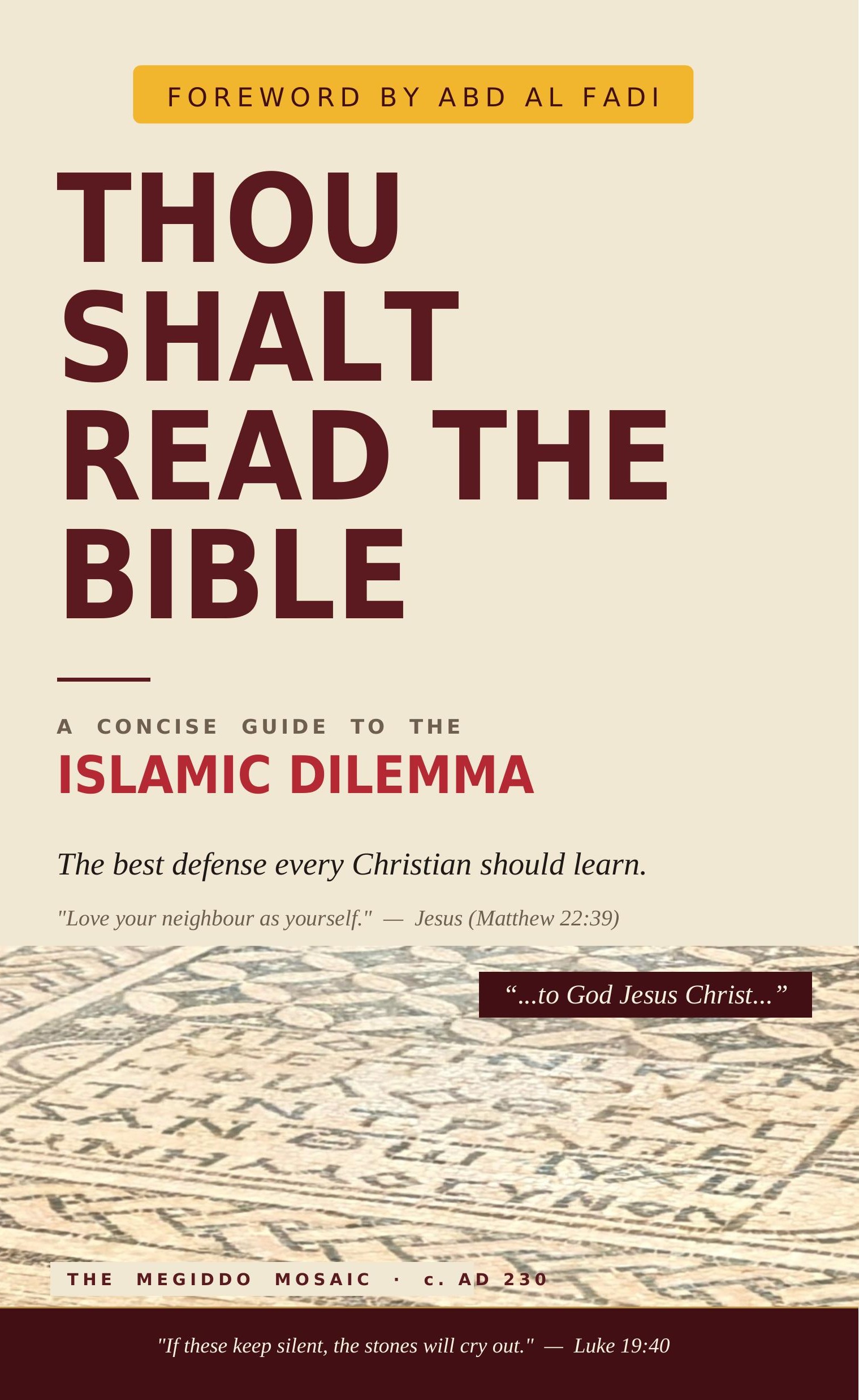
There's a question that comes up again and again wherever Christians and Muslims talk seriously about their scriptures — at Speakers' Corner, in YouTube debates, in late-night conversations between friends of different faiths. It's an old question, but it has a sharp edge, and most people have never thought it all the way through. Suresh Paul's new book, Thou Shalt Read the Bible: A Concise Guide to the Islamic Dilemma, sets out to do exactly that.
What is the "Islamic Dilemma"?
The argument is deceptively simple. The Qur'an speaks of the earlier scriptures — the Torah (Tawrat) given to Moses and the Gospel (Injil) given to Jesus — as genuine revelation from God. It calls them guidance and light. In several places it even tells the People of the Book to judge by what God revealed to them, and it instructs anyone in doubt to ask those who were reading the scriptures before.
At the same time, a very common Muslim position today is that the Bible Christians and Jews now hold has been corrupted — changed, edited, lost in transmission. This is how the contradictions between the Bible and the Qur'an are usually explained away.
But put those two ideas side by side and a problem appears:
If the Bible is reliable, then it stands as God's word — and where it contradicts the Qur'an (on the death and resurrection of Jesus, on his divinity, on the nature of God), the Qur'an has a problem.
If the Bible has been corrupted, then why does the Qur'an affirm it, command people to consult it, and even point to it as confirmation? And how was it corrupted at all, if — as one verse puts it — none can change God's words?
Either way, the argument runs, the Qur'an's own statements pull against each other. That tension is what Christian apologists have come to call the Islamic Dilemma, and the title of Paul's book — Thou Shalt Read the Bible — is itself a nod to those Qur'anic passages that point readers back to the earlier scriptures.
Why a whole book about it?
Stated in a paragraph, the dilemma sounds like a gotcha. Stated honestly, it's the beginning of a real conversation — and that's where a book earns its place over a viral clip.
There are thoughtful Muslim responses, and any guide worth reading has to take them seriously. Some scholars distinguish between tahrif al-ma'ani (corruption of meaning or interpretation) and tahrif al-nass (corruption of the actual text), arguing the Qur'an only ever charged Jews and Christians with the former. Others point to historical scholarship on how the "corruption" doctrine developed over the early centuries of Islam, often in the heat of polemics rather than straight from the Qur'an itself. Still others read the relevant verses in a narrower way than the dilemma assumes.
A concise guide, as Paul frames his book, is valuable precisely because it walks through the argument cleanly, lays out the key Qur'anic and biblical passages, and engages the standard objections instead of pretending they don't exist. The goal isn't to win an argument by ambush — it's to help readers actually understand the issue well enough to discuss it with clarity and respect.
Who is this book for?
If you've ever been in one of these conversations and felt the argument slip through your fingers, this book is aimed at you. It's written for:
Christians who want to understand the dialogue with Islam and explain their faith thoughtfully.
Curious readers of any background who want a clear, structured account of one of the most debated questions in comparative religion.
Anyone interested in interfaith dialogue who'd rather engage the strongest version of the argument — and its best rebuttals — than a caricature.
Whatever you ultimately conclude, you'll come away knowing the terrain.
A note on tone
Arguments like this are easy to weaponize and hard to handle well. The best engagements treat the people on the other side as exactly that — people, worth listening to — while still taking the ideas seriously enough to disagree. A good guide to the Islamic Dilemma is finally an invitation to do the most disarming thing of all: to read carefully, both the Qur'an and the Bible, and follow the questions wherever they lead.
Get the book
Thou Shalt Read the Bible: A Concise Guide to the Islamic Dilemma by Suresh Paul is available now. Grab your copy here.
If it sharpens how you think about one of the oldest conversations between two of the world's largest faiths, pass it along to someone who'd want to read it too.