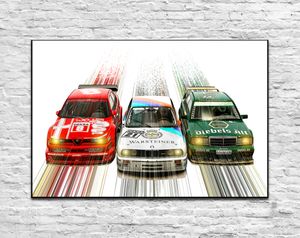

Shown below is the result of 5 hours of research. Almost enough to have the pieces I need to build a Super Taikyu DC2 Integra from the late 1990s. And I'm keeping that RX-7 and those Mitsubishi Lancers in mind for future projects. Read up below to visit the Retro & Replica garage and get an idea of how an average daily driver becomes an authentic race car.
My vision
My goal is to create cars that feel like the real car would - or at least how it would feel in Gran Turismo. An authentic experience means that everything checks out, and that goes much further than power and weight:
What generation of chassis model?
What engine was in it?
Was it bored/stroked up?
HOW did they increase power: did they use more aggressive camshafts, hardened pistons?
At what RPM did it make peak power and torque?
Did they change the gearbox, and if so; was this a sequential, a dogleg?
What kind of clutch plates were used?
How was the suspension stiffened? Was it the spring rate, the dampers, the roll bars? And to what extent was the chassis reinforced?
What wheel sizes?
What regulations was the car subject to?
Answering all these questions and more is what makes the experience as authentic as possible.
Research
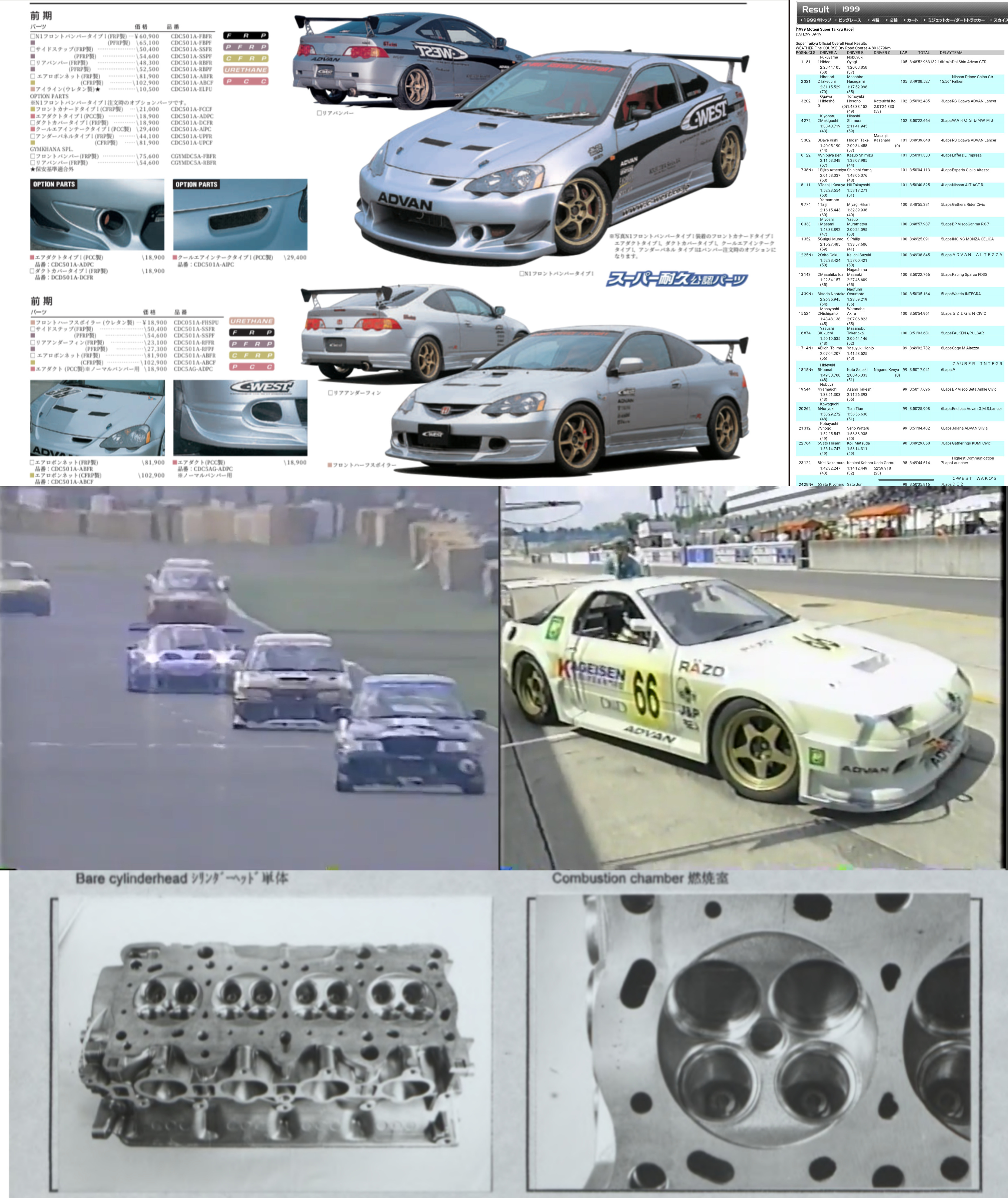
The research is the most difficult and most rewarding part. Scouring the depths of the internet for a picture where I can see the roll cage, spec sheets of the gearbox, parts lists from the aftermarket tuner, articles about the driving experience, videos of a race from 1992. It takes hours and hours to find that one missing piece of the puzzle, but just look at the pictures; that's just a fraction of the information I use. It is like traveling back in time.
On top of that, I am playing through every Gran Turismo game to understand how the physics have evolved, and how to translate the settings from older games to GT7.
Ultra high standards
I'm sure you've seen them: flashy videos with fancy looking cars to recreate iconic race cars. But soon you'll realize it’s just a livery slapped onto a car, and a tune that drives well. It's fun in its own right, but vastly different from what I'm envisioning for my creations.
I have an immense car graveyard with tuned cars that weren't close enough, and an even bigger list of cars I couldn't create. I would LOVE to recreate the M3 GTR. I can get the gear ratios, suspension setup, weight ratio, power, torque… But it would be a bootleg. I can't swap in the P60B40 engine that I'd need, and the S54B32 engine that's in it can't be tuned to have anywhere near the same nature. Even if I could get to the same displacement, the nature of the engines is too different and that is WELL below my standards. More examples of such:
RE Amemiya Asparadrink RX-7 (needs a 3-rotor Wankel)
HPA Motorsports Audi TT (has a parallel twin turbo)
Chevrolet Corvette C5-R (needs a 7 litre engine) - the list goes on and on.
Incorporating the hidden values of the game
As you may know, roll cages add a fractional amount of body rigidity. It used to affect PP, but it's not in the PP formula anymore. Wheel dimensions also aren't just cosmetic; they affect the size of the contact patch and may cause fender interference. There is much, much more than that. Already in Gran Turismo 4, things like drive inertia, chassis stiffness, flywheel inertia and wind drag were incorporated.
If you'd like a demonstration; grab an Aston Martin DB5, and take it down the Fuji home straight. That engine braking taking so long? That's the massive flywheel that's in it. Or just have a look at the Group 3 cars in GT7: the suspension settings are identical, yet each car feels different.
Understanding that there's more to the nature of a car in GT7 than meets the eye makes for a more complete experience. And it shows what painstaking attention to detail Polyphony Digital puts into their cars.
Working within and embracing the limitations of the game
If I increase the bore of an engine, I can't do it in millimeters. The gains are percentual. This applies to almost every upgrade. By mixing and matching parts, I can come as close as possible. Sometimes I can't get close enough, and that's when a tune ends up in the trash bin.
To get this to work, I need to take some liberties. Say I have a car that weighed 1200 kg in real life, but I can only get it to 1210 kg in-game. That's 0.83% heavier than real-life, so I'll embrace it and give the car ±0.83% more power.
Things like downforce, LSD settings and rollbar stiffness are abstract game values, so I’ll have to incorporate those into how the car is supposed to handle. Finally, the power restrictor and ECU are used as modifiers to manipulate the power curve after all the correct parts have been installed.
By incorporating all the specs I can find, I'm left with only a few variables that I need to fill in myself. And then accounting for how the game works; for example you can't put a car at minimum ride height with minimum damper compression or it will bottom out.
Final word & credits
If you've made it this far, thank you for reading. And to put it into perspective - this is the equivalent of not even half of one single article I read during the research phase.
Applying all this knowledge would not have been possible without Mozzie and Filo. Mozzie taught me how to tune and is the ultimate test driver for these projects - the final product is stress-tested by him. Filo taught Mozzie how to tune, and his tuning explanations and troubleshooting laid the foundation to make this possible.