

Why healing starts with feeling, not thinking
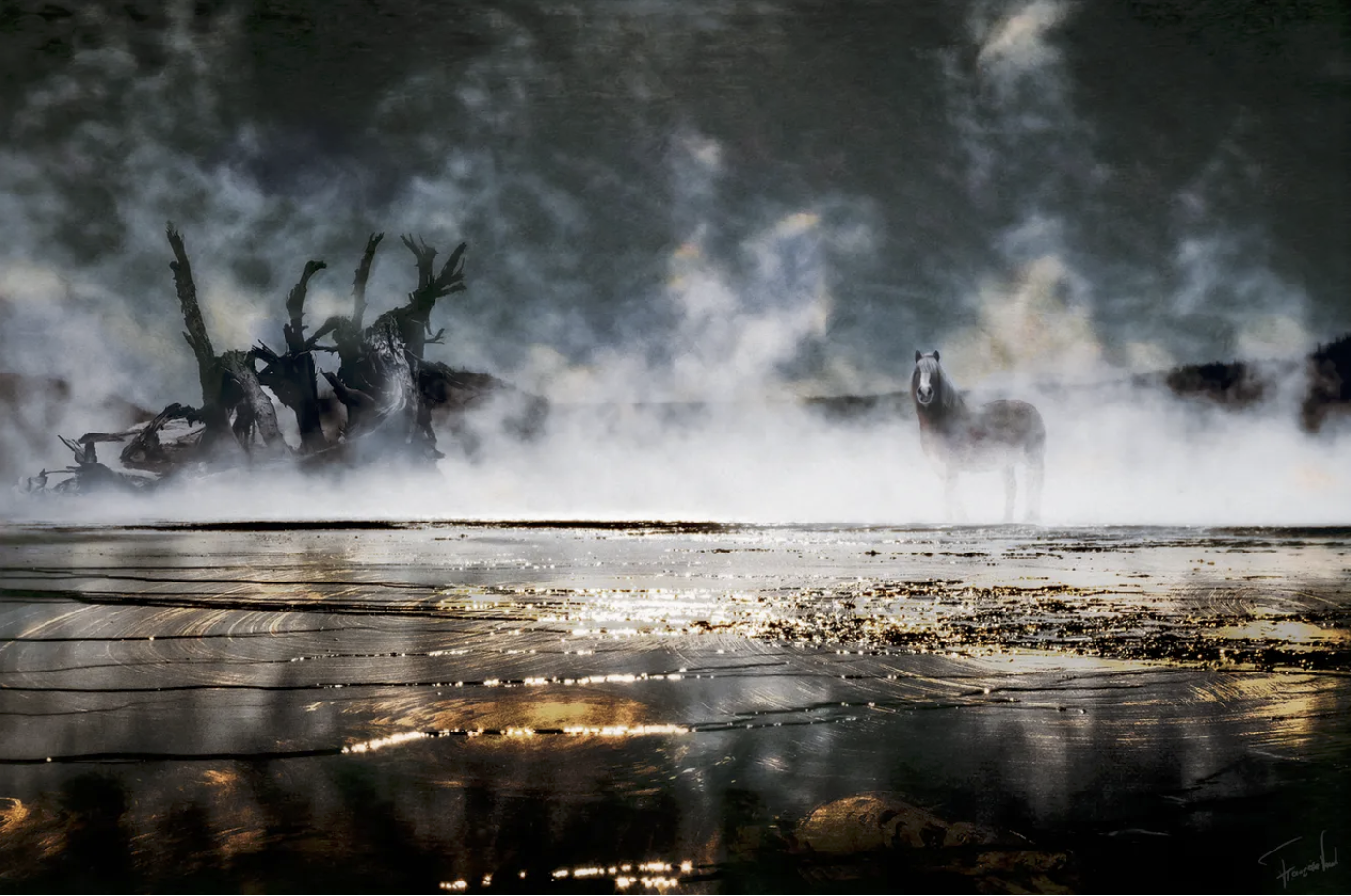 The Brave © Françoise Vaal - digital collage - The untamed spirit of nature
Under normal conditions, your senses don’t lie. If you’ve ever visited a house of mirrors, you know they can be fooled, but only when we’ve built the illusion ourselves. The mind plays tricks more subtly. It can fool you for years, and worse, convince you that what you’re thinking is reality.
If that thought lifts you up, fine. But most of the time, we believe the ones that quietly chip away at us.
Humans can do something remarkable: we think in symbols, words, and abstract ideas. It’s a neat trick, but also a dangerous one. We start treating words like facts. Say “I don’t feel well” ten times, and your body will start to agree. Thoughts begin to override the senses. We make assumptions and rarely check if they’re true. With the speed of daily life, who has time to investigate every passing idea?
Nature doesn’t work that way. It doesn’t use words or slap labels on things. No labels means no judgment. Nature is always in the present. It speaks in color, scent, temperature, vibration, movement, stillness. It’s tuned for harmony, not opinions. It’s had a few million years to get it right. Humanity, driven by language and ideas, hasn’t done nearly as well. We’re not great at maintaining balance—within ourselves or with the world.
“Nature never deceives us; it is always us who deceive ourselves.”
– Jean-Jacques Rousseau
“I think I feel like…”
Nope. That’s not how it works. You’re either feeling or you’re thinking. Ideally, you feel first and let the thought come after.
Most of us have had a moment when something stirs inside and there are no words for it. That’s where it gets tricky. The unfamiliar invites doubt. Doubt calls in the mind to explain or justify the feeling. Soon, you’ve talked yourself out of trusting it. That’s how we start abandoning ourselves.
Some even say, “I feel this way, but I know it’s not true.” That’s a contradiction. Your senses are giving you real information. If a situation makes you feel unsafe, that feeling is true for you. The fact that others don’t share it doesn’t make it false. Dismissing your own senses to follow someone else’s opinion is common—and corrosive.
Clients often told me, “I felt it, but I didn’t listen.” That’s the point. You’re supposed to listen. You’re supposed to notice the difference between a thought and a true feeling. That’s how you learn to trust yourself.
Here are a few examples from my counseling practice:
1. Motorcycles and the Art of Feeling
Erik was reeling after a divorce. He couldn’t stop replaying the arguments in his head. He understood what had happened—logically—but he didn’t feel better. He was stuck in thought.
So I asked him, “What used to make your senses come alive?” It took a while, but something flickered.
“I felt amazing riding my motorcycle,” he said. “Leaning into the curves, wind in my face, rain soaking my helmet. That’s when I felt alive.”
Then came the punch: “I sold the bike when the kids were born. I thought that was the responsible thing to do.”
The look on his face was shame, then clarity. He’d traded real, vital feelings for a belief about what fathers are supposed to do.
He had also stopped listening to music, walking the beach at sunset, treating himself to one very fancy dinner a year. Not because he didn’t want to—but because those pleasures didn’t fit the image of who he thought he had to be.
When Erik saw this clearly, something shifted. He booked a table at a Michelin-starred restaurant. He test rode a new bike. The heavy thoughts loosened. He returned to himself, one sense at a time.
2. Whose Fear Are You Living?
Birgit came to talk about her mother. The relationship was tense, full of nagging and clashing views. It turned out her mother saw the world as a dangerous place. That fear had shaped Birgit’s childhood.
“She never let me play in the forest,” Birgit told me. “Afraid I’d get hurt or dirty. I used to think she was protecting me. But now I see—she was afraid she couldn’t handle it. It wasn’t really about me.”
We went to the forest together after a storm. The path was muddy. I asked her what she felt.
“I want to stomp in that mud like a child,” she said, grinning.
“What’s stopping you?”
“In the past, my mother’s voice would have. Now—nothing.”
She jumped in. The squish of it, the smell of wet earth, the weight of her boots—it brought her straight into her body. Into her own senses. She’d been following someone else’s fear for years. That day, she left it behind in the mud.
3. When Words Fall Short
Eduard and Bianca were stuck. Eduard was quick with words. Bianca wasn’t. He kept saying he wanted to feel loved, but only accepted verbal proof. I pointed out the contradiction. He wanted to feel something, but demanded words to make it real.
When did he last feel loved?
“When she made my favorite dinner,” he said.
It wasn’t the sentence, “I love you,” that moved him. It was the warmth of a familiar taste. The comfort. The care.
Bianca expressed herself through action. Once they saw that, the stalemate broke. He stopped expecting speeches. She stopped feeling inadequate. They found each other again—through the senses, not through talking it to death.
And Then There’s Art.
Art doesn’t try to explain. It bypasses the mind and speaks to the body first. Before you understand it, you feel it. A painting hits you in the chest. A sound pulls at something wordless in you. Then the brain arrives, a little late, trying to make sense of what just happened.
That’s why I make the kind of art I do. I work with wild, rugged landscapes—geysers, deserts, mountains—and turn them into portals. Not metaphorical ones. Visual ones. Openings that suggest there’s something just beyond what we see. I build these worlds in mixed media, combining photography, paint, and texture until something else shows up. Something you can’t name but can feel.
What draws me to this process is how physical it is. Choosing the image, touching the surface, smudging the paint, scraping it back again—it’s all done with the body. Sometimes I work fast, chasing a sense. Other times, I slow down and let it come through like a whisper. The landscape doesn’t tell me what to do in words. It stirs something in my gut. A pulse. An image. A sense of awe, or sometimes grief.
That’s the whole point for me: to make something that can’t be fully explained, only experienced. My best pieces are the ones where people stand in front of it and say, “I don’t know why, but this gives me a feeling.” That’s enough. That’s the power of art. It opens the door to the senses again, especially in a world that teaches us to trust only what can be said out loud.
We’re not here to explain everything. We’re here to feel more than we’ve been told we’re allowed to.
Art knows that.
So does nature.
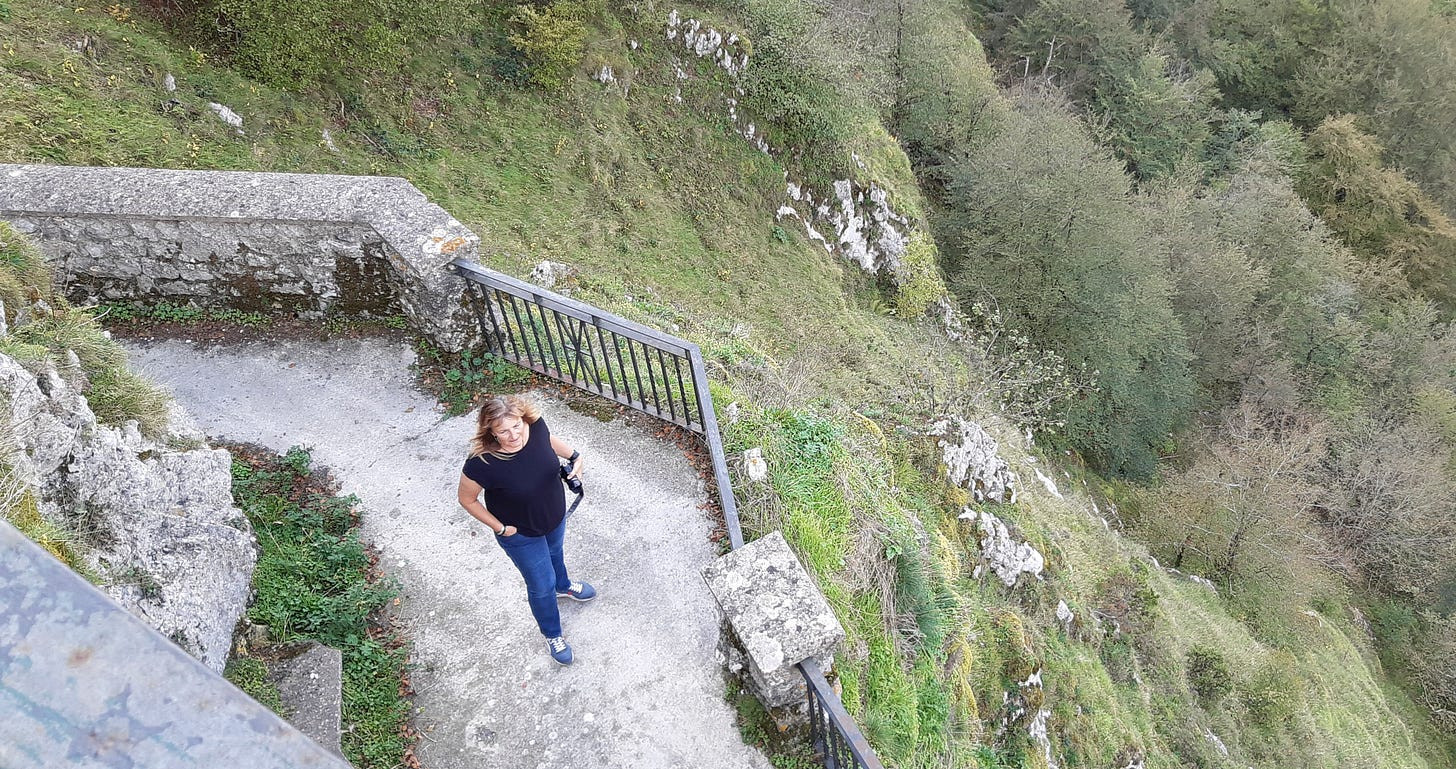 I’m Françoise. I began my career as a photo editor at Dutch national newspapers, until a quiet but persistent sense of purpose pulled me into marriage counseling. In my private practice, I realized that what most clients truly needed wasn’t more talking, it was time outside. I began using nature as a co-therapist, with powerful results. After a decade of helping others reconnect, my own creative voice grew louder. I listened, left the therapy chair, and returned to the arts, where I now explore the same themes with images instead of advice.
My art now centers on the wild, desolate landscapes that remind us how small—and how deeply embedded—we really are in the natural world. I work with photography, paint, and mixed media to evoke not just beauty, but belonging. My goal is to invite you into a deeper, more sensory relationship with land and self. A place where the body leads, and the thinking mind learns to follow.