
NEWSFLASH! All my digital scores are in the process of moving from SendOwl to Gumroad. I'm sorry to see you go SendOwl, but I'm afraid it was very much time... I'll send you an update when the move is complete.
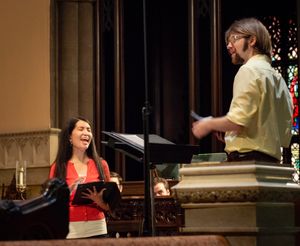
What top performers choose to highlight in their copies is of endless fascination to me. This is often because they pay attention to details that I would otherwise interpret differently. For this first post of the 'Yearnings for Home' series, I thought that I would share with you excerpts of Claire's editing of the Violin Concerto No.1 and look briefly at parts that I thought of interest.
Movement 1
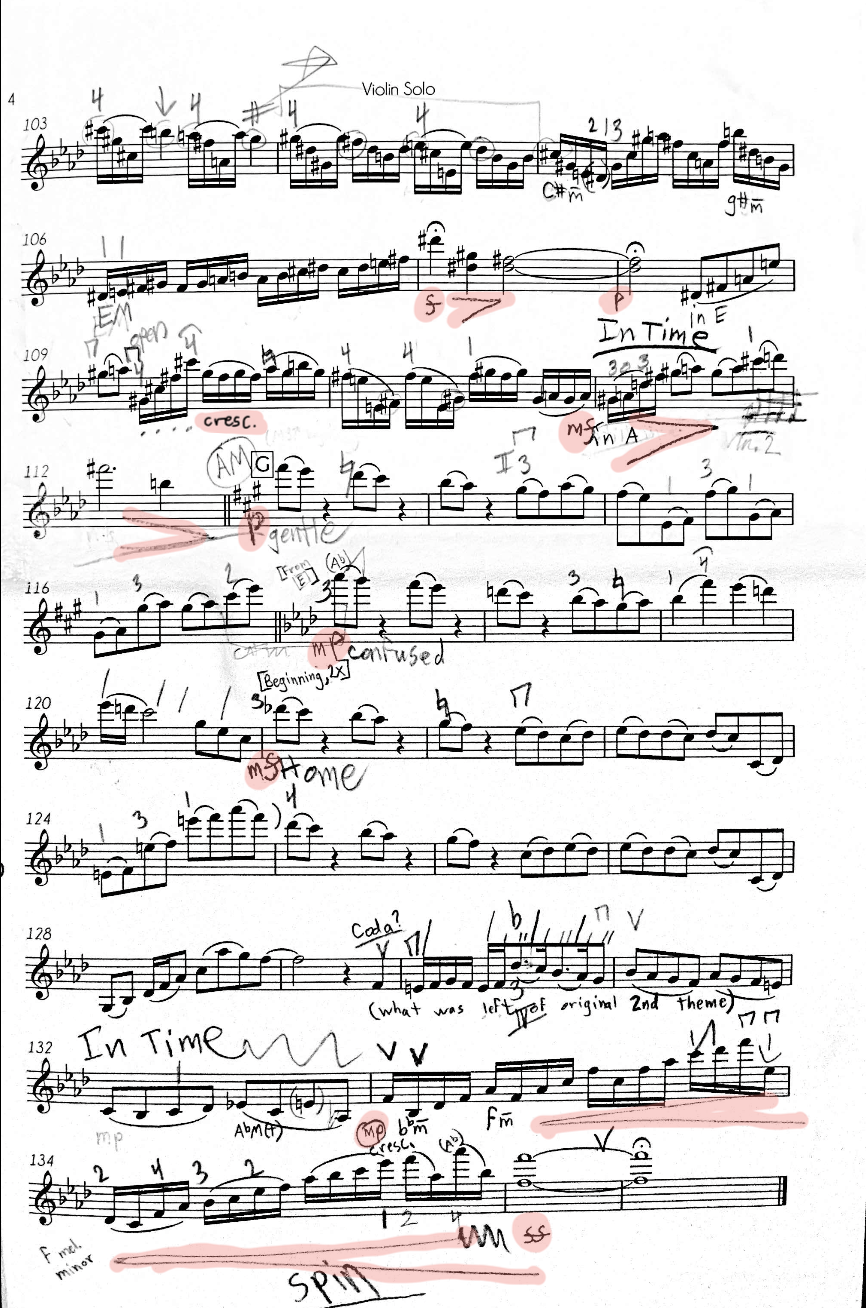
This section at the end of the first movement shows how Claire interacts with each repetition of the melody on a personal basis. She targets a feeling that she's aiming to evoke in her playing, and this provides a further level of variation between the three different melody sections. Whilst in rehearsal, Claire asked me what was happening in b. 129-b. 132, and she's dutifully taken note here of my response that that fragment is all that remains of the original 2nd theme (I had originally planned to write the piece in Sonata form, but got distracted with the excitements of Ritornelli!). Finally, it's particularly interesting to note the attention to the chordal underlay that she pays in the final bars. Without understanding the keys, this part becomes just as easy to play, but Claire has written in the underlay so as to plan where to correctly place the emphasis on the phrase giving a strong sense of 'spin'[-ning] upward to the final octave 'f' that concludes the movement.
Movement 3
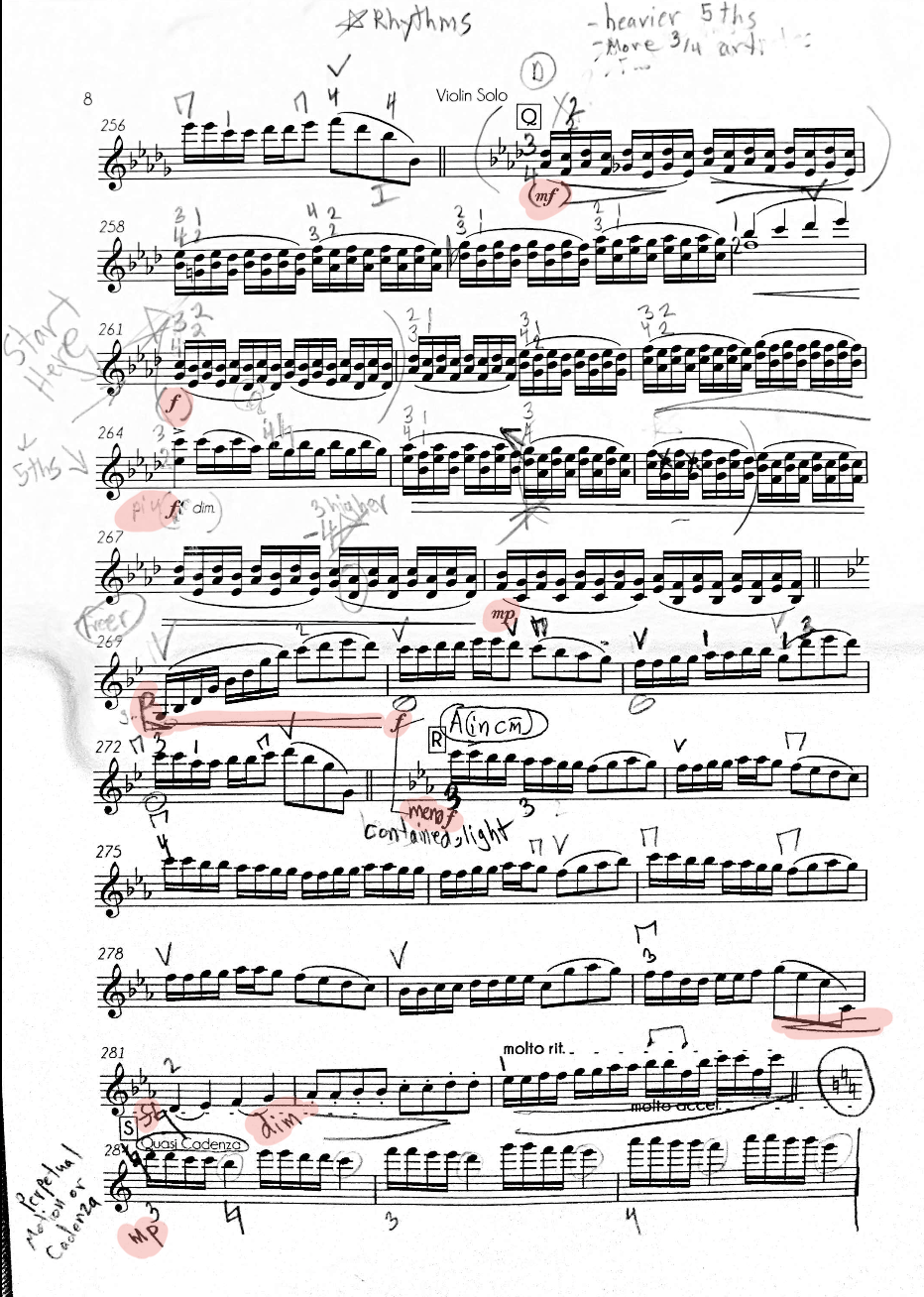
I enjoy this page. The octave-fourth pattern at letter 'Q' is fiendishly difficult to play, and hence requires the bullet points to think about it. Again, there is an enormous attention to detail here, from shaping the phrase, to deciding that each group of 8 should successively decay (a 'bloom' effect or 'slow attack' effect would lead to completely different audible outcomes). Particularly interesting is Claire's note at letter 'S' – a question that I had not considered, but is an accurate reflection of my writing – does the Cadenza constitute a perpetual-motion style riff or a long open ended time away from the otherwise unrelenting march of the piece in 2? Either case is compelling, but the performer's choice here has wide implications for how an audience will receive the final bars of the piece that slow from the relentless pace to restate things. If Claire chooses for the cadenza to be more 'cadenza-like', she lessens the shock of the final section, and visa versa.
It's a pleasure to hear Claire play this, and gain a deeper insight into her process as a performer. Tomorrow, we will look at some handwritten cards... I very much look forward to seeing you then!