

Before we get into the episode — quick sponsor-style shoutout:
If you’ve followed The Middle Ground Mic, you know I don’t push stuff I wouldn’t actually use. That’s why I’ve been talking about Brio. Their Beardscape trimmer is one of those products that actually feels built right — clean cut, solid guards, and no cheap nonsense. Use promo code MIDDLEGROUND for 10% off at brio4life.com?aff=296. It helps support the show, and it keeps independent conversations like this one going.
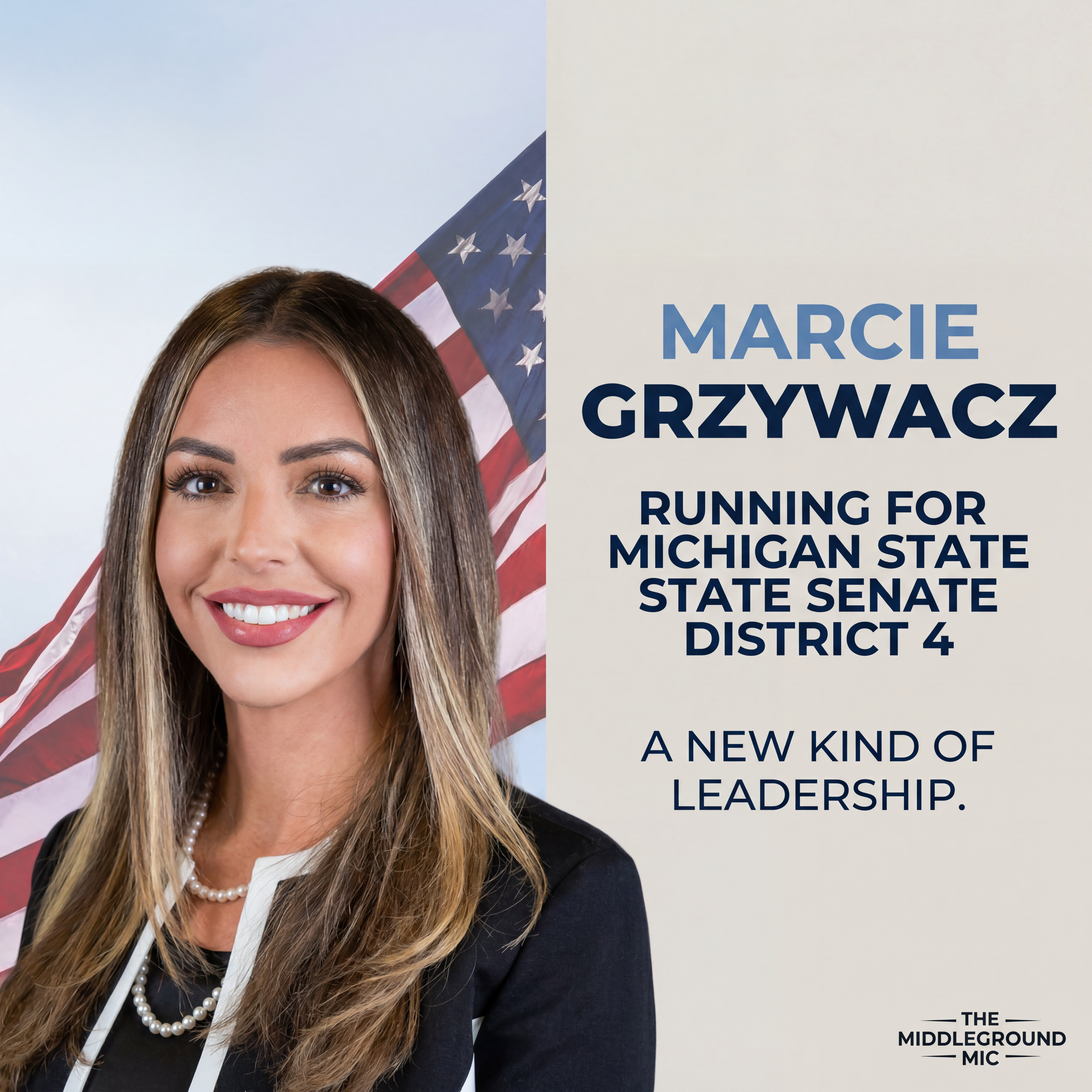
Sometimes the most important political conversations are not the loudest ones. They are not always about national headlines, viral outrage, or party warfare. Sometimes the real issue is much simpler: people do not know who to call when something in their community breaks. That was the heart of this conversation with Marcie Grzywacz, who is running for Michigan State Senate District 4.
“As servant leaders, we need to better educate the people that we serve.”
That line stood out because it cuts through the usual campaign noise. It is not about winning a soundbite. It is about something basic that local government should already be doing: helping people understand where to go, who to contact, and what office is responsible for what problem. If your road needs repair, if your neighborhood has an issue, if your city or township is not responding, people should not have to guess their way through government.
Marcie brought up a simple idea: a quick reference fact sheet. Nothing flashy. Nothing complicated. Just a clear guide that tells residents who handles what and when they should reach out. That might sound small, but for regular people trying to navigate local government, that kind of information can make the difference between being ignored and actually getting help.
“Who takes care of the road in front of your house?”
That question is exactly why this clip matters. Because most people do not think about government until something directly affects their home, their street, their family, or their neighborhood. And when that moment comes, they deserve answers. They should not have to be insiders to understand how the system works.
Marcie also talked about her time on council and what frustrated her when she first ran: a lack of transparency and accountability. That is the kind of phrase politicians throw around all the time, but in this conversation, it was tied to something practical. Transparency is not just a slogan. It means people can see what is happening. Accountability means they know who is responsible. Service means elected officials do not hide behind confusion.
“One of the issues that I had when I ran for council was the lack of transparency and accountability.”
To be clear, this conversation is not an endorsement. That is not what The Middle Ground Mic is. My goal is to give people a chance to hear directly from candidates, public officials, and community voices without the usual cable-news filter. You may agree with Marcie. You may disagree with her. But you should hear what she actually says before anyone else tells you what to think.
The bigger takeaway from this clip is simple: government should not feel impossible to understand. If public servants want trust, they have to earn it by making the system clearer, more accessible, and more responsive. That starts with conversations like this.
Watch the full conversation with Marcie Grzywacz on The Middle Ground Mic.
No Left. No Right. Forward.