
When Russia invaded Ukraine in February 2022, Armenia found itself in a precarious situation. The West and Russia’s preoccupation with the war effectively untied Azerbaijan’s hands, allowing it to pursue its political goals vis-à-vis Armenia through military coercion. Active disinformation campaigns were a key part of these tactics. In the first month of Russia’s invasion, Azerbaijani propagandists aggressively pushed the narrative that Armenia was involved in Russia’s war against Ukraine. The pinnacle of this campaign was the false claim that Yerevan had transferred its four SU-30 jets—acquired from Russia in 2019—to Moscow.
Realizing the futility of combating such disinformation directly, I woke up one morning and, before heading to work, tweeted: "Good morning, folks. According to multiple credible sources, Armenia has decided to send its aircraft carriers and nuclear submarines from Sevan to the Black Sea, aiming to support Russia's war effort in Ukraine."
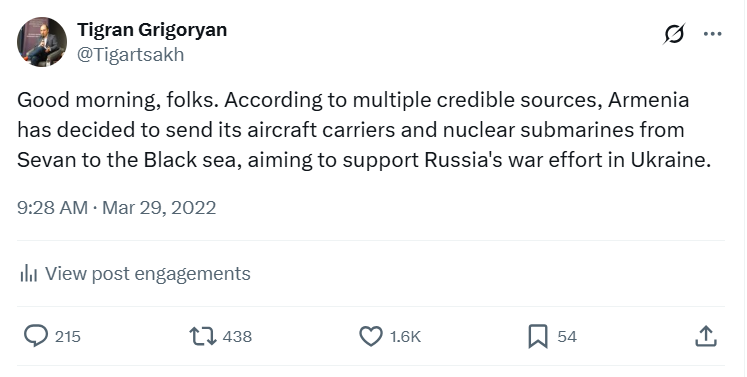
To say I was overwhelmed by the response would be an understatement. In less than 24 hours, the tweet garnered over 1,500 likes, more than 400 retweets and quote tweets, and hundreds of comments. While the vast majority understood the joke and joined in trolling Azerbaijani disinformation, there were some notable exceptions.
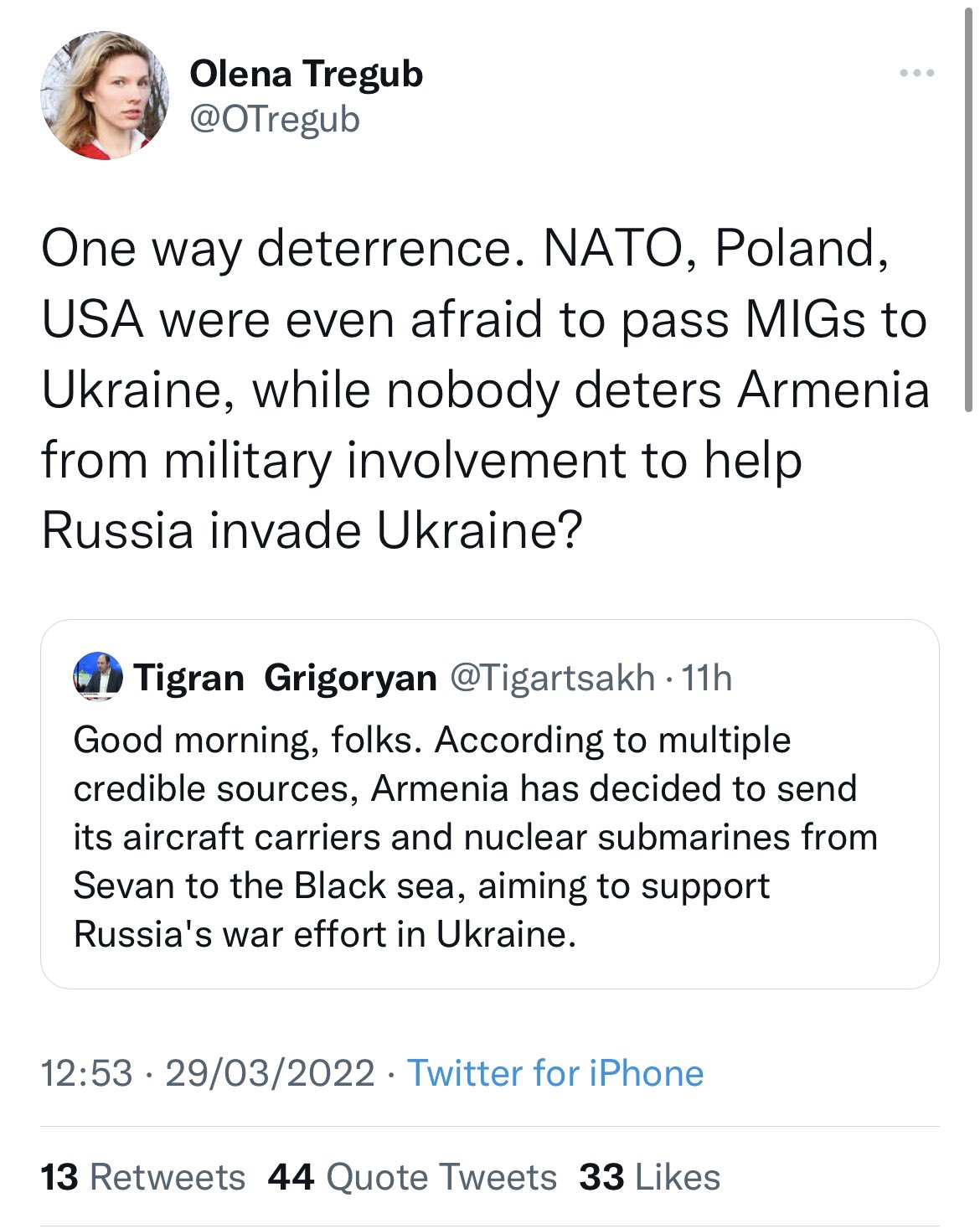
Olena Tregub, a Ukrainian anti-corruption and defense expert, reacted by sharing the tweet and complaining: “One way deterrence. NATO, Poland, USA were even afraid to pass MiGs to Ukraine, while nobody deters Armenia from military involvement to help Russia invade Ukraine.” She later deleted the tweet.
The whole point of my post was to highlight the absurdity of the false accusations against Armenia—a country facing existential threats and desperately in need of weaponry itself. That goal was at least partially achieved. Months later, I attended a meeting with a Western ambassador in Armenia. She brought up the tweet, telling me that she had been receiving regular inquiries from her capital about Armenia’s alleged involvement in the Ukraine war. One day, she sent my tweet about Armenian nuclear submarines to her superiors, and those inquiries stopped.
At the time, some people—including disinformation experts—criticized me for posting the tweet, arguing that many didn’t know Armenia is a landlocked country and thus couldn't have submarines. But setting Armenia’s geography aside, why should we care about the opinions of people who don’t even know that only a handful of countries possess nuclear weapons or aircraft carriers—and that Armenia is not one of them?
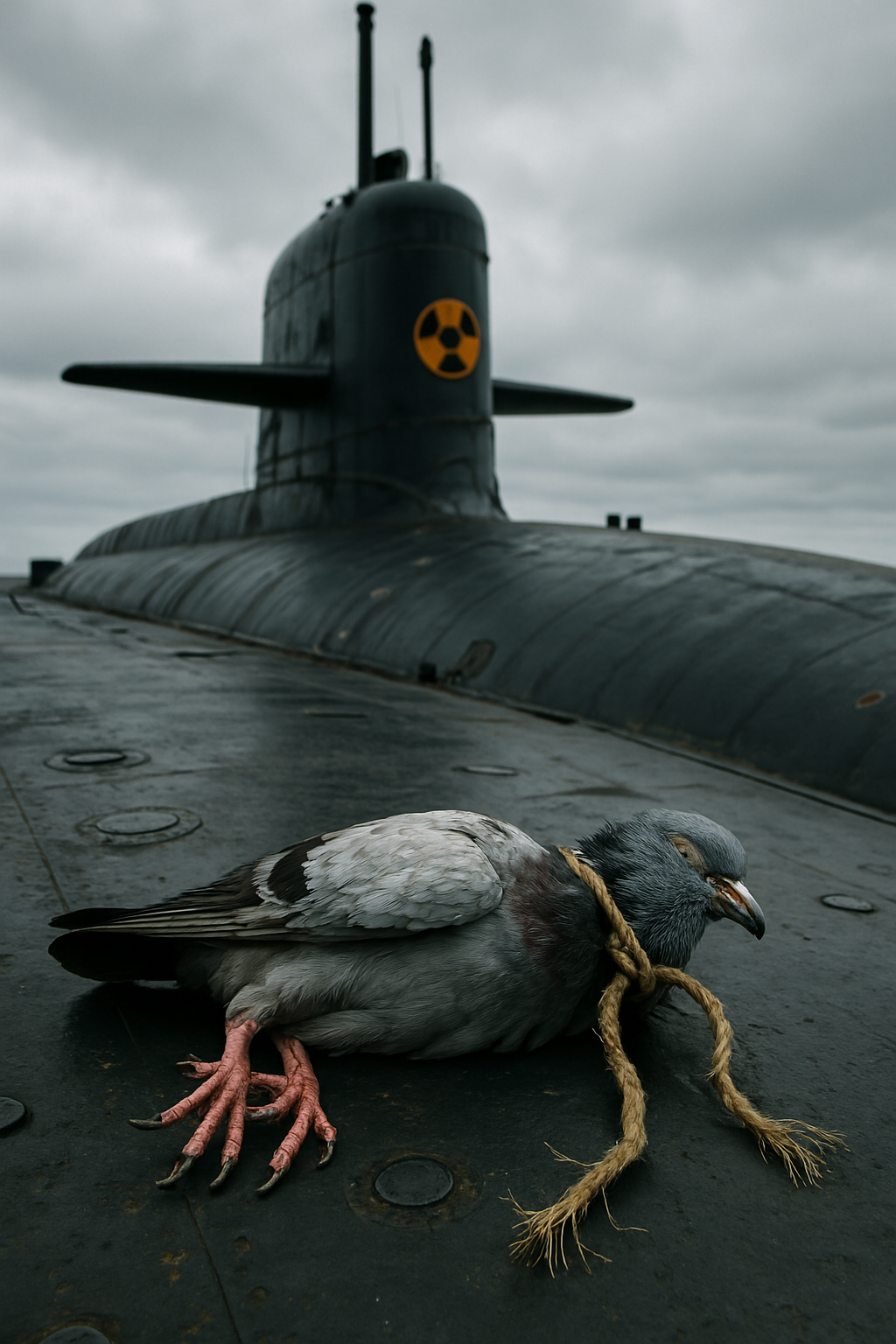
My next experiment with online political satire happened months later, again completely spontaneously. I was anxiously following Azerbaijan’s blockade of Nagorno-Karabakh when, in its initial stage, sham “eco-activists” blocked the Lachin Corridor, cutting off the entire region from the outside world. On the third day of this so-called eco-protest, a government-linked “ecologist” in a fur coat attempted to release a peace dove—killing the bird in the process.
The surreal symbolism of that episode was striking, but it wasn’t until the following day, when that same woman held a press conference in Baku to insist that she hadn’t killed the pigeon, that I decided to create the Strangled Pigeon Twitter account. The absurdity was impossible to ignore.
I launched the account with a gladiator-themed tweet: 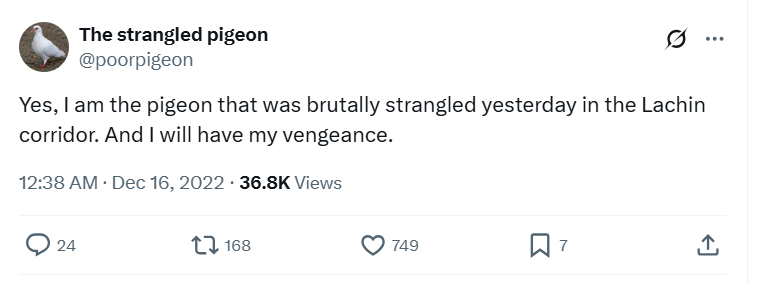
Like the nuclear submarine tweet, it immediately went viral. The account gained over 500 followers in a day without any specific effort.
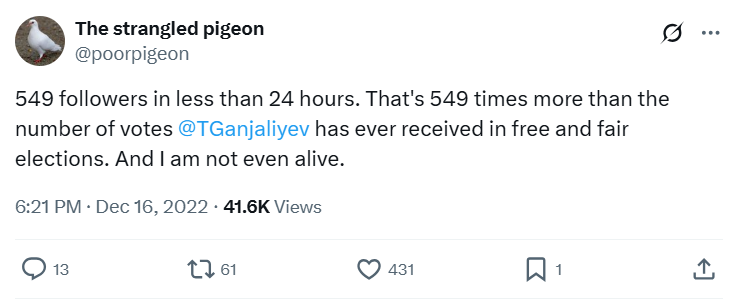
In the following weeks, it arguably became the most relevant account on Caucasus Twitter. Diplomats, international journalists, and experts—along with former and current high-ranking officials—started following it and discussing it. During that time, I attended various events where people talked about the account, and I was pretending I didn’t know who was behind it.
On a more personal level, the account became an outlet for my frustrations with the cynicism surrounding the plight of Nagorno-Karabakh and its people, who had been abandoned by everyone. The pigeon would randomly troll Azerbaijani lobbyists about their propaganda narratives, only to have them respond—completely seriously—to a fictional dead bird.
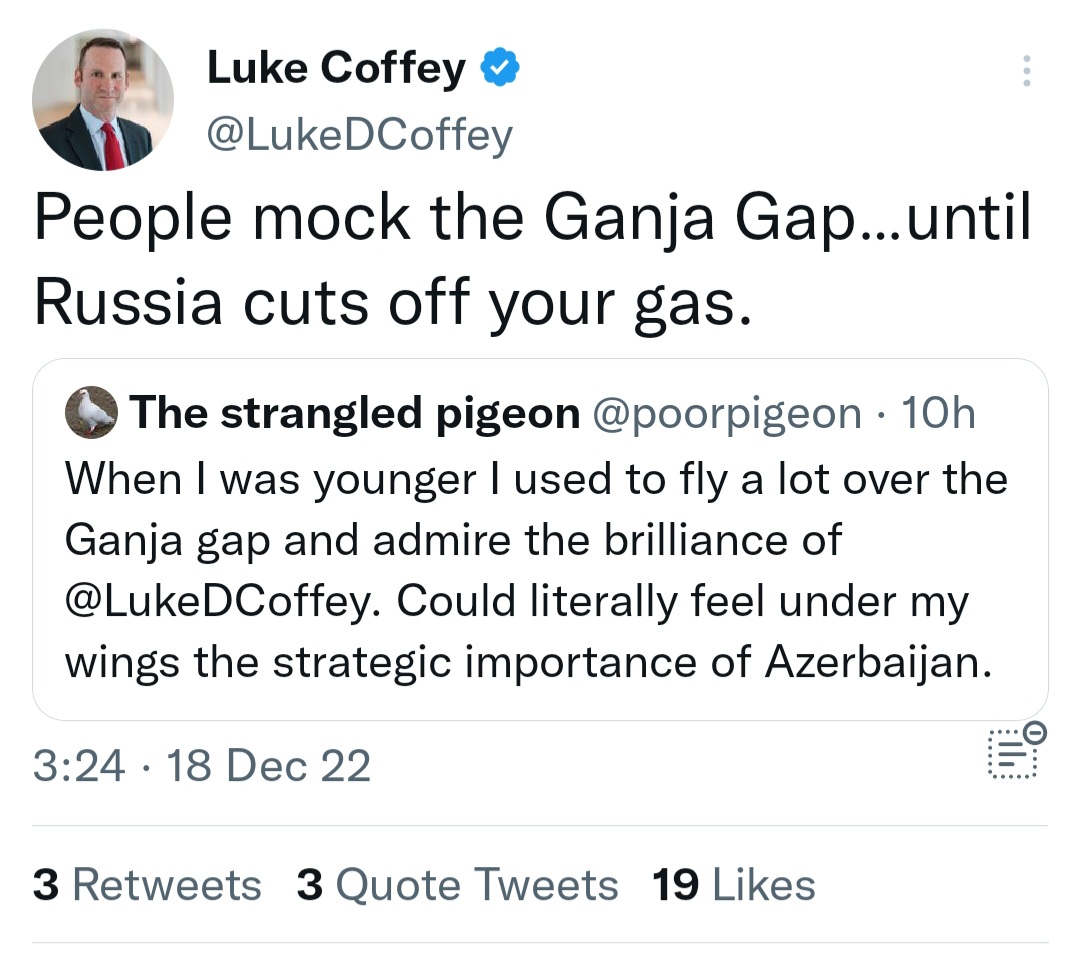
My main rule while running the account was simple: if I couldn’t post something from my personal account, I wouldn’t post it from the Strangled Pigeon account either.
However, as the blockade of Nagorno-Karabakh worsened by the day, my motivation and ability to post satirical content also dwindled. Eventually, I decided to quit the account. I had tried to lift people’s spirits during tragic times—until my own spirits became irreversibly unliftable.
This experience reinforced how powerful political satire can be. It is a potent tool against authoritarianism and the instruments used by autocrats. For people in places like Armenia, where geopolitical instability and existential threats have become an inescapable part of daily life, a good sense of humor is vital for maintaining sanity. The ability to laugh and not take oneself too seriously is, in general, a good credo to live by.
But satire is not just about humor—it is about resilience. It is about reclaiming dignity in the face of disinformation and cruelty. It is about refusing to be silenced, even when reality becomes unbearable. The Strangled Pigeon may have flown away, but its message lingers: sometimes, laughter is the last defense against despair.
Happy April Fool’s Day!
Tigran Grigoryan