

An extra hour feels different when most of your hours already belong to you.
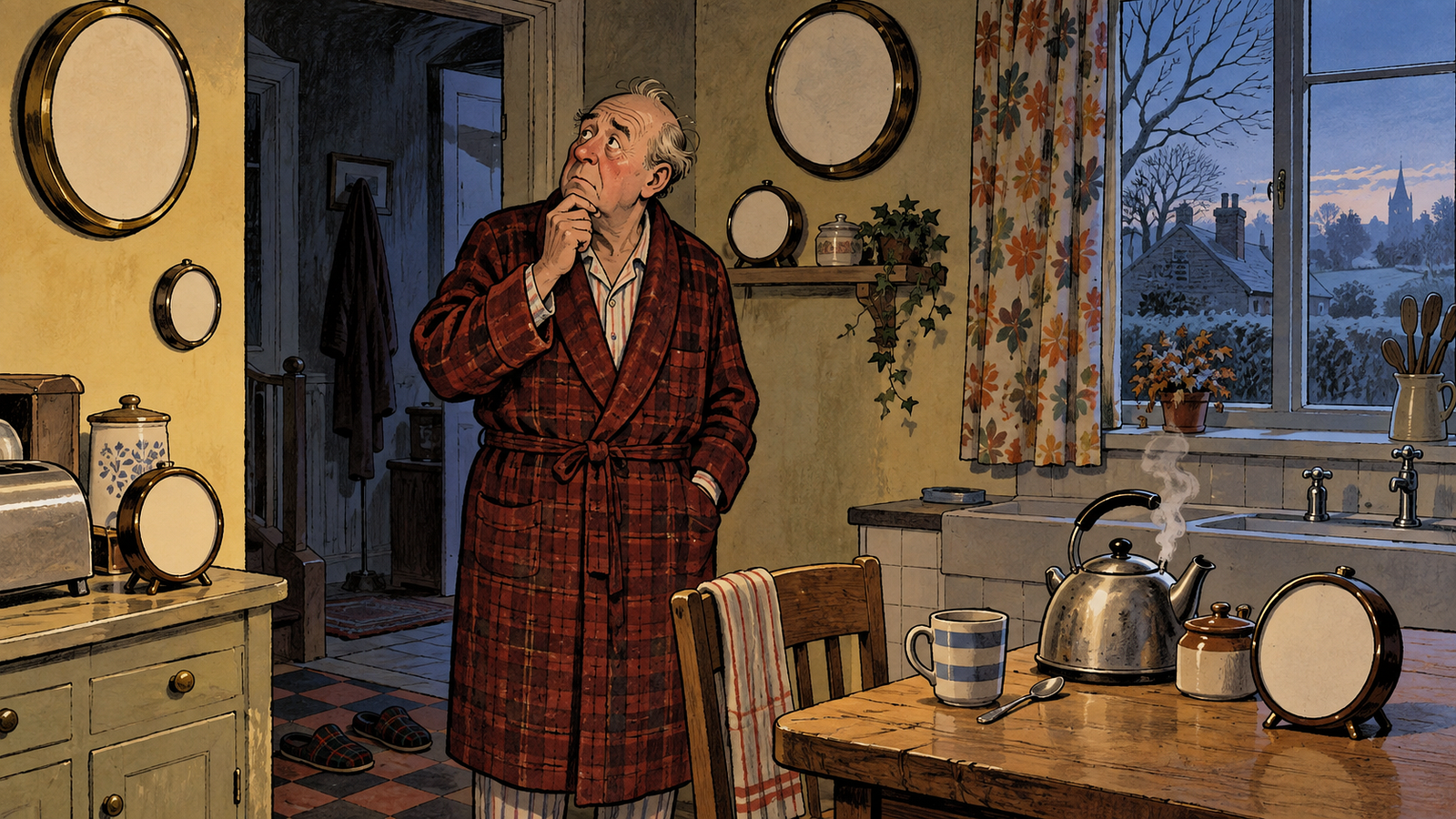
I woke at the old time, which the phone informed me was now the new time minus an hour.
The country had changed the clocks. My body hadn’t attended the meeting. It proceeded with its previous arrangements and seemed surprised that the kitchen was not ready to receive it.
So I made tea in the half-dark and considered what to do with an extra hour.
Once, I would have known. Sleep. Finish something. A small margin in a life that rarely supplied one. The hour would have disappeared gratefully into the machinery of being busy.
Now I have rather more hours. They arrive each morning without anyone else having booked them first. Giving me another is kind, but a little like delivering a spare chair to a man already wondering where to sit.
Before enjoying the gift, of course, there is the administration. The oven needs changing. The heating timer expresses its preferences through buttons I cannot identify without a torch.
The car clock remains in a category of its own. I can navigate by the stars, but the dashboard thinks every enquiry is an invitation to pair a device. Apparently being in the right time zone is available only through Bluetooth.
For part of the year I adjust it mentally. For the other part I congratulate myself on its accuracy, despite having contributed nothing whatsoever to it.
The joke is an old one. The feeling beneath it is newer.
Time used to push against me. Departure times. Appointments. A person waiting for a decision. There were walls around the day, and though I often resented them, they made the space inside comprehensible.
Retirement has made those walls softer. Monday can resemble Saturday. The bins have acquired a degree of authority previously held by my diary.
Then the clocks change and everybody, briefly, has a shared instruction again. Move the hands. Accept that the light will arrive differently. Rearrange what you thought you knew about the morning.
I find that strangely reassuring. I am still part of a common rhythm, even if my body is determined to file a dissenting report.
But the extra hour raises the question the other hours raise. Must I do something with it for it to count?
I spent this one looking outside. A fox crossed the road with the confidence of a resident who had never been asked to pay council tax. The street was quiet. The tea was hot. I didn’t accomplish anything likely to appear in an account of the week.
I had the hour rather than used it.
That sounds wasteful to the part of me trained to extract a result from every stretch of time. It sounds rather lovely to another part, which has spent years hoping for exactly this sort of morning.
Neither part has persuaded the other yet.
Eventually my body will accept the new arrangement. The car probably won’t. The heating timer is still considering its position behind the towels.
I finished the tea. It was getting light.
For once, nothing needed to begin simply because the hour said it should.
Before you wander back into the ordinary noise of the day, do one small thing with this.
Not a grand reinvention. Not a ten-year vision board. Just a quiet refusal to drift.
Because later life has a habit of becoming whatever is left after everyone else has had their say: the pension provider, the calendar, the family WhatsApp, the old job still living rent-free in your head.
The danger is not that you fail to make a plan.
The danger is that you inherit one by default.
If this piece nudged something uncomfortable but useful, I’d start here:
The Second Act Playbook is for building the shape of the next chapter before life fills it in for you.
The Retirement Identity Check-In is for the quieter question underneath it all: who are you becoming when the old labels loosen?
One is Free the other isn’t I will leave it to you to have a look. Neither is about panic.
They are about not waking up five years from now with a tidy pension and a life that somehow forgot to include you.