

There are many ways for greeting in Thai as there are both formal and informal greeting in Thai. In this blog, we will focus on all you need to know about greeting in Thai and learn network Thai words from them to see what are the meaning behind these words really and how they can be used in another context.
At the end of the blog, you will learn both formal and informal greeting in Thai to be able to use either with your close friends or at your workplace and really can be adapted to use in daily life!
Hello and ending words in Thai
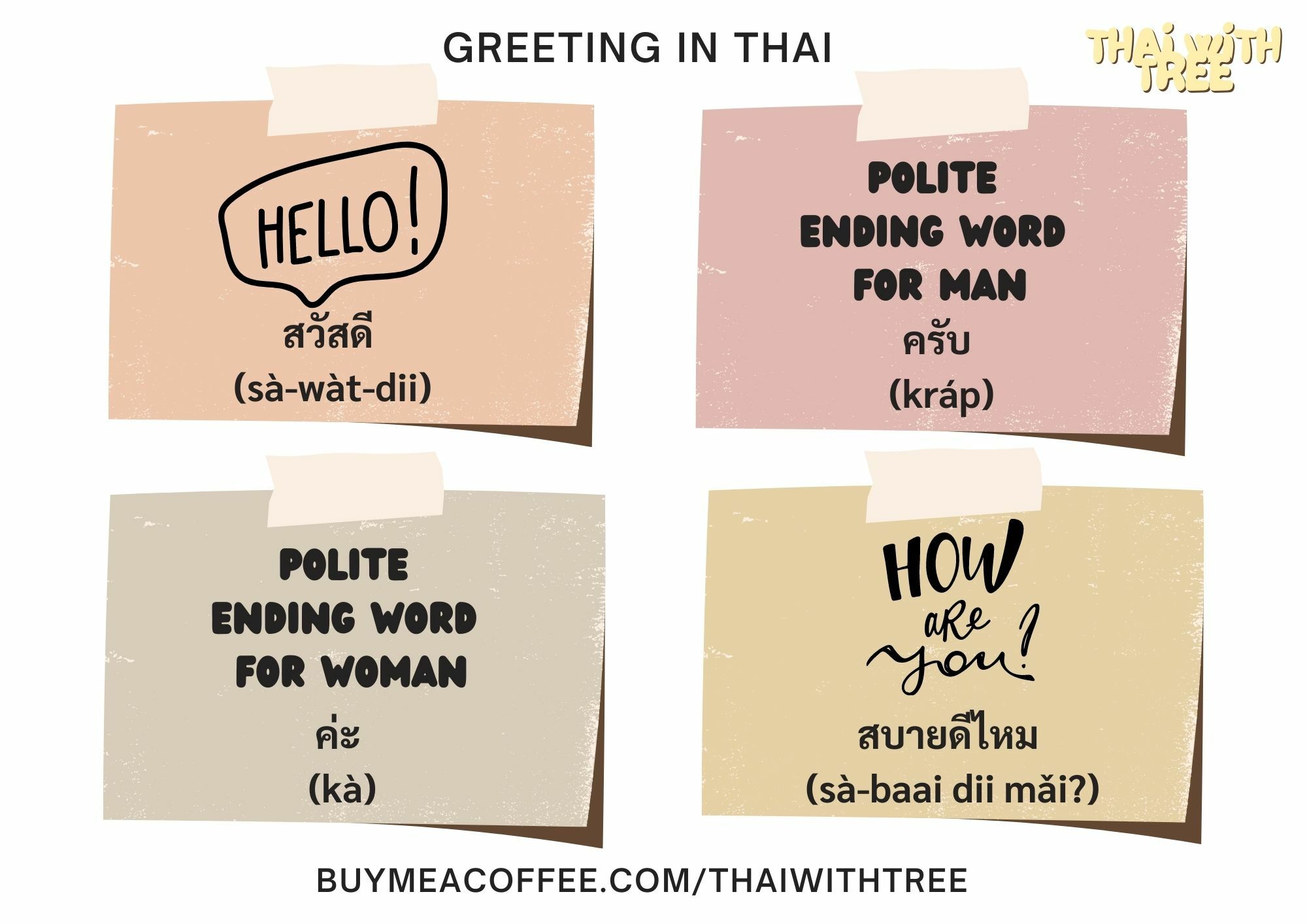
To say hello for greeting in Thai, we say สวัสดี (sà-wàt-dii). In Thai we will add polite ending words for man and woman when saying after it as well. Polite ending word for man is ครับ (kráp) and polite ending word for woman is ค่ะ (kà).
So if you are a man, you say สวัสดีครับ (sà-wàt-dii kráp) and if you are a woman, you say สวัสดีค่ะ (sà-wàt-dii kà).
Polite ending words are added in the end of the phrases/sentences how you want to. For example, when it is formal conversation or when you talk with someone older.
Apart from polite ending words for man and woman, there are also other types of ending words which you could hear them pretty often too in daily life which are as following:
นะ (ná) = informal ending word (make it sounds more close/extra cute 😀)
นะคะ (náká) = formal/informal ending word (depends on the way and who you are speaking to, your boss or your partner)
นะครับ (nákráp) = formal/informal ending word (depends on the way and who you are speaking to, your boss or your partner)
However, in daily life, you may have heard หวัดดี (wàt-dii) as informal way of greeting in Thai. Most of the time it is used between friends and close family members, etc. You can compare it as hi in English.
Note: We don’t really use as good morning, good afternoon and good evening in Thai like in English so you can just use สวัสดี (sà-wàt-dii) in any time of the day. However, we have a word for good morning as อรุณสวัสดิ์ (à-run sà-wàt) but rarely use in daily life.
อรุณ (à-run) = morning
สวัสดิ์ (sà-wàt) = good, happiness *old word of Pali/Sanskrit origin
Good night in Thai
For good night is ราตรีสวัสดิ์ (raa-dtrii-sà-wàt) but we use ฝันดีนะ (fǎn dii ná) which means have a nice dream more often in daily life.
ฝัน (fǎn) = dream
ดี (dii) = good
ราตรี (raa-dtrii) = night *old word of Pali/Sanskrit origin
How are you?
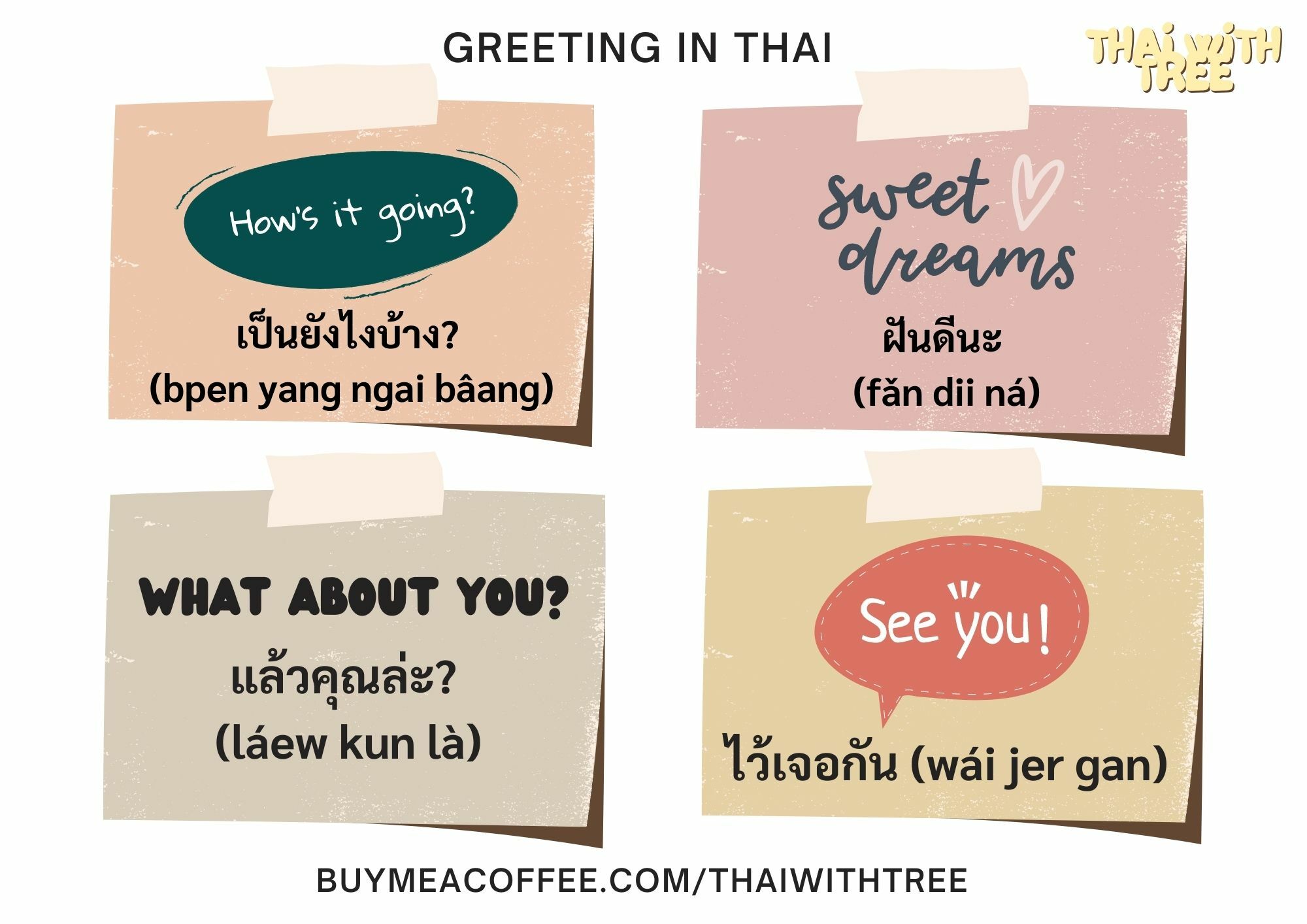
To say how are you? for greeting in Thai, we say สบายดีไหม? (sà-baai dii mǎi) which means are you good? And you can answer สบายดี (sà-baai dii).
สบาย (sà-baai) = comfortable, good
ไหม (mǎi) = Yes-no question word
Another way you can say as how is it going? is เป็นยังไงบ้าง? (bpen yang ngai bâang) or เป็นไงบ้าง? (bpen ngai bâang) or เป็นไง? (bpen ngai) which means how is it?, how are you doing? For example, เฮ้ย (hóiie) เป็นไงบ้าง? hey, how are you doing? The formal way to say this is เป็นอย่างไรบ้าง? (bpen yàang-rai bâang)
ไง (ngai) = howdy
ยังไง (yang ngai), อย่างไร (yàang-rai) = how
When someone asks how are you?, you normally say what about you back right? So, what about you in Thai is แล้วคุณล่ะ (láew kun là).
คุณ (kun) or เธอ (ter) = you (polite word)
แล้ว…ล่ะ (láew … là) = what about …?
If these days you feel not so good and want to be honest with your friends, you can tell them in many ways such as:
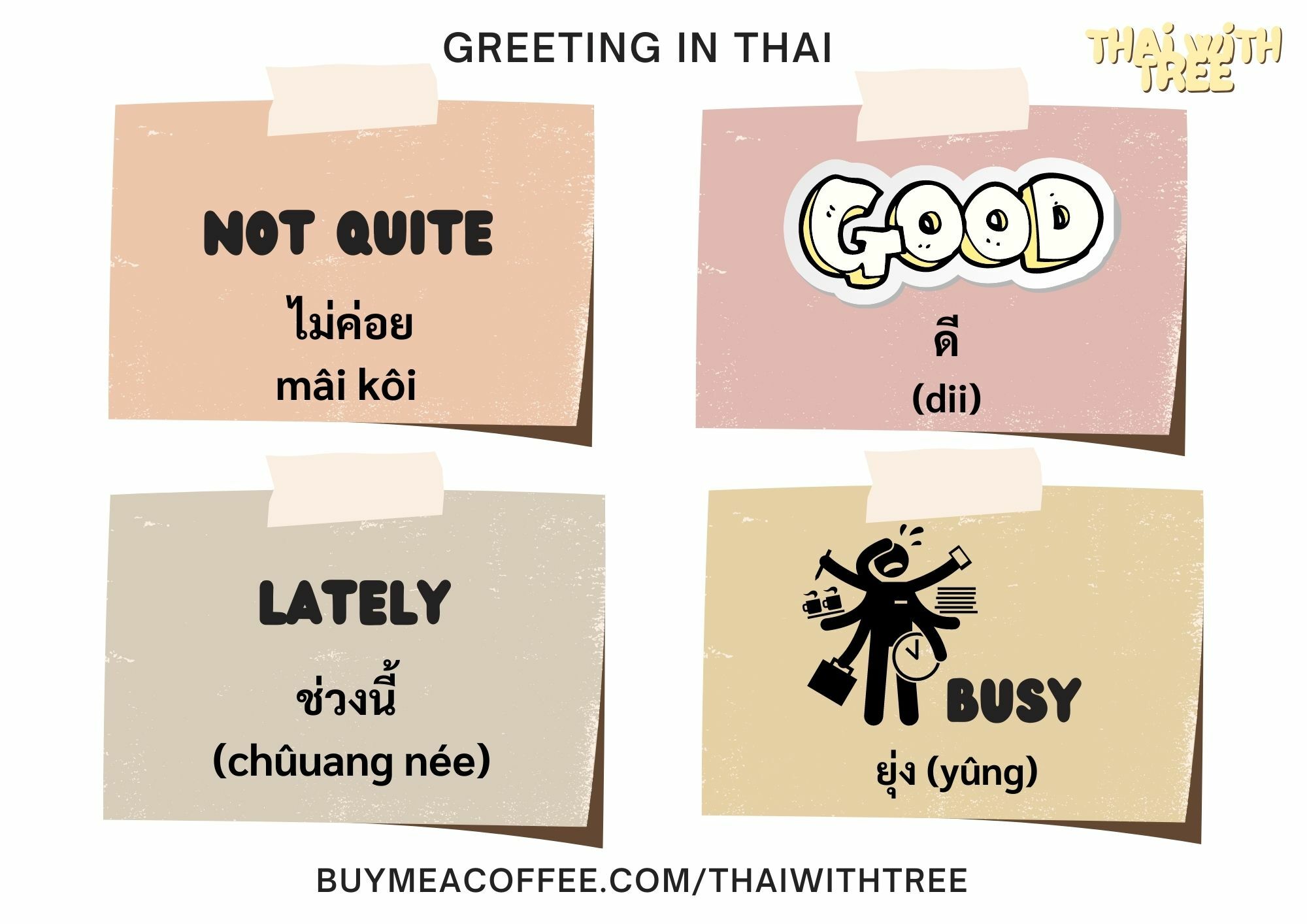
ไม่ค่อยดีช่วงนี้ ยุ่งมาก (mâi kôi dee chûuang née · yûng mâak) = Not so good lately. Very busy.
เหนื่อยมาก งานเยอะ (nèuuay mâak · ngaan yúh) = So tired. Have so much work.
ไม่ค่อยสบาย (mâi kôi sà-baai) = Not quite well (sick)
ไม่ค่อย (mâi kôi) = not quite
ช่วงนี้ (chûuang née) = lately
ยุ่ง (yûng) = busy
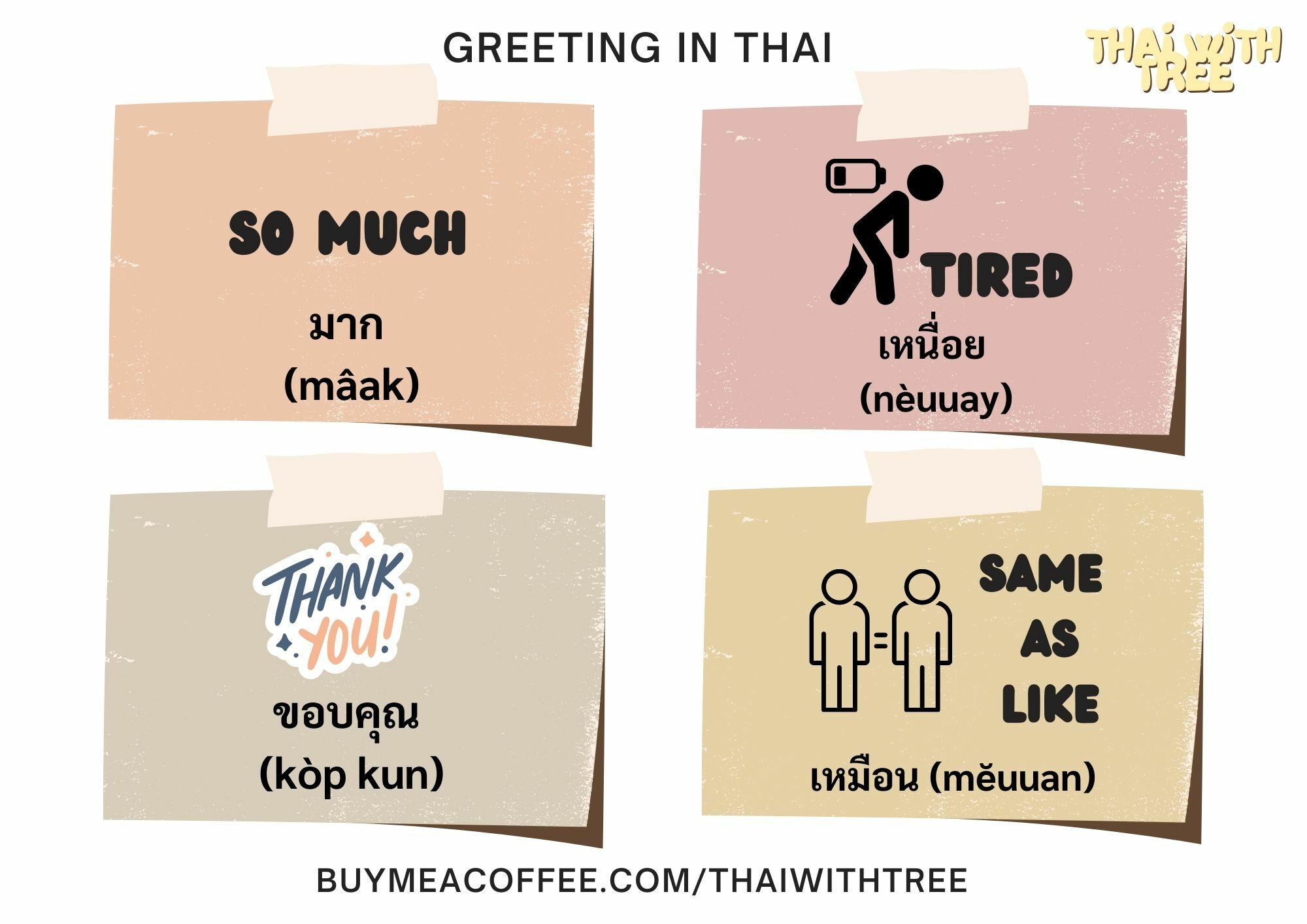
มาก (mâak) = so much
เหนื่อย (nèuuay) = tired
For see you, see you later or see you next time, we say ไว้เจอกัน (wái jer gan), ไว้เจอกันทีหลัง (wái jer gan tee lăng), ไว้เจอกันครั้งหน้า (wái jer gan kráng nâa)
ไว้ (wái) = keep, save, store
เจอ (jer) = meet
กัน (gan) = together
เจอกัน (jer gan) = meeting, seeing
Example of conversation:
Conversation 1:
สวัสดีครับ (sà-wàt-dii kráp) B
สวัสดีค่ะ (sà-wàt-dii kà) A
สบายดีไหมครับ? (sà-baai dii mǎi kráp?)
สบายดีค่ะ (sà-baai dii kà) แล้วคุณ B ล่ะ? (láew kun B là)
สบายดีครับ (sà-baai dii kráp) ขอบคุณครับ (kòp kun kráp)
Conversation 2:
หวัดดี (wàt-dii) A เป็นไงบ้างช่วงนี้? (bpen yang ngai bâang)
ไม่ค่อยดีช่วงนี้ ยุ่งมาก งานเยอะ (mâi kôi dee chûuang née · yûng mâak · ngaan yúh)
ไม่ค่อยดีเหมือนกัน ไม่สบายช่วงนี้ (mâi kôi dee mĕuuan gan · mâi sà-baai chûuang née)
หายไว ๆ นะ (hăai wai wai · ná)
ขอบคุณมาก (kòp kun mâak)
Bonus:
ขอบคุณ (kòp kun) = thank you
เหมือน (mĕuuan) = same, as, like
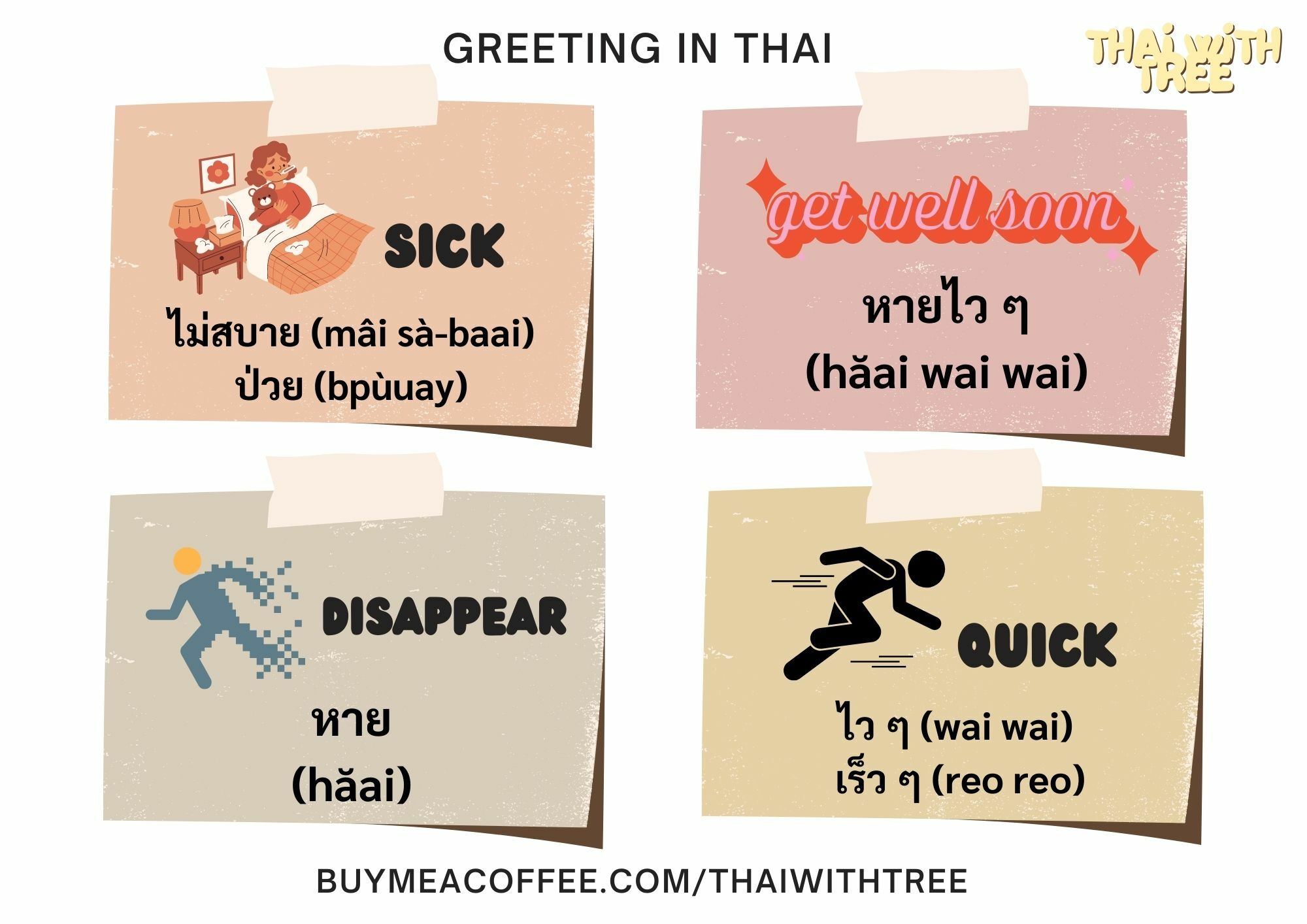
ไม่สบาย (mâi sà-baai), ป่วย (bpùuay) = sick
หายไว ๆ (hăai wai wai) = get well soon
หาย (hăai) = disappear
ไว ๆ (wai wai), เร็ว ๆ (reo reo) = quick
And this is all I can come up with when thinking about greeting in Thai. It may feel too much for beginners but I want to create a network of Thai words through this and tell you both formal and informal ways to use them. This way you know the meaning behind it and can connect them in another context as well.
So, are there any words about greeting in Thai you want to know? Comment below and I will share it in Thai 🙂