

How Modern Leftism and DEI Frameworks Marginalize Gifted Minds
Introduction: From Intellectual Vanguard to Ideological Orthodoxy
Historically, leftist movements have been engines of intellectual growth - championing critical thought, academic inquiry and civil liberties. From 19th-century labor uprisings to 20th-century civil rights activism, debate and evidence-based reasoning were central to leftist ideologies. Similarly, recent Diversity, Equity and Inclusion (DEI) frameworks have sought to address historical injustices and create inclusive environments.
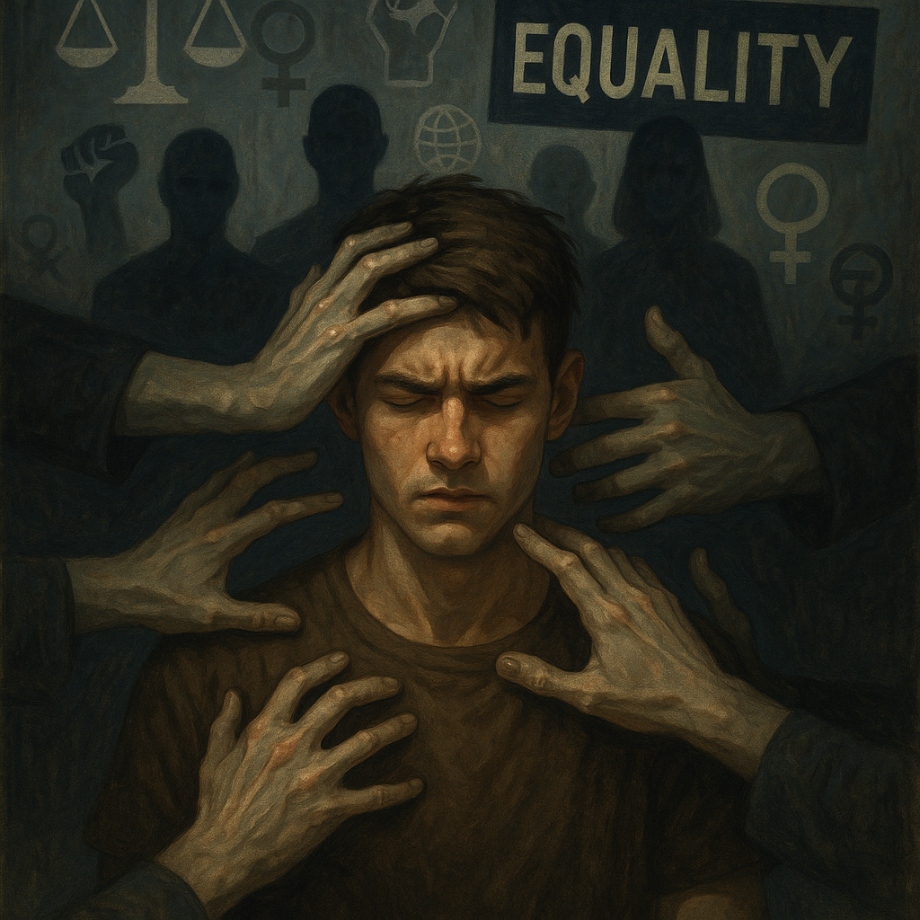
Yet today, both modern leftist movements and institutional DEI programs have taken a bizarre turn. They increasingly promote ideological conformity, emotional reasoning and caged collectivist thinking that ultimately throttles individuality. This has had particularly dire consequences for a population rarely discussed in either sphere: cognitively diverse individuals, especially those who are twice-exceptional (2e) - gifted individuals who are also neurodivergent or disabled. This article examines how the left’s shift toward ideological absolutism and DEI’s limited vision of diversity have contributed to the marginalization of gifted minds in education, discourse and society.
Emotion Over Reason: The Decline of Intellectual Rigor
Modern left-leaning spaces are increasingly prioritizing emotional appeals over rational inquiry. Social media has accelerated this shift, rewarding content that is righteous, oversimplified and emotionally charged. Nuance, complexity and critical debate have been largely replaced by slogans and moral binaries. For example, discussions on race, gender and power often rely on subjective feelings rather than data or argument. “Lived experience” is elevated above all else.
While validating personal stories is important, elevating emotion to the status of unquestionable truth creates an epistemic hierarchy that can exclude or silence those who approach problems analytically or abstractly. In this climate, intellectual dissent - even when evidence-based - is interpreted as emotional violence or privilege. This silences not only bad actors but also truth-seekers, reformers and many neurodivergent individuals who may express themselves in atypical ways.
The Policing of Thought and Language
The left has always critiqued the use of language to uphold systems of power - but now, it enforces its own linguistic orthodoxy with the same dogmatic fervor. Words, phrases, and even moments to reflect on ambiguity are monitored for signs of moral correctness. Intent no longer matters; only perceived harm does. This results in a culture of constant self-surveillance and fear. Academics, artists, and students tiptoe through conversations, terrified of saying the wrong thing. It is not uncommon for individuals to face professional consequences for statements taken out of context, or for failing to use the latest lexicon.
What was once a tool for liberation has become a mechanism for control. This linguistic authoritarianism and determinism particularly disadvantages neurodivergent people - especially autistics, who often struggle with implied meaning, social nuance, or rapidly changing social rules. When conversational norms are built on emotional perception and social fluidity, logical speakers are often labeled as rude, insensitive, or harmful - regardless of their intent or merit.
DEI’s Blind Spot: Cognitive and Neurological Diversity
DEI initiatives have made significant strides in addressing racial and gender-based disparities. However, these frameworks often overlook cognitive diversity entirely. Despite the fact that giftedness intersects with race, disability, and socioeconomic status, the twice-exceptional are often left out of the conversation. 2e individuals struggle in school systems that are not equipped to support asynchronous development. A student might be reading at a post-graduate level while simultaneously needing support for sensory overwhelm or executive function challenges. Traditional DEI models tend to prioritize group identity over cognitive profile, which leaves these students (and adults) invisible. This oversight is particularly stark given that many 2e individuals exist within marginalized communities. A gifted Black student with ADHD or an autistic Indigenous child may face systemic barriers that are compounded by both their race and neurotype - yet DEI discussions often split these traits apart, rather than acknowledging their intersectionality.
This disconnect is especially apparent in the realm of education, where 2e students have often been left out of diversity and inclusion programs within many parts of the U.S. school system. Despite a growing awareness of neurodiversity, numerous school districts (especially in larger urban areas) remain slow to incorporate 2e students into their frameworks. While specialized schools such as Bridges Academy have emerged to support this unique population, most public schools still lack the infrastructure and resources necessary to meet the needs of students who are both gifted and have learning differences. Budget cuts have only worsened this situation, leading to the defunding or elimination of gifted and talented programs in cities across the country. Instead, many districts have redirected funding toward broader diversity initiatives centered on race and socioeconomic status, often overlooking the nuanced and individualized needs of 2e learners.

New York City is a particularly striking example of this systemic failure. Although the city offers selective programs for high-achieving students through its Gifted & Talented (G&T) system, these options frequently fail to account for students who don’t neatly fit into a single category. The system’s binary focus on either disability services or gifted education often fails to meet the needs of 2e students, whose disabilities can obscure their intellectual strengths - or whose giftedness can hide their challenges. As a result, proper identification becomes a significant barrier, and students are frequently misdiagnosed, undiagnosed, or funneled into programs that address only part of their educational profile. This lack of appropriate support is compounded by an overwhelmed special education infrastructure, where schools lack trained staff and adequate funding to support complex dual needs.
Even when 2e students are placed into gifted programs, these environments are rarely designed with accommodations for neurodiverse learners. The curricula are often too rigid or fail to balance intellectual rigor with flexibility and support, which leaves 2e students either under-stimulated, overwhelmed, or both. Furthermore, recent policy trends in New York City have moved toward dismantling traditional gifted programs in favor of more inclusive models. While this shift is often made in the name of equity, it can have the unintended consequence of marginalizing neurodivergent students, particularly those from minority communities who already face barriers to recognition and appropriate intervention. By failing to provide dual-support pathways for these learners, the education system risks violating their rights under laws like the Individuals with Disabilities Education Act (IDEA), and more broadly, fails to nurture their potential.
Anti-Intellectualism and the Oversimplification of Complex Issues
Nowhere is modern leftist anti-intellectualism more apparent than in the flattening of geopolitical narratives. A prime example is the Israel-Palestine conflict, a centuries-long entanglement involving colonialism, theology, trauma, land rights, and competing historical narratives. Instead of encouraging deep engagement with these complexities, much of today’s left frames the issue in reductive moral terms: Palestinians are the oppressed; Israel is the oppressor. There is little room for nuance, historical context, or moral ambiguity.
Jewish voices - especially those from the Middle East or North Africa - are often silenced if they express anything outside the dominant narrative. Nuanced positions are dismissed as “Zionist propaganda” or complicity in genocide. This binary framing replicates the very authoritarian mindset the left claims to oppose. It allows groupthink to flourish while alienating intellectuals, historians, and thinkers whose work defies ideological simplicity.
The Tyranny of Collectivism: Suppressing Individual Brilliance
Modern DEI rhetoric is increasingly collectivist. “Community,” “solidarity,” and “group identity” dominate the conversation. But what happens to the individual, particularly the exceptional individual, within this matrix? Collectivist cultures tend to breed conformity. Success is framed not as personal growth or innovation, but as alignment with group values. Disagreement is seen as betrayal. In such an environment, the gifted person - especially one with social or communication differences - becomes a threat. Their insights are dismissed as elitist. Their desire for intellectual rigor is reframed as perfectionism. Their drive for innovation is seen as arrogance or self-centeredness. Equity becomes confused with enforced sameness, and excellence becomes a liability. This dynamic is particularly dangerous in academia and the sciences, where intellectual freedom is essential. If brilliance must be “relatable” to be valid, we risk alienating the very people most capable of pushing humanity forward.
This cultural tendency becomes even more complex when viewed through the lens of contemporary political ideologies. There is a compelling argument that the modern left, in its current form, tends to ignore (or even resent) 2e and gifted individuals. This attitude seems to stem from an undercurrent of anti-intellectualism, a preference for collectivist thinking, and a dominant focus on external oppression narratives rather than internal, individualized struggle. While the left often prides itself on advocating for marginalized communities, its prevailing frameworks frequently overlook the subtle, misunderstood challenges faced by intellectually gifted and neurodivergent individuals - challenges that do not always fit neatly within conventional identity categories or activist discourse.
The modern left’s equity model, which prioritizes equal outcomes over merit-based achievement, inherently conflicts with the existence of the gifted. 2e individuals naturally disrupt the narrative that success is solely a product of privilege or systemic bias. Their achievements, often born from raw cognitive ability and intense inner struggle, contradict the assumption that disparities in outcomes are always unjust. As a result, gifted people become inconvenient outliers - difficult to fit into a worldview structured around victimhood hierarchies. Historically, many leftist movements have harbored hostility toward intellectuals, viewing them as elitist or disconnected from the needs of the “common people.” From the French Revolution’s persecution of so-called elitists to Mao’s Cultural Revolution - where intellectuals were systematically targeted - there is a pattern of suspicion toward those who deviate from the ideological mainstream through intellect. Today, this manifests less violently but no less meaningfully in the dismissal of gifted individuals as arrogant, privileged, or out of touch.

Moreover, collectivist ideologies focus intensely on group identity - such as race, gender, or socioeconomic class - as the primary lens through which injustice is viewed. This framework leaves little room for internal struggles like ADHD, autism, or other neurological differences that characterize many 2e individuals. Because giftedness is not tied to any protected identity category, it is often overlooked or minimized. The inner turmoil of gifted individuals simply doesn’t fit the dominant narrative of external, identity-based oppression. This ideological rigidity also explains why programs for the gifted are increasingly being defunded or eliminated in favor of “equity-based” initiatives. The left tends to interpret gifted success as a form of systemic unfairness, rather than a sign of individual capacity or neurodivergent need. Rather than acknowledging the emotional, social, and academic hardships many gifted individuals endure, the narrative instead casts them as beneficiaries of unearned advantage.
Adding to the disconnect is the modern left’s prioritization of emotionalism over rational thought. Political discourse on the left often favors impassioned, morally evocative narratives over analytical or data-driven arguments. In contrast, gifted and 2e individuals tend to operate through rational analysis, independent thought, and a heightened sensitivity to nuance. This makes them less likely to conform to ideological groupthink and less politically useful to movements that rely on emotionally charged storytelling. This ideological mismatch deepens the divide. Many leftist movements seem to harbor an implicit discomfort with highly intelligent, independent thinkers - especially when those individuals don’t fit into the prevailing oppression-based framework. The modern left often favors group identity over individual ability, external oppression over internal struggle, and emotional resonance over intellectual independence. As a result, gifted and 2e individuals are not only excluded from many leftist narratives - they are subtly (or sometimes overtly) treated as ideological threats.
Neurological and Evolutionary Implications
The long-term cultural effects of suppressing giftedness are not merely social or educational - they may be neurological and evolutionary. Some researchers warn that when societies devalue complexity and reward conformity, they may alter the developmental priorities of future generations. The corpus callosum, which enables integration between abstract reasoning and emotional processing, may be underused in rigid ideological environments. This could lead to a rise in polarized thinking - emotional or logical, but not both.
If we continuously reward simplistic moral binaries and discourage ambiguity or abstract thought, we may be encouraging a form of cognitive flattening - where novelty, depth, and synthesis are replaced by reactivity and repetition. Whether or not this becomes biologically encoded is speculative, but culturally, the signs are already here.
A Path Forward: Reclaiming Intellectual Pluralism
The left must remember its roots in intellectual courage and radical thought. DEI must expand its definition of “inclusion” to embrace minds that don’t conform to collective norms. That means honoring cognitive diversity, supporting asynchronous learners, and listening to voices that challenge orthodoxy.
We need to move beyond moral purity tests and embrace intellectual humility. Political engagement should be shaped by thoughtful debate, not emotional loyalty. We must recognize that intellectual, neurological, and philosophical differences are not dangers to be managed, but gifts to be valued. Real inclusion isn’t about sameness - it’s about ensuring everyone, especially those with unique perspectives, has the support they need to thrive.
Distorted Signals Offer Possible Salvation
Marginalizing gifted and twice-exceptional individuals isn’t just an educational failure - it’s a civilizational risk. Every social movement that has changed the world was powered by individuals who thought differently, felt deeply, and spoke inconvenient truths. From Galileo to Audre Lorde, history belongs to the intellectually courageous.
If we continue down a path of ideological purity, emotional policing, and the suffocating uniformity of collectivism, we may silence the very minds that can help us survive our greatest challenges - from climate collapse to technological ethics to spiritual renewal. We must remember: progress doesn’t come from conformity. It comes from complexity. It comes from the eccentric dissidents. It comes from the exceptional. So let’s stop erasing them.