

Schools are back, and the leaves have begun to tumble in the UK as September has drawn to a close. It has been a busy one getting caught up on work after a few weeks leave and I have been busy getting into a new technology area I gave a vague passing reference to last month. With that in mind, here’s a round up of my past month.
 ThoughtAsylum
On the blog I’ve just the one post this month, but in it, I explain how I am using Pan and Piper along with a little treasure trove of free software and scripts to create my own automated pipeline for taking a page or article and saving it off to be converted into pretty reasonable human speech, and deposited in my own private podcast feed.
If you enjoy some of my deeper dives then this post on building a personal audio feed is one you will enjoy.
 Forums
Just a handful of posts on each of my usual forum hangouts this month, but there are a few that required a deeper dive which was fun.
Drafts
In a post about previewing a draft that is not in the editor, you can find some good discussion on building previews and even a bonus from me on generating tables from CSV data in Markdown.
If you want to print multiple Drafts at once as separate documents, then like the original poster, I might have just the action to help you.
If you are having trouble installing/updating Drafts, or other apps, since updating to Tahoe, then you are not the only one - though given all the niggly issues people have seen, I am still running the prior OS release on my devices.
Finally, there was a discussion on why actions don’t always show.
Automators
The resurrection of an old post I answered on converting rows of Excel into individual Markdown files on macOS took a bit of a turn as it turned out someone else who was having trouble getting it to work turned out to be on an entirely different operating system. But, automation on Windows is entirely possible too.
An open question of “why does my automation not work?” remains open and waiting for answers.
To finish off, I gave some advice, and a Shortcuts example, on appending text to a specific Apple Notes note - and without using the clipboard too.
Other
Licence to …
Throughout August, I decided I wanted to learn something new, and after considering various options, I decided I would like to learn more about radio, and I set about learning the basics Amateur Radio operation, or Ham radio for my friends across the Atlantic.
Back in the far too dim and distant past I did study electromagnetic waves, and the mathematics of waves in general, as part of my undergraduate degree. It wasn’t my favourite topic, but so much of our technology relies on this, and radio is such a useful utility for communications in general, it just felt like something that would dovetail nicely into my interests. Enough technology and science to satisfy my inner (and outer) nerd.
After weeks of serious over studying and digging deeper than necessary on various topics, I took an online, proctored exam with the Radio Society of Great Britain. My over preparation served me very well, and I am now a proud foundation level licence holder for amateur radio in the UK. I have not acquired a transceiver (a transmitting and receiving radio) just yet, but I hope to have addressed that by next month’s update. In the meantime I have just been poking around the radio spectrum with a software defined radio (SDR) dongle, some pretty poor antennas, and my Mac. Again, I hope to have some improvement on the antenna front in October.
Meshcore
Amateur radio touches on a lot of technology areas, and I also started looking more deeply at mesh networks on LoRa, a long range, low power radio technology. If this sounds interesting, then take a look at Meshtastic, Meshcore, and Reticulum for the more popular mesh networks.
The ideas is that you can build these out with multiple users and multiple devices to create a network. Many people like this for off-grid messaging, but I am just tinkering to expand my working knowledge and to experiment a little.
Now I noted that the above are the more popular mesh networks, but that does not mean you will find them on every street corner. Far from it. Particularly if you live somewhere like I do. Notably, they don’t interoperate either, so if you are exploring options, keep in mind your use case and who you might want to use it with.
As a starter, I got my hands on an ESP32-based Heltec v3 board with a 10 dBi antenna - so one that is a fair bit better than the usual stubby antenna they ship with. I decided I was happy using one of numerous USB power supplies I have with it, so I have not, or at least not yet, got a battery for it, but it is common to use a small LiPo battery for these devices.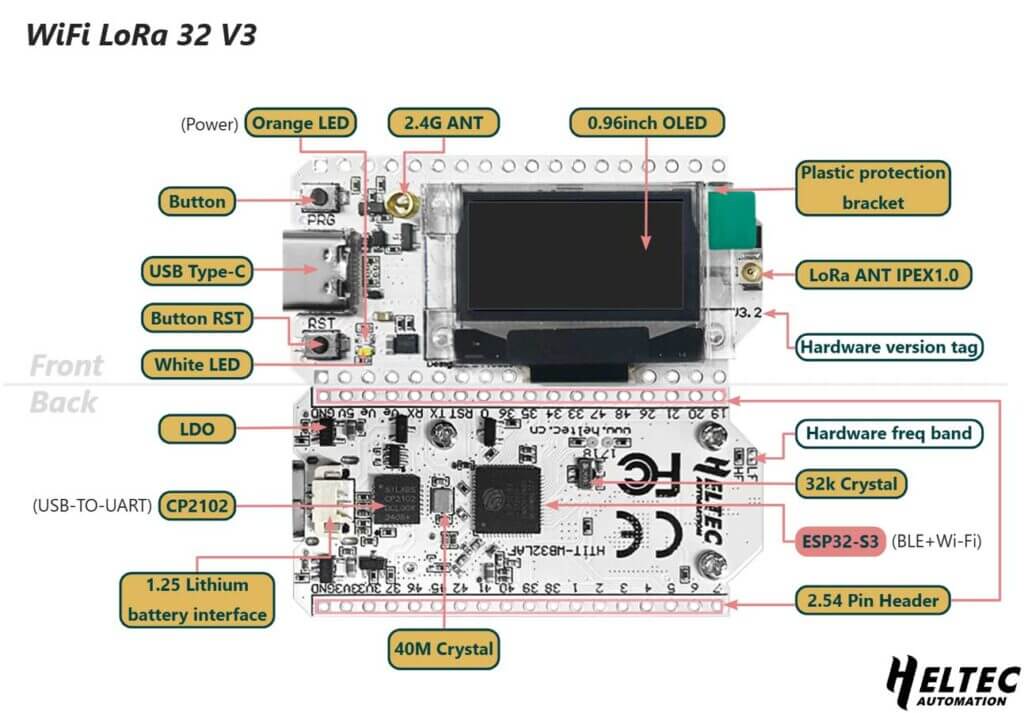 I’ve selected to use Meshcore as it is growing quickly in the UK and is more efficient than Meshtastic - but with some constraints by design of how the mesh build out. While Meshtastic has every client passing data around, Meshcore uses repeaters to do this. The repeaters can use the same hardware, but operate more like a cell tower in that respect.
I’ve not managed to connect to any other clients just yet, but I was able to monitor it via my SDR, and I do expect to make use of it on my travels in October.
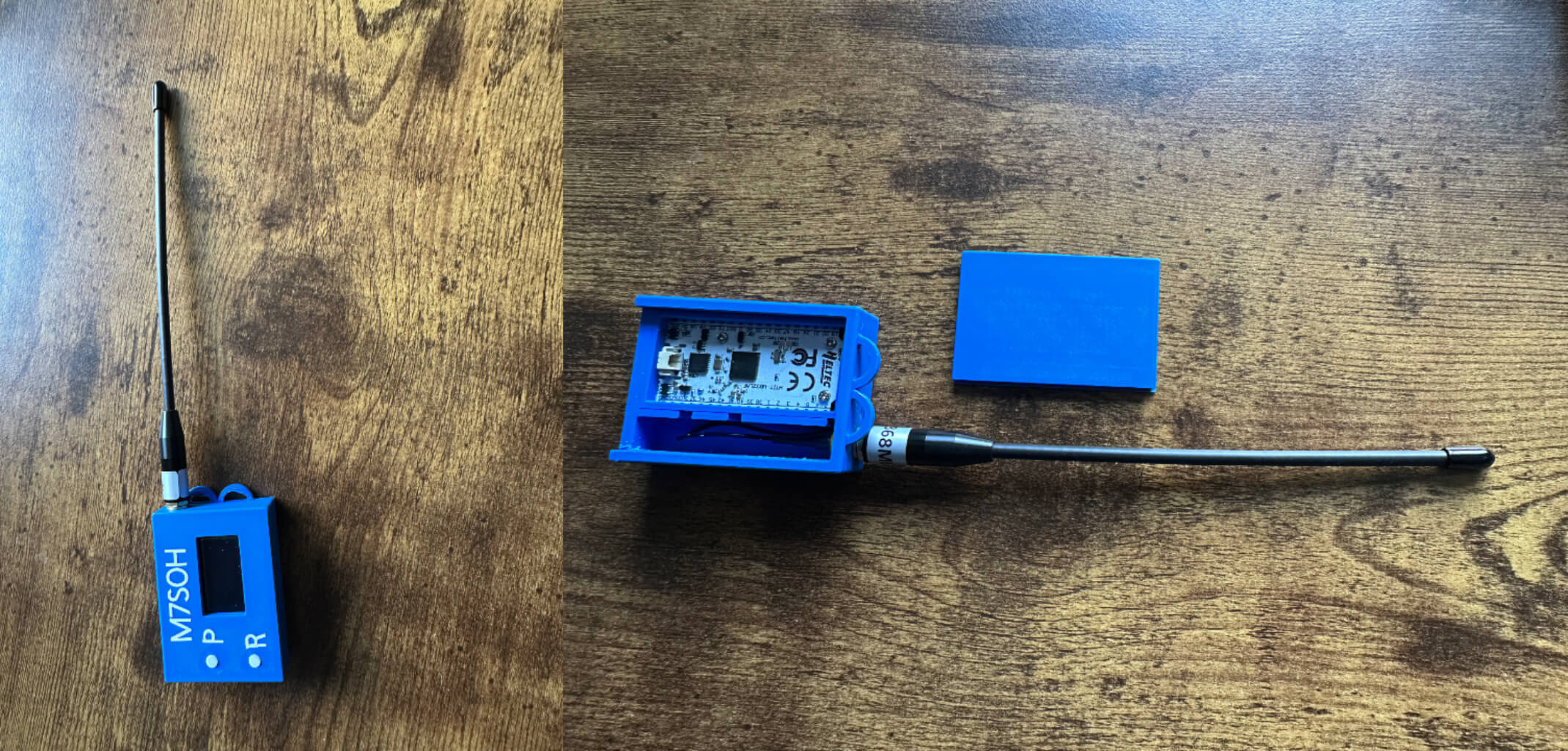
Trying to find a 3D printable case compatible with the antenna, which didn’t add space for a battery I was not using, and did not require a screw to hold in place proved impossible, so I ended up whipping-up a case of my own with a slide on back and access to the USB-C port. Not as stylish as all the other cases I’ve seen, but one hundred percent functional for me.
 SAP
SAP
Those of you who follow my posts may have noted that in my day job I continue to work with SAP technologies. In September, I spent a few evenings expanding my knowledge into some new areas with some training offered by SAP through their Learning Hub.
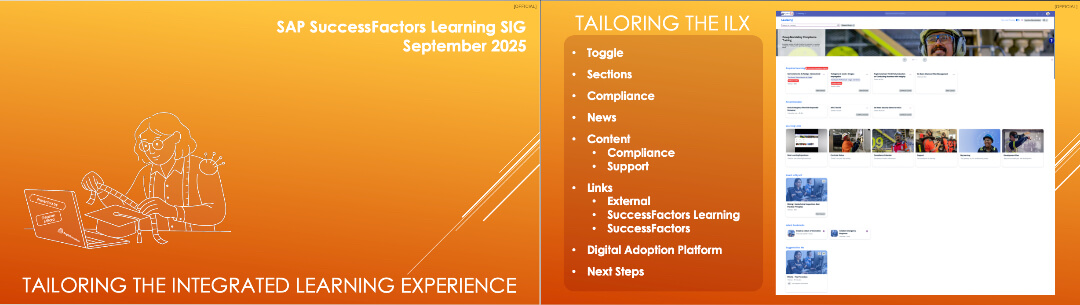
I also joined the global special interest group for SAP SuccessFactors Learning for the monthly call as usual, but as occasionally happens, I was one of the guest speakers talking about implementing and getting the most out of the latest user interface for SuccessFactors Learning - the “integrated learning experience” or ILX. I posted my deck and tips to the group’s private space, but you can find some of the more technical aspects I spoke about in some recent posts on my blog.
 Links
Links
Continuing with last month’s new addition to my update, here are a few useful things I’ve been making use of in September.
Tinify
First of all for your consideration is Tinify. My use of this online service has increaser recently in both my work and personal projects. I am using it for image compression on both PNG and JPG images. I have used it occasionally before via a DropZone plugin, but recently my use has escalated, and I have a scripted version of my own for use with quick compression replacement versions via their API when I am using PathFinder. The resulting compression is incredible. I have not seen anything else get these sorts of results with negligible reduction in quality.
World Time Buddy
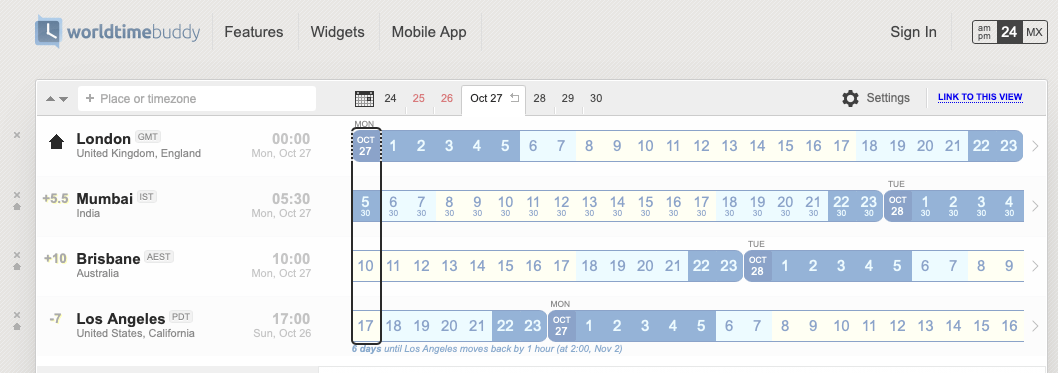
As someone who works with colleagues in multiple time zones and works in a geography that still implements daylight saving time, World Time Buddy is my go to when it comes to scheduling during the period everyone starts moving their clocks around. A lot of services do not take into account when locations switch between UTC offsets, but this one does, and it accurately lets you plan ahead through those weeks of uncertainty each year. Given we have one such period imminent, it would be remiss of me not to include this one.
 Software Defined Radio
This one is going to be a double. As noted above, while I don’t have a transceiver yet, I do have access to an SDR dongle I can use. Now, Microsoft Windows is the main player in the SDR software space, so it can take a little digging to find an SDR app you like for macOS. After trying a few out, the one I have settled on, at least for now, is SDR++, an open source solution.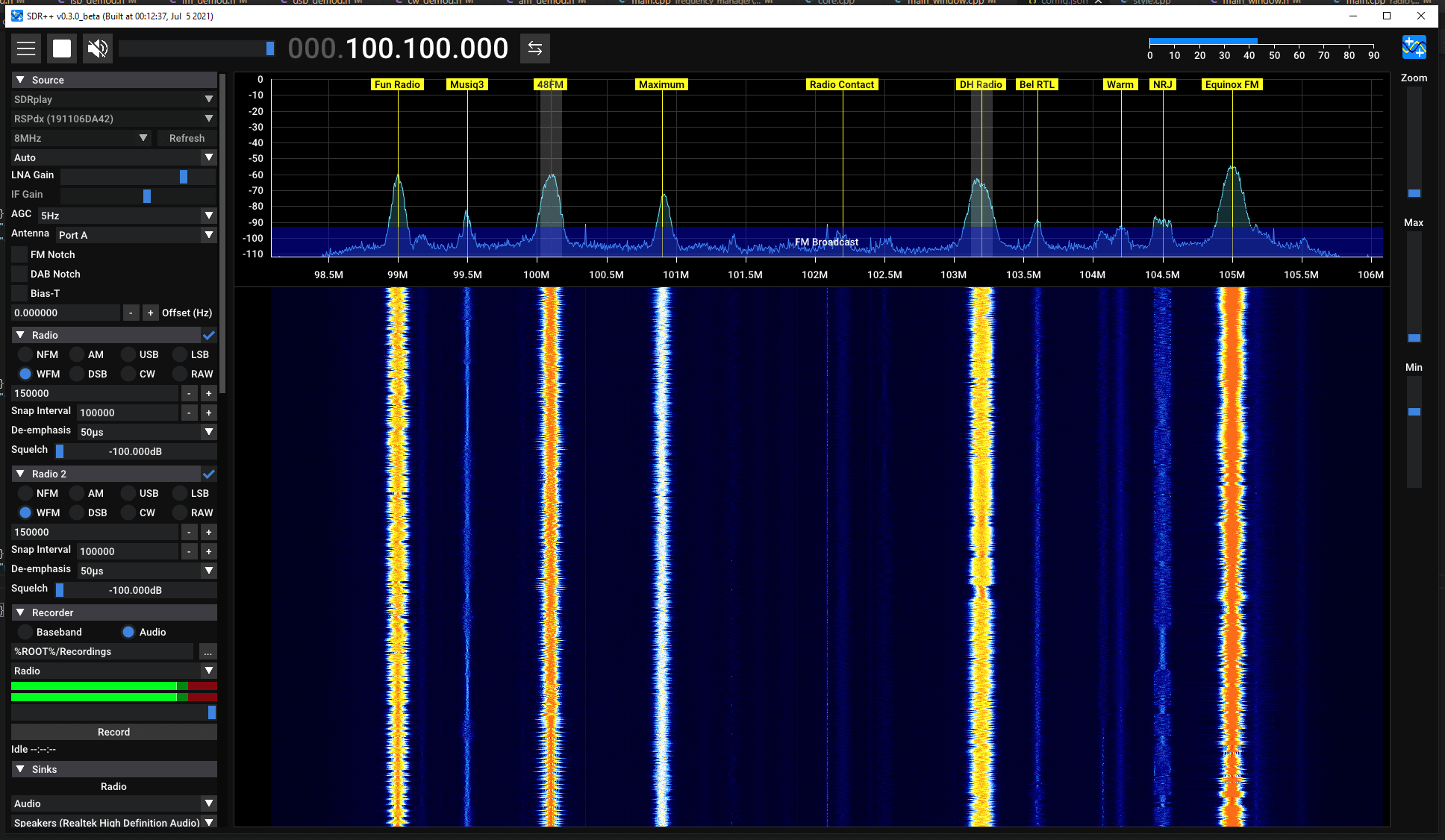 But, you do not have to have an SDR dongle to have an experiment with software defined radio. There are actually many organisations out there who offer up their own radios for you to poke around on via your web browser. websdr.org gives you links to a huge range of freely accessible SDR servers around the globe. If you have never tried using a software defined radio, then this is definitely a great place to start. You do not have to deal with any of the hardware side, it is all just there ready and waiting for you.
Upcoming
October is going to be a bit of a crazy month for me. I have a couple of weekends away, attending the RSGB Convention, and helping out at a cub scout camp. Along with some family things time is going to be tight, but I am sure I will find time for a few bits and pieces here and there.
All that remains is for me to once again thank everyone for following along, and thanks to everyone who has bought me a coffee. I appreciate every sip. Have a great October and I will be back to let you know about what I’ve been up to early next month.