


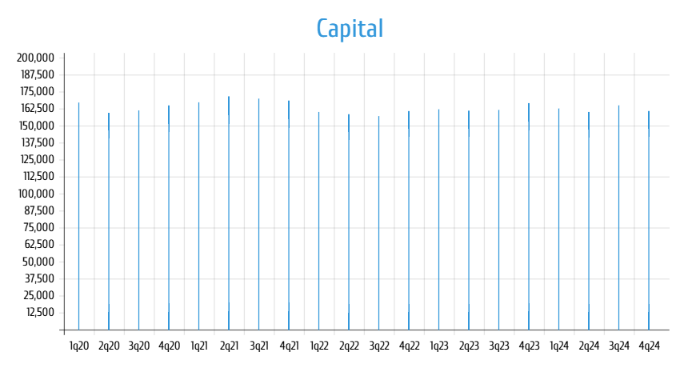
Let's look at the situation at Wells Fargo Bank. The bank's capital did not increase, remaining at the same levels.
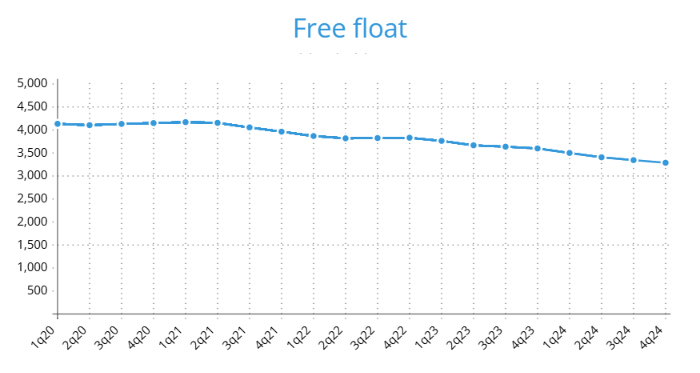
This is likely due to a significant decrease in the number of shares outstanding - from 4056 to 3228. The bank has been actively repurchasing its own shares.
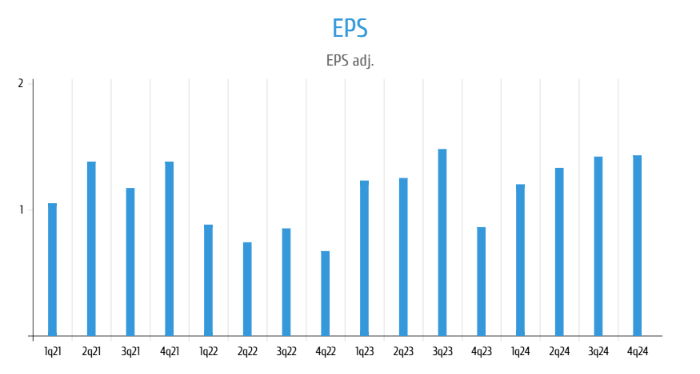
As a result, the net profit per share has reached almost a record level - $1.43. Even with current income levels, reducing the number of shares will allow the bank to increase the profit per share.
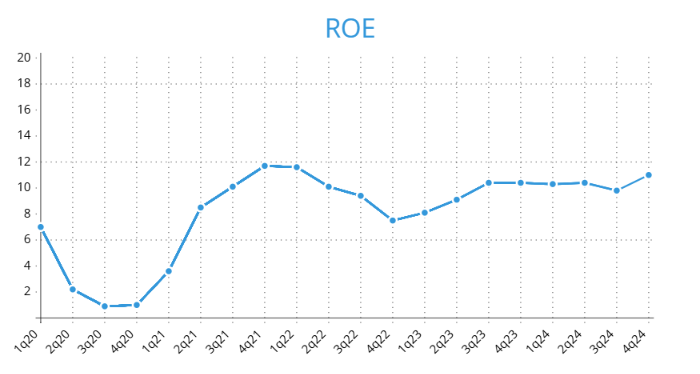
However, despite these positive aspects, Wells Fargo's Return on Equity (ROE) remains low compared to competitors such as JP Morgan. Wells Fargo's ROE is only 11%, indicating a need to improve capital efficiency.
Let's focus on the Price/Book Value ratio of the shares.
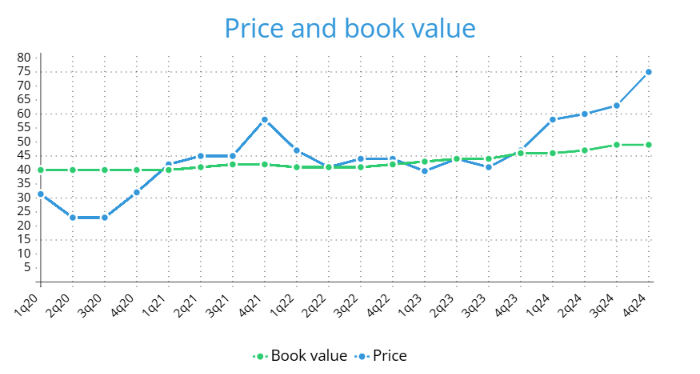
This ratio has reached 1.5, approaching historical highs.
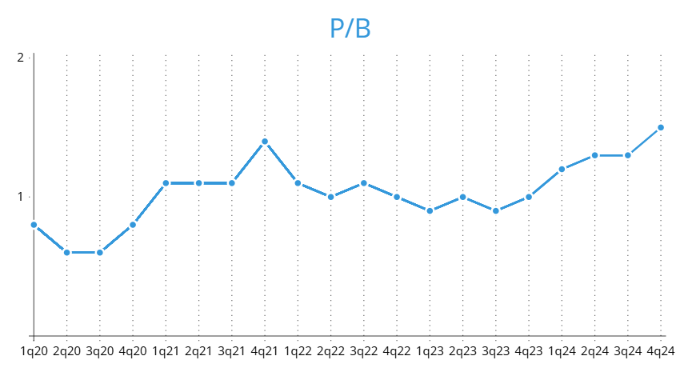
Therefore, although earnings per share are increasing due to a reduction in the number of shares outstanding, investors should consider the low profitability and possible overvaluation of Wells Fargo's stocks before making investment decisions.
Become a member to receive more useful information. Thank you to everyone who shared the post on social media.
It is not an investment recommendation. Consult with a financial advisor before making investment decisions