

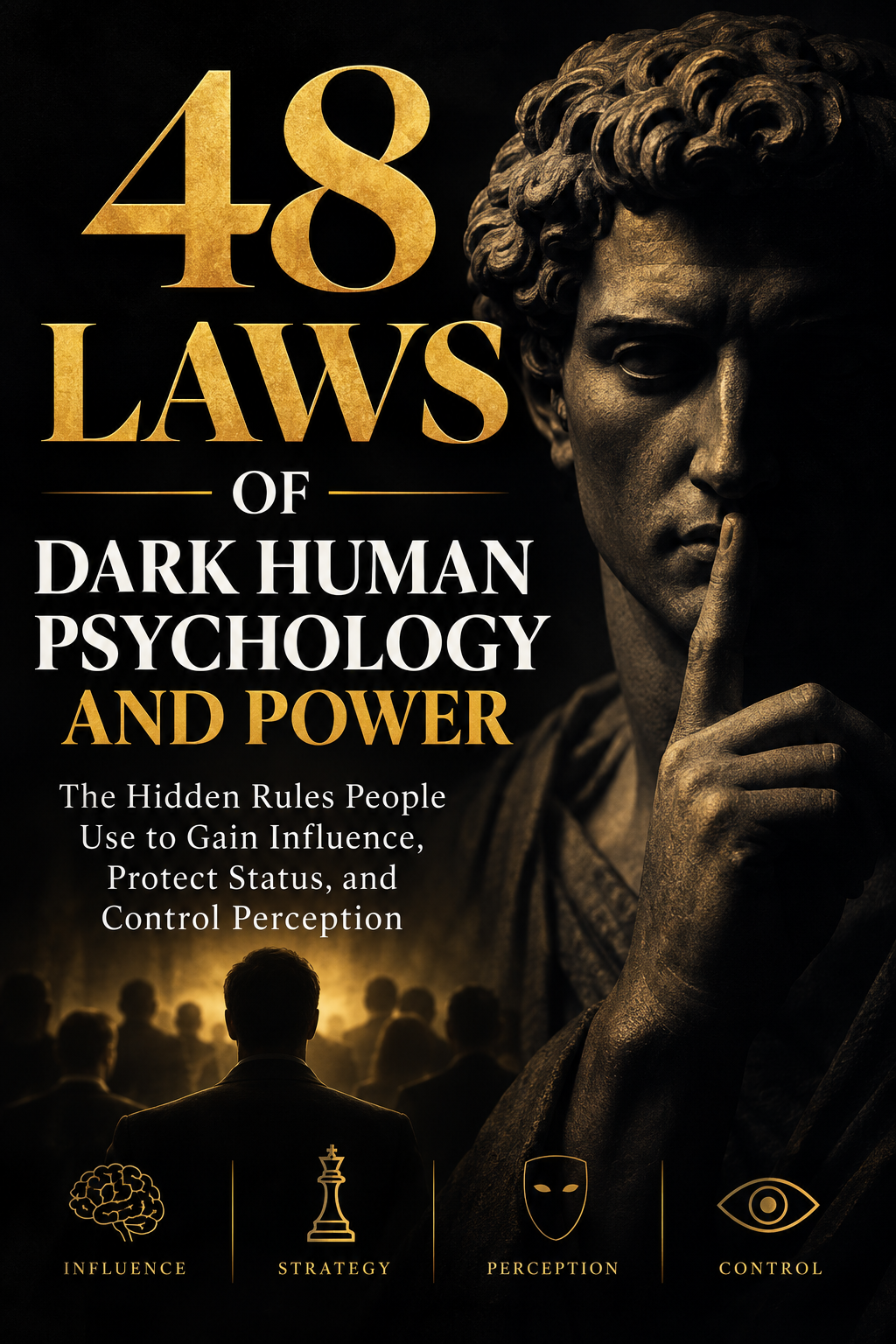
Power rarely announces itself.
Most influence happens quietly. It appears in conversations, relationships, workplaces, friendships, and even families. The people who shape outcomes are often not the loudest or the strongest. They simply understand how human psychology works.
These “laws” are not scientific laws or guarantees. They are patterns often discussed in psychology, negotiation, leadership, and social behavior. Understanding them is less about controlling others and more about recognizing when someone may be trying to influence you.
The greatest advantage isn’t knowing how to manipulate people.
It’s knowing when someone is trying to manipulate you.
Take Power and Influence Motives tests
1. People trust confidence before competence.
2. First impressions become difficult to erase.
3. Silence often makes people reveal more than questions.
4. People protect the identity they have built.
5. Scarcity increases perceived value.
6. Emotion usually wins before logic arrives.
7. Most people seek validation more than truth.
8. Attention is one of the most valuable forms of power.
9. People remember how you made them feel more than what you said.
10. Repetition creates familiarity, and familiarity creates trust.
11. Uncertainty increases anxiety and compliance.
12. Small commitments often lead to bigger commitments.
13. Status influences perception before evidence does.
14. People defend decisions they’ve already invested in.
15. Reciprocity creates invisible social pressure.
16. The fear of loss is stronger than the hope of gain.
17. Secrets naturally attract attention.
18. Curiosity is one of the strongest psychological motivators.
19. People compare themselves constantly, even when they deny it.
20. Social proof reduces uncertainty.
21. Authority changes how information is received.
22. Most people avoid cognitive dissonance whenever possible.
23. Confidence can be mistaken for certainty.
24. The person who controls the frame often controls the conversation.
25. People judge intentions through outcomes.
26. Predictability creates comfort.
27. Ambiguity invites projection.
28. Fear narrows decision-making.
29. People often seek evidence that confirms existing beliefs.
30. Gratitude increases cooperation more than obligation.
31. Consistency strengthens credibility.
32. Exclusivity makes opportunities appear more desirable.
33. Timing often matters more than wording.
34. Respect cannot be demanded; it is earned repeatedly.
35. Most conflicts begin with misunderstood intentions.
36. People reveal priorities through actions, not promises.
37. Calmness under pressure increases perceived authority.
38. Boundaries reveal self-respect.
39. Those who listen carefully usually gather the most influence.
40. People admire discipline more than talent over time.
41. Confidence grows through repeated action, not repeated thinking.
42. Emotional self-control is a quiet form of power.
43. Every relationship operates on spoken and unspoken expectations.
44. People often resist change until the cost of staying the same becomes greater.
45. Influence grows when people feel understood.
46. Trust takes years to build and seconds to destroy.
47. Reputation often enters the room before you do.
48. The greatest power is understanding yourself before trying to understand others.
The darkest forms of influence succeed because they often go unnoticed.
Learning these psychological patterns isn’t about becoming manipulative. It’s about becoming aware. Awareness helps you recognize emotional pressure, resist unhealthy influence, communicate with greater intention, and make better decisions.
The most powerful people aren’t always the ones who control others.
They’re the ones who can control themselves.