

 Image/nikkei Asia
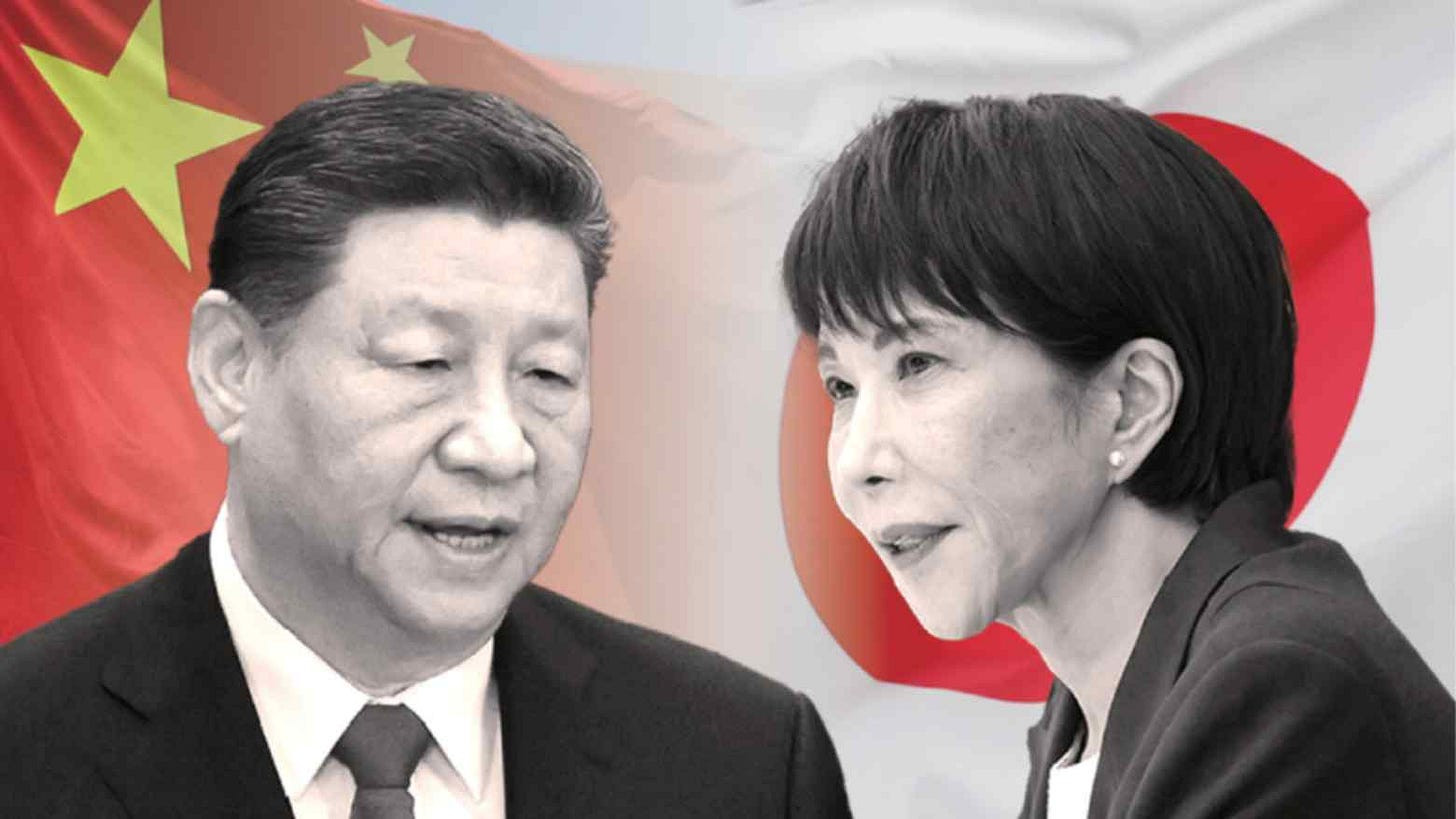
A new round of retaliatory measures by Beijing against Japan has been set in motion following remarks by Japan’s prime minister on the possibility of a “Taiwan contingency.” In commenting that a crisis in the Taiwan Strait would not be a purely regional matter but one with direct implications for Japan’s security - and by extension for the broader international community - the Japanese leader reaffirmed Tokyo’s long-standing concern that peace and stability across the Strait are inseparable from Japan’s own national interests. Beijing interpreted these remarks as an infringement on what it defines as its core sovereignty claims, responding with a familiar playbook of diplomatic pressure, economic signaling, and nationalist mobilization.
Nationalism once again serves as the central narrative justifying China’s retaliation. Yet beneath its surface coherence, this strategy is showing growing strain. What had long functioned as a low-cost, high-impact tool of coercion is increasingly evolving into a high-friction, selectively applied risk mechanism - one that not only complicates China’s external diplomacy but also threatens to rebound inward, exacerbating social fatigue, economic anxiety, and ideological dissonance at home.
Read more @ Sinosage.substack.com
Domestic nationalism under strain
Within China, public fatigue with - and growing skepticism toward - the political manipulation of nationalism is increasingly evident. This shift is reflected in the large number of Chinese citizens who, despite repeated official “advice” to the contrary, continue to travel to Japan; in the spontaneous gatherings of fans outside the abruptly canceled Shanghai concert of Ayumi Hamasaki, as well as in her decision to perform in the empty venue; and in clusters of posts and replies on Douyin declaring sentiments such as “If Taiwan is in trouble, the Chinese people are in trouble,” and “Always stand with the people of Taiwan against the real enemy.” Statistics from the Japan National Tourism Organization reinforce this pattern: even after Beijing introduced a series of retaliatory measures against Japan, the number of Chinese tourists traveling there continued to rise sharply in November.
While state-led nationalism has long dominated China’s official discourse, it has never been uniformly accepted or fully internalized across society. Forms of quiet skepticism, selective disengagement, and private resistance have persisted for decades, constrained by political risk but sustained by personal experience and pragmatic calculation. The recent public and highly symbolic developments therefore do not represent a sudden emergence of anti-nationalist sentiment, but rather the surfacing and intensification of long-standing undercurrents now finding more visible expression.
 Image/taiwannews
The drivers of this shift stem mainly from five factors. First, China’s persistently deteriorating economic environment has made the real costs of nationalism both visible and prohibitively high. Since the launch of the narrative of the “great rejuvenation of the Chinese nation,” nationalist campaigns - from “wolf warrior diplomacy” to the “guochao” movement, a state-encouraged consumer and cultural trend promoting domestic brands and “Chinese-style” aesthetics as symbols of political loyalty and national pride - have proliferated and escalated. Their most direct consequences have been blind xenophobia, indiscriminate boycotts of foreign goods and services, verbal and even violent threats against foreigners, and an increasingly aggressive diplomatic posture. Under these conditions, China’s economic and business environment has sharply worsened, prompting large-scale withdrawals of foreign companies and foreign investment.
According to the European Union Chamber of Commerce and the American Chamber of Commerce in China, in 2025, 20 percent of European companies no longer listed China among their top ten global investment destinations - the first time this has occurred since the survey began tracking this indicator. Across all surveyed firms, only 38 percent of foreign companies in China reported profit growth in 2024 - the lowest level on record. According to recent reports, Canon Printing of Japan announced in November 2025 the closure of a factory that had operated in China for 24 years, while Sony announced on December 14 that it would shut down its main factory in Huizhou, Guangdong, and exit China altogether. The 2025 American Chamber of Commerce survey further indicates that 30 percent of U.S. companies are in the process of relocating or preparing to relocate their supply chains out of China - 14 percentage points higher than in 2023. A European Central Bank report likewise shows that 40 percent of multinational firms operating in China plan to move production elsewhere. Other technology and service-sector companies - such as Samsung of South Korea (mobile phone and computer factories), and U.S. firms Amazon, Yahoo, LinkedIn, and Airbnb - have also closed part or all of their China operations due to the country’s increasingly hostile political environment. Meanwhile, China’s net FDI plunged from USD 344 billion in 2021 to just USD 18.6 billion in 2024. In 2024 alone, capital outflows reached USD 168 billion, the highest level since 1990.
These visible changes have laid bare the negative consequences of Chinese nationalism. In the past, its economic costs could be masked by rapid growth. Today, that is no longer possible. Each new episode further exacerbates an already dire situation marked by mass unemployment, falling incomes, and declining living standards.
The second key factor is a shift in popular political psychology. Improvements in personal living standards and social status are no longer widely perceived as being tied to individual effort. Instead, institutions are increasingly seen as the decisive determinant of economic outcomes and social mobility. As a result, collective narratives - such as nationalism - that once promised personal advancement through national strength have lost much of their emotional and material resonance. The perceived positive linkage between nationalist narratives and individual interests has therefore been significantly weakened.
 Image/Rfa
A sociological study on China published in early 2025 found that Chinese attitudes toward the causes of poverty have changed markedly over the past decade. Between 2004 and 2014, respondents overwhelmingly attributed poverty to lack of ability, insufficient effort, and low levels of education. Structural issues such as unequal opportunities ranked only fifth, while unfair economic structures ranked ninth. By 2023, however, this low attribution to systemic responsibility had shifted dramatically. Structural factors were now seen as the most important explanation for poverty. “Unequal opportunity” surged to first place, while “unfair economic structure” rose to third. Education remained the second most important factor, but in China unequal access to education itself is a widespread and persistent source and symptom of inequality. When respondents were asked about the causes of wealth, the pattern was identical. From 2004 to 2014, human-capital factors - ability and talent, hard work, and good education - dominated. In 2023, these individual-level factors fell to fourth, fifth, and seventh place respectively, while structural explanations such as “good connections,” “more opportunities due to family background,” and “unfair economic structures” became more prominent. In 2014, more than 60 percent of respondents believed that lack of ability and insufficient effort were major causes of poverty; by 2023, only 31 percent cited lack of ability, and just 33 percent cited insufficient effort. Meanwhile, the share of respondents who agreed that “hard work is always rewarded” dropped from 62 percent to 28 percent. The study also shows that slower economic growth reduces opportunities and heightens concerns over inequality and fairness. Put differently, when the pie is growing rapidly, inequality may be more tolerable; when growth stalls, inequality becomes unbearable.
While inequality and poverty do not automatically lead to political instability, public perceptions of them are closely tied to social and political stability. In China, where the risks of overt action are extremely high, passive resistance - such as “lying flat” (withdrawing effort) and “keeping a low profile” (continuing activities while avoiding attention) - has become the safest and most common response. Another form of resistance is “voting with one’s feet,” as elites seek to move themselves, their families, or their assets abroad. The recent surge in emigration, the sharp increase in indiscriminate acts of social violence, and resistance to Beijing’s political and economic mobilization all align closely with the findings of this research.
Against this backdrop, Chinese citizens have increasingly begun comparing their government with those of democratic societies in Europe, the United States, Japan, and South Korea. As direct criticism of Chinese officials is prohibited and risky, indirect satire - criticizing foreign governments and officials as a metaphor for China’s own problems - has become popular.
In the recent China–Japan diplomatic episode, Japanese Prime Minister Sanae Takaichi became a vehicle for such satire. On China’s Toutiao platform, under a post titled “What’s a good way to deal with Sanae Takaichi?”, users replied: “Her child is her weak spot” (a reference to a Beijing grassroots official during COVID who threatened a resident’s children to enforce extreme lockdown measures); “Withhold her wages - arrest her if she dares demand payment for ‘malicious wage claims’”; “Make her disclose her assets - scare her to death”; “Send in a squad of chengguan (China’s urban management officers often associated with arbitrary enforcement and forced demolitions) and demolish her home without notice”; “Give her a pension of just over 200 yuan and make her pay 400 yuan for rural medical insurance”; “Send her to work on our factory line, 12 hours a day with no days off, and exhaust her - let her live our life.” Each of these comments reflects the deep resentment of ordinary Chinese people toward wage levels, social welfare, healthcare, pensions, corruption, and abuse of power. Meanwhile, stories about former Japanese Prime Minister Tomiichi Murayama riding a bicycle to buy groceries after retirement still circulate widely in China, precisely because it is almost unimaginable to see senior Communist Party officials living ordinary lives without privilege.
As internet technology and social media advance, more Chinese living in Japan are using short videos to transmit images of Japan’s clean governance and its democratic, civilized, and friendly society back to China. While this has not overturned the impact of Beijing’s official nationalist narrative toward Japan, the cracks are widening.
 Image/Globaltimes.cn
Due to decades of extensive cross-strait interaction and growing dissatisfaction with Communist Party rule, an alternative narrative of “another China” has taken hold within Chinese society. In this narrative, Taiwan is seen as the true preserver of Chinese civilization, representing a successful fusion of traditional China with modern Western democracy. This stands in stark contrast to mainland China under Communist rule, where genuine traditional culture has been distorted or destroyed by political campaigns, and “democracy” has been labeled a hostile Western value. Hopes that mainland China would become freer and more open have been shattered by recent crackdowns on the private sector and the return of revolutionary-style ideological dominance. What happened to Hong Kong is widely regarded as the clearest illustration.
Thus, in response to the recent China–Japan incident, when a Douyin user posted, “A reminder to Chinese people who aspire to civilization: if Taiwan is in trouble, the Chinese people are in trouble,” the most-liked replies declared: “I am willing to support Taiwan to protect the hope of China, even unto death”; “Protect Taiwan”; “Whoever dares touch our Taiwanese compatriots must be killed”; “If Taiwan is in trouble, the Chinese people are in trouble”; and “Always stand with the people of Taiwan against the real enemy.”
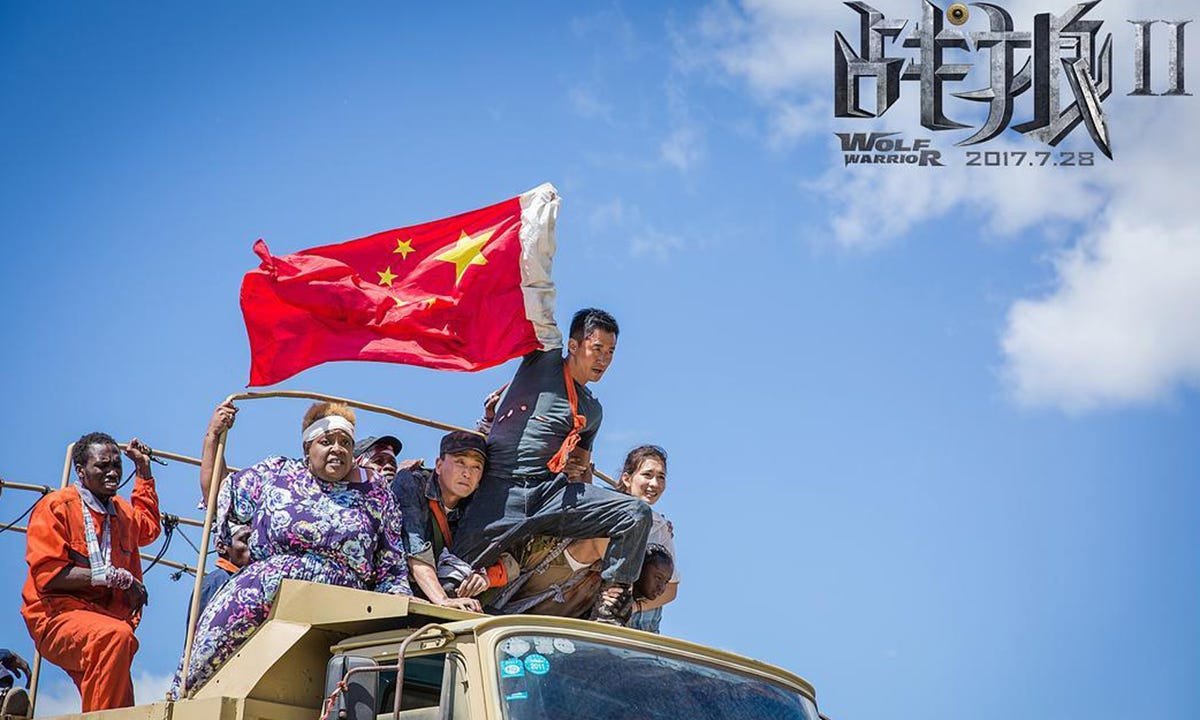
Decades of ideological and nationalist manipulation, and their widespread penetration into all aspects of Chinese society, have fundamentally laid the groundwork for an intellectual separation between ordinary Chinese citizens and the Communist regime in Beijing. From film and television to corporate operations, from education to everyday consumption and lifestyles, everything has been stamped with ideological labels. “Patriotism” has gradually morphed into a synonym or substitute for personal morality, corporate culture, product quality, and even mental health. Anti-Japanese war dramas dominate prime-time television; the exaggerated nationalist bravado of the Wolf Warrior films has shifted from cinematic fantasy to a default perception of reality for many; and whether to broadcast “Resisting U.S. Aggression and Aiding Korea” movies or the US-China love story Lover’s Grief over the Yellow River became entirely contingent on Beijing’s political needs.
Yet when Chinese abroad abruptly discover that flashing a Chinese passport as in Wolf Warrior films not only fails to solve real problems but may invite greater trouble; when a once-diverse cultural market is monopolized by cheap, monotonous ideological content; when “patriotism” becomes a shield for corporate misconduct and shoddy products; and especially when people themselves become the “price” in Beijing’s oft-repeated pledge to act “at any cost,” nationalism and related ideologies inevitably attract resentment and skepticism.
None of this is entirely new. But the critical turning point at which these sentiments began to break through Beijing’s official narrative and confront it directly was the three years of draconian lockdowns during the COVID-19 pandemic. Those measures shattered hopes that China’s future would be freer and more democratic, replacing them with a stark disregard for life, basic rights, and human dignity. When a young Shanghai resident was threatened by local enforcers—warned that refusal to comply would result in police punishment and long-term consequences for his family—he roared, “This is our last generation.” As the economic environment has continued to deteriorate, public attitudes have undergone even broader and deeper changes. The record-breaking waves of emigration in recent years are the most direct manifestation of these forces.
Read more @ Sinosage.substack.com
The vicious cycle of Chinese nationalism abroad
Abroad, Beijing’s ideological manipulation faces increasingly unpredictable consequences as well. As Chinese individuals and firms expand overseas, China’s influence does grow - including through selective cultural exports and consumer phenomena that generate genuine popular appeal. Yet this form of soft power remains fragmented and limited, and it pales in comparison to the far more dominant modes through which Beijing projects influence. Rather than being anchored primarily in cultural attraction, shared political values, or public diplomacy, China’s external influence is more often expressed as “sharp power,” whereby an authoritarian state projects power into other societies through state-led, institutionalized coercion and infiltration.
As Ursula von der Leyen noted in a 2023 speech quoting Xi Jinping, China seeks to strengthen international supply-chain dependence on itself in order to create powerful countermeasures and deterrence. In trade disputes with Europe and the United States - and in the recent dispute with Japan - Beijing has applied this logic by retaliating against Japan’s tourism sector, seafood exports, and cultural products.Such behavior is not limited to direct state action.
Individuals deeply shaped by ideology can also - consciously or unconsciously - become instruments of China’s sharp power. In the recent China–Japan episode, many Chinese citizens complied with Beijing’s political mobilization. More often, nationalist influence appears subtly in personal behavior: shouting loudly in public and accusing those who politely intervene of discriminating against Chinese; remaining silent about rights abuses at home but aggressively claiming discrimination abroad; belittling or attacking overseas Chinese from other regions; launching collective boycotts or attacks under the banner of “hurt national feelings”; and blindly “counterattacking” overseas critics on China. These behaviors often become extensions of Beijing’s overseas sharp power.
The delicate interplay between state-led actions and ideology-driven everyday behavior facilitates Beijing’s external influence while simultaneously increasing the risk of backlash - particularly in Asia amid rising tensions over Taiwan.
 Image/SCMP
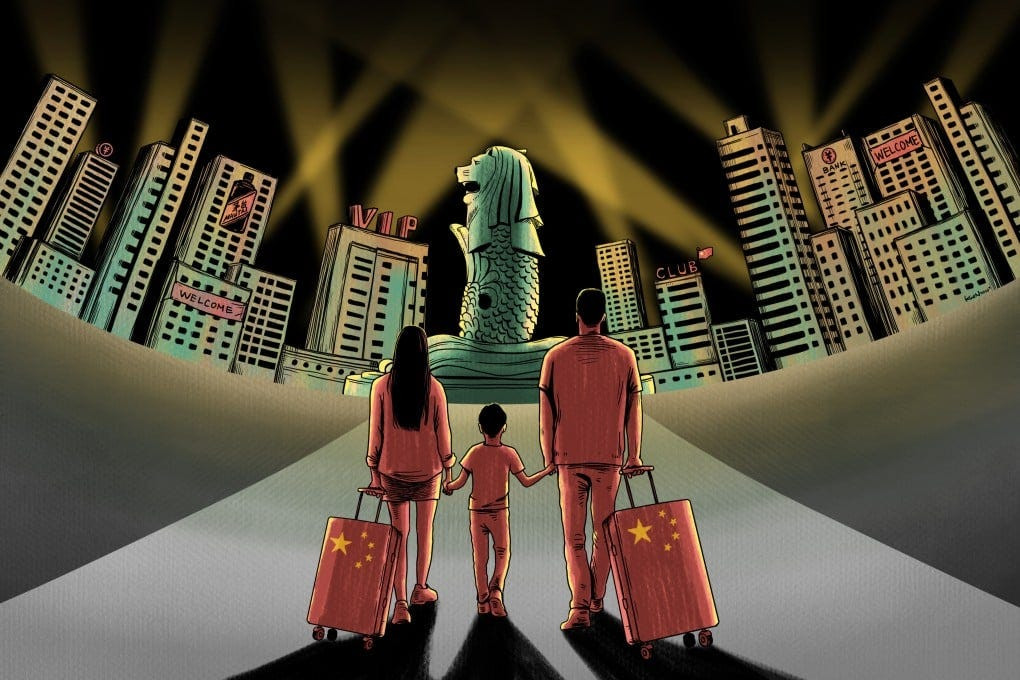
As China’s domestic political environment tightens and economic problems worsen, many Chinese individuals and firms are seeking looser environments and better opportunities in neighboring countries. From 2024 to 2025, Chinese direct investment in ASEAN grew at an annual rate of 13 percent. Eighty-six percent of Chinese firms plan to expand overseas within three years, with 48 percent prioritizing ASEAN. Trade data likewise show that ASEAN has become China’s largest trading partner.
At the individual level, Singapore expects to receive more than 1,600 high-net-worth migrants from China in 2025 - roughly 21 percent of China’s total high-net-worth emigration that year. At the same time, growing numbers of ordinary Chinese are relocating to Thailand on five-year visas to live and work. Malaysia, Vietnam, and several other countries are experiencing similar increases in the numbers of both Chinese firms and migrants.
But problems have followed. Between 2024 and 2025, the surge in Chinese activities - corporate relocations, “gray-zone” investments, and increased migration - has triggered multifaceted domestic resistance across Asia. In Southeast Asia, this reaction has increasingly been driven by the perception that China’s “highly coordinated” economic model does not offer fair exchange, but instead floods local markets with excess capacity and fosters illegal shadow economies.
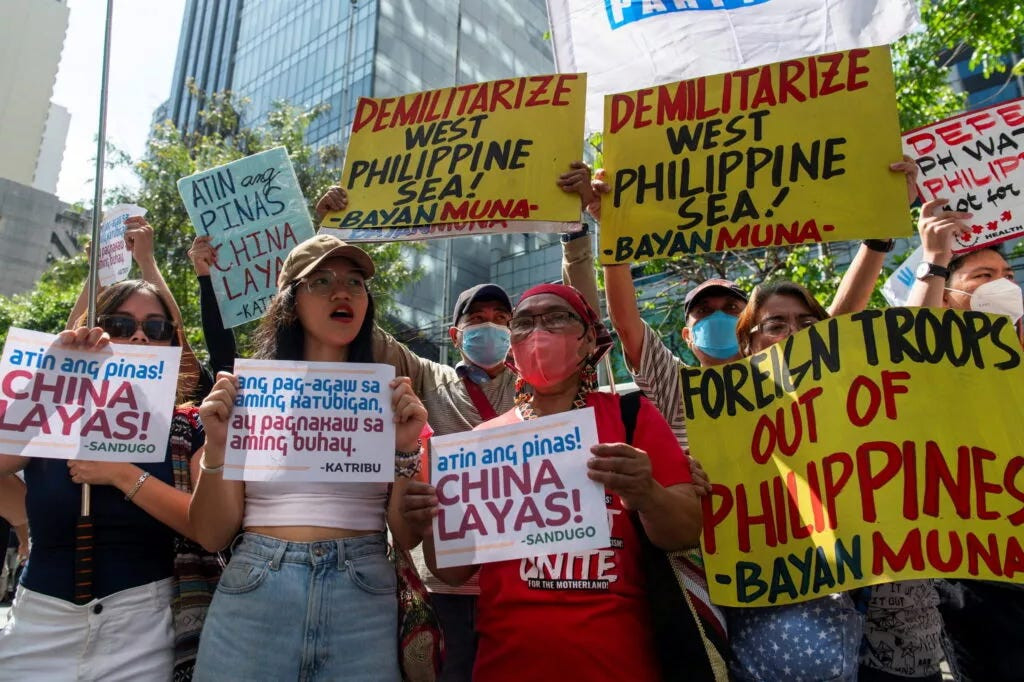
In the Philippines, resistance was most evident in the comprehensive ban on Philippine Offshore Gaming Operators (POGOs) under the 2025 Anti-POGO Act. These centers - largely run by Chinese nationals - were linked to industrial-scale telecom fraud, human trafficking, and even infiltration of local governments, pushing public and official tolerance to a breaking point. This legislative “counterstrike” was further amplified by public outrage over China’s maritime expansion in the West Philippine Sea, creating an environment in which Chinese commercial presence is increasingly viewed as a national security threat rather than an economic opportunity.
Thailand and Indonesia have seen resistance take a more protectionist form. In Thailand, the influx of Chinese “gray-zone” businesses - restaurants and retail shops using Thai nominees to evade ownership laws - has provoked widespread anger among local SMEs. These firms are accused of operating in closed loops, importing Chinese labor, materials, and logistics, leaving no meaningful spillover benefits for the Thai economy. In Indonesia, unions and student groups have challenged the Omnibus Law on Job Creation, and large protests erupted in late 2025 against Chinese-funded nickel smelting projects. Critics argue these projects prioritize Chinese technicians over local workers and bypass environmental regulations, fueling social unrest and calls for stricter quotas on foreign labor.
 Image/eastasiaforum
Singapore’s response has been more institutionalized, focusing on safeguarding the “integrity” of its status as a financial center, rather than street protests. After a massive money-laundering scandal involving Chinese nationals - worth up to SGD 3 billion - entered large-scale asset liquidation in 2025, Singapore tightened entry thresholds for family offices and luxury property investment. High stamp duties on foreign buyers cooled the real estate market to ease domestic tensions over housing costs. Singapore has also actively used the Foreign Interference Countermeasures Act (FICA), designating pro-China lobbyists as “politically significant persons,” underscoring efforts to prevent “coordinated markets” from becoming coordinated political influence.
For now, driven by economic pragmatism, the backlash against China in Southeast Asia has attracted limited attention. But as tensions over Taiwan intensify, potential conflicts between Asian countries and China will become more pronounced. In this sense, Sanae Takaichi’s remarks on “a Taiwan contingency” merely brought forward a reality that many Asian governments may ultimately have to confront - and Beijing’s response foreshadows what others could face.
Indeed, many Asian countries have long-standing territorial disputes with China, and an increasingly assertive China is heightening their anxiety. As Bilahari Kausikan describes in his recent book The Myth of the Asian Century, since Xi Jinping took office in 2012, “peaceful development” has faded from China’s diplomatic lexicon, replaced by the slogan “the East rises, the West falls.” China has become more aggressive not only in the South China Sea, but also in Hong Kong, the East China Sea, around Taiwan, toward Australia, and along the Himalayan border - raising anxiety across Asia. The deteriorating Taiwan Strait situation and the unresolved South China Sea disputes are accelerating this trend.
As in China, nationalism remains a powerful force across Asia, having played a central role in struggles against colonial rule and imperial domination. In relations with China, however, long-standing grievances are often muted by the scale of economic interdependence, with trade and investment encouraging governments and societies to frame ties in largely pragmatic terms. Yet it is precisely this deep economic penetration and expanding web of interactions that are now revitalizing nationalist sentiment in many countries. When relations are understood primarily through the lens of mutual economic benefit, disputes appear manageable. But when political flashpoints - such as Taiwan or the South China Sea - move to the foreground, nationalist narratives can be rapidly activated and amplified. In that scenario, Beijing may find that the very economic ties and human networks it once relied upon as tools of influence have become unavoidable political and economic liabilities.
Conclusion
In sum, Beijing’s long-constructed nationalist narrative has reached a precarious moment. Once a cornerstone of internal legitimacy, nationalism is now encountering rising skepticism among Chinese citizens, widening ideological fissures at home. At the same time, as growing numbers of Chinese move abroad, these domestic tensions risk being externalized - intensifying internal pressures while provoking broader backlash from other countries against China’s diplomacy and geopolitical posture. As a regime marked by strong Leninist characteristics, Beijing is likely to respond by doubling down on propaganda and social control, thereby reinforcing the very vicious cycle it most urgently needs to escape.
If you like our work, please consider subscribing or buying us a coffee. Thank you!
Read more @ Sinosage.substack.com