

 Greg Baker/AFP
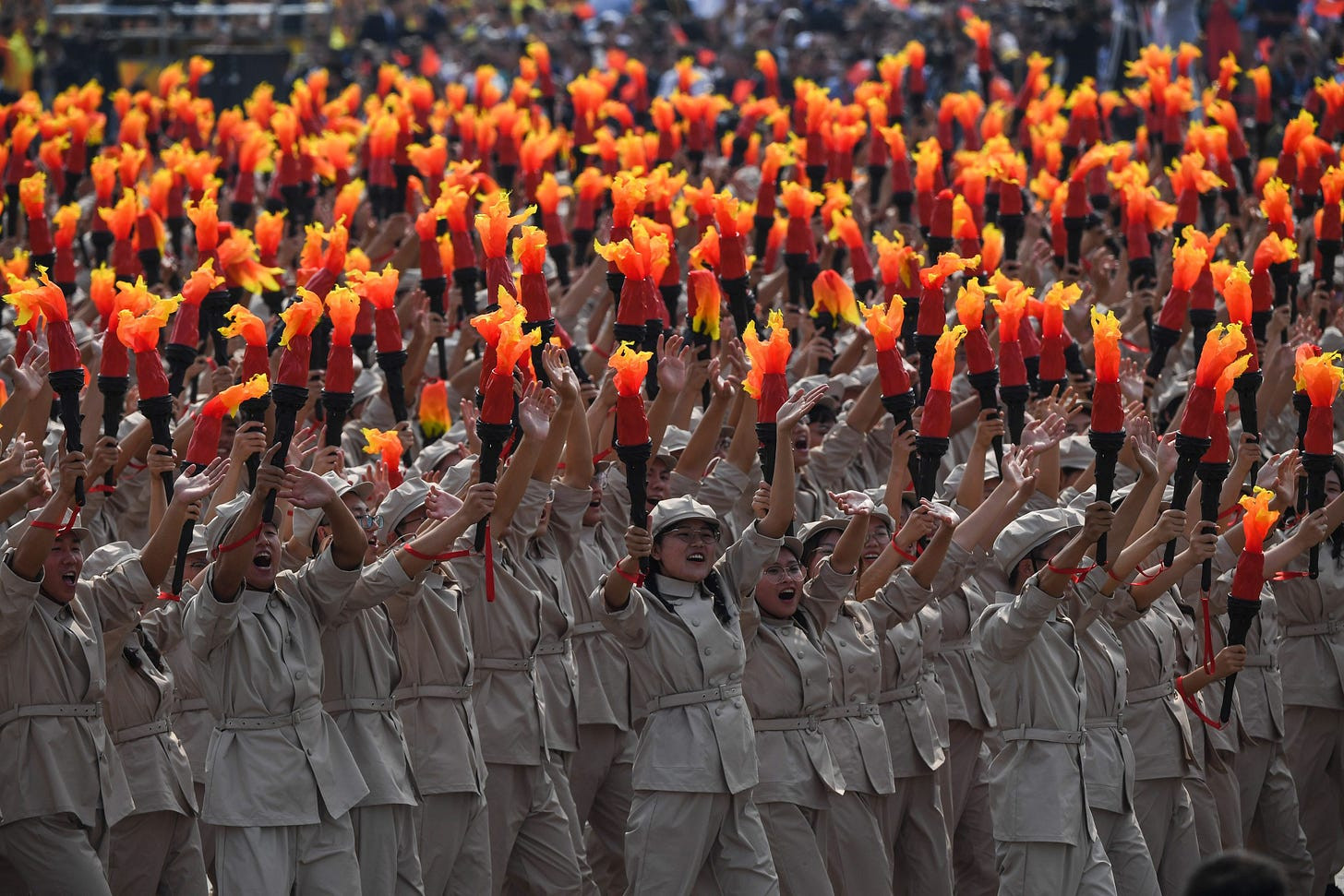
Patriotism is often regarded as a mild sentiment - arising from a sincere love for the homeland’s culture, history, and community - whereas nationalism is more exclusive, shaping identity by emphasizing the nation’s superiority and by defending or confronting external “others.” The boundary between the two has long been subject to distortion and manipulation. Yet in China, the fusion of the two exhibits some unique characteristics: it is shaped and guided from the top down by the Chinese government, used not only as a means to achieve geopolitical objectives but increasingly as an integral part of Beijing’s internal governance mechanisms.
The Fusion of Nationalism and Patriotism
Patriotism and nationalism are theoretically distinct. The former is an inward-facing civic loyalty, while the latter is an outward-facing, politically exclusive consciousness. However, through the manipulation of political discourse and public opinion, the Chinese government deliberately blurs the boundary between the two, combining the moral legitimacy of patriotic sentiment with the disciplinary power of nationalism, turning “loyalty” into an institutionalized and regulated social behavior.
To this end, the government has long maintained the collective memory of the “century of national humiliation” - the period from the First Opium War in 1839 to the founding of the People’s Republic in 1949, marked by foreign invasions, unequal treaties, and national fragmentation - and continuously reinforces this framework through education, media, and diplomatic narratives. This sense of historical victimhood is not only the spiritual source of nationalism but also becomes an ideological tool to legitimize political actions.
At the same time, in official contexts, patriotism is redefined as loyalty to the Party and the system rather than as an independent emotional expression. The political equation “patriotism = love the Party = love socialism” erodes the critical distance between citizens and the state, reducing “patriotism” to institutionalized obedience to the Party-state.
Within this logic, external economic friction, diplomatic confrontations, or consumer boycotts are recoded as “historical revenge” or “justifiable defense,” enabling the state to exercise pressure in the name of defense on the international stage; domestically, responding to calls and defending systematic interests is constructed as an obligatory life attitude and social norm.
Geopolitical Utility and International Consequences
The fusion of nationalism and patriotism provides Beijing with unprecedented political convenience and strategic tools in its international economic and geopolitical actions. This fusion not only consolidates domestic political unity but also establishes a logic of “Chinese-style emotional diplomacy” at the international level: by mobilizing national sentiment, economic behavior, diplomatic postures, and public opinion are integrated, allowing the state to implement economic and political signaling measures without resorting to direct confrontation.
Within this logic, the Chinese government often translates diplomatic disagreements into “national sentiment events,” creating a rapid chain reaction from policy decisions to grassroots mobilization. Actions by foreign companies, statements by foreign governments, or media reports, once perceived as “challenging national dignity,” trigger multi-layered countermeasures - simultaneous public condemnation, consumer boycotts, and administrative penalties. Whether protesting Japan, the Philippines, Canada, or criticizing “Western discursive hegemony” at the United Nations, the starting point is consistently framed as “defending national dignity.” Standardized rhetoric such as “interfering in China’s internal affairs” or “hurting the feelings of the Chinese people” has become entrenched. This discursive mechanism effectively transforms geopolitical conflicts into nationwide emotional events, achieving the “domestication” and emotional management of international affairs.
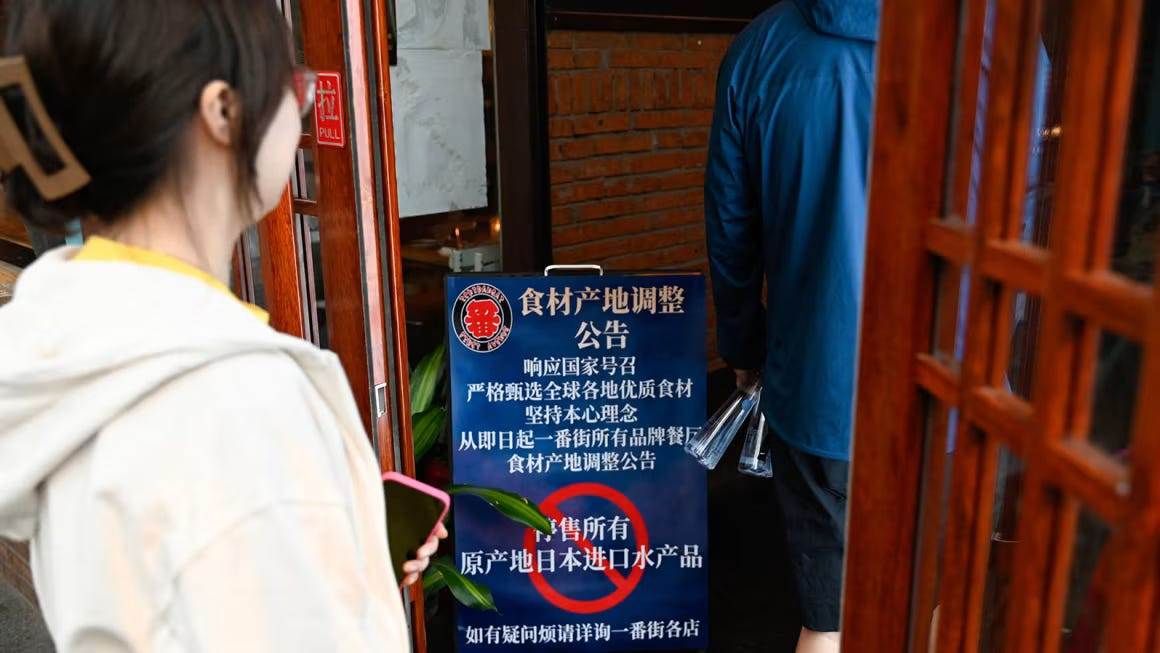
The political instrumentalization of this fusion is particularly evident in economic and trade-related countermeasures. In 2024, following Japan’s announcement of nuclear wastewater discharge, the Chinese government immediately suspended imports of Japanese seafood and tacitly permitted the spread of nationalist sentiment on social media - campaigns such as “Refuse Japanese Sushi” and “Protect Chinese Food Safety” - transforming the diplomatic dispute into a nationwide economic boycott. Meanwhile, Chinese seafood from the same waters flowed freely in domestic markets. By packaging economic policy in the language of national sentiment, the state redefined the legitimacy of its economic measures, presenting “retaliatory trade actions” as morally framed “patriotic defense” at the popular level.
This emotional politics was similarly mobilized amid intensifying Sino-American technological friction. Tesla faced restrictions from entering certain government and military facilities due to “information security risks,” which quickly evolved into an online movement advocating “boycotting U.S. companies.” Meanwhile, when Apple launched its new iPhone in China, multiple local government agencies prohibited public employees from using the devices, and social media campaigns surged with slogans such as “De-Apple” and “Buying Huawei is Patriotic.” Domestic smartphone sales skyrocketed as official media amplified narratives of “national technological confidence” and “self-reliance,” integrating consumption behavior into the patriotic narrative and turning market competition into a symbol of political loyalty.
 Image/CNN
The experience of foreign consulting and professional service firms further reveals the extension of this politicized mechanism. Bain & Company, Capvision, Deloitte, and other firms’ China branches have faced sudden raids, with multiple Chinese and foreign employees detained. Officially, investigations were justified on grounds of “data security” or “leakage of state secrets,” but details were not disclosed, leading the outside world to interpret these as “policy warnings” and “selective enforcement.” In official discourse, these actions were framed as “patriotic measures to safeguard national economic sovereignty,” thus packaging administrative enforcement as a publicly acceptable “defensive response.”
However, while this emotionally charged geopolitical strategy can foster short-term national cohesion, it produces long-term trust deficits. On one hand, it strengthens government control over public opinion and political legitimacy during crises, turning “unity” into a political resource for responding to external pressure; on the other hand, it undermines China’s predictability and institutional trustworthiness in the international community, gradually portraying China as an actor whose economic and diplomatic behavior is “emotion-driven.”
Impact on the Domestic Market
Domestically, the fusion of nationalism and patriotism has given rise to a market order driven by political sentiment. This mechanism provides powerful political tools for both the government and enterprises, but it also generates significant structural risks. Within this system, consumers are mobilized as extensions of the state’s will, while enterprises leverage their status as “national brands” to enjoy political protection and market advantages, ultimately forming an ideologically charged economic nationalist loop - where political mobilization and consumer loyalty reinforce each other, supplanting the traditional market logic centered on competition, fairness, and efficiency.
At the core of this mechanism is the state’s redefinition of consumption as a political act through policy discourse and media guidance. Purchasing domestic brands is no longer a purely personal choice but is imbued with the political meaning of “patriotism.” State propaganda, centered around narratives such as “national rise” and “technological self-strengthening,” ties consumer sentiment to national destiny, transforming patriotic enthusiasm into market loyalty and brand faith. Simultaneously, this politicized consumption logic drives shifts in cultural production: companies increasingly embed traditional symbols and cultural elements in product design and marketing to align with nationalist sentiment and policy direction. Multinational corporations are compelled to “localize,” deliberately incorporating “Chinese elements” into product development and design. Yet this shift has not fostered genuine openness or inclusivity. Within the nationalist framework, Chinese consumers show strong preference for domestic brands while remaining highly wary and resistant toward “China-style innovation” from foreign firms, solidifying an inward-looking, emotionally charged market structure.
Under this logic, domestic enterprises receive unprecedented policy protection and public opinion shields. Industrial subsidies, brand premiums, exaggerated marketing, and tight media control collectively create a “political shield,” granting enterprises perceived as representing national interests structural privileges in the market. Any criticism - whether concerning quality defects or consumer rights - can easily be labeled as “smearing Made in China” or “hurting national confidence.” Rational discourse is sharply constrained, and the market gradually slides toward a logic where loyalty supersedes competition and emotion overrides rules.
The electric vehicles (EV) industry exemplifies this mechanism. In recent years, Chinese EVs have become symbols of state industrial policy and national pride. However, behind this so-called “technological triumph,” safety incidents and quality defects are common in China. Multiple cases of vehicle fires have circulated on social media, but have often been quickly “cooled down” or deleted. According to various media reports, some manufacturers immediately dispatch “emergency teams” after incidents to obscure or remove brand identifiers, preventing public scrutiny. Brands such as Huawei AITO, BYD, Li Auto, and Xpeng have all been reported as engaging in such practices. Brand reputation is treated as an extension of “national honor,” and the enterprise’s first response prioritizes preventing negative association with the brand rather than tracing technical faults or ensuring accountability.
The smartphone sector offers another example. Huawei reclaimed market dominance through narratives of “domestic technological revival” and “breaking through blockades,” turning slogans like “far ahead” into national totems and outlets for public expressions of confidence in the state. In this environment, purchasing behavior is highly politicized, squeezing space for rational evaluation of products. Even in the presence of serious quality issues or pricing controversies, negative information rarely persists on mainstream platforms. At the same time, companies exploit “patriotic consumption” narratives to implement premium pricing strategies, framing high-end domestic phones as political symbols where “buying equals patriotism,” thereby capturing “loyalty premiums.”
Even more problematically, this sentiment-driven system is accompanied by legal intimidation and political threats. Complaints about product quality are often dismissed as “malicious hype,” and individual consumers who publicly criticize Chinese EVs or domestic smartphones may face legal warnings, account suspensions, or even police inquiries. Critical content is rapidly removed, while corporate PR teams and public opinion contractors depict critics as “manipulated by foreign forces.” The state often tacitly permits or even condones this, since these brands are regarded as symbols of “technological self-reliance” and, politically, as “national assets.” In this narrative, questioning a brand is tantamount to challenging the nation; criticism is deemed “ideologically incorrect,” and enterprises enjoy de facto immunity from accountability under the protective cover of nationalism. This mechanism grants certain enterprises unfair competitive advantages or even monopolistic positions but at the cost of a dysfunctional market feedback system, eroding the foundation of product development and innovation, and producing long-term damage. Meanwhile, ordinary consumer rights advocacy is forcibly imbued with political risk.
 Image/360doc.com
In response to this system, many consumers adopt a form of “strategic compliance” - publicly displaying patriotic postures in the media to avoid social or reputational risk, while privately expressing resistance through satire, mimicry, or “reverse consumption.” Online catchphrases such as “Patriotism, too, must be economically rational” reflect public awareness and subtle subversion of this emotionally charged market logic.
In short, the fusion of patriotism and nationalism has created monopolies and privileges for specific enterprises domestically, while undermining market feedback mechanisms and eroding the foundations of innovation and trust. As political sentiment is excessively mobilized, increasing numbers of consumers express “fatigue” or “skepticism” toward “national tide consumption,” rejecting coerced patriotic consumption and insisting that “patriotism should not exempt brands from scrutiny.” Yet in a political context where nationalism remains a pillar of stability, such resistance can only exist at the margins of public discourse.
Backlash and Structural Consequences
Overall, the fusion of nationalism and patriotism has created an efficient yet ultimately unsustainable political-economic model. In the short term, it strengthens regime legitimacy, social mobilization, and economic resilience. However, its hidden costs include erosion of institutional trust, weakening of market rationality, and damage to international credibility. The fundamental dilemma lies in the fact that when “patriotism” is defined by the state and exploited by the market, it ceases to be a spontaneous emotional identification and instead becomes an institutionalized form of compulsory obedience.
This resilient but brittle hybrid system maintains order through emotion, substitutes loyalty for competition, and replaces truth with ideology. While it appears to enhance the unity and coordination of national will, in reality it continuously undermines itself amid the accumulation of internal contradictions.
If you like our work, please consider subscribing or buying us a coffee. Thank you!
Read more @ Sinosage.substack.com