

 Image/SpecialEurasia
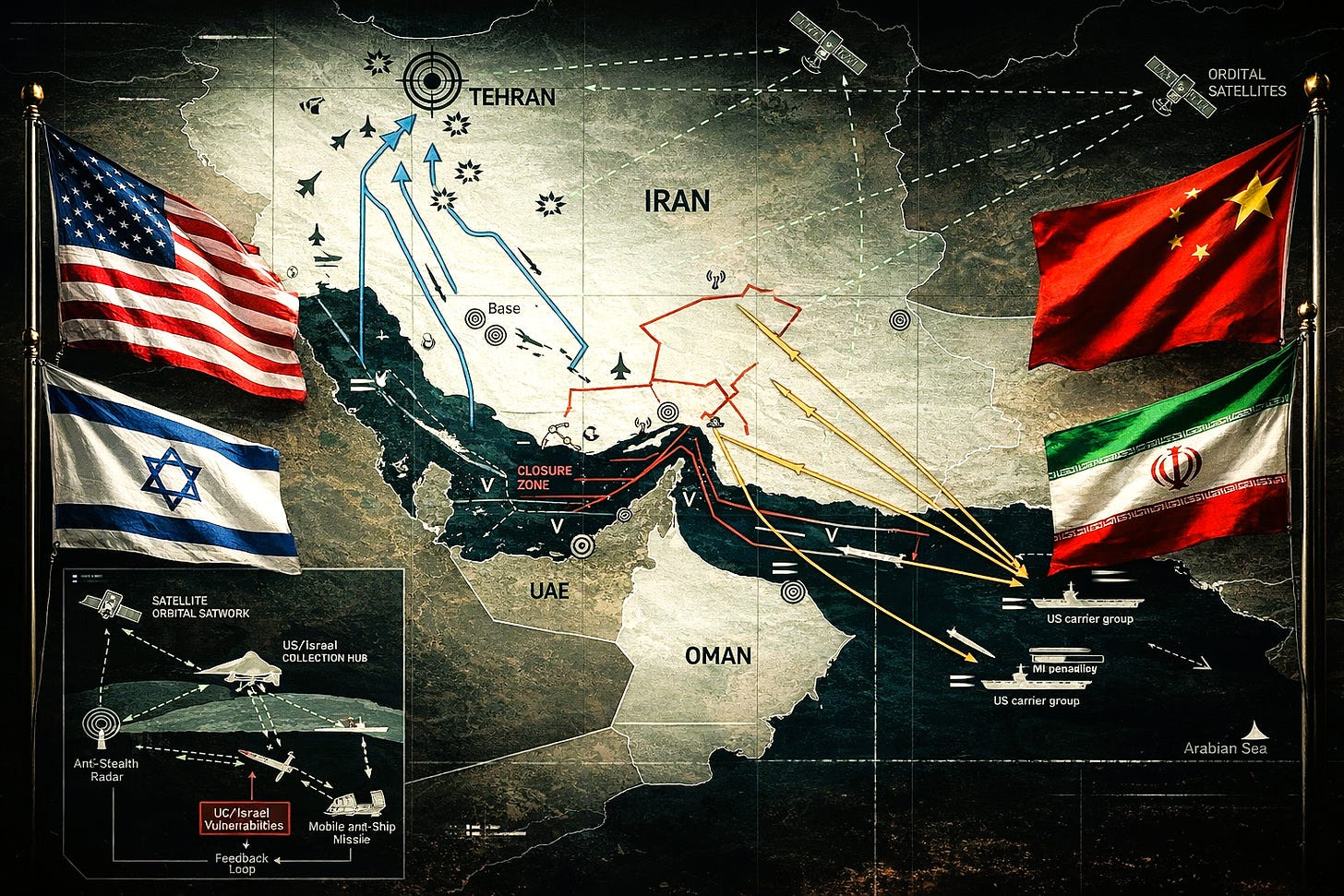
In early 2025 and into 2026, a sequence of geopolitical developments occurred that, taken individually, appear explicable through familiar policy drivers but, viewed together, may carry broader strategic implications. The destabilization of Venezuela and the escalation of military pressure on Iran both have identifiable proximate causes. U.S. policy toward Venezuela has long been shaped by domestic political incentives, particularly the importance of anti-Chavista constituencies in Florida and the persistence of Monroe Doctrine–style rhetoric in American political discourse. The escalation of confrontation with Iran, meanwhile, emerged from a convergence of factors including longstanding U.S. concerns about Iran’s nuclear program, broader regional security dynamics in the Middle East, and the strategic priorities of regional partners such as Israel. These overlapping pressures gradually produced conditions in which a military confrontation became increasingly plausible.
Yet when these developments are viewed sequentially rather than independently, they begin to form a pattern that may appear more consequential from the vantage point of Beijing than from Washington. Both Venezuela and Iran occupy central positions within a loose network of states that China has spent more than a decade cultivating as part of a broader effort to build political and economic relationships outside the institutional frameworks dominated by Western powers. Alongside Russia, Cuba, North Korea, Belarus, Syria, and Nicaragua, these countries form what might be described as an external strategic “bulwark” surrounding China’s geopolitical position. The significance of this network lies less in ideological alignment than in its function as a set of regimes that complicate Western efforts to isolate or pressure China within the global system. If two of these nodes appear to come under severe pressure or collapse within a short period of time, Beijing may reasonably interpret the sequence as evidence that the United States has begun systematically targeting China’s external partners.
Whether such a campaign actually exists is a separate question. Yet in international politics the distinction between intentional strategy and perceived strategy often matters less than might be assumed. States react not to the internal motivations of their rivals but to the patterns of behavior they observe. If the sequence of events affecting Venezuela and Iran appears systematic from Beijing’s perspective, Chinese leaders may respond as though a systematic campaign were underway regardless of whether Washington ever consciously conceived such a plan. This perception gap - between U.S. intent and Chinese interpretation - has the potential to generate strategic consequences that neither side initially intended.
The possibility of such a misalignment is particularly significant because China has invested considerable political, financial, and diplomatic resources over the past fifteen years in cultivating relationships with precisely the states now appearing most vulnerable to Western pressure. These relationships form something closer to a portfolio than to a formal alliance network. China has not constructed a rigid bloc of treaty allies comparable to the alliance systems maintained by the United States during the Cold War. Instead, Beijing has gradually assembled a diverse set of partnerships that together reduce Western leverage over the global political and economic order.
The portfolio spans several dimensions: financial exposure through overseas lending and infrastructure investment; institutional integration within organizations that China promotes as alternatives to Western-dominated institutions; monetary and financial infrastructure designed to reduce reliance on the dollar-centered financial system; security relationships and arms transfers; and diplomatic coordination and protection within international institutions such as the United Nations. Increasingly, a sixth dimension has emerged as well: technological integration. From satellite navigation networks and telecommunications infrastructure to digital payment systems and surveillance technology, Beijing has embedded partner states within Chinese technological ecosystems that can operate independently of Western-controlled systems.
The cumulative effect of these overlapping relationships is to create a geopolitical ecosystem in which a group of states, many of them sanctioned or politically isolated by the West, maintain durable economic, technological, and political ties with Beijing.
The strategic architecture described above was largely constructed during a period when China faced limited direct pressure on the political regimes within its network. The current Iran crisis therefore represents something more than a regional conflict. Rather, it is the first major real-world stress test of this external “bulwark portfolio.”
Whether or not China’s investment in financial infrastructure, technological cooperation, diplomatic protection, and strategic partnerships can actually pay off when partner regimes are under sustained Western military pressure is now being evaluated in real time. The Iran conflict therefore provides a window into how resilient, or fragile, China’s alternative geopolitical architecture may ultimately prove to be.
 Image/theasis
Historical Precedents: When Great Powers Lose Multiple Clients
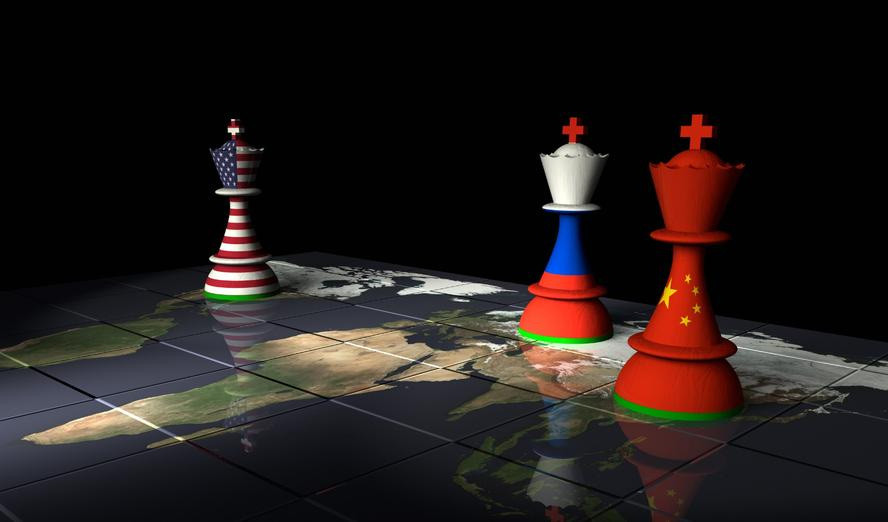
History provides several examples of how great powers respond when multiple client states or partners come under pressure at roughly the same time. These cases suggest that such moments often produce sharp strategic reassessments, particularly when patron states begin to interpret isolated crises as part of a broader pattern threatening their geopolitical position.
The Soviet Union confronted this dynamic repeatedly during the 1970s and 1980s. In the early 1970s, Moscow experienced a series of destabilizing shocks across its network of aligned states. Egypt’s President Anwar Sadat expelled thousands of Soviet military advisers in 1972 and subsequently shifted Cairo toward a U.S.-backed alignment following the Camp David Accords. Within a few years, other regimes in the Middle East and Africa were also reassessing their relationships with Moscow. The Soviet leadership responded initially with efforts to reinforce the remaining pillars of its influence through increased military assistance, arms transfers, and advisory deployments in countries such as Syria, South Yemen, and Ethiopia. The objective was not only to preserve those regimes but to signal that the erosion of Soviet influence in one theater would be counterbalanced elsewhere.
A similar pattern emerged in the late Cold War. During the 1980s the Soviet Union faced growing instability across Eastern Europe and within several allied states in the developing world. Poland’s Solidarity movement, unrest in Afghanistan, and shifting alignments in parts of Africa and the Middle East collectively strained Moscow’s capacity to sustain its external commitments. The Soviet response evolved over time. Early in the decade, the Kremlin attempted to maintain its geopolitical network through continued military support and political backing for allied governments. By the late 1980s, however, economic pressures and internal political change pushed Soviet leaders toward retrenchment. Under Mikhail Gorbachev, Moscow gradually abandoned the Brezhnev Doctrine - the policy of intervening to preserve socialist regimes - and allowed several Eastern European governments to collapse without direct military intervention. The Soviet system ultimately proved unable to sustain the costs of preserving its entire external network.
The United States has confronted analogous moments of cascading ally vulnerability. One example occurred during the final years of the Vietnam War. As the United States withdrew from Southeast Asia in the early 1970s, Washington faced concerns that the collapse of South Vietnam could trigger broader instability among regional partners. The response combined retrenchment in Vietnam with intensified diplomatic engagement elsewhere. The Nixon administration simultaneously pursued détente with the Soviet Union, rapprochement with China, and expanded security commitments to key partners such as Japan and South Korea in order to stabilize the broader strategic environment.
Taken together, these historical cases suggest that great powers rarely interpret simultaneous pressure on multiple client states as unrelated events. Instead, they tend to view such sequences as potential indicators of systemic challenge. Their responses typically fall along a spectrum that includes accommodation, retrenchment, and escalation. The Soviet Union initially escalated support to vulnerable partners before ultimately retrenching when the costs became unsustainable. The United States, facing similar moments of cascading instability, has often attempted to compensate for the loss of specific allies by strengthening other elements of its geopolitical network.
For China, these historical precedents provide a useful analytical benchmark. If Beijing begins to perceive that multiple regimes within its external strategic network are coming under coordinated pressure, its response could similarly move along this spectrum. China might double down on financial, technological, and diplomatic support for vulnerable partners in order to reinforce the network. Alternatively, if the costs of sustaining those relationships rise sharply, Beijing could gradually retrench from certain commitments while consolidating influence in more stable regions. Beijing could also practice selective escalation through economic pressure, diplomatic obstruction, or expanded technological integration with partner states.
When attempting to discern which path Beijing might take, however, it is important to look realistically at costs versus benefits, from Beijing’s perspective. In the context of the Iran war, for example, much focus has been placed on a handful of familiar narratives that obscure rather than illuminate the strategic stakes. These interpretations tend to reduce China’s role to reactive economic interests, overlooking how the conflict interacts with the broader geopolitical architecture Beijing has been constructing for more than a decade.
The most commonly reported angle has been the oil dependency issue. More than eighty percent of Iran’s seaborne oil exports in 2025 were reportedly shipped to China, accounting for roughly 13.5 percent of China’s seaborne oil imports. This statistic is widely cited and frequently treated as the central lens through which to interpret China’s stake in the crisis. Yet the analysis often stops at the observation that “China needs Iranian oil,” without examining the deeper strategic relationship between the two states. Similarly, China’s diplomatic condemnation of attacks on Iran - statements declaring that Beijing “firmly opposes and strongly condemns” the strikes while urging an immediate halt to hostilities - has been widely analyzed as if it represents a meaningful strategic signal. In reality, this language has become almost boilerplate within Chinese diplomatic practice. The condemnation-without-action pattern is now sufficiently predictable that it reveals relatively little about Beijing’s actual strategic calculations.
 Image/thecipherbrief
There are, however, a number of overlooked factors that may be more relevant to Beijing’s strategic calculus. Taken together, these factors complicate the assumption that the Iran crisis represents a straightforward strategic loss for China. The reality is more ambiguous. While instability in Iran threatens a key component of China’s Eurasian connectivity strategy, the conflict also generates opportunities for deeper technological integration, intelligence collection, and long-term influence. These factors include the following:
1. BeiDou and the Satellite Navigation Dimension
One of the most underreported aspects of the conflict concerns Iran’s growing integration with China’s BeiDou satellite navigation system. During the 2025 Iran–Israel conflict, widespread electronic warfare operations disrupted both civilian and military GPS signals across parts of Iran and the surrounding region. Electronic warfare systems can overwhelm satellite navigation receivers by flooding the radio spectrum with interference, effectively preventing devices from calculating their position or time accurately.
In response, Iranian forces reportedly accelerated the integration of China’s BeiDou Navigation Satellite System (BDS) into their military architecture. BeiDou is China’s independent global navigation system, consisting of a constellation of roughly three dozen satellites capable of providing global positioning and timing services with encrypted signals offering far higher precision for authorized users.
The operational implications are significant. During the conflict, GPS disruption degraded the guidance reliability of Iranian drones and missile systems. The shift toward BeiDou allowed Iranian forces to restore navigation accuracy and continue strike operations despite ongoing electronic interference.
Beyond restoring targeting capability, BeiDou provides several advantages that are strategically meaningful for Tehran. Unlike GPS, the BeiDou system includes a short-message communication feature that allows limited command communications to continue even if terrestrial networks are disrupted. It also provides encrypted, high-precision military signals capable of centimeter-level accuracy, which can dramatically improve the targeting precision of drones and missile systems.
Perhaps even more important from Beijing’s perspective is the intelligence dimension of this technological integration. Iran’s operational use of BeiDou in a contested electronic warfare environment effectively turns the conflict into a real-world testing ground for China’s satellite navigation architecture. Observing how Western forces conduct jamming operations, deploy missile defenses, and coordinate electronic warfare provides China with insights that would be extremely difficult to obtain during peacetime.
In effect, Iran becomes a live laboratory for China’s space-enabled military infrastructure.
2. Iran as a Military Technology Laboratory
The conflict may also serve a broader function for China as an observational platform for military technology. Chinese military modernization has long relied on close study of foreign conflicts to identify capability gaps and accelerate doctrinal adaptation. The Gulf War, the Iraq War, and more recently the war in Ukraine have all played this role in shaping Chinese military thinking.
A prolonged confrontation involving Iran provides a similar opportunity. The conflict exposes American and Israeli weapons systems - including missile defense networks, electronic warfare tools, air-defense integration, and precision strike platforms - to real-world operational conditions.
For Chinese strategists, the ability to observe how these systems perform in combat offers invaluable insights. It allows analysts to study targeting sequences, electronic warfare signatures, and missile interception performance. Such observations can inform Chinese research into countermeasures, alternative strike architectures, and future weapons development.
This kind of battlefield learning has historically been central to China’s defense modernization. The demonstration of the battlefield utility of drones during the war in Ukraine, for example, significantly accelerated Chinese experimentation with drone swarms and autonomous systems. The Iran conflict may serve a similar function, revealing both strengths and vulnerabilities in Western military technology.
Seen from this perspective, the war provides China with an opportunity to refine its own military capabilities without direct involvement in the conflict itself.
3. The Paradox of a Weakened Iran
Another underappreciated dynamic concerns the possibility that a weakened Iran could become more dependent on China rather than less.
At first glance, military pressure on Iran might appear to undermine Chinese regional strategy. Iran is a key node within China’s broader network of geopolitical partnerships and occupies an important geographic position linking Central Asia, the Persian Gulf, and the eastern Mediterranean.
However, geopolitical pressure often produces the opposite of the intended effect. If the Iranian regime emerges from the conflict economically weakened and diplomatically isolated, its reliance on Chinese financial support, technological infrastructure, and diplomatic protection could deepen significantly.
In practical terms, this could increase China’s leverage over Tehran. A country that is cut off from Western financial systems, faces sanctions pressure, and must rebuild damaged infrastructure will likely turn toward the partners still willing to provide capital, technology, and political support.
China has already demonstrated its willingness to play this role in other sanctioned economies, including Venezuela and Russia. In those cases, financial dependence often translated into deeper long-term strategic alignment.
For Beijing, therefore, the weakening of Iran may not necessarily represent a strategic loss. It may instead consolidate China’s influence over a state that occupies a critical position within Eurasian transport corridors and energy routes.
4. Rare Earth Leverage and the Commodities Dimension
Another overlooked dimension involves China’s potential use of commodity supply chains as a strategic tool. China dominates global production and processing of rare earth elements, materials essential for many advanced military systems, including guided missiles, radar systems, jet engines, and precision electronics.
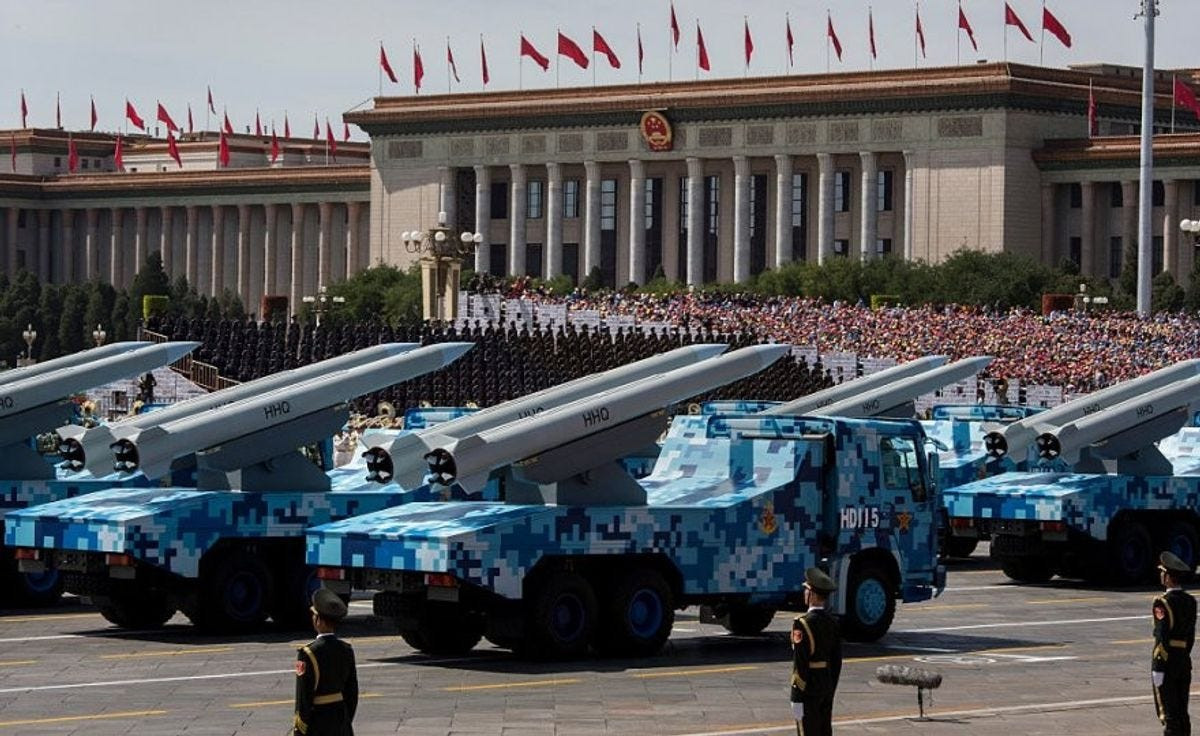
If Beijing were to restrict exports of these materials during a prolonged Middle Eastern conflict, it could complicate the United States’ ability to replenish weapons stocks used in the region. Rare earth supply chains have long been recognized as a potential source of geopolitical leverage for China, particularly during periods of heightened strategic competition.
Such measures would not involve direct military confrontation, yet they could shape the broader strategic environment in which a conflict unfolds. Slowing the production of precision weapons or advanced military components would increase the economic and logistical costs of sustaining a prolonged military campaign.
This kind of indirect pressure represents a form of economic statecraft rather than traditional military escalation. Yet its potential strategic effects could be significant, particularly if combined with other forms of geopolitical competition.
 Image/aunetwork
What These Dynamics Mean for China’s Strategic Calculus
Iran is not simply another regional partner for Beijing. It sits at the intersection of several strategic corridors that underpin China’s Eurasian strategy, linking Central Asia, Russia, the Persian Gulf, and the eastern Mediterranean. Iran is also embedded in China’s Belt and Road Initiative energy networks and sits astride emerging transport corridors such as the International North–South Transport Corridor. For Beijing, Iran therefore represents more than a bilateral relationship. It is a structural node in a wider geopolitical system. The overlooked dynamics discussed above illustrate how deeply integrated that system has become.
These dynamics do not eliminate the larger strategic risk confronting Beijing. If multiple nodes within Beijing’s strategic network begin to collapse under Western pressure, the credibility of China’s alternative geopolitical architecture would come into question. This credibility problem is particularly acute because China’s model of geopolitical influence differs fundamentally from that of traditional military alliances. Beijing has historically avoided offering explicit security guarantees. Instead, it has relied on economic integration, infrastructure development, and technological interdependence to bind partner states into its orbit.
Yet the same characteristics that critics sometimes describe as weaknesses in China’s approach may also provide Beijing with a significant strategic advantage. Because China’s external relationships are grounded primarily in economic integration, technological interdependence, and infrastructure development rather than ideological alignment or formal military alliances, they are inherently more flexible than traditional Cold War–style bloc politics. Beijing does not need every partner regime to remain permanently stable in order to preserve influence. Instead, the value of these relationships lies in the broader economic and technological ecosystems they create. Even when individual governments experience instability or external pressure, the financial, logistical, and technological networks linking them to China often remain intact. In this sense, China’s external “bulwark portfolio” functions less as a rigid defensive perimeter than as a distributed system designed to absorb geopolitical shocks while preserving long-term strategic positioning.
This distinction reflects a deeper difference between China’s strategic ambitions and those historically pursued by other great powers. Beijing’s objective is not necessarily to construct a political or ideological sphere of influence comparable to the Cold War blocs of the twentieth century. Rather, China’s leadership has consistently emphasized the accumulation of economic capacity, technological leadership, and military modernization as the foundation of national power. The partnerships described throughout this analysis should therefore be understood primarily as instruments for strengthening China’s long-term position within the international system rather than as attempts to establish political hegemony over aligned states. Infrastructure corridors, payment systems, satellite navigation networks, telecommunications platforms, and supply chains all serve this broader objective: building a global environment in which China’s economic and technological power can continue to expand regardless of Western political pressure.
From this perspective, geopolitical crises such as the current confrontation involving Iran may present not only risks but also opportunities for strategic adaptation. Conflicts that expose the vulnerabilities of Western military systems, disrupt existing supply chains, or deepen the economic isolation of sanctioned states can create conditions in which China’s financial resources, technological platforms, and diplomatic relationships become more valuable to partners. The result is a dynamic in which geopolitical turbulence sometimes accelerates the very forms of integration that Beijing has spent the past decade constructing.
These dynamics are particularly relevant when considering China’s long-term strategy with respect to Taiwan. Beijing’s approach to the Taiwan question has historically emphasized patience, economic integration, and the gradual accumulation of comprehensive national power rather than immediate military confrontation. A geopolitical environment in which China’s technological ecosystems expand, its financial networks deepen, and its industrial base continues to grow strengthens the structural conditions under which Beijing believes reunification will eventually become possible. Observing conflicts elsewhere also provides China with opportunities to study Western military capabilities, refine its own doctrines, and test technologies that could prove relevant in a future Taiwan contingency.
At the same time, the perception gap described at the beginning of this article remains central to how Chinese leaders interpret unfolding events. If Beijing concludes that the sequence of crises affecting states such as Venezuela and Iran represents the early stages of a systematic effort by the United States to dismantle China’s external strategic partnerships, the incentives for accelerating technological integration, economic statecraft, and military modernization may grow considerably stronger. In that scenario, China’s long-term response would likely focus less on direct confrontation and more on strengthening the systemic foundations of its power: insulating financial systems from sanctions pressure, expanding alternative technological infrastructures, and reinforcing relationships with states willing to operate outside Western institutional frameworks.
The most important implication of the current moment may therefore lie not in the immediate outcome of any single regional conflict, but in the strategic conclusions Chinese leaders draw about the trajectory of U.S. policy. If Beijing interprets recent developments as evidence that the United States is moving toward a strategy of systematically pressuring the political foundations of China’s external network, China’s response is unlikely to take the form of abrupt escalation. Instead, it would likely accelerate the long-term project already underway: transforming China into a military and economic powerhouse capable of operating within a global system that is increasingly resilient to Western coercion.
In that sense, the emerging geopolitical competition may be defined less by ideological confrontation or alliance politics than by the gradual construction of parallel systems of power. Whether the sequence of events now unfolding is interpreted in Beijing as coincidence, opportunism, or deliberate strategy will shape how quickly that transformation proceeds - and how the strategic balance surrounding Taiwan evolves in the years ahead.
If you like our work, please consider subscribing or buying us a coffee. Thank you!
Read more @ Sinosage.substack.com