

India, a vast country with diverse cultures and languages, operates on a single time zone known as Indian Standard Time (IST). This unified time zone has been a subject of discussion and debate due to the country's extensive geographical spread. Despite  spanning several longitudinal degrees, India adheres to a single time standard, which is UTC+5:30. This decision was not arbitrary but the result of historical, political, and practical considerations. Understanding the history and implications of India's single time zone sheds light on how timekeeping can influence a nation's functioning and unity.
Historical Context of Timekeeping in India
Before the establishment of a standardized time system, India relied on local mean times, which varied from place to place. Each region set its clocks according to the position of the sun, leading to significant discrepancies across the country. This method of timekeeping was feasible in an era when long-distance travel and communication were limited. However, with the advent of the British colonial rule and the introduction of railways, the need for a standardized time became evident. The British established local time zones in major cities like Bombay, Calcutta, and Madras, but these varied by several minutes, complicating scheduling and administration. This historical context highlights the challenges faced in synchronizing time across a diverse and sprawling nation like India.
The Establishment of Indian Standard Time (IST)
Indian Standard Time was officially adopted on January 1, 1906, during the British colonial period. The central meridian chosen for IST was 82.5 degrees east longitude, passing through Allahabad (now Prayagraj). This central point was meant to balance the time differences between the eastern and western extremes of the country. The establishment of IST aimed to unify the nation under a single time standard, facilitating smoother administration and communication. This move was also in line with global trends of adopting standardized time zones, which were becoming essential for international trade and coordination. Despite India's vastness, the decision to maintain a single time zone was driven by the need for national cohesion and administrative efficiency.
Reasons Behind Maintaining a Single Time Zone
Several reasons contribute to India's choice of maintaining a single time zone. One primary factor is administrative convenience. A unified time system simplifies government operations, business transactions, and media broadcasting. It also avoids the confusion and complexity that multiple time zones would introduce in a country with already significant regional diversity. Moreover, having a single time zone fosters a sense of national unity. It symbolizes the idea of India as one cohesive entity, despite its vast geographical and cultural differences. The choice also reflects practical considerations, as implementing multiple time zones would require significant changes in infrastructure and could disrupt established routines.
Advantages of a Single Time Zone
The benefits of a single time zone in India are manifold. It simplifies nationwide coordination, making it easier for businesses to operate across different regions. National events and broadcasts can be scheduled without the need for adjustments, ensuring uniformity in communication. For the government, a single time zone streamlines administrative processes, reducing the risk of errors in scheduling and record-keeping. Additionally, it strengthens the sense of unity among citizens by aligning the country under one standard time. This alignment can be particularly important in a nation as diverse as India, helping to reinforce the idea of a unified national identity.
Challenges and Criticisms
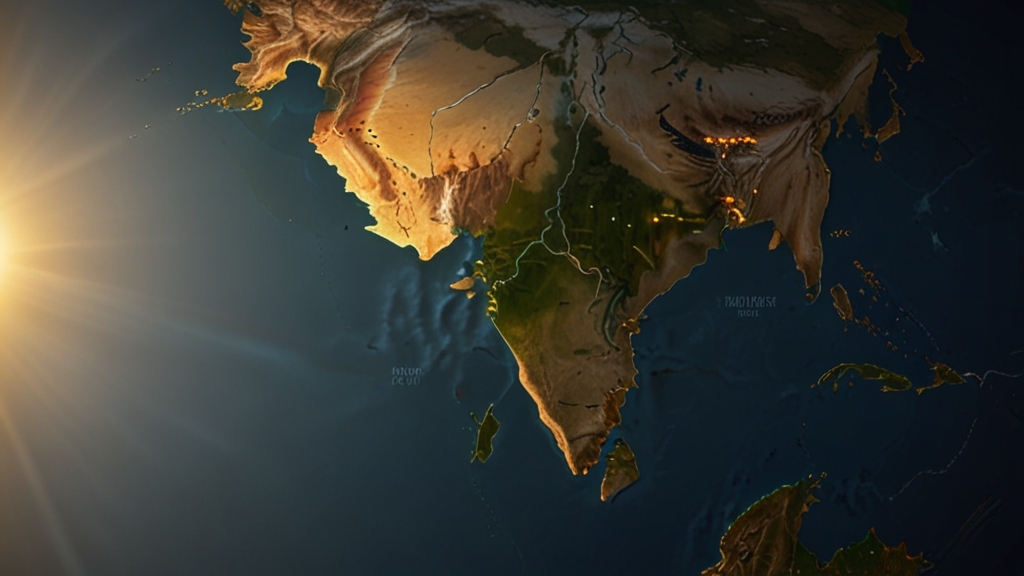
Despite its advantages, India's single time zone also faces criticisms and challenges. One significant issue is the discrepancy in daylight hours between the eastern and western parts of the country. Regions in the far east, like Assam and Arunachal Pradesh, experience sunrise and sunset much earlier than those in the west. This can lead to inefficiencies in daily life, such as school and work hours not aligning well with natural light. Critics argue that adopting a second time zone or adjusting the current one could improve productivity and quality of life in these regions. There are also concerns about the impact on energy consumption, as misaligned schedules can lead to higher use of artificial lighting.
Comparison with Other Countries
Comparing India's approach to time zones with other large countries offers valuable insights. For example, China, despite its vast size, also uses a single time zone, China Standard Time (CST). This choice promotes national unity but creates significant regional time differences. On the other hand, countries like the United States and Russia use multiple time zones to better align with local solar time, enhancing daily efficiency but adding complexity to national coordination. India's decision to use a single time zone reflects a balance between unity and practicality, similar to China's approach, yet different from the multiple time zones seen in other large nations.
Future Considerations for India’s Time Zone
As India continues to grow and develop, the debate over its single time zone persists. Technological advancements and changing lifestyles may prompt a reevaluation of the current system. Some experts advocate for introducing a second time zone or shifting IST to better align with natural daylight hours. Others argue for maintaining the status quo, emphasizing the benefits of national unity and administrative simplicity. Any future changes would need to consider the diverse needs of the population, the impact on daily life, and the potential economic implications. Ultimately, the decision will reflect a balance between tradition, practicality, and the evolving demands of a modernizing nation.
By exploring the history and implications of India's single time zone, we gain a deeper understanding of how timekeeping can shape a country's identity and functionality. Indian Standard Time, with its origins in colonial history and its continued relevance today, remains a fascinating example of the interplay between geography, politics, and society.