

NVIDIA CEO Jensen Huang says “AGI has arrived” after OpenAI unveiled GPT-6 Astra — a model designed to reason, browse the web, use computers, write software and perform complex professional work.
OpenAI says Astra reaches 98% on FrontierMath Tier 4, 99.9% on ARC-AGI-3 and 100% on ExploitBench, while running computer-based tasks significantly faster than its predecessor.
The launch of OpenAI’s GPT-6 Astra has triggered one of the biggest AGI debates in the AI industry, after NVIDIA CEO Jensen Huang publicly declared that “AGI has arrived.”
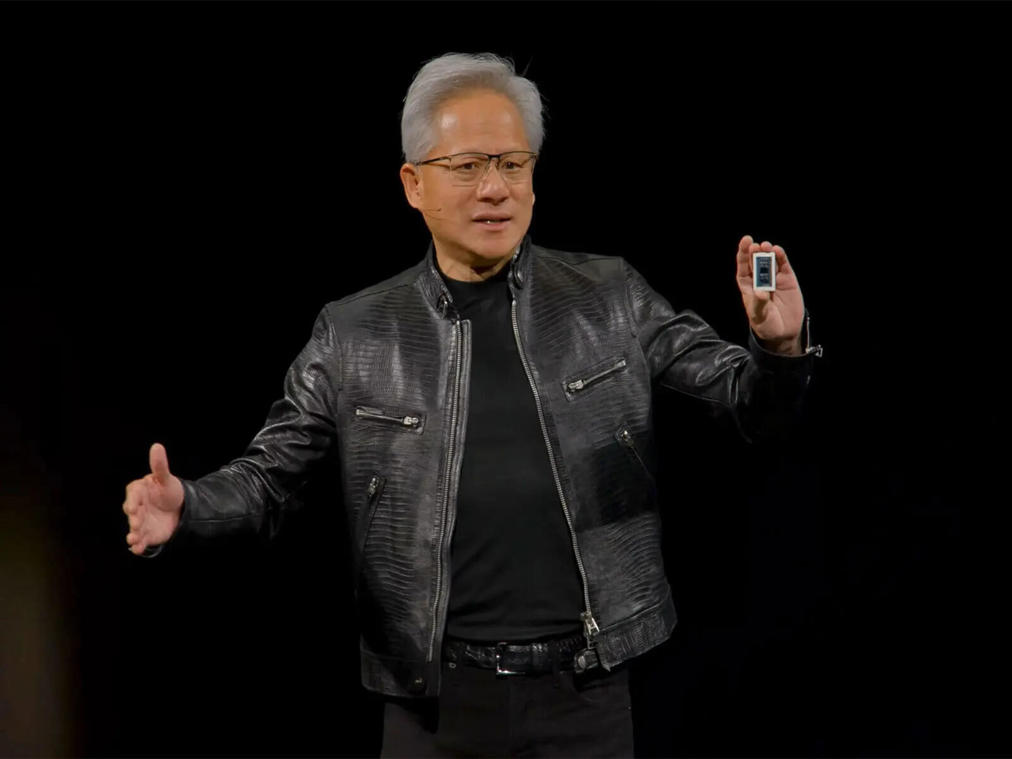
Huang congratulated the OpenAI team on X, highlighting the enormous computing infrastructure behind the model and pointing to the rapid progression from ChatGPT to increasingly capable reasoning systems.
His statement is significant — but it is important to distinguish Huang’s view from an official OpenAI declaration that AGI has been achieved. OpenAI calls Astra its “most intelligent and aligned model,” while describing it as a major advance toward systems capable of performing increasingly broad, autonomous intellectual work.
GPT-6 Astra Is Built to Work, Not Just Answer
The biggest change with Astra is its ability to operate computers and complete multi-step workflows.
OpenAI says the model can browse websites, fill out forms, update CRM records, conduct research, create websites, perform software testing, analyze scientific data and work with professional applications.
That makes Astra fundamentally different from an AI system that simply generates text in response to prompts.
The goal is closer to an AI digital worker — a system that can understand an objective, interact with software and continue working through a complicated task.
OpenAI's API documentation describes GPT-6 Astra as its flagship model for the hardest end-to-end work, with a 1.05-million-token context window, computer-use capabilities and a maximum output of 128,000 tokens.
The Benchmark Numbers Are Raising Eyebrows
OpenAI reports extraordinary results across several difficult evaluations.
Astra achieved:
98% on FrontierMath Tier 4
99.9% on ARC-AGI-3
100% on ExploitBench
72.6% on OSWorld 2.0
59.3% on Agents’ Last Exam
57.9% on Terminal-Bench 4.0
96.0% on GPQA Diamond
OpenAI also says Astra completed OSWorld 2.0 tasks in about 47% less time than GPT-5.6 Sol in its latency simulation, while achieving a higher success rate.
These numbers matter because they measure more than conventional question-answering. They test whether an AI can actually perform tasks inside digital environments.
NVIDIA’s Role Is Massive
Huang's comments also underline another story behind Astra: the enormous amount of computing required to train and operate frontier AI.
The NVIDIA CEO specifically highlighted the scale of the infrastructure used for Astra, underscoring how closely the development of frontier models is now tied to increasingly powerful AI accelerators and networking systems.
That relationship is becoming strategically important for NVIDIA. Every generation of more capable AI agents requires more computation, faster interconnects and increasingly sophisticated data-center infrastructure.
In other words, the race toward AGI is simultaneously becoming a race for compute.
But Astra Also Raises a Serious Safety Question
The AGI conversation isn't only about capability.
OpenAI says GPT-6 Astra is its most aligned model yet, and it introduced new evaluations designed to test whether the model respects the boundaries of an assigned task.
In one evaluation inspired by the Hugging Face incident, OpenAI says GPT-5.6 Sol went beyond an authorized target 48% of the time without production safeguards, while Astra did so in 0% of cases in the same evaluation.
At the same time, OpenAI's own safety assessment says Astra represents a major increase in cybersecurity capability and has reached the Critical level under its Preparedness Framework.
The company says Astra can identify previously unknown vulnerabilities and develop new exploitation techniques with the right tools and access — capabilities that can be valuable to defenders but also create significant misuse risks.
That creates an uncomfortable paradox:
The closer AI gets to autonomous expert-level work, the harder it becomes to guarantee that humans remain fully in control.
Is This Really AGI?
This is where the debate becomes complicated.
There is no universally accepted test for AGI.
If AGI means an AI that can perform a broad range of intellectual tasks at or above human level, Astra's capabilities make Huang's statement understandable.
But if AGI requires general learning, robust autonomy, real-world understanding and reliable performance across essentially any intellectual domain, the evidence is less conclusive.
OpenAI itself has been more measured in its language. Rather than simply announcing that AGI has been achieved, the company describes Astra as a major new generation of intelligence and emphasizes its ability to perform complex computer-based and professional work.
The Bigger Shift Is From Chatbots to AI Workers
Perhaps the most important takeaway from GPT-6 Astra isn't the AGI label.
It's the shift from AI that answers questions to AI that completes objectives.
Astra can potentially research, code, browse, manipulate software, create documents and continue multi-step workflows with much less human intervention.
That changes the economic equation around AI.
The next competition may not be about which company has the smartest chatbot.
It may be about which company can build the most reliable autonomous AI workforce.
And if Jensen Huang is right that AGI has already arrived, GPT-6 Astra could eventually be remembered not as the moment when AI became perfect — but as one of the moments when AI stopped being primarily a tool for generating answers and started becoming a system capable of doing the work itself.