

A Federal Judge Just Called Flock's License-Plate Network "Indiscriminate Mass Surveillance" — And Threw Out the Evidence It Produced
A Tulsa County sheriff's deputy ran a license-plate search for one reason: the car had California plates. What came back changed the course of a federal case — and may now be reshaping how courts think about AI-powered policing tech nationwide.
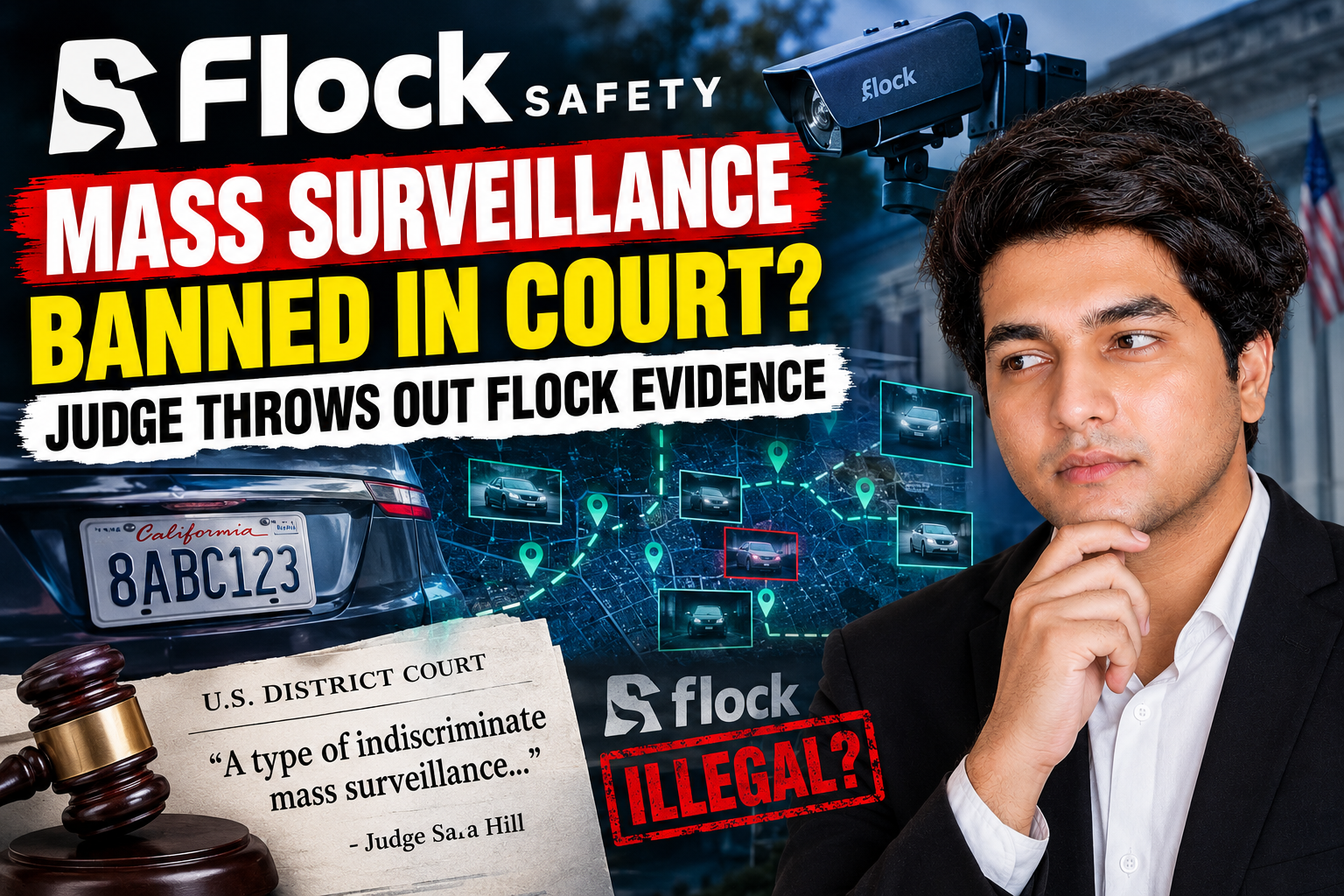 Here's what actually happened, and why it matters beyond one drug case:
→ The deputy queried Flock Safety's automated license-plate-reader (ALPR) database with no warrant and no individualized suspicion — just a California plate flagged as worth checking
→ The search returned over 50 location records spanning an entire month of the woman's movements, which the deputy then used to justify searching her car — leading to 91 pounds of seized methamphetamine
→ Federal Judge Sara Hill ruled on October 1 that the search violated the Fourth Amendment, applying the "fruit of the poisonous tree" doctrine to suppress all evidence that followed
→ Her language was blunt: Flock's network is "a type of indiscriminate mass surveillance," and the system is "approaching dragnet-type law enforcement practice"
→ She went further than most rulings on this topic — suggesting other courts that found Flock searches don't count as a Fourth Amendment search were likely wrong, because they hadn't grappled with how automated and widespread the system actually is
→ Flock disputes the ruling, says it wasn't a party to the case, and expects it to be appealed and overturned — pointing out that a federal appeals court (5th Circuit) upheld plate readers back in March
→ The timing isn't isolated: days earlier, Senator Bernie Sanders introduced the "Block Flock Act" to bar federal agencies from using automated plate readers, and Flock's CEO has already apologized to women stalked by law enforcement officers who misused the system
This ruling doesn't bind other courts, and it covers just one case in one Oklahoma district. But it's one of the first times a federal judge has put constitutional language this direct on paper about an AI-powered surveillance system — and that language is now something every defense attorney facing a Flock search can cite.
The deeper question this case raises isn't really about one deputy's bad judgment call. It's about what happens when a tool is built to be queried at scale, by anyone with access, with no built-in requirement to justify why. A system designed for "search anything, anytime" doesn't need a bad actor to produce a bad outcome — it just needs an officer who doesn't stop to ask whether they should.
Where do you think the line should sit between public-safety tech and warrant-free tracking of ordinary people's movements?
#AI #Surveillance #FlockSafety #FourthAmendment #Privacy #TechPolicy #Cybersecurity
— 𝔖𝔞𝔫𝔡𝔢𝔢𝔭 ℜ𝔞𝔦𝔷𝔞